
Salmon Sauce Essentials: Simple Recipes and Flavor Pairings
I love a simple sauce that lifts plain salmon into a tasty family meal. This lemon-dill cream sauce blends butter, lemon, fresh dill, and a few pantry staples to make a bright, silky topping that you can cook in about 15 minutes.
I use the sauce with pasta, mashed potatoes, or steamed veggies for easy weeknight dinners that even kids enjoy. Below are the key points you’ll want to remember when making and serving this sauce.
Key Takeaways
- The sauce combines lemon, butter, herbs, and a touch of savory ingredients for a creamy finish.
- It comes together quickly and suits both simple sides and hearty starches.
- Small tweaks in seasoning and herbs let you adapt the sauce for grilled or baked salmon.
Creamy Salmon Sauce Ingredients:
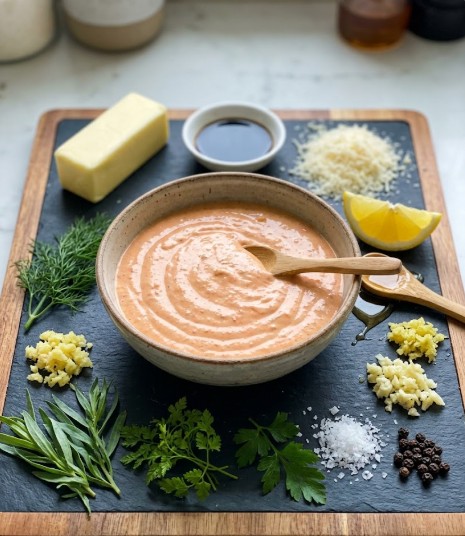
Fat for richness
I use 1/2 cup butter to give the sauce a smooth, silky mouthfeel. Salted or unsalted both work; pick unsalted if you want tighter control of seasoning.
Umami seasoning
I add 1/4 cup soy sauce to bring savory depth and a touch of saltiness. It helps the sauce cling to the fish and boosts overall flavor.
Warm spice root
I stir in 1 teaspoon minced fresh ginger for a bright, slightly spicy lift. Ginger cuts through the richness and adds a fresh note.
Bright citrus
I squeeze in 1 tablespoon lemon juice to balance the creaminess with acidity. The lemon brightens the sauce and complements the salmon.
Aromatic allium
I crush or mince 3 cloves garlic to build savory, garlicky complexity. Garlic warms the sauce and pairs well with butter and herbs.
Fresh herb — dill
I use 1 teaspoon chopped fresh dill to add a mild, citrus-like herb flavor. Dill is classic with salmon and keeps the sauce lively.
Basic seasoning — salt
I include 1/2 teaspoon salt to enhance all the other flavors. Adjust to taste if you use salted butter or extra soy sauce.
Ground black pepper
I add 1/2 teaspoon freshly ground black pepper for a mild, peppery bite. It rounds out the sauce without overpowering it.
Savory liquid base
I pour in 1/2 cup chicken stock to thin the sauce and add savory body. Use low-sodium stock if you want less salt.
Cheese for umami and texture
I fold 1/2 cup grated Parmesan into the sauce for nutty, salty richness. Parmesan also helps thicken and tighten the sauce.
Anise-scented herb — tarragon
I mix in 1 tablespoon finely chopped tarragon leaves to introduce a subtle anise aroma. Tarragon adds a refined, slightly sweet herb note.
Delicate herb — chervil
I add 1 tablespoon chopped chervil for a mild, parsley-like flavor with a faint licorice hint. Chervil keeps the taste light and elegant.
Bright green garnish — parsley
I sprinkle 1 tablespoon chopped fresh parsley for color and a gentle herbal finish. Parsley freshens each bite.
Light sweetener
I balance acidity and salt with 1 tablespoon honey. The honey tames sharp edges and gives the sauce a soft, rounded finish.
How To Make Lemon Dill Salmon Sauce:
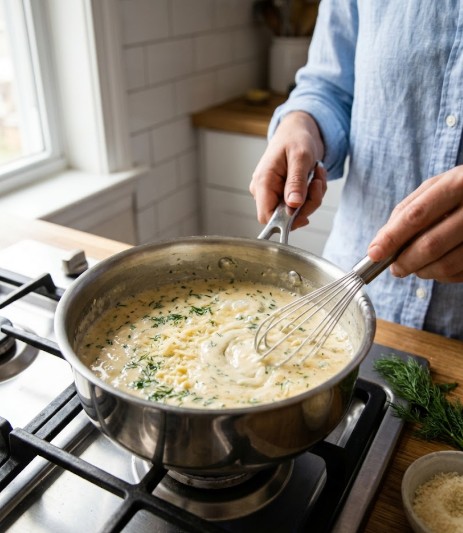
Step 1: Heat and build the base
I melt a small knob of butter in a saucepan over medium-low heat. I add minced garlic and grated ginger and cook until they soften and smell fragrant, about 1–2 minutes. Then I pour in a splash of low-sodium chicken stock and a little soy sauce, and let the mix simmer gently for about 3 minutes to blend flavors.
Step 2: Add cheese, sweet and bright elements
I stir in finely grated Parmesan until it melts into the liquid. Next I whisk in honey for sweetness, fresh lemon juice for brightness, and a handful of chopped fresh dill. I lower the heat and let the sauce simmer 5–7 minutes so it thickens slightly. I keep the heat low so the sauce stays smooth and doesn’t break.
Step 3: Finish and use
I remove the pan from the heat once the sauce reaches a glossy, pourable texture — it will thicken a bit as it cools. I spoon it over baked salmon or brush it on fillets before grilling. I taste and adjust salt, lemon, or dill to suit my preference.
Recipe Tips & Notes:
Nutrition Details I Provide
- I list approximate values to help plan meals.
- Calories: ~230 per serving.
- Carbs: about 5 g.
- Protein: about 2 g.
- Fat: about 25 g.
Storage and make-ahead tips
- I keep leftover sauce in an airtight container in the fridge for up to 48 hours.
- I do not recommend freezing this sauce; texture and flavor suffer.
- Reheat gently over low heat so the sauce stays smooth.
Ingredient swaps and additions
- I use fresh herbs for best flavor; I avoid frozen herbs here.
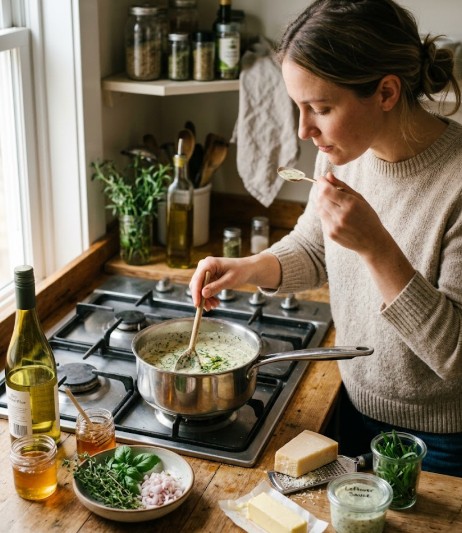
- If I lack tarragon or chervil, I substitute with fresh thyme, basil, and finely chopped shallot.
- For richer depth, I sometimes swap chicken stock for a splash of white wine.
- I add 1 tablespoon heavy cream when I want a silkier, creamier sauce.
- I may grate lemon zest for extra brightness.
Salt, cheese, and sweetness guidance
- I taste before adding salt because butter and soy sauce can make the sauce salty already.
- Common cheeses like mozzarella or cheddar will work if a recipe calls for cheese.
- I omit honey when I prefer a non-sweet, tangier sauce; honey balances acidity if I use it.
Cooking technique pointers
- I stir the sauce occasionally while cooking.
- I avoid constant whisking to reduce the risk of the sauce breaking.
Frequently Asked Questions:
1. Which sauces taste best with salmon?
I like bright, tangy sauces that cut the fish’s richness. Lemon-dill and yogurt-dill sauces add fresh acidity.
For bolder flavors, teriyaki, honey-mustard, or hot honey-butter give sweet and savory balance.
Herb sauces like pesto or classic tartar work well, too. Choose based on how you cook the fish and your spice preference.
2. Can I use one sauce for both grilled and oven-baked salmon?
Yes — many sauces work for both methods.
Thicker glazes (teriyaki, honey-mustard) suit grilling and hold up to heat. Creamy or butter-based sauces pair well with baked or pan-seared fillets.
If you grill, brush on toward the end to avoid burning sweet ingredients.
3. How do I make a smooth, creamy salmon sauce?
I start with butter and grated Parmesan for richness.
To make it silkier, increase the butter and add heavy cream (about ½ cup) while warming gently.
Finish with lemon and fresh herbs like dill for brightness and to prevent an overly heavy taste.
4. What side dishes go with salmon and sauce?
Keep a balance of protein, carbs, and vegetables. I serve salmon with roasted or mashed potatoes, steamed rice, or crusty bread for carbs.
Add sautéed greens, roasted vegetables, or a crisp salad for fiber and color.
For low-carb meals, choose cauliflower mash or roasted veggies.
Ingredients
- ½ cup butter
- ¼ cup soy sauce
- 1 tsp fresh minced ginger
- 3 cloves garlic, minced
- 1 tbsp fresh lemon juice
- 1 tsp fresh dill
- ½ tsp salt
- ½ tsp ground black pepper
- ½ cup chicken stock
- ½ cup finely grated Parmesan
- 1 tbsp tarragon, chopped
- 1 tbsp chervil, chopped
- 1 tbsp parsley, chopped
- 1 tbsp honey
Instructions
- Sauté garlic and ginger in butter until golden.
- Add chicken stock and soy sauce; simmer 3 minutes.
- Stir in Parmesan until melted.
- Add honey, lemon juice, and chopped herbs; simmer 5–7 minutes on low, stirring occasionally.
- Remove from heat when sauce thickens to a glossy but pourable consistency.
- Spoon over cooked salmon and serve with chosen sides.
Nutrition
- Calories: 230 kcal (per serving, approximate)
Takeaway:
I make a bright, herby cream sauce that lifts baked or grilled salmon. Fresh lemon adds a clean zip while chopped herbs bring earthy flavor. It beats store-bought versions because I can change herbs, acidity, or creaminess to match the meal. I serve it over salmon with quinoa, roasted vegetables, and a simple salad for a balanced plate. Guests often ask for the recipe after tasting it, which shows how much a small sauce tweak can improve a dinner.
FAQs
- What sauce works best to boost salmon’s flavor without hiding the fish?
I prefer sauces that add brightness or creaminess while letting salmon shine. Citrus-based sauces, light vinaigrettes, or a simple lemon-butter finish bring acidity and fat that lift the fish. Heavy, very sweet sauces can mask salmon’s natural taste. - Is it safe to serve raw or undercooked salmon with sauce?
I avoid serving raw salmon to people who are pregnant, elderly, very young, or immune-compromised. For others, use sushi-grade fish and keep all prep surfaces and tools clean. Acidic sauces (like citrus or vinegar) do not reliably kill parasites or bacteria. - How long will a prepared salmon sauce keep in the fridge?
I store most homemade sauces 3–5 days in a sealed container. Mayonnaise- or cream-based sauces are best used within 3 days. Oil- and vinegar-based dressings can last up to a week. Always smell and check for mold before using. - How should I reheat salmon when it already has sauce?
I reheat gently to preserve texture and sauce quality. Use a low oven (250–275°F / 120–135°C) for 10–15 minutes or warm briefly in a covered skillet over low heat. Avoid high heat or microwaving for long periods, which can dry the fish and separate sauces. - Which sauces are best for grilled versus baked salmon?
I match sauce style to cooking method. Bold glazes (teriyaki, honey-garlic) work well on the grill because they caramelize. Creamy herb or lemon-butter sauces pair nicely with baked or pan-seared salmon where you want a silky finish. - How do I maintain sauce consistency and prevent separation?
I emulsify properly and add ingredients slowly. For mayo- or oil-based sauces, whisk oil into the base in a steady stream. Chill emulsified sauces before serving. If a sauce breaks, whisk in a teaspoon of mustard or warm a little and re-emulsify slowly. - How do sauces compare to other ways of flavoring salmon, like rubs or marinades?
I use sauces for finishing and contrast, rubs for surface seasoning and texture, and marinades to infuse flavor before cooking. Sauces add moisture and a final flavor boost; rubs create crust; marinades penetrate the flesh. They often work best combined.
Conclusion
I recommend choosing a sauce that balances flavor and simplicity to get the best results with salmon. A lemon-butter or herb-forward sauce adds bright, fresh notes without hiding the fish. Glazes like teriyaki or honey-mustard work well when you want a sweet, caramelized finish.
I look for sauces that use quality, simple ingredients and avoid heavy cream or excess salt. This keeps the dish healthier and lets the salmon’s natural taste shine. I also prefer recipes that are quick to make so they fit into weeknight cooking.
I value safety and sustainability. I choose recipes that limit processed additives and use responsibly sourced salmon when possible. That lowers environmental impact and supports long-term food choices.
Use these tips to pick or make a sauce you’ll return to often. A dependable, well-balanced sauce improves flavor, cooks reliably, and keeps meals enjoyable week after week.

