
Butternut Squash Ravioli Sauce: Creamy Sage Butter for Elegant Weeknight Dinners
I love butternut squash ravioli because it pairs sweet, nutty filling with soft pasta for a simple, cozy meal. A sauce can change the whole dish, so choosing the right one—from brown butter with sage to a creamy garlic‑Parmesan—matters for flavor and texture.
I will guide you through tasty sauce choices, the basic ingredients, and easy steps to make a smooth cream or butter‑based sauce. I also share quick tips for cooking ravioli and pairing sides so your meal feels complete and well balanced.
Key Takeaways
- Choose a sauce that balances the squash’s sweetness and the pasta’s texture.
- Use a short list of ingredients and simple tools for fast, reliable results.
- Follow easy cooking tips to serve ravioli with the best flavor and presentation.
Ingredients Of Ravioli Sauce Recipe
Packaged Butternut Squash Ravioli (18 oz)
I use one 18-ounce package of butternut squash ravioli as the base. This provides the sweet, creamy filling that the sauce will dress. Keep the pasta refrigerated until you’re ready to cook it.
Fresh Sage Leaves (about 20)
I add roughly 20 fresh sage leaves for an earthy, slightly peppery note. I usually tear a few for texture and reserve whole leaves for browning in butter to release aroma.
Unsalted Butter (1 stick)
I melt one stick of unsalted butter to form the sauce base. Using unsalted butter lets me control seasoning and creates a rich, silky mouthfeel when browned gently.
Sea Salt (½ teaspoon)
I measure ½ teaspoon of salt to season the sauce. I add it gradually and taste as I go to avoid over-salting, since Parmesan also contributes saltiness.
Ground Black Pepper (½ teaspoon)
I use ½ teaspoon of freshly ground black pepper for warmth and mild heat. I add most before finishing the sauce and adjust to taste.
Heavy Cream (2 tablespoons)
I stir in 2 tablespoons of heavy whipping cream for a smooth, velvety texture. A small amount gives body without masking the butter and sage flavors.
Freshly Grated Parmesan (½ cup)
I fold in ½ cup of finely grated Parmesan cheese to thicken and flavor the sauce. I grate it fresh so it melts evenly and adds a nutty, savory finish.
Essential Tools I Use for Butternut Squash Ravioli Sauce
- Y-peeler — peels squash fast and clean.
- Chef’s knife — chops sage and garlic precisely.
- Nonstick skillet — browns butter and sautés without sticking.
- Wooden spoon — stirs gently and protects pans.
- Fine mesh strainer — removes water from ravioli without tearing.
How To Make Cream Sauce For Pumpkin Ravioli?
Step 1 — Cook the Ravioli
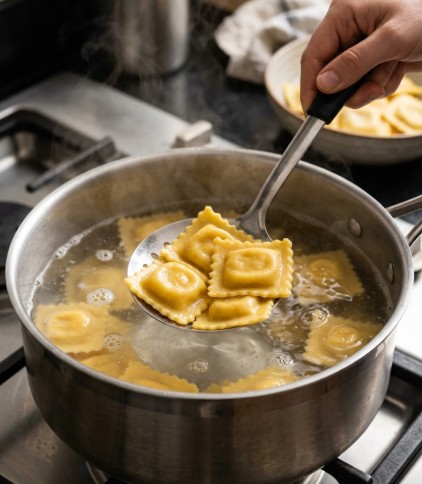
I boil salted water in a large pot and cook the pumpkin ravioli until they float. I save ½ cup of the pasta water before draining. I lift the ravioli gently with a slotted spoon to avoid tearing.
Step 2 — Brown the Butter

I melt unsalted butter in a wide skillet over medium heat. I watch for a light golden color and a nutty aroma, about 3–4 minutes. I remove the pan from the heat if the butter browns too fast.
Step 3 — Crisp the Sage
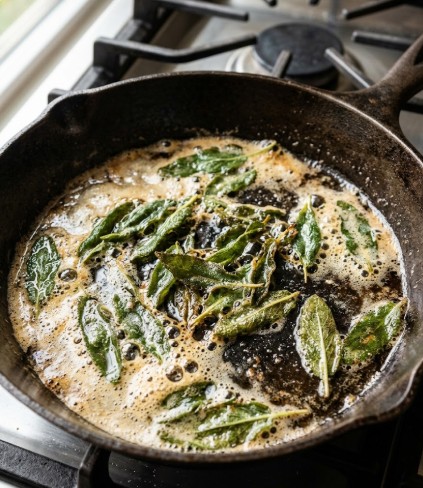
I add fresh sage leaves to the butter and fry them until crisp, about 2–4 minutes. The sage should become fragrant and slightly crunchy.
Step 4 — Build the Cream

I return the pan to low heat and add a splash of cream or milk. I stir in a few tablespoons of the reserved pasta water to loosen the sauce and reach a silky texture.
Step 5 — Finish and Serve
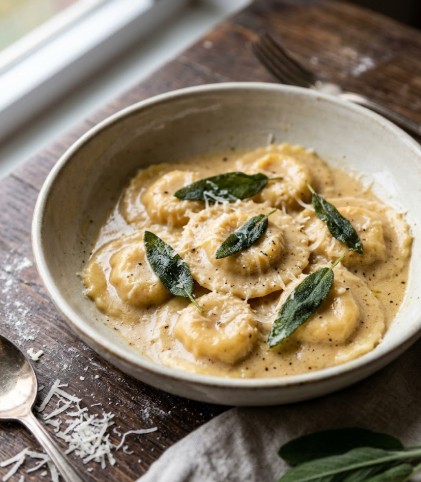
I fold grated Parmesan into the sauce until it melts. I toss the cooked ravioli in the sauce, adjust seasoning with salt and pepper, and top with the fried sage before serving.
Tips for Best Sauce For Pumpkin Ravioli
Make Extra and Store It
I double the sauce when I have time so I can freeze portions or keep them in the fridge. This saves time on busy nights and makes quick lunches. Label containers and use within a month for best flavor.
Build a Full Plate
I pair pumpkin ravioli with a crisp salad and a light white wine or a simple grilled protein. A green salad with vinaigrette cuts the richness. Grilled chicken or roasted vegetables add texture and protein.
Cook Ravioli Carefully
I cook ravioli just until al dente to avoid splitting or air pockets. Use a gentle boil and stir once or twice. Drain carefully and toss with sauce while hot.
What Goes With Butternut Squash Ravioli Sauce?
Ingredients I Use
- 18 oz butternut squash ravioli (store-bought or homemade)
- 1 stick (8 tablespoons) unsalted butter
- About 20 fresh sage leaves
- 2 tablespoons heavy cream
- 1/2 cup grated Parmesan cheese
- 1/2 teaspoon salt
- 1/2 teaspoon black pepper
- Optional: 1/2 cup reserved pasta water
- Optional garnish: toasted walnuts or pecans, extra grated Parmesan, fried sage
How I Make It
- Bring a large pot of salted water to a boil and cook the ravioli until they float. Reserve 1/2 cup of pasta water before draining.
- Melt the butter in a large skillet over medium heat. Cook until it turns a light golden brown and smells nutty, about 3–4 minutes.
- Add the sage leaves and let them crisp briefly, then remove a few for garnish if desired.
- Stir in the heavy cream and a little of the reserved pasta water, whisking to combine and prevent splatter.
- Add the Parmesan and whisk until smooth. Season with salt and pepper to taste.
- Gently fold the drained ravioli into the sauce, tossing carefully so they don’t break. Add more pasta water if the sauce needs loosening.
- Serve with extra Parmesan, crisped sage, and chopped toasted nuts for crunch.
Nutrition Info Per Serving (Approx.)
- Calories: 400 kcal
- Fat: 17 g (Saturated: 12 g; Monounsaturated: 3 g)
- Protein: 10 g
- Carbohydrates: 51 g
- Fiber: 4 g
- Sugar: 9 g
- Sodium: 705 mg
- Cholesterol: 98 mg
- Potassium: 573 mg
Final Words
I like to pair butternut squash ravioli with sauces that balance its sweetness. I often choose a brown butter and sage sauce for a nutty, warm flavor or a light lemon‑cream for a brighter note. I also enjoy a simple pesto or a balsamic glaze when I want something herbaceous or tangy.
Try small batches of different sauces and taste as you go. Use toasted nuts, fresh herbs, or a squeeze of citrus to tweak texture and acidity. Keep portions modest so the filling stays the star. Experimentation helps me find the best match for the meal and company.
FAQs
- What sauce works best to highlight butternut squash ravioli?
I like sauces that are simple and let the squash flavor shine. Brown butter with sage, a light cream sauce, or a lemony olive oil dressing all pair well. These keep the filling front and center without overpowering it. - Is a creamy sauce safe for people with food sensitivities?
I recommend checking ingredients first. Creamy sauces often contain dairy and sometimes nuts. For dairy-free needs, I use a blended roasted squash or a nut-free pesto made with sunflower seeds instead. - How long will a cooked sauce stay good in the fridge?
I store most pasta sauces in airtight containers for 3–4 days. If the sauce has cream, I aim to use it within 2–3 days for best quality. Reheat gently over low heat to avoid breaking the sauce. - What’s the easiest sauce to make when I’m short on time?
Brown butter and sage takes just minutes and needs only butter and fresh sage. Toss the ravioli in the butter, add a squeeze of lemon if you like, and serve. It’s fast and very flavorful. - How do I keep the ravioli from falling apart when I toss it with sauce?
I drain ravioli carefully and save a little pasta water. Add the ravioli to the pan with the sauce and toss gently, using a splash of pasta water to help the sauce cling without over-stirring. - Can I use a heavy tomato sauce with butternut squash ravioli?
I avoid very acidic or heavy tomato sauces because they can mask the sweetness of the squash. If you want tomato, I choose a light, slightly sweet tomato sauce and add herbs or cream to balance acidity. - How does a brown butter sauce compare to a creamy Alfredo-style sauce?
I find brown butter offers a nutty, subtle flavor that complements squash without adding heaviness. Alfredo is richer and makes the dish more decadent. Choose brown butter for balance, Alfredo for richness.
Conclusion
I recommend choosing a sauce that balances sweetness, savory depth, and texture to get the best from butternut squash ravioli. Brown butter with crisped sage gives a nutty, aromatic match. A light cream or Parmesan sauce adds richness without hiding the squash. Pesto or roasted vegetable sauces work when you want brighter, herb-forward flavors.
I value safety and simplicity in recipes. Use fresh ingredients, moderate salt and fat, and avoid burning butter or overcooking herbs. That keeps the sauce tasty and healthy.
I also consider eco-friendliness when I cook. Pick seasonal squash, local dairy and herbs, and minimize single-use packaging to lower your meal’s footprint.
For long-term success, learn one versatile sauce well, then adapt it with nuts, spices, or greens. That saves time and gives consistent results.
Try one of these sauces this week and refine it to fit your taste. You’ll get a reliable, delicious topping that highlights the ravioli every time.


