
Brenda Gantt Cornbread Dressing Recipe — Authentic Southern Holiday Staple
I love the way Southern cornbread dressing brings a holiday meal together. My aim is to show how Brenda Gantt’s approach turns simple cornbread and everyday ingredients into a rich, savory dish that feels like home.
I will walk through the key steps, tools, and tips you need to recreate that tender, well-seasoned dressing. The guide will cover timing, ingredient choices, and easy variations so you can make a reliable dish for your own table.
Key Takeaways
- Learn the basic steps to make a moist, flavorful cornbread dressing.
- Find practical tips for timing, tools, and simple ingredient swaps.
- Use clear instructions to serve and store the dressing with confidence.
What Brenda Gantt’s Cornbread Dressing Tastes Like to Me
I find this dressing soft and spoonable, not dry or crumbly.
Savory notes from butter-sautéed celery and onions give it a warm, homey flavor.
Creamy soup makes the texture smooth, while turkey broth adds a light, meaty depth.
The egg bread brings a gentle sweetness that balances the savory parts.
- Moist but not mushy
- Flavorful without being overwhelming
- Great with cranberry sauce and turkey gravy for contrast and extra richness
Ingredients for Brenda Gantt Cornbread Dressing
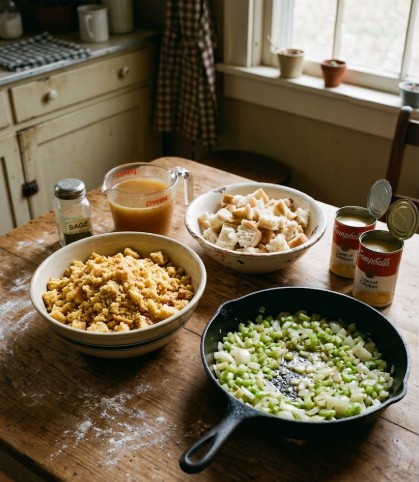
Cornbread foundation
- I use one batch of Brenda’s egg bread (made with five eggs), baked until soft and cooled, then crumbled.
Cooked vegetables
- I finely chop a full bunch of celery and 3–4 large onions (use three if the pot is very full).
- I sauté them in one stick of salted butter, plus any butter scraps, with just enough water to barely cover while cooking.
Creamy binder
- I add three cans of regular cream of chicken soup (avoid low-fat versions).
Extra bread layer
- I tear 10 slices of plain white sandwich bread, slightly stale, into pieces.
Liquids and seasoning
- I use 2–3 cups turkey broth for moisture, salt to taste, and optional sage for flavor.
Kitchen Tools I Use
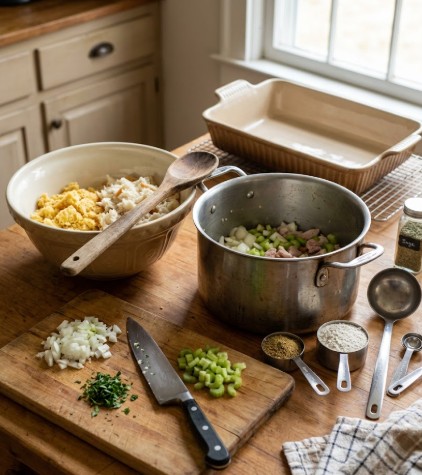
- Large stockpot for cooking veggies and soaking bread.
- Huge mixing bowl to toss ingredients evenly.
- Sharp knife and cutting board for chopping.
- Wooden or large spoon for stirring.
- Deep casserole dish (or two 9×13 pans).
- Measuring cups for accuracy.
Preparation and Cooking Time
- I prep: 30 minutes.
- I cook: 45 minutes for vegetables plus 30–45 minutes to bake.
- I plan: about 2 hours total.
- Yields: 12–16 servings.
How I Make Brenda Gantt’s Cornbread Dressing: A Clear Step-By-Step Guide
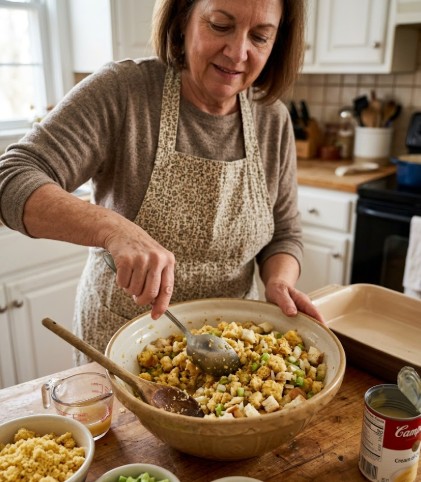
- Preheat oven to 350°F. I start by chopping a full bunch of celery and three large onions into small pieces. I melt one stick of butter in a large pot, add the vegetables and just enough water to cover, then simmer until very tender (about 30–45 minutes). I keep the cooking liquid.
- Lower the heat and stir in three cans of regular cream of chicken soup until the mixture is smooth and evenly combined with the vegetables. I leave the pot on low while I prepare the breads.
- I crumble cooled egg cornbread finely into a very large pan. I tear ten slices of white sandwich bread into small pieces, remove most crusts, and scatter those pieces over the cornbread without stirring.
- I pour the hot vegetable-and-soup liquid evenly over the layered breads, making sure the white bread soaks through. I let the mixture rest for 15–20 minutes so the breads absorb the liquid.
- After resting, I gently fold the mixture with a spoon, breaking up large chunks. I add 2–3 cups of turkey broth a little at a time until the dressing is very moist but not soupy. I taste and add salt if needed.
- I transfer the mixture to a deep casserole dish and bake 30–45 minutes until it’s hot, bubbly, and slightly set on top. I serve with a spoon so it stays soft.
Ways I Tweak and Serve Brenda Gantt Cornbread Dressing
I often change the dressing to fit the meal or guest tastes. Below are simple swaps and pairings I use to add flavor, texture, or make serving easier.
- Make it meaty: I brown 1 pound of breakfast sausage and stir it in before baking. The sausage gives the dressing more body and can turn it into a main dish for a casual dinner.
- Add giblets for depth: I chop cooked turkey or chicken giblets finely and fold them into the mix. This boosts the poultry flavor and makes the dressing taste more traditional.
- Mushroom and bacon boost: I sauté 8 oz of sliced mushrooms with 6 strips of bacon (crumbled), then mix them in. The result is smoky, earthy, and richer without hiding the cornbread base.
- Herb-forward version: I add 1–2 tablespoons dried sage or about 1/4 cup fresh chopped thyme, rosemary, and parsley. The herbs lift the dish and give a familiar stuffing-style aroma.
I also use presentation and serving tricks that change the eating experience:
- Individual muffins: I bake the dressing in greased muffin tins for single servings. The edges get crispy while the centers stay soft, and these reheat well.
- Pair with turkey and sauces: I serve the dressing next to roasted turkey, gravy, and cranberry sauce so the dressing soaks up gravy and the cranberries add a sweet-tart contrast.
- Serve with seafood: I sometimes pair the dressing with baked or fried fish, shrimp, or a Low Country-style boil. Its mild savory flavor complements seafood without overpowering it.
Quick guide to pairings and add-ins
| Purpose | What I add or serve | Effect |
|---|---|---|
| More hearty | Breakfast sausage | Makes it a main, adds savory fat |
| Deeper poultry flavor | Chopped giblets | Traditional, richer taste |
| Smoky/earthy | Bacon + mushrooms | Complex umami notes |
| Herbaceous | Sage or fresh herbs | Classic stuffing aroma |
| Easy portions | Muffin tin baking | Crispy edges, neat servings |
| Classic holiday plate | Turkey, gravy, cranberry | Balanced sweet, savory, tangy |
| Nontraditional pairing | Fish/seafood | Versatile side for seafood meals |
I keep measurements flexible to match taste. Small changes can make the dressing feel new while staying true to its comforting roots.
Essential Tips for Perfect Brenda Gantt Cornbread Dressing
I always start by keeping celery in the mix. Use plenty; it cooks down with onions and butter to build the dish’s core flavor. Celery adds a mild crunch and a savory note that onions alone can’t match.
I never substitute the regular cream of chicken soup with low-fat versions. Full-fat soup gives the dressing a thick, silky body. If I make my own, I keep it rich so the dressing won’t turn out thin or watery.
I prefer slightly stale bread over fresh slices. Let bread sit out overnight or toast it lightly so it soaks up liquid without becoming gluey. Stale bread holds shape and gives the dressing a better, more pleasing texture.
Moisture control matters most. I add turkey broth slowly and stop when the mixture feels very moist but not soupy. The mix should be looser than you expect before baking because it firms up in the oven. I record the exact broth amount that works for me so I can repeat it.
I always let the combined mixture rest for 15–20 minutes before baking. This pause lets the bread and cornbread absorb liquids evenly. Skipping it often leaves dry pockets or overly soggy spots.
Remember that everything is already cooked before it goes in the oven. The bake is just to meld flavors and warm the dish through. Because of that, I’ll often prepare the mixture a day ahead, keep it chilled, and bake on the day I need it—just add 15–20 minutes to the bake time if it’s cold from the fridge.
I save and freeze homemade turkey broth whenever I can. After roasting a bird, I add some water to the roasting pan to pull up drippings and make a rich broth. I use what I need for the dressing and freeze the rest in labeled containers for soups or next year’s dressing.
Quick checklist I use every time:
- Use plenty of celery with onions and butter.
- Choose full-fat cream of chicken soup (or make a rich homemade version).
- Use stale or lightly toasted bread for proper absorption.
- Add turkey broth gradually; aim for a very moist, loose mix.
- Let the mixture rest 15–20 minutes before baking.
- Prep ahead if needed; bake longer if starting cold.
- Freeze extra homemade turkey broth for later use.
If you want a simple measuring guide, I keep a note in my recipe card: start with about 3 cups of broth for a standard 9×13 pan, then add 1/4 cup at a time until the texture is right. Adjust based on how dense your bread and cornbread are.
I also watch the final bake: it should be heated through and slightly set, not dry. If the top browns too fast, I tent it with foil for the last part of baking to keep moisture inside.
Storage and Reheating Guidance
Ingredients I keep on hand
- Cooked cornbread dressing leftovers.
- Turkey or chicken broth to restore moisture.
- Small amounts of butter or olive oil for richness.
- Airtight containers or heavy-duty freezer bags.
Tools I use
- Microwave-safe dishes for single servings.
- Oven-safe casserole dish or shallow pan for larger portions.
- Aluminum foil to cover while reheating.
- Measuring cup or small ladle for adding broth.
How I store and warm leftovers
- Cool dressing to room temperature, then place it in an airtight container. I refrigerate for up to four days.
- For a single plate, I spoon the portion into a microwave-safe dish, add a tablespoon of broth, cover loosely, and heat 1–2 minutes. I stir halfway if needed.
- For a whole casserole, I spread it in an oven-safe dish, add a little broth around the edges if it looks dry, cover with foil, and bake at 325°F for about 20–25 minutes until evenly heated.
- If the dressing feels too dry after heating, I add a splash more broth and stir gently to restore a moist texture.
Video and visual tips I follow
- Watch a step-by-step demo to see the texture and moisture level to aim for.
- Pause the video when the cook checks doneness so I can compare color and bubbling.
- Note how much broth they add when refreshing dry dressing; I copy that amount for similar batches.
Extra notes I rely on
- Freeze portions in sealed bags for longer storage; thaw overnight in the fridge before reheating.
- Avoid overbaking when reheating. Covering the dish keeps the top from drying out.
- Reheat only the portion I plan to eat to preserve quality of remaining dressing.
- Label containers with the date so I use older portions first.
Common Queries and FAQs About Brenda Gantt Cornbread Dressing
Q: How is dressing different from stuffing?
In the South, dressing means the bread mixture bakes in a casserole, while stuffing cooks inside the bird. I prefer dressing because baking in a dish gives more even texture and is safer for large batches.
Q: Can I prepare this dressing the day before?
Yes. I assemble the full mixture, put it in the baking dish, cover tightly, and refrigerate up to 24 hours. Add about 15–20 minutes to baking time when starting from cold.
Q: What causes dry dressing and how do I fix it?
Dry results from not enough liquid or overly dry bread. I make the mix slightly wetter than I think it should be before baking. Use the full broth called for, don’t discard vegetable cooking liquid, and choose a soft cornbread.
Q: Are other canned cream soups OK to use?
You can swap, but I recommend cream of chicken for the most traditional taste. Cream of mushroom gives an earthier flavor and darker color; cream of celery tastes milder and highlights veggies.
Q: What is Brenda’s Egg Bread, and can I use plain cornbread?
Brenda’s egg bread is a cornbread made with extra eggs for a soft, cake-like crumb. I use any soft, tender cornbread — not dry, sugary, or studded with jalapeños or corn — to keep the dressing moist and authentic.
Q: Do I really need to use an entire bunch of celery?
Yes. Celery gives the aromatic base that defines the flavor. I use the whole bunch because it softens and sweetens as it cooks with onions and butter, blending into the dish rather than tasting raw.
Q: Is it safe to freeze the dressing?
Yes. I freeze up to 3 months, either before or after baking. For unbaked dressing, thaw overnight in the fridge before baking. For baked dressing, thaw and reheat covered at 325°F, adding a little broth if it seems dry.
Q: Why avoid fresh white bread in the mix?
Fresh white bread holds too much moisture and can turn gummy when mixed with liquids. I use slightly stale bread so it soaks up flavor without becoming pasty, giving a better texture.
- Quick tips I follow:
- Use soft, not crumbly cornbread.
- Keep the mix moist before baking.
- Cook celery and onions slowly to develop flavor.
- Refrigerate assembled dressing if making ahead, then extend bake time.
FAQs
- What makes Brenda Gantt’s cornbread dressing different from other recipes?
I find her version uses a very soft, egg-rich cornbread as the base and combines it with white sandwich bread for texture. The dressing is seasoned simply but well — celery, onion, sage, and poultry seasoning — and uses broth and often a bit of cream soup to keep it moist. - Is this dressing safe to serve at a large family meal?
Yes, if you follow basic food safety. Cool cooked components quickly, keep the mixture chilled if you’re preparing it a day ahead, and bake until it reaches 165°F (74°C) in the center. That prevents foodborne bacteria from growing. - How do I keep the dressing moist without it becoming soggy?
I add broth gradually and test the texture. The goal is moist but not wet. Using a mix of crumbled cornbread and torn white bread gives structure. If it seems dry after baking, stir in a little warm broth before serving. - Can I make the dressing ahead of time, and how should I store it?
I often assemble the dressing a day ahead, cover it tightly, and refrigerate. Bake it the next day, or bake it fully and reheat gently. If refrigerating the unbaked mix, let it sit at room temperature for 20–30 minutes before baking for even cooking. - How does Brenda Gantt’s dressing compare to plain cornbread stuffing?
Her dressing blends cornbread with white sandwich bread and richer seasoning, which gives a softer, more layered texture and deeper savory flavor than a plain cornbread-only stuffing. - Can I adapt the recipe for dietary needs, like lower sodium or gluten-free?
I recommend simple swaps: use low-sodium broth and reduce added salt for lower sodium. For gluten-free, use gluten-free cornbread and bread. Be aware the texture will change with substitutions. - What are common mistakes to avoid when making this dressing?
I avoid overbaking, which dries it out, and under-seasoning the mix. Also, don’t add all the liquid at once — it’s easier to add more broth than to fix an overly wet dressing.

