
Cowboy Pork Chop Recipe — Grilled Perfection and Simple Sides
You want a steakhouse-worthy pork chop without leaving home. I’ll show you how to get a thick, bone-in chop seared for a crisp, charred crust and finished tender and juicy, plus how to top it with a buttery, tangy glaze that lifts every bite. You can make a LongHorn-style Cowboy Pork Chop at home that tastes restaurant-rich but stays simple and fast.
I’ll walk you through the key ingredients, the pan- or grill-based technique that locks in juices, and the quick homemade butter sauce that adds savory and citrus notes. Expect clear tips to avoid dryness, easy side ideas, and simple reheating advice so leftovers stay great.
Key Takeaways
- Follow a short set of steps to get a charred crust and juicy interior.
- Use a few pantry staples and a buttery glaze for bold, balanced flavor.
- Simple prep and reheating tips keep results consistent and fast.
Overview of the LongHorn Steakhouse Cowboy Pork Chop Recipe
I explain why this recipe tastes like a steakhouse meal, what key flavors drive it, and what cooking steps set it apart.
Recipe Inspiration and History
I trace the inspiration to classic American steakhouse cooking that favors thick, bone‑in cuts. LongHorn’s version likely grew from a desire to treat pork like a steak — seared hard, seasoned boldly, and finished with a simple glaze or butter baste. That approach echoes regional Texas and Southern grilling traditions where high heat and smoke shape flavor.
The dish uses a cowboy chop: a large, bone‑in pork loin chop about 1–2 inches thick. I note that restaurants choose this cut for its meatiness and visual appeal. The bone helps keep the chop juicy during high‑heat cooking.
Home cooks adapted the steakhouse method by using cast‑iron skillets, high heat, and short resting times. I recommend following those steps to replicate the restaurant texture and crust.
Signature Flavors Explained
I focus on three flavor layers: seasoning, sear, and finishing glaze. For seasoning, salt, black pepper, and smoky paprika form the base. These spices boost the pork’s natural savor without hiding it.
For the sear, hot oil and a cast‑iron pan or grill create a caramelized crust. That crust adds a savory, slightly bitter contrast to the meat’s sweetness. I aim for a medium internal temperature (around 145°F) to keep the chop tender.
For finishing, many recipes add a butter baste or a tangy glaze such as balsamic orange. The butter adds richness and mouthfeel. A citrus‑based glaze gives brightness and balances the pork’s fattiness. I recommend tasting the glaze and adjusting sugar or acid to fit your preference.
What Makes This Dish Unique
I point out three practical differences that set the cowboy pork chop apart: cut choice, cooking technique, and finishing touch. The thick, bone‑in cut yields a steak‑like eating experience. It looks impressive on the plate and holds up to high heat.
The cooking technique—high‑temperature sear followed by short finish—creates a pronounced crust while keeping the interior juicy. This contrasts with thinner chops that dry out quickly.
The finishing element, whether butter basted or glazed, adds a restaurant‑style polish. That final step transforms a simple seared chop into a balanced dish with savory, fatty, and bright notes working together.
Essential Ingredients for Cowboy Pork Chop
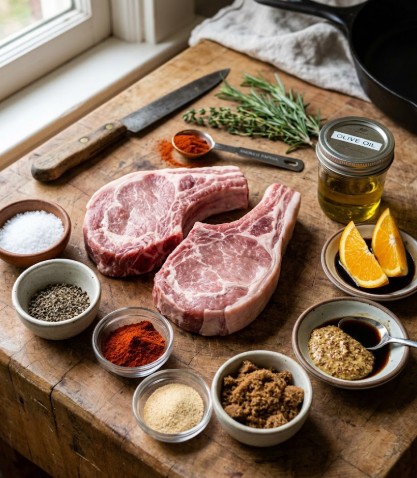
I focus on three areas that make these pork chops taste like a steakhouse dish: the right cut of meat, the precise seasonings, and a simple but effective marinade. Each part shapes texture and flavor.
Recommended Pork Chop Cuts
I choose thick, bone-in pork chops for this recipe. A 1.5–2 inch thick chop keeps the interior juicy while the exterior gets a good char. The bone adds flavor and helps the meat cook more evenly.
Look for chops labeled “center-cut” or “rib chop.” These contain more marbling than lean loin chops, which boosts tenderness. Frenched or long-bone chops give a dramatic presentation but are optional.
If you prefer pork loin, pick chops at least 1 inch thick and watch the cook time carefully. For sous-vide or low-and-slow methods, slightly thinner chops work, but for a grilled, steakhouse result, thicker bone-in cuts are best.
Key Spices and Seasonings
I rely on a simple rub to bring bold, balanced flavor without masking pork. Use kosher salt and coarsely ground black pepper as the base. They draw out flavor and create a savory crust.
Add smoked paprika and garlic powder for warmth and a slight smoky note. A small amount of brown sugar helps caramelize the exterior and pairs well with a butter baste. Optional: a pinch of cayenne or chili powder for mild heat.
Measure by weight or level teaspoons for consistency. For two large chops, try 1½ teaspoons kosher salt, ¾ teaspoon black pepper, 1 teaspoon smoked paprika, ½ teaspoon garlic powder, and 1 teaspoon brown sugar. Pat the rub onto both sides and let the chops rest at room temperature 20–30 minutes before cooking.
Marinade Components
I use a short marinade to boost juiciness and add bright flavor without turning the meat mushy. Acid plus oil is the base: use 2 tablespoons olive oil with 1 tablespoon orange juice or balsamic orange glaze for citrus brightness. The acid tenderizes the surface and adds tang.
Include 1 teaspoon Dijon mustard to help emulsify and stick the marinade to the meat. A tablespoon of soy sauce or Worcestershire adds umami and deepens the savory profile. Keep salt low in the marinade if the rub already contains salt.
Marinate for 30 minutes to 2 hours in the refrigerator. Longer can change texture because of the acid. Bring chops to room temperature before cooking for even searing.
Kitchen Equipment and Preparation Tips
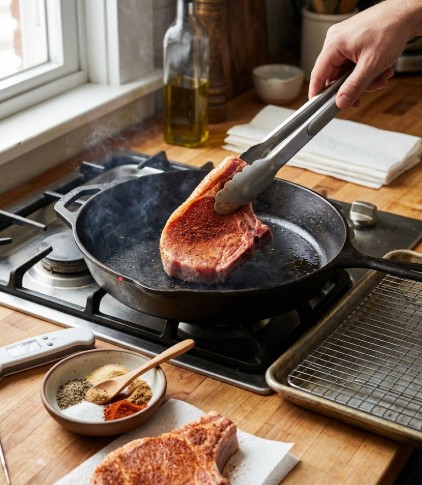
I list the tools I always reach for and the exact steps I take to prep pork chops so they sear evenly and stay juicy. Read the tool list and the prep steps to get a reliable result.
Must-Have Tools
I use a heavy-bottomed cast iron skillet for a true steakhouse crust. A 10–12 inch skillet fits two large chops without crowding, which keeps the pan hot and helps browning.
I keep a meat thermometer (instant-read) within arm’s reach to check internal temp. I pull the chops at 135°F for medium-rare to medium, then rest them to reach 140–145°F.
Other items I use every time:
- Tongs with a good grip for turning without piercing.
- A small bowl for the rub and a spoon to shake spices on evenly.
- A wire rack and baking sheet for resting the chops so juices don’t pool.
- Paper towels to pat chops very dry before seasoning.
Prepping the Pork Chops
I buy bone-in pork chops about 1 to 1.5 inches thick for best flavor and moisture. Thicker chops tolerate a high-heat sear and gentle finish.
I pat each chop completely dry with paper towels. Dry surface = better crust. Then I apply a thin coat of oil and press a dry rub (salt, pepper, garlic powder, paprika, brown sugar) into the meat so it adheres.
I let the seasoned chops rest at room temperature for 20–30 minutes before cooking. This evens the internal temp and helps the sear. If I’m short on time, I still let at least 10 minutes.
I always preheat the skillet until it’s smoking lightly and test with a drop of water. If the water dances, the pan is ready.
Step-by-Step Cooking Instructions
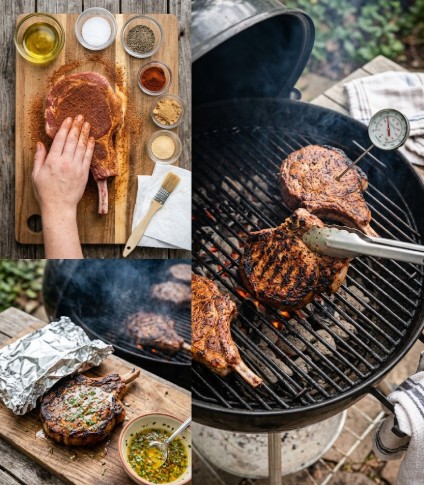
I’ll walk you through prepping, grilling, and finishing the cowboy pork chops so they come out juicy, well-seared, and flavorful. Follow the times, temperatures, and simple techniques for best results.
Marinating Process
I start by trimming excess fat and patting the chops dry with paper towels. Dry meat sears better. Then I brush each chop lightly with olive oil so the rub adheres.
For the rub I mix: 1 tbsp kosher salt, 1 tsp black pepper, 1 tsp smoked paprika, 1 tsp brown sugar, 1/2 tsp garlic powder, and 1/4 tsp cayenne (optional). I rub this evenly on both sides and press it into the meat.
I refrigerate the chops, uncovered, for 30 minutes to 2 hours. Short marinating time keeps the flavor on the surface and helps form a crust. Remove the chops 20 minutes before grilling so they come to near room temperature.
Grilling the Pork Chops
I preheat my grill to medium-high, aiming for 400–450°F (204–232°C). A clean, oiled grate prevents sticking. For a 1- to 1.5-inch pork chop, I sear 3–4 minutes per side over direct heat to get a good crust.
After searing, I move the chops to indirect heat (or lower the flame) and continue cooking with the lid closed. I use an instant-read thermometer and pull the chops at 140–145°F (60–63°C) for slightly pink, juicy meat. Expect an additional 4–8 minutes depending on thickness.
I avoid flipping more than once. Constant flipping loses juices and prevents a proper crust. If flare-ups occur, I move chops away briefly and lower the heat.
Finishing Touches
I remove the chops to a cutting board and tent them loosely with foil for 5–7 minutes. This resting raises the internal temp a few degrees and lets juices redistribute.
While resting, I make a quick pan sauce if desired: melt 1 tbsp butter in a skillet, add 1/4 cup chicken stock and 1 tsp brown sugar, simmer 1–2 minutes, then stir in a splash of apple cider vinegar for brightness. Spoon the sauce over the chops.
I slice against the grain for tender bites and serve immediately. Leftovers keep well in the fridge for 3–4 days.
Homemade Cowboy Butter Sauce
I make a bright, garlicky butter that adds smoky heat and fresh herbs to the pork chop. The sauce is quick to mix and holds up well on a hot chop or as a dipping sauce for sides.
Butter Sauce Ingredients
I use unsalted butter as the base so I can control salt. For one batch I start with 1/2 cup (1 stick) softened butter, 2 cloves minced garlic, and 1 tablespoon Dijon mustard.
Fresh herbs give lift: I add 1 tablespoon chopped parsley and 1 tablespoon chopped chives. For brightness I use 1 teaspoon lemon zest and 1 teaspoon lemon juice.
For the smoky, spicy profile I add 1/2 teaspoon smoked paprika and 1/8–1/4 teaspoon cayenne (adjust to taste).
I finish with 1/4 teaspoon freshly ground black pepper and 1/2 teaspoon kosher salt, then a splash of Worcestershire or a tiny pinch of anchovy paste if I want deeper umami.
Sauce Preparation Steps
I let the butter soften at room temperature for 15–30 minutes so it mixes smoothly. I finely mince the garlic and herbs to keep the sauce spreadable and avoid large chunks on the pork.
I combine butter, garlic, mustard, lemon zest, lemon juice, smoked paprika, cayenne, salt, and pepper in a bowl. I use a fork or silicone spatula to mash and blend until the mixture is uniform and slightly whipped.
If I plan to serve it warm, I spoon the butter into a small heatproof dish and set it on the warm pan for a minute before topping the chop. For make-ahead, I form into a log on plastic wrap, chill, and slice when ready.
Best Side Dishes to Serve With Cowboy Pork Chop
I pick sides that match the pork chop’s smoky, peppery crust and its juicy center. Rich, buttery potatoes and crisp vegetables balance the meat, while a bright sauce or slaw cuts through the fat.
Classic Steakhouse Sides
I serve roasted garlic mashed potatoes or a simple baked potato with butter and chives alongside the pork chop. The potatoes soak up pan juices and add a creamy contrast to the chop’s crust.
For vegetables, I choose pan-seared green beans tossed with lemon and toasted almonds or oven-roasted Brussels sprouts with a light balsamic glaze. Both add a crisp texture and a bit of acidity.
I often add a warm dinner roll or garlic bread to sop up sauce. If you prefer starch variety, try roasted fingerling potatoes with rosemary for a rustic touch.
Creative Pairings
I like to pair the chop with a tangy apple slaw or quick pickled red cabbage to echo classic pork-and-apple flavors. The sweetness and acid brighten the plate and cut the richness.
For a southwestern twist, I serve charred corn salad with cilantro, lime, and cotija cheese. It complements the cowboy seasoning and adds fresh, smoky notes.
If I want something hearty, I pick creamed corn or cheesy polenta. Both bring comfort and a velvety mouthfeel that pairs well with the chop’s bold seasoning.
Tips for Achieving Steakhouse Quality at Home
I start by choosing the right pork chop: look for thick cuts with good marbling and a bone if possible. Thick chops sear well and stay juicy during cooking.
I season simply but boldly: salt at least 30 minutes before cooking or overnight in the fridge for deeper flavor. I add black pepper and a light garlic or smoked paprika rub just before searing.
I use high heat to form a crust, then lower the heat to finish cooking. A heavy skillet or grill gives the best sear. I tend to measure doneness with an instant-read thermometer to avoid overcooking.
I rest the meat for 5–10 minutes after cooking so juices redistribute. This step keeps the chop tender and makes slicing neater.
I control smoke and flavor by using clarified butter or a mix of oil and butter for pan cooking. For a smoky edge, I finish on a hot grill or add a quick flame kiss with a torch.
I pair simple sides and a pan sauce to elevate the dish. A quick pan deglaze with broth, wine, or lemon and a pat of butter makes a steakhouse-style sauce in minutes.
I keep tools ready: tongs, thermometer, and a heavy pan or grill grate. Consistent technique matters more than fancy gear.
Serving and Presentation Ideas
I focus on clean plates, bold contrasts, and simple garnishes that make the pork chop look like a steakhouse dish. I pair the chop with one starch and one vegetable, and I keep sauces controlled so the bone-in chop stays the star.
Plating Suggestions
I place the cowboy pork chop slightly off-center so the bone points outward and adds height. I rest the chop on a small smear of sauce (about 1–2 tablespoons) rather than pooling it, which keeps the crust crisp and the plate tidy.
For sides, I pick one creamy item and one bright vegetable. Examples:
- Creamy: garlic mashed potatoes or whipped sweet potato (serve 3–4 tbsp).
- Bright: charred asparagus or sautéed green beans (about 4–6 spears/pieces).
I use a warm plate to help keep the meat hot. Leave a 1–1.5 inch gap between the chop and the sides so each element reads clearly. Finish with a small spoonful of pan jus near the bone to add shine without sogginess.
Garnishing Techniques
I keep garnishes edible and functional. A sprig of fresh thyme or a few chopped chives add color and complement pork flavors. I avoid heavy herbs that compete with the glaze.
For texture, I add 1–2 tablespoons of crispy fried onions or toasted nuts at the plate edge. I use citrus sparingly: a thin lemon wheel or a light zest over the meat brightens the dish without overpowering it.
I finish with a quick brush of melted butter or a light drizzle of balsamic reduction across the plate lines. I wipe the rim with a clean cloth so the presentation stays sharp.
How to Store and Reheat Leftovers
I keep pork chops and glaze separate when I save leftovers. I chill food quickly, store in airtight containers, and use or freeze within recommended times to keep flavor and safety.
Proper Storage Methods
I let the cooked pork chop cool for about 30–60 minutes at room temperature, then place it in the fridge. I use airtight containers or heavy-duty zipper bags to prevent air and moisture. If the glaze is still on the chop, I sometimes scrape the glaze into a small container and store it separately to keep the meat texture firmer.
I label each container with the date. I follow the 3–4 day refrigerator rule for cooked pork. For longer storage, I freeze chops and glaze in freezer bags, squeeze out excess air, and expect best quality for 2–3 months.
Quick tips:
- Chill within 2 hours of cooking (1 hour if above 90°F/32°C).
- Use shallow containers for faster cooling.
- Thaw frozen chops in the fridge overnight, not on the counter.
Best Ways to Reheat
I reheat pork chops to an internal temperature of 165°F (74°C) to ensure safety. I prefer the oven or a skillet to keep the crust and glaze texture. In the oven, I set 300–325°F, place chops on a baking sheet with a little broth or water, and cover loosely for 10–15 minutes depending on thickness.
For a skillet, I add a teaspoon of oil or butter, warm on medium-low, cover, and heat 3–5 minutes per side until hot through. If I use a microwave, I cut the chop into slices, place them in a single layer, cover with a damp paper towel, and heat in 30–45 second bursts, flipping between bursts.
Reheat checklist:
- Target temp: 165°F / 74°C.
- Restore moisture with a splash of broth or reserved glaze.
- Reheat only once; discard leftovers after reheating and not finishing.
Nutritional Information and Dietary Notes
I break down the main nutrition facts and offer practical swaps to lower calories, fat, or sodium. Read the calorie and macro details, then pick substitutions that match your diet or health goals.
Calorie Breakdown
I estimate one serving of the cowboy pork chop at about 620–740 calories, depending on portion size and butter used. The chop itself provides most calories from protein and fat; a typical split is roughly 45% fat and 55% protein of total calories when prepared with a butter baste and seared exterior.
Key nutrients to watch:
- Protein: High — useful if you want to meet daily protein targets.
- Fat: Moderate to high — saturated fat increases with extra butter.
- Sodium: Can be high if the recipe or seasoning uses added salt or store-bought rubs.
If you track macros, weigh your cooked chop. That gives the most accurate calorie and macro counts. Restaurant versions can be higher in calories than a home-cooked portion.
Ingredient Substitutions
I suggest simple swaps to cut calories, saturated fat, or sodium while keeping flavor.
- To lower fat: use 1–2 tsp olive oil instead of a large butter baste, or finish with a small pat of butter only at the end.
- To reduce sodium: choose low-sodium rubs or use fresh herbs (rosemary, thyme) and lemon zest for flavor instead of heavy salt.
- To keep moisture with less fat: brine the pork in a light salt-and-sugar solution for 30–60 minutes, then pat dry before searing.
- To make it lighter overall: trim visible fat from the chop and serve with high-fiber sides like roasted vegetables or a mixed green salad.
Use a kitchen scale and nutrition calculator after substitutions to update calorie and macro totals for your plate.
FAQs
Q: How do I know the cowboy pork chop will stay juicy?
I sear the thick, bone-in chop over high heat to lock in juices, then finish it with lower heat or in the oven. I use a meat thermometer and remove the chop at 140–145°F, then rest it 5–10 minutes to let carryover heat finish cooking.
Q: Is this recipe safe to serve to guests?
Yes. I follow safe food practices: clean surfaces, avoid cross-contamination, and cook pork to the safe internal temp above. Proper resting time also ensures even temperature and safety.
Q: How does this method compare to other cooking styles?
Compared with thin pan-frying, the cowboy method gives a better sear and juicier center because of the thicker cut and bone. Compared to slow-cooking, it delivers more char and a faster cook time while still tender.
Q: What maintenance or prep do I need before cooking?
I pat chops dry, season well, and let them sit at room temperature 20–30 minutes for even cooking. I also preheat my skillet or grill and have tongs, a thermometer, and a resting tray ready.
Q: Can I use different seasonings or glazes?
Yes. I often swap the rub or use a balsamic-orange glaze for tang. Adjust salt and sugar levels to avoid burning during searing.
Q: Does the bone affect cooking and flavor?
The bone helps the chop cook more evenly and adds depth of flavor. I leave it on for a steakhouse-style result.
Q: What should I do if my chop dries out?
If it’s overcooked, I slice it thin and serve with a sauce or pan jus to add moisture. Next time I’ll lower final heat and watch the thermometer more closely.
Conclusion
I found the Cowboy Pork Chop method reliable and easy to repeat at home. The bone-in, thick-cut chop sears well and holds juiciness, while a butter baste and tangy glaze add deep flavor without fuss.
The recipe uses simple, safe ingredients and basic techniques that keep waste low and cleanup quick. That makes it an eco-friendly choice compared with complex, multi-step dishes that need many single-use items.
I recommend choosing quality, well-trimmed chops and a trusted steak seasoning for consistent results. Using fresh butter and a modest glaze keeps the dish balanced and suitable for regular family meals.
If you want a long-term go-to, this approach scales well and stays flavorful whether you cook one chop or several. I encourage you to try it, adjust the seasoning to your taste, and make it part of your weeknight or weekend rotation.
Give the recipe a shot and see how a simple technique can deliver restaurant-style pork chops at home.


