
Buc-Ees Bohemian Garlic Beef Jerky Recipe — Authentic Homemade Method and Tips
I make beef jerky at home because I enjoy the process and the result. I use my smoker, oven, or food dehydrator depending on the day, and I like that homemade jerky lets me control flavor and texture. Store-bought Buc-ee’s Bohemian Garlic jerky is a favorite for its bold garlic taste and convenience, but the price can be hard to justify.
So I learned to recreate that flavor at home. The copycat version gives the same savory, garlicky bite for a fraction of the cost, and making it isn’t as hard or time-consuming as people expect. With a few simple ingredients and basic equipment, I get tender, flavorful jerky that beats the store buy.
Key Takeaways
- Homemade jerky delivers strong garlic flavor and better value than store-bought.
- You can make similar texture and taste with common kitchen tools and simple swaps.
- Proper slicing, seasoning, and storage are key to great, long-lasting jerky.
What I Taste in Buc-ee’s Bohemian Garlic Beef Jerky
I get a bold garlic punch right away.
Behind that, brown sugar brings a soft sweetness while paprika adds a smoky edge.
Soy and Worcestershire give savory, tangy depth, and black pepper adds mild warmth.
The texture stays chewy but not tough, with a slight sticky glaze from the marinade.
I find it salty, smoky, and garlicky all at once, which makes me keep reaching for another piece.
Cutting the Strips for Jerky
I freeze the beef for 1–2 hours so it firms up and is easier to cut. I use a very sharp knife to make thin strips about 1/4 inch thick.
I always slice against the grain to keep the jerky tender and easy to chew. Slicing with the grain makes pieces tougher and stringy.
I trim away any visible fat because fat slows drying and can cause the jerky to spoil sooner. I work slowly and carefully here — neat, even slices pay off when the jerky is done.
Buc-ee’s Bohemian Garlic Beef Jerky Ingredients
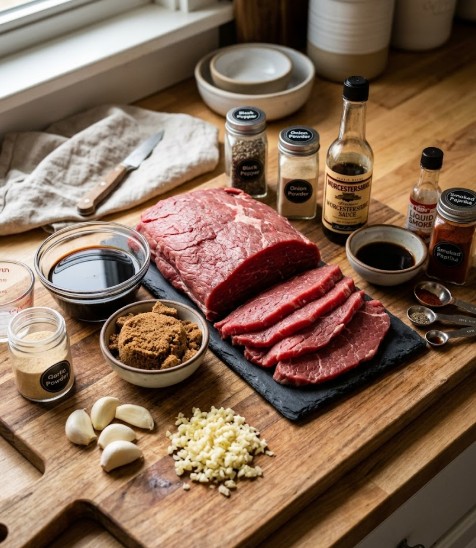
I use simple, easy-to-find items to build bold garlic flavor and a chewy texture. Below I list what I use and why each part matters.
- Beef — 2 lb (top round or eye of round)
I choose lean cuts so the jerky lasts longer and stays firm. These muscles slice thin and give the right chew without excess fat. - Soy sauce — 1/2 cup
I rely on soy sauce for salt and umami. It also helps the meat absorb flavor and tenderize during the soak. - Brown sugar — 1/4 cup
I add brown sugar to balance salty notes and give a touch of caramelized stickiness as the jerky dries. - Garlic — 4 cloves minced or 1 tbsp garlic powder
Garlic is the main flavor I want to stand out. Fresh minced garlic gives a sharp bite; garlic powder is a handy swap. - Worcestershire sauce — 2 tbsp
I use this for a deeper, tangy layer that ties the sweet and savory elements together. - Black pepper — 1 tsp
I add freshly ground pepper for a mild heat and extra complexity. - Onion powder — 1 tsp
I include onion powder for subtle savory sweetness that rounds out the flavor. - Smoked paprika — 1/2 tsp
I use smoked paprika to add a warm, smoky note and a light red color without spiciness. - Liquid smoke — 1 tsp (optional)
I add liquid smoke only when I oven-dry the jerky. It gives a barbecue-like smokiness if I can’t use a smoker or dehydrator.
Tips I follow: slice the meat against the grain for tenderness, trim fat to reduce spoilage, and adjust soy or sugar to taste.
Helpful Swaps
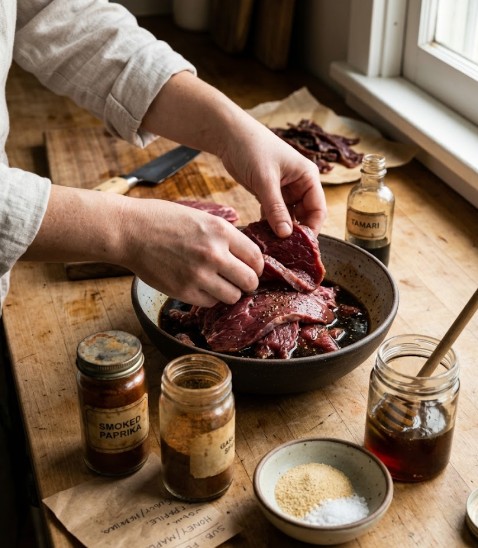
If I’m missing an ingredient, I swap smartly to keep flavor and texture. For beef, I use flank or sirloin instead of top or eye of round — they slice thin and stay lean. For soy sauce, I grab tamari or coconut aminos when I need gluten-free options. I replace brown sugar with honey or maple syrup for a different sweetness and slightly sticky glaze. When fresh garlic is gone, I use ½ teaspoon garlic salt but cut back on soy sauce to control saltiness. If I don’t have liquid smoke, smoked paprika gives a good smoky note.
- Meat: flank or sirloin
- Soy: tamari, coconut aminos
- Sweet: honey, maple syrup
- Garlic: garlic salt (reduce soy)
- Smoke: smoked paprika
Kitchen Gear I Use
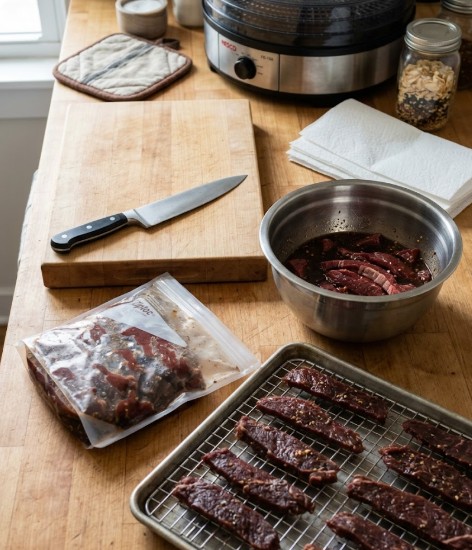
I keep gear simple and reliable so jerky prep stays easy.
- Sharp chef’s knife — I slice thin, even strips safely and quickly.
- Sturdy cutting board — I use one that won’t slip while I trim meat.
- Mixing bowl — I mix and hold the marinade in one place.
- Sealable bag or container — I marinate the beef in the fridge for even flavor.
- Oven or food dehydrator — I use a dehydrator for even drying, or an oven if needed.
- Baking sheet with wire rack — I place strips on racks so air circulates all around.
- Paper towels — I pat strips dry after marinating to speed up drying.
How I Make Buc-ee’s Bohemian Garlic Beef Jerky
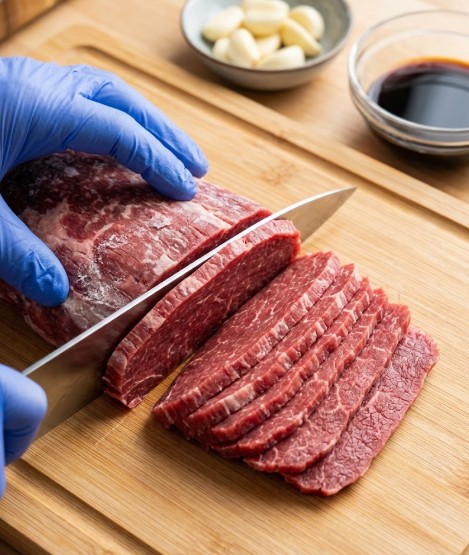
I start with 2 pounds of lean beef—top round or eye of round work best. I chill the meat in the freezer for 1–2 hours until it firms up. That makes slicing thin, even strips much easier.
I cut the beef into roughly 1/4-inch slices and trim any fat. I slice against the grain when I want a tender bite, and with the grain if I want chewier jerky.
For the marinade I combine:
- 1/2 cup soy sauce
- 1/4 cup brown sugar
- 4 cloves garlic, minced (or 1 tablespoon garlic powder)
- 2 tablespoons Worcestershire sauce
- 1 teaspoon black pepper
- 1 teaspoon onion powder
- 1/2 teaspoon smoked paprika
- 1 teaspoon liquid smoke (optional)
I stir the mix until the sugar dissolves and the flavors blend. Then I add the beef strips, massage the marinade into the meat, and transfer everything to a sealable bag or covered container.
I refrigerate the marinating meat for 8–12 hours, turning the bag once or twice so the marinade soaks evenly into every strip.
When the time’s up, I remove the strips and pat them dry with paper towels to remove excess liquid. I throw away the used marinade.
I dry the jerky one of three ways:
- Dehydrator: 160°F for about 4–6 hours.
- Oven: lowest setting (around 170°F) for 4–6 hours, on a wire rack over a baking sheet.
- Grill/smoker: indirect heat, maintaining low temperature until dry.
I check doneness by touch and by bending a piece. Proper jerky bends and cracks slightly but doesn’t snap. The inside should be cooked and not raw.
I let the jerky cool to room temperature on a rack so air can circulate. Then I taste a piece to confirm the garlic-forward flavor and chewiness.
I store cooled jerky in an airtight container or resealable bag. For short-term use I keep it at room temp; for longer storage I refrigerate or freeze.
Tips for Perfection
I freeze the meat briefly before slicing to get thin, even strips. That step makes a big difference in texture and cook time.
I let the beef soak in the marinade up to 24 hours when I can. Longer marinating deepens the flavor.
I check the jerky often while it dries. Ovens and dehydrators vary, so frequent checks prevent drying it too much.
I turn on the oven fan or use a small fan nearby to keep air moving for even drying.
I always taste a cooling strip to adjust seasoning next time.
How I Like to Serve Buc-ee’s Bohemian Garlic Beef Jerky
I eat it straight from the bag—easy and satisfying.
I also pack pieces in my lunch or tuck a small container into my gym bag, backpack, or glove box for quick snacks.
After workouts I reach for it for a protein boost.
Sometimes I chop jerky over salads or sprinkle it on baked potatoes for extra flavor.
I keep servings small and ready so I can enjoy it whenever I want.
Make Ahead
I often marinate the beef a day before and dry it the next day.
For longer prep, I freeze the seasoned meat and thaw it in the fridge before drying.
- Marinate up to 24 hours for best flavor.
- Freeze marinated beef for up to a week; thaw in fridge overnight.
This saves time and keeps snacks ready when I need them.
Storage Tips
I store jerky in an airtight bag or container to keep air and moisture out. I keep it in a cool, dry spot for up to about a month.
For longer storage, I put it in the refrigerator where it stays good for up to three months.
If I need to keep it even longer, I freeze portions for as long as six months and thaw at room temperature before eating.
I always sniff for off odors before I eat any leftover jerky.
Buc-ee’s Bohemian Garlic Beef Jerky Recipe FAQs
What goes into the jerky mix
I use lean top round or eye of round sliced thin against the grain. Fat makes jerky spoil faster, so I trim it off.
Typical pantry items I add:
- Soy sauce (I prefer low-sodium to control salt)
- Brown sugar for balance
- Fresh garlic or garlic powder for that strong garlic taste
- Worcestershire sauce for umami
- Black pepper and onion powder for savory notes
- Smoked paprika and optional liquid smoke for a faint smoky edge
If you want a ready list, here’s a simple version I use:
- 2 lb lean beef, thinly sliced
- 1/2 cup soy sauce
- 1/4 cup brown sugar
- 4 cloves garlic, minced (or 1 tbsp garlic powder)
- 2 tbsp Worcestershire sauce
- 1 tsp black pepper
- 1 tsp onion powder
- 1/2 tsp smoked paprika
- 1 tsp liquid smoke (optional)
I double ingredients when I make larger batches. If you prefer milder salt, swap regular soy sauce for low-sodium and shorten the soak time.
How I prepare and dry the meat
I freeze the beef 1–2 hours first so it firms up. That makes thin, even slices much easier.
I slice about 1/4 inch thick, against the grain for a more tender bite. After trimming fat, I mix the marinade ingredients and coat every strip well.
I chill the meat in the marinade 8–12 hours in a sealed bag, flipping it once so flavors spread evenly. If the soy sauce seems very salty, I cut the time back.
Before drying, I pat strips dry with paper towels to speed drying and reduce sogginess. I discard any leftover marinade.
Drying options I use:
- Dehydrator: 160°F for 4–6 hours, check for bendable but not brittle texture.
- Oven: lowest setting (around 170°F), place strips on wire racks over baking sheets, prop door open slightly for airflow, 4–6 hours.
- Smoker or grill works too; skip liquid smoke if you use a real smoker.
I test doneness by bending a piece. It should bend without snapping and feel dry, not sticky. If it’s still moist, I dry longer in 30–60 minute increments.
Storage and batch notes:
- Cool to room temperature before storing.
- Use airtight containers or resealable bags.
- I dry in batches if my equipment is too small. Doubling the recipe is fine, just double the marinade.
Quick troubleshooting
- Too salty: use low-sodium soy sauce or shorten marinating time.
- Too soft: dry longer. Check every hour after the fourth hour.
- Different equipment: oven and dehydrator times vary, so monitor texture rather than time alone.
Nutrition and yield A typical yield from 2 pounds of meat gives about eight servings. Per serving I usually estimate around 150 calories and about 20 g protein, though exact numbers vary by cut and how much marinade stays in.
I keep recipes simple and adjust small things—salt, smoke, or drying time—until the jerky matches my taste.
FAQs
What makes my version of Buc-ee’s Bohemian garlic beef jerky flavorful?
I use a strong garlic-forward marinade, a balance of salt and sugar, and a touch of black pepper and smoked paprika. These ingredients give the jerky savory depth, mild sweetness, and a smoky note without overpowering the beef.
Is this recipe safe to make at home?
Yes. I follow food-safety steps: use fresh, lean beef, keep all surfaces clean, marinate in the fridge, and dry the meat at a safe temperature (around 145–160°F / 63–71°C) until fully dehydrated. This reduces risk of harmful bacteria.
How long will the jerky keep, and how should I store it?
I store homemade jerky in an airtight container. At room temperature it lasts about 1–2 weeks; refrigerated it lasts 1–2 months; frozen it lasts several months. For best texture, use a resealable bag or vacuum seal and keep away from heat and sunlight.
How do I maintain the right texture — chewy but not dry?
I slice the beef thin and against the grain for tenderness. I watch drying time closely and test pieces by bending them; they should bend and crack but not break. If they snap, they’re too dry; if they feel spongy, they need more time.
Can I adapt the recipe for different flavors or diets?
Yes. I swap soy sauce for tamari for gluten-free, or use liquid smoke for extra smokiness. I can reduce sugar or use honey, and add spices like cayenne, onion powder, or Worcestershire for new profiles. Adjust marinating time to keep balance.
How does this homemade recipe compare to store-bought Buc-ee’s jerky?
My homemade jerky gives control over ingredients, salt, and sweetness. Store-bought versions may use different cuts, preservatives, and commercial smoking methods that create a distinct texture and shelf life. I prefer homemade for customization and fresher taste.
What equipment do I need and how do I care for it?
I use a sharp knife, baking sheet, oven or food dehydrator, and airtight containers. I clean tools and racks after each use with hot soapy water, and dry them before storing to avoid rust and bacteria buildup.
Final Thoughts
I find Buc-ee’s Bohemian Garlic beef jerky—whether bought or made at home—to be a bold, garlic-forward snack that balances strong flavor with a satisfying, chewy texture. Its mix of savory spices and simple ingredients makes it effective as a high-protein, grab-and-go option for trips, work, or quick energy between meals.
I trust recipes and products that use clear ingredient lists and safe curing or drying methods. When you prepare jerky yourself, follow proven marinating times, refrigeration, and proper dehydration or oven temperatures to keep it safe and shelf-stable. Store-bought jerky from reputable brands also gives consistent quality and longer shelf life.
I consider this flavor profile eco-friendlier when you choose lean cuts, limit waste, and use energy-efficient drying methods. Buying local beef or making jerky at home can reduce packaging and transport impact compared with imported snack options.
I recommend picking a reliable source—either a trusted brand or a well-tested home recipe—and sticking with safe handling steps. Do this and you’ll enjoy bold garlic flavor, good nutrition, and peace of mind. Take the step to try a batch or buy a trusted package and see which option fits your routine best.

