
Texas Roadhouse Peppercorn Sauce Recipe
I first tried the peppercorn sauce at Texas Roadhouse and wanted to recreate it at home. I learned that the sauce blends cream, butter, and a punch of crushed black peppercorns to give steaks a rich, peppery finish that tastes like a steakhouse meal.
My goal is to share a simple, reliable recipe you can make with common ingredients and basic kitchen tools. I’ll also show easy swaps, clear steps, and storage tips so you can make this sauce again and again.
Key Takeaways
- The sauce gives steaks a creamy, pepper-forward flavor that feels restaurant-quality.
- The recipe uses simple pantry ingredients and allows for easy substitutions.
- Clear steps and storage tips make the sauce easy to prepare and keep.
Why I Love This Peppercorn Sauce
I reach for this peppercorn sauce when I want big flavor with little fuss. It comes together fast—about 15 minutes—and uses just a few common ingredients.
I like the contrast: crunchy, spicy peppercorns against a smooth, creamy base. That mix lifts simple dishes and adds a steakhouse feel.
It works with steaks, chicken, burgers, or even mashed potatoes, so I use it a lot. Making it at home saves money and still feels special.
When I serve this sauce, guests notice the peppery kick and silky texture. It’s my quick trick for turning everyday meals into something memorable.
Ingredients You Will Need
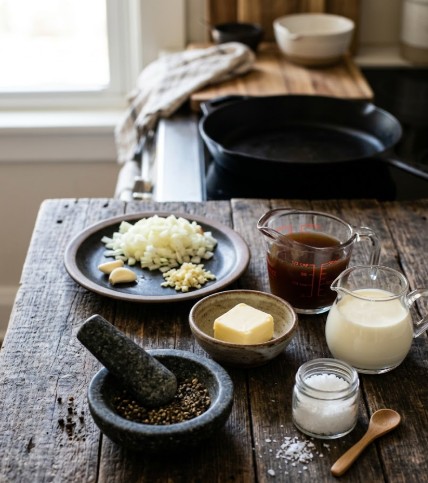
I list the items and amounts I use to make this creamy peppercorn sauce. I also note why each one matters so you can adjust to taste.
- 1 small onion, finely chopped
I choose a yellow onion for its mild sweetness. It softens when cooked and builds the savory base. - 2 cloves garlic, minced
I add garlic for warm, aromatic depth. Fresh and finely minced works best so it blends into the sauce. - 2 tablespoons unsalted butter
I use butter to sauté the aromatics and to give the sauce a smooth, rich mouthfeel. Unsalted lets me control seasoning. - 1 tablespoon crushed black peppercorns
This gives the sauce its bold, peppery kick. I prefer crushing whole peppercorns myself for fresher flavor, but pre-crushed is fine. - 1/2 cup beef stock (low-sodium if preferred)
I add stock for a meaty depth and to thin the sauce to the right consistency. Low-sodium stock helps avoid over-salting. - Salt, to taste
I season lightly and taste as I go because the beef stock can already contain salt. - 1/2 cup heavy cream
I finish with heavy cream to create a rich, silky texture that tames the heat from the peppercorns.
Notes
- Adjust peppercorn amount if you want milder heat.
- Use a mortar and pestle or a spice grinder to crush peppercorns for best aroma.
- For a slightly different flavor, substitute part of the beef stock with demi-glace or a splash of brandy.
Substitutes and Simple Twists
I often change a few ingredients when I’m missing something or want a different taste. For sharper bite, I swap onions for shallots. If I don’t have fresh garlic, I use 1/2 teaspoon garlic powder, though fresh garlic gives a fuller flavor.
I prefer butter for richness, but margarine or a little olive oil will work in a pinch. For the stock, beef gives the best depth; chicken or vegetable stock is acceptable if needed. I use heavy cream for thickness; half-and-half thins the sauce and milk is too weak.
For pepper, I like blending black, green, and pink peppercorns to add color and a layered pepper taste. To lift the sauce, I sometimes deglaze the pan with a splash of brandy or white wine after sautéing the aromatics. If I want heat, I add a pinch of red pepper flakes.
- Bold swaps: butter → margarine/olive oil, heavy cream → half-and-half
- Flavor boosts: mixed peppercorns, brandy/white wine, red pepper flakes
Tools I Use in the Kitchen
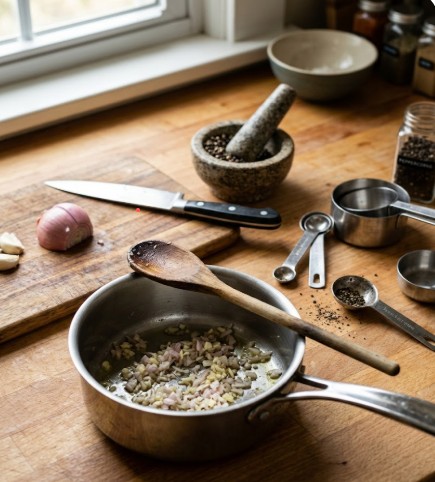
I keep the gear simple. A small saucepan handles the sautéing and simmering.
I stir with a wooden spoon or spatula for smooth blending.
A sharp knife and cutting board let me chop shallots and garlic cleanly.
Measuring cups and spoons ensure correct quantities.
Optional: a mortar and pestle if I want to crush whole peppercorns myself.
How to Make Texas Roadhouse Peppercorn Sauce

I start by finely chopping a small onion and mincing two garlic cloves so they cook evenly. I heat a small saucepan over medium heat and melt 2 tablespoons of butter until it’s foamy but not browned.
I add the chopped onion and cook, stirring, for about 3–4 minutes until the onion softens and becomes translucent. Then I stir in the minced garlic and cook for roughly one more minute.
Next I add one tablespoon of crushed black peppercorns and mix them with the onion and garlic for about 30 seconds to release their aroma. I pour in 1/2 cup of beef stock slowly, stirring to combine, and season with a small pinch of salt.
I keep the pan at medium heat and let the mixture simmer gently for 5–7 minutes so the liquid reduces and thickens a bit. I stir occasionally to prevent sticking.
I lower the heat and stir in 1/2 cup of heavy cream, which instantly makes the sauce creamy. I simmer the sauce on low for another 5 minutes, stirring now and then, until it reaches a pourable, velvety consistency.
I taste the sauce and adjust seasoning to my preference, adding a bit more salt or crushed peppercorns if I want a stronger kick. If the sauce becomes too thick, I thin it with a splash of beef stock until it reaches the right texture.
I serve the sauce warm over steak, pork, chicken, or roasted vegetables. For best results, keep it warm and stir gently before pouring so the cream stays smooth.
Ingredients at a glance:
- 2 tbsp butter
- 1 small onion, finely chopped
- 2 garlic cloves, minced
- 1 tbsp crushed black peppercorns
- 1/2 cup beef stock
- 1/2 cup heavy cream
- Salt to taste
Quick tips:
- Crush whole peppercorns with a mortar and pestle for fresher flavor.
- Use low heat after adding cream to avoid curdling.
- Adjust salt gradually to avoid over-seasoning.
Tips for Getting the Sauce Just Right
I crush whole peppercorns myself for the best aroma — a mortar and pestle or small grinder works well. I let the sauce simmer slowly so it reduces and deepens in flavor; don’t speed this step. I taste and tweak seasoning while cooking, adding salt or more pepper to suit my palate. I keep the sauce warm on very low heat and serve soon after making it to keep it smooth. I avoid high heat to stop the cream from splitting.
Using This Texas Roadhouse Peppercorn Sauce
I like to pour this creamy peppercorn sauce over grilled steaks for a classic match. I also spoon it on roasted or grilled chicken to add richness. For vegetables, I drizzle it on roasted potatoes, carrots, or asparagus to lift simple sides. I spread it on burgers when I want a peppery kick. I often serve it with pan-seared pork chops to add savory depth and a restaurant-style finish.
Proper Storage & Reheating Tips
I store leftovers in an airtight container and keep them in the fridge for up to 3 days. The sauce may thicken as it cools; that’s normal and easy to fix.
For longer storage, I freeze portions in a freezer-safe container and leave a little headspace for expansion. I label the date and use frozen sauce within one month. Thaw it overnight in the fridge before reheating.
To reheat, I warm the sauce gently over low heat in a small saucepan and stir often. If it seems too thick, I add a splash of cream or beef stock to loosen it. I avoid boiling to prevent the cream from separating.
Texas Roadhouse Peppercorn Sauce Recipe FAQs
What’s in the sauce?
I use simple, easy-to-find ingredients to make this creamy peppercorn sauce. Key items include butter, a small chopped onion, minced garlic, crushed black peppercorns, low-sodium beef stock, heavy cream, and a little salt. These combine to give a rich, peppery flavor that pairs well with steak, chicken, pasta, or vegetables.
Typical amounts (per batch):
- 2 tbsp unsalted butter
- 1 small onion, finely chopped
- 2 garlic cloves, minced
- 1 tbsp crushed black peppercorns (reduce to 2 tsp for less heat)
- 1/2 cup beef stock (low-sodium recommended)
- 1/2 cup heavy cream
- Salt to taste
I sometimes add a pinch of herbs like thyme or rosemary, or a dash of Worcestershire for extra depth. For more heat, I add cayenne very sparingly.
How do I make it step by step?
I follow a short stovetop method that keeps flavors bright and the sauce smooth.
- Melt butter in a small saucepan over medium heat.
- Sauté the chopped onion about 3–4 minutes until soft and translucent.
- Add minced garlic and cook 30–60 seconds until fragrant.
- Stir in crushed peppercorns and cook briefly to release their aroma.
- Pour in beef stock and a pinch of salt, then simmer 5–7 minutes to reduce slightly.
- Add heavy cream, lower heat, and simmer 4–6 minutes until it thickens but stays pourable.
- Taste and adjust salt or pepper. If it’s too thin, simmer a bit longer. If too thick, whisk in a splash of stock or cream.
Make it ahead and refrigerate for up to 2 days in an airtight container. Reheat gently on low and stir in a splash of cream if it tightens up.
How spicy will it be?
The sauce has a mild, peppery kick from the crushed peppercorns. It’s not hot like chili peppers. I cut the heat by using 2 teaspoons of crushed peppercorns instead of a tablespoon. Taste as you go and adjust.
What if the sauce is too thin or too thick?
If it’s too thin, I simmer it on low to reduce the liquid and thicken naturally. Stir often to prevent sticking. If it gets too thick after cooling, I thin it with a small amount of beef stock or cream while reheating.
Can I use it on other dishes besides steak?
Yes. I toss this sauce with pasta (about 1/4 cup per serving works well) for a creamy peppery pasta. It also dresses grilled chicken, roasted veggies, or even as a dip for fried appetizers.
How should I crush whole peppercorns without special tools?
I put whole peppercorns in a zip-top bag and gently crush them with a rolling pin or the flat bottom of a heavy pan. Aim for small chunks, not a powder, to keep the sauce’s texture.
Which beef stock should I pick?
I prefer low-sodium beef stock so I can control the salt level. Homemade or store-bought both work fine. If you use regular stock, taste before adding more salt.
Can I change the flavor with other spices?
Yes. I add a pinch of thyme or rosemary for an herbal note. For extra heat, I add a tiny dash of cayenne. Add small amounts and taste so the peppercorn taste stays central.
How long can I store leftovers?
I store the sauce in an airtight container in the refrigerator for up to 2 days. Reheat gently over low heat and stir in a splash of cream if it thickens too much.
Nutrition snapshot
Per serving, the sauce is fairly rich due to the cream and butter. Expect around 145 calories, 14 g fat, and about 190 mg sodium per serving. Adjust portions or ingredients if you need lower calories or salt.
Final Thoughts
I can’t wait for you to try this peppercorn sauce—it’s quick, rich, and adds real flavor to simple meals. I use it on steaks, chops, and even roasted vegetables to make dinner feel special without extra fuss.
Try a small batch first to adjust the pepper and cream to your taste. If you like, share how it turned out and pin the recipe for later. I find this sauce makes weeknight cooking feel a bit more like dining out.
FAQs
- What makes my version of Texas Roadhouse peppercorn sauce work well with steak?
I balance cream, beef stock, and plenty of crushed black peppercorns to create a rich, savory sauce that cuts through fatty steak. The cream gives body, the stock adds depth, and the pepper gives the bite that complements grilled meat. - Is this sauce safe to eat for people with common food sensitivities?
I use dairy and often brandy or mustard in the sauce, so it is not safe for people with milk allergies or who avoid alcohol. To make it safer, I suggest substituting heavy cream with lactose-free cream or a thickened non-dairy milk and skipping the brandy. - How long does the sauce stay good in the fridge and how should I store it?
I store the cooled sauce in an airtight container in the refrigerator for up to 3–4 days. Reheat gently on low heat so the cream doesn’t separate. For longer storage, I freeze portions in small containers for up to 2 months and thaw slowly in the fridge. - How do I maintain the sauce’s texture when reheating?
I reheat on low heat and stir constantly. If it thickens too much, I add a splash of beef stock or cream to loosen it. Avoid high heat or rapid boiling, which can cause the sauce to break. - How does this peppercorn sauce compare with other steak sauces like béarnaise or demi-glace-based sauces?
I find this peppercorn sauce is creamier and spicier than béarnaise, which is egg- and tarragon-based and has a bright, herby flavor. Compared with straight demi-glace, the peppercorn version is milder in pure beef intensity but richer and more pepper-forward. - Can I use this sauce on foods other than steak?
Yes. I use it on pork chops, roasted chicken, and even grilled vegetables. It works best with dishes that can handle creamy, peppery flavors. - Is the pepper level adjustable and how do I control it?
I control heat by the amount and coarseness of the peppercorns. Crushed whole peppercorns give a strong, textured bite. For milder heat, I use ground black pepper or reduce the quantity. Taste and adjust near the end of cooking.
Conclusion
I recommend this peppercorn sauce for anyone who wants a rich, restaurant-style topping at home. It pairs well with steak, pork, chicken, and vegetables, and you can make it with simple, common ingredients like cream, butter, beef broth, and crushed black peppercorns.
- Effectiveness: The sauce adds bold, savory flavor and a creamy texture that enhances grilled or pan-seared meats.
- Safety: Made from fresh, cooked ingredients, it’s safe when prepared and stored properly. Cool and refrigerate leftovers within two hours.
- Eco-friendliness: You can keep it green by choosing local dairy and responsibly sourced beef broth or by using vegetable stock for a lower-impact option.
- Suitability: I find it versatile for weeknight dinners and special meals. It scales easily and adapts to dietary tweaks, like using dairy-free cream alternatives.
Choose a reliable recipe and quality ingredients for the best long-term results. Try making a small batch first, then adjust pepper and seasoning to match your taste. You’ll get a dependable, crowd-pleasing sauce that lifts many dishes.
