
Chili Seasoning Mix Recipe: Easy Homemade Blend for Bold, Authentic Flavor
I love using a homemade chili seasoning mix because it gives me full control over flavor and avoids the preservatives found in many store-bought blends. Chilies form the core of the mix, and when I combine them with a few pantry spices, I can turn plain meals into warm, well-seasoned dishes that match my personal heat level.
In this article I’ll show the ingredients I prefer, the simple tools I use, and a four-step method to mix, taste, and store a versatile chili seasoning at home. The recipe is easy to follow and lets you tweak heat and aroma so the blend fits your cooking style and keeps well without additives.
Key Takeaways
- Make a fresh chili seasoning at home to control flavor and avoid preservatives.
- Use a few common spices and simple tools to create a customizable blend.
- Follow a short, four-step process to measure, mix, adjust, and store the mix.
The Best Chili Seasoning Ingredients
I use a mix of simple pantry spices that work together for depth, heat, and balance. Below I list each ingredient, the amount I recommend, and a short note on why it matters or how to tweak it.
- Chili powder — 2 tablespoons
This is the backbone of the blend. It gives color, warmth, and primary chili flavor. Choose a mild or hot chili powder based on how spicy you want the final mix. - Cumin — 1 tablespoon
Cumin adds an earthy, slightly smoky aroma. I use half the amount of cumin compared to chili powder so it supports without overwhelming. - Paprika — 1 tablespoon
Paprika rounds out flavor and adds mild sweetness or smokiness. Use smoked paprika for a BBQ-like note or sweet paprika for a softer taste. - Garlic powder — 1 tablespoon
Garlic powder brings savory depth and a steady aromatic base. It blends into the mix without needing fresh garlic. - Onion powder — 1 tablespoon
Onion powder enhances the savory, umami side of the seasoning. It helps the blend feel full and well-rounded. - Dried oregano — 1 teaspoon
Oregano gives a herbaceous lift that pairs well with chili flavors. A small amount brightens the mix without making it taste herbal. - Ground black pepper — 1 teaspoon
Black pepper adds a warm, sharp note that increases perceived heat and complexity. - Salt — 1 teaspoon (or to taste)
Salt is essential for balance. I recommend starting with 1 teaspoon and adjusting after tasting your cooked chili. - Cayenne pepper — 1/2 teaspoon
Cayenne supplies concentrated heat. I stick to 1/2 teaspoon as a baseline and increase or skip it to match heat preference. - Dried chili flakes — 1 teaspoon (optional)
Chili flakes add texture and bursts of heat. I include them only when I want visible flecks and extra kick. - Sugar — 1/2 teaspoon (optional)
A small pinch of sugar can round out acidity and bitter notes. I add it sparingly and omit it when I prefer a purely savory or very spicy mix.
Quick tips:
- Store the mix in an airtight jar away from light to keep flavors fresh.
- Taste and adjust salt and cayenne after cooking, since liquids and meat will change intensity.
- Swap smoked or sweet paprika to shift the profile without changing measurements.
Essential Kitchen Tools for Chili Seasoning Mix
I use a few simple tools: measuring spoons for exact amounts, a spice grinder or mortar and pestle for fresh flavor, mixing bowls to blend evenly, and airtight jars to keep the mix fresh.
How to Prepare the Chili Seasoning Mix: 4 Easy Steps
Step 1: Gather and Measure Everything

I lay out the spice list and check I have each item.
I put jars, measuring spoons, a small bowl, and a whisk or spoon on the counter.
I measure each spice into the bowl in order so nothing gets missed.
Step 2: Mix the Spices Together
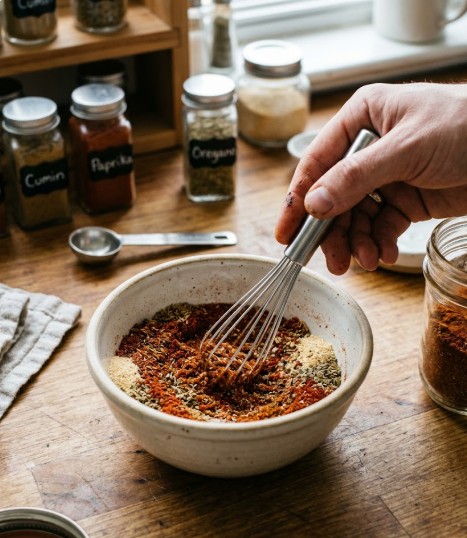
I use a spoon or whisk to blend the spices until uniform.
I scrape the sides and stir for at least 20–30 seconds so the powders combine well.
If I want a finer blend, I give the mix a quick pulse in a spice grinder or blender.
Step 3: Taste and Tweak the Flavor

I pinch a small amount and taste it to judge heat, salt, and smokiness.
To raise heat I add a little more cayenne or chili powder.
To add smoke I stir in a bit of smoked paprika.
To lower heat I balance with a pinch of sugar or more paprika.
I adjust salt and oregano last, tasting after each small change.
Step 4: Store the Mix Correctly

I transfer the mix to an airtight container, preferably glass.
I keep the jar in a cool, dark pantry away from heat and light.
I label the jar with the date and try to use it within three months for best flavor.
Ingredients
- 2 tbsp chili powder
- 1 tbsp ground cumin
- 1 tbsp paprika
- 1 tbsp garlic powder
- 1 tbsp onion powder
- 1 tsp dried oregano
- 1 tsp ground black pepper
- 1 tsp salt
- 1/2 tsp cayenne pepper
- 1 tsp dried red chili flakes
- 1/2 tsp sugar (optional)
Instructions
- Check your spice stash and gather the listed ingredients.
- Set out measuring spoons, a small bowl, and a spoon or whisk.
- Measure each spice into the bowl, working one by one.
- Mix thoroughly until the color and texture look even.
- Taste a pinch and adjust heat, salt, or smoke as needed.
- Store in an airtight jar in a cool, dark place and label with the date.
Nutrition
- Serving size: about 1 tsp
- Calories: ~22 kcal per serving
- Sodium: ~160 mg per serving
- Fat: ~0.6 g
- Protein: ~0.8 g
- Carbs: ~4.2 g
Closing Thoughts
I make my own chili seasoning so I can control heat and flavor. I tweak spices to match what I want — from mild and smoky to bold and fiery.
I use the blend on tacos, soups, roasted veggies, pizza, pasta, and fries. It works with beef, chicken, beans, or vegetables, and it keeps recipes simple.
Try small changes first: add more cumin, reduce chili powder, or stir in smoked paprika. Adjusting one spice at a time helps me build a mix I actually enjoy.
FAQs
Q: Will this homemade chili seasoning give the same depth of flavor as store packets?
I find that a homemade mix often tastes fresher and more balanced. By adjusting chili powder, cumin, and garlic to my preference, I can match or surpass store-bought packets without preservatives or extra sodium.
Q: Is it safe to use this seasoning for kids or people with mild spice sensitivity?
Yes, if I reduce or omit cayenne or crushed red pepper. I recommend starting with small amounts of heat and tasting as you go. Mild versions still deliver good flavor with less burn.
Q: How long does a batch stay fresh and how should I store it?
I store the mix in an airtight jar in a cool, dark place. It keeps its best flavor for about 6 months, though it remains usable longer. Whole spices or freshly toasted spices can extend freshness.
Q: Can I use this mix for foods other than chili?
Absolutely. I use it for tacos, roasted vegetables, soups, and marinades. A little goes a long way to add warm, savory notes to many dishes.
Q: How do I adjust this blend for low-sodium or gluten-free diets?
The mix is naturally gluten-free when made from pure spices. For low-sodium needs, avoid adding salt or use a small, measured amount. I taste and add salt at the end of cooking instead of in the mix.
Q: How does homemade chili seasoning compare to commercial packets in cost and convenience?
Making my own is cheaper per use if I already have pantry spices. It takes about five minutes to mix, so it’s almost as convenient and gives better control over ingredients.
Q: Do I need special tools or techniques to make the best blend?
No special tools are required. I use measuring spoons and a small bowl or jar. Toasting whole spices briefly and grinding them can boost flavor, but it’s optional.
Conclusion
I recommend making your own chili seasoning mix because it gives you full control over flavor, salt, and heat. A simple blend of chili powder, cumin, garlic, onion, paprika, and optional cayenne or oregano delivers bold taste without preservatives or hidden ingredients.
- Effectiveness: This mix seasons beef, turkey, chicken, and vegetarian chilis well. It also works for tacos, soups, and roasted vegetables.
- Safety: Using pantry spices reduces additives and lets you cut sodium. Store the blend in an airtight jar in a cool, dark place and use within 6–12 months.
- Eco-friendliness: Making a homemade mix cuts packaging waste from single-use packets and lets you buy spices in bulk.
- Suitability: Adjust proportions to match mild, medium, or spicy preferences. It fits low-sodium, gluten-free, and plant-based diets when you choose plain spices.
I urge you to try a small batch and tweak it until it fits your taste. Once you find your favorite ratio, keep a labeled jar on hand for quick, consistent results.