Yard House Poke Nachos Recipe — Easy Copycat Guide for Crispy, Fresh Nachos
I love poke, but turning it into nachos felt like a fresh idea I had to try. I recreated the flavors I enjoy—marinated ahi, creamy sauces, and crunchy toppings—stacked over crisp chips to get that mix of salty, sweet, spicy, and creamy in every bite.
Since I don’t have a Yard House nearby, I built my own version at home using simple ingredients and easy steps. This guide shows how to pull those textures and flavors together so you can make tasty poke nachos without hunting down a restaurant.
Key Takeaways
- I explain why these poke nachos balance bold and creamy flavors.
- I list the main ingredients and simple steps you need to copy the dish at home.
- I share practical tips to get the right crunch and fresh taste every time.
Why You’ll Fall in Love with These Yard House–Style Poke Nachos
I love how crisp wonton chips meet tender, spicy ahi in every bite. The mix of creamy unagi aioli, briny soy-sesame notes, and a light sprinkle of furikake gives each mouthful a bright, layered taste. Texture plays a big role — crunchy chips, silky fish, and soft avocado contrast perfectly.
- Customizable: swap proteins, heat level, or toppings.
- Easy to make at home: simple steps, big payoff.
- Party-ready: looks impressive and shares well.
This dish feels fresh and a little tropical, yet still familiar and satisfying.
Key Ingredients for the Best Yard House–Style Poke Nachos
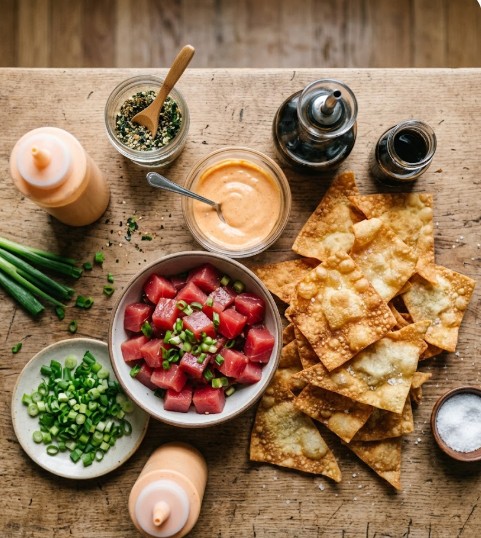
I keep the ingredient list tight to balance crisp texture, fresh fish, and bold sauces. For chips I use 12 square wonton wrappers fried in about 2 cups of neutral oil, then lightly salted. For the poke, I pick ½ pound of sushi‑grade ahi, cut into small cubes for even seasoning and bite‑sized pieces.
I make the creamy spicy mayo with 3 tablespoons of Kewpie or regular mayo mixed with 1½ teaspoons sriracha. For a savory marinade I add 1 teaspoon shoyu and ½ teaspoon toasted sesame oil, plus a small grated garlic clove for depth. I fold in 2 tablespoons of chopped green onions into the tuna for freshness.
For finishing touches I reserve extra mayo for drizzling and use 1½ tablespoons of unagi or sweet soy glaze for a glossy, sweet note. I sprinkle thinly sliced green onions and about 1 tablespoon of furikake for crunch and umami. Keep a squeeze bottle handy if you want neat sauce lines.
Copycat Yard House Poke Nachos Recipe
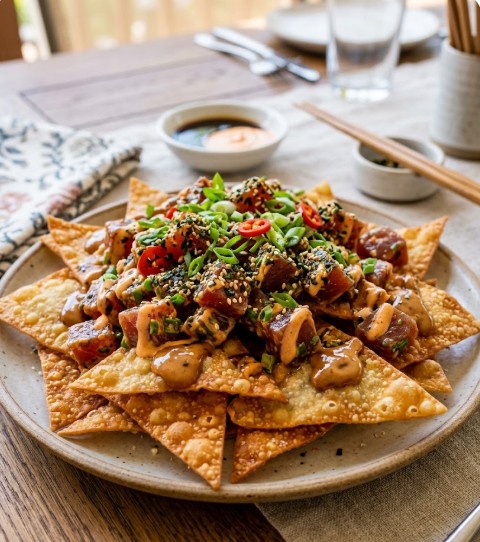
I make crisp wonton chips by cutting wrappers into triangles and frying them in hot oil until they turn golden, about a minute per side. I drain them on paper towels and salt while hot so they stay crunchy.
I toss cubed sushi-grade ahi with a spicy mayo mix—Kewpie, sriracha, a splash of soy, and a touch of sesame oil—to coat the fish lightly. I fold in chopped green onions with gentle strokes so the tuna keeps its texture.
I whisk the remaining mayo with sweet unagi sauce and grated garlic to create a rich aioli. This adds a glossy, savory finish that balances the heat from the poke.
To build the nachos, I arrange a bed of wonton chips, spoon the spicy ahi over them, and scatter extra green onions. I sprinkle furikake for crunch and umami, then dot or lightly drizzle the unagi aioli across the top. I serve immediately so the chips stay crisp and the textures contrast—crunchy chips, silky tuna, creamy aioli.
Tip: fry in small batches to keep oil temperature steady and season chips right away for best flavor.
Pro Tips for First-Time Success with My Poke Nachos
- Fry in small batches. I fry only a few wonton triangles at a time so they cook evenly and don’t stick together. Crowding the oil makes soggy or uneven chips.
- Shape the chips like real nachos. I cut wonton wrappers corner to corner into triangles. The shape makes them easy to scoop and looks right on the plate.
- Check oil heat before frying. I drop a tiny scrap of wrapper in the oil. If it bubbles immediately, the oil is ready. If not, I wait — that prevents greasy chips.
- Salt while hot. I salt the chips straight from the oil. The heat helps the salt stick. Waiting lets the salt fall off and the flavor weakens.
- Buy sushi-grade tuna. I always pick sashimi- or sushi-grade ahi for raw use. If I’m unsure, I ask the fishmonger. Safety and texture depend on the right fish.
- Slice tuna with gentle strokes. I use long, smooth cuts rather than a sawing motion. That keeps the fish firm and prevents mushy pieces.
- Use sesame oil sparingly. A little sesame oil adds flavor, but too much hides the other tastes. I add small amounts and taste as I go.
- Taste the sauce first. I sample the poke sauce before mixing it with tuna. That way I can adjust spice, salt, or acidity without ruining the fish.
- Reserve mayo for aioli. I set aside some mayonnaise before making the poke sauce so I have enough left to make the unagi aioli. Running out of mayo breaks the setup.
- Assemble right before serving. I build the nachos at the last minute. Keeping chips separate until the end prevents sogginess and keeps the dish crisp.
Quick checklist I use:
- Oil hot and ready
- Wontons cut and salted
- Tuna prepped and chilled
- Sauces tasted and adjusted
- Mayo reserved
- Assemble at the end
I follow these steps every time to get crisp chips, balanced flavors, and fresh-tasting poke.
Creative Serving Ideas for This Yard House Poke Nachos
How to Store Leftovers and Reheat for Best Texture
I store the poke and chips separately to keep things crisp. Put the tuna in an airtight container and refrigerate; use within 24 hours. Keep the chips in a sealed bag or container at room temperature to avoid sogginess.
To reheat chips, warm them for 3–5 minutes at 300°F (150°C) on a baking sheet; check often so they don’t burn. Do not microwave chips — they get soft. If the aioli was refrigerated, bring it to room temperature or whisk briefly before using.
What to Serve with the Nachos
I like simple, fresh sides that balance the rich fish and mayo. Good options include:
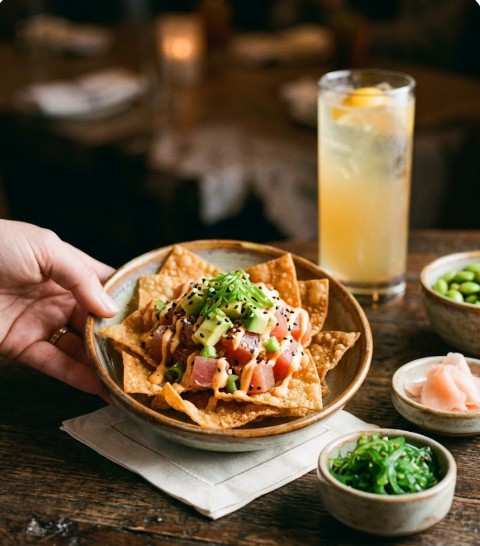
- Seaweed salad or a small bowl of edamame for a light, salty contrast.
- Pickled ginger or quick-pickled red onions for a bright, acidic pop.
- A small green salad with citrus vinaigrette to cut the richness.
For drinks, I pair the nachos with a cold beer, like an IPA or a citrus Radler, or a light cocktail such as a yuzu spritzer or a lychee mojito.
Step-by-Step for Serving and Presentation
I arrange the chips in a single layer on a large platter so everyone can reach them. Spoon the marinated tuna across the chips in even dollops rather than one big pile. Add toppings in layers: avocado or guacamole, a drizzle of unagi aioli, then green onions and furikake.
For parties, I use shallow trays and double the poke. For bite-size servings, I fill small cups with a chip, a scoop of tuna, and a little aioli. That makes serving easier and keeps portions neat.
Visual Guide and Demo Video Link
I keep a short demo video handy when I cook this for guests. The clip shows:
- Cutting and frying wrappers into crisp chips.
- Mixing the spicy mayo marinade and saucing the tuna.
- Assembling nachos with avocado, furikake, and aioli drizzles.
If you like a visual walk-through, search for a quick Yard House poke nachos demo to follow the steps in real time.
Extra Tips and Helpful Notes
- Swap wonton chips for taro chips when you want an earthier crunch; they pair well with tuna.
- Add crushed roasted macadamia nuts for extra texture and a buttery note.
- Drizzle a little chili oil or spicy honey for sweet-heat contrast if you want more kick.
- If you plan to serve as a spread, keep the aioli and extra toppings in separate bowls so guests can customize.
I recommend assembling just before serving for the best crunch and brightest flavors.
Common Questions About Yard House Poke Nachos Recipe
1. What ingredients go into Yard House–style poke nachos?
I use crispy wonton chips, cubed ahi tuna tossed in a spicy soy-based sauce, sliced green onions, and a creamy unagi-style aioli.
I finish with a sprinkle of furikake for extra umami.
Optional add-ins include diced avocado, tobiko, or extra jalapeño for heat.
2. What toppings belong on poke nachos?
Start with crunchy chips, then add spoonfuls of seasoned raw tuna.
Drizzle the aioli and scatter green onions over the top.
Sprinkle furikake or sesame seeds and add any optional garnishes like avocado or fish roe.
3. How do I make wonton chips at home?
Cut square wonton wrappers in half diagonally to make triangles.
Fry them in hot oil until golden, drain on paper towels, and salt while hot.
For a lighter option, brush with oil and bake at 375°F (190°C) until crisp.
4. How long should tuna marinate for poke?
I only let the tuna sit in the sauce for about 10–15 minutes.
That time gives good flavor without breaking down the texture.
If you marinate much longer, the fish can become too soft.
5. Can I buy pre-made wonton chips instead of making them?
Yes. Store-bought wonton chips save time and work well.
Homemade chips are fresher and hotter, but ready-made chips still give a good crunch.
6. Which type of tuna is best for poke?
Use sushi- or sashimi-grade ahi tuna for safety and flavor.
Buy from a reliable fishmonger and ask if it’s safe to eat raw.
If ahi isn’t available, look for other sashimi-grade tuna options.
7. What can I use instead of tuna?
You can swap tuna for salmon, cooked shrimp, or firm tofu.
Keep the same spicy sauce for consistent flavor.
Adjust marinating time for cooked proteins or tofu so they don’t get too soft.
8. What is furikake and is it necessary?
Furikake is a Japanese dry seasoning with seaweed, sesame seeds, and savory bits.
It adds crunch and umami, but it’s not required.
If you don’t have it, use sesame seeds and crushed nori as a simple substitute.
9. How do I stop the nachos from getting soggy?
Only assemble the nachos right before serving.
Keep chips, poke, and sauces separate until the last minute.
For groups, let people build their own so chips stay crisp longer.
10. Can I prepare any parts ahead of time?
Yes. Make the chips, poke, and aioli separately and refrigerate.
Poke stores in the fridge for a few hours; aioli keeps for a couple of days.
Do not assemble until you’re ready to serve to preserve crunch.
FAQs
Q1: What makes my poke nachos taste like Yard House’s version?
I use fresh, sushi-grade ahi tuna cut into small cubes and toss it in a soy-based dressing with sesame oil, green onions, and a touch of sweetness. I layer that over very crispy chips (wonton or tortilla) and add creamy avocado, crunchy toppings, and a spicy mayo drizzle to match the balance of textures and flavors.
Q2: Are these poke nachos safe to eat raw?
Yes, if I choose sushi-grade tuna from a trusted source and keep it cold until serving. I handle the fish with clean hands and utensils, and I serve it immediately or within a few hours. People with weakened immune systems or pregnancy should avoid raw fish.
Q3: How long can I store leftovers and how should I keep them?
I separate components for best results: store the marinated tuna and sauces in airtight containers in the fridge for up to 24 hours. I keep chips and crunchy toppings separate to avoid sogginess. Assemble just before eating.
Q4: How do I keep the chips from getting soggy?
I place chips on plates just before serving and put wet ingredients like tuna, avocado, and sauces on top right away. If I must prep ahead, I set up a build station so each person assembles their own nachos.
Q5: Can I swap ingredients for dietary needs or taste?
Yes. I can use cooked shrimp, tofu, or cooked salmon instead of raw tuna. I swap mayo-based sauces for yogurt or omit them for dairy-free diets. Gluten-free soy sauce or tamari works for gluten sensitivity.
Q6: How do these poke nachos compare to traditional nachos?
Compared to classic nachos, my poke version focuses on fresh, cold toppings and lighter flavors instead of melted cheese and cooked meat. The texture contrast—crispy chips with soft fish and creamy avocado—gives a different but equally satisfying experience.
Q7: What maintenance does the recipe need for repeat success?
I always keep a few quality staples on hand: sushi-grade fish from a reliable vendor, fresh avocados, and good oil and soy sauce. I also clean cutting boards and knives between uses to prevent cross-contamination and maintain consistent, safe results.
Conclusion
I recommend trying these poke nachos when you want a fresh, fun appetizer that still feels like a meal. The mix of sushi-grade tuna, creamy avocado, crisp chips, and bold sauces works well together and delivers reliable flavor without much fuss.
I find this dish safe and eco-friendly when you pick sustainably sourced tuna and fresh, local produce. Preparing components separately keeps textures right and helps control sodium and heat levels for a healthier result.
If you want long-term satisfaction from this recipe, choose high-quality ingredients, keep raw fish properly chilled, and make sauces from scratch when possible. Those choices boost flavor, food safety, and sustainability.
Give this recipe a try at your next gathering — it’s a crowd-pleaser that’s easy to scale and tweak to taste.