
Yard House Edamame Recipe: Simple Garlic-Soy Method
I make Yard House–style edamame at home often, and I’ve tuned the recipe so it reliably matches the restaurant flavor. It pairs steamed soybeans with a garlicky, gingery sauce that balances salty, spicy, and a touch of sweetness for a bright, snackable bite.
I’ll guide you through the simple ingredients and clear steps, plus share tips I use to get the same bold taste at home. The method stays quick and flexible, so you can serve it as a solo snack or an easy appetizer for guests.
Key Takeaways
- The recipe recreates Yard House edamame with a balanced savory and spicy sauce.
- Simple ingredients and clear steps make this dish quick and repeatable.
- Small tips and tweaks help achieve a restaurant-like result at home.
Why You’ll Love This Yard House Edamame
I love how this edamame hits big flavor with little fuss. Bright garlic and fresh ginger give it a lively taste, while a touch of chili adds warmth without overpowering the beans. It takes about 15 minutes from start to finish and uses common pantry staples, so I can make it any time.
I can tweak the heat and salt to match my mood. It works as an easy appetizer, a simple snack for game day, or a quick bite during a show. The result feels restaurant-quality but is far faster and cheaper to make at home.
Ingredients I Use for This Yard House-Style Edamame

- Edamame — 1 pound in the pod (frozen or fresh).
- Garlic — 1 tablespoon, minced.
- Ginger — 1 tablespoon, minced.
- Neutral oil — 1 tablespoon (canola or vegetable).
- Light soy sauce — 2 tablespoons.
- Maple syrup — 3 teaspoons for a touch of sweetness.
- Toasted sesame oil — 1 teaspoon for nutty aroma.
- Chili paste or Sriracha — Start with 1 teaspoon and adjust to taste.
Bold items are the key flavors. I also use simple tools: a medium saucepan, a large skillet, measuring spoons, a strainer or slotted spoon, and small prep bowls. Prep takes about 10 minutes; cooking about 5 minutes.
How To Make Yard House Edamame

I start by prepping the aromatics. I finely mince 1 tablespoon fresh garlic and 1 tablespoon fresh ginger and keep them nearby so they’re ready when the pan is hot.
Next I cook 1 pound of edamame in salted, boiling water for 3–5 minutes, until the pods turn bright green. I drain them well and set them aside to stop the cooking.
I heat 1 tablespoon oil in a large skillet over medium heat. I add the garlic and ginger and stir for 30–60 seconds, just until fragrant. I watch closely so they don’t brown.
With the pan off the heat, I whisk together the sauce: 2 tablespoons soy sauce, 3 teaspoons maple syrup, 1 teaspoon toasted sesame oil, and chili paste or sriracha to taste. I stir until the sweet and salty flavors combine.
I return the pan to low heat, add the drained edamame, and toss until every pod is coated in the sauce. I cook for another 30–60 seconds to warm the sauce through and let flavors meld.
Serve hot in a bowl for snacking. I like to grind a little sea salt on top and offer extra chili paste at the table. Quick tip: use firm, fresh edamame and don’t overcook the aromatics for the best flavor.
Notable Tips to Make This Yard House Edamame Recipe Perfect
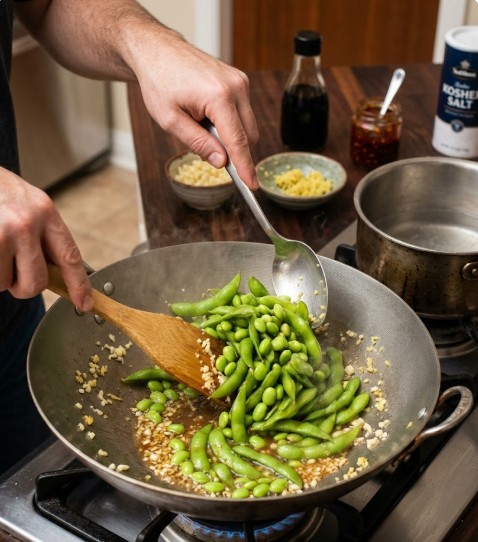
I prep my aromatics before the pan heats. Mince garlic and grate ginger first so I can move fast once the oil is hot.
I use fresh garlic and ginger every time. Fresh ingredients give a brighter, cleaner flavor than jarred or powdered versions.
I watch the edamame closely while cooking. I remove them as soon as they turn bright green to avoid a mushy texture.
I always salt the boiling water. A good pinch seasons the pods from the inside and boosts overall flavor.
I stop cooking garlic the moment it becomes fragrant. Burnt garlic tastes bitter, so I pull the pan off the heat or add the next ingredient right away.
I add heat cautiously. I start with a small amount of chili paste or Sriracha, taste, then increase if needed.
I toss the edamame while they’re still hot. Warm beans absorb the sauce better, so I mix everything immediately after draining.
I taste and tweak before serving. A dash more soy sauce, a touch of sweetness, or a squeeze of citrus can balance the final flavor.
I make extra sauce when I can. Leftover sauce stores well in the fridge for a few days and saves time on repeat batches.
I serve the dish right away. Edamame is best hot and fresh, so I get it to the table quickly.
Quick checklist (for a perfect batch)
- Prep garlic and ginger before heating the pan
- Use fresh aromatics, not jarred
- Salt the cooking water
- Remove edamame at bright green stage
- Avoid burning garlic
- Add chili in small amounts
- Toss while hot to absorb sauce
- Taste and adjust seasoning
- Make extra sauce for storage
- Serve immediately
These steps keep the texture bright and the flavors balanced every time.
Some Delicious Ways to Enjoy This Yard House Edamame

How I Keep and Reheat Leftovers
I store any leftovers in an airtight container and put them in the fridge. They stay good for up to 48 hours.
To reheat, I warm a skillet over low heat and toss the edamame until heated through. For a really quick option, I microwave them about 30 seconds, then shake or stir to spread the heat.
What I Use (Ingredients)
- 1 lb edamame in the shell
- 1 tbsp fresh garlic, minced
- 1 tbsp fresh ginger, minced
- 1 tbsp neutral oil (canola or vegetable)
- 2 tbsp light soy sauce
- 3 tsp maple syrup
- 1 tsp toasted sesame oil
- Chili paste or Sriracha, to taste (start with 1 tsp)
I keep the chili adjustable so the spice level matches the crowd.
How I Make It (Step-by-Step Method)
- Mince the garlic and ginger so they’re ready when the pan is hot.
- Boil salted water, add the edamame, and cook 3–5 minutes until bright green. Drain.
- Heat oil in a large skillet over medium. Add garlic and ginger and cook 30–60 seconds without browning.
- Remove from heat and stir in soy sauce, maple syrup, sesame oil, and chili paste. Mix well.
- Add the drained edamame to the skillet and toss until pods are evenly coated. Serve warm.
I find finishing off the sauce off-heat keeps the flavors bright and prevents bitter garlic.
Quick Visual Guide (Video)
- Title: Yard House Edamame Recipe
- Content: Short demo showing blanching, sautéing garlic and ginger, and tossing edamame in the sauce.
- Tip: Watch for garlic that browns; the video shows how to avoid overcooking it.
I use a short clip to confirm timing and texture when I’m trying the recipe for the first time.
Extra Tips and Small Notes
- Serve ideas: I put this next to sushi, ramen, dumplings, or on a party snack board. It also works cold straight from the fridge.
- Salad and bowls: Shelled leftover edamame makes a great salad topper or rice-bowl add-in.
- Pairings: A cold beer or chilled sake balances the spice well.
- Storage reminder: Eat within 2 days for best flavor. Reheat gently to keep the sauce bright.
I keep these tips handy so the edamame tastes great whether I serve it hot, cold, or as part of another dish.
FAQs on This Yard House Edamame Recipe
1. How can I make edamame more flavorful?
I boost plain edamame with a quick sauce. I sauté minced garlic and ginger in a little oil until fragrant, then add soy sauce and a touch of sweetener like maple or honey. A splash of sesame oil at the end brightens the taste.
2. Which seasonings work best with edamame?
I stick to garlic, ginger, chili flakes or Sriracha, soy sauce, and sesame oil. For variety I sometimes add smoked paprika or a pinch of five-spice, but simple aromatics usually taste best.
3. How do I prepare chili-flavored edamame?
I boil or steam the pods until bright green, then drain. I sauté garlic and ginger, stir in soy sauce, sesame oil, a sweetener, and my chosen chili paste, then toss the hot edamame in the sauce until evenly coated.
4. Is a spicy edamame snack a healthy choice?
Yes. I see edamame as a good source of protein, fiber, and vitamins while staying low in calories. Watching oil and salt keeps it healthier, and fresh garlic and ginger add beneficial compounds.
5. Can I cook with frozen edamame?
Absolutely. I keep frozen, in-shell edamame on hand and boil it straight from frozen. No thawing needed; it cooks to a tender, bright green texture every time.
6. Can I change how hot the edamame is?
Yes. I control heat by adjusting the amount of chili paste, flakes, or Sriracha. I can make it mild, medium, or very spicy to suit my guests or mood.
7. What’s the right way to eat edamame while it’s still in the pod?
I hold a pod between my fingers, put one end in my mouth, and squeeze or bite gently to push the beans out. I never eat the shell—just the beans inside—and I drop the empty pods on the plate.
8. Is it possible to meal prep spicy edamame?
Yes. I make a batch and refrigerate it for up to two days. I reheat it quickly in a skillet or microwave and freshen it with an extra drizzle of sesame oil or a squeeze of lime before serving.
9. What dishes pair well with this edamame?
I serve it as an appetizer with sushi, as a snack with drinks, or alongside rice bowls and noodle dishes. I also toss cooled edamame into salads for added protein and spice.
10. Will this sauce work on other vegetables?
Yes. I use the same garlic-ginger-chili sauce on green beans, broccoli, or roasted Brussels sprouts. It lifts many vegetables and works well as a stir-fry or a warm salad dressing.
FAQs
Q1: What makes this Yard House–style edamame taste like the restaurant version?
I use a mix of garlic, soy sauce, and a touch of sweetness (like honey or sugar) plus chili flakes for heat. Toasting garlic in sesame oil before tossing the edamame helps deepen the flavor. A splash of oyster sauce or mirin can add the savory, slightly sweet finish you find at the restaurant.
Q2: Is this recipe safe for people with food allergies?
No. The recipe commonly uses soy sauce, oyster sauce, and sesame oil, which contain soy, shellfish (in oyster sauce), and sesame—common allergens. I recommend swapping with allergy-safe alternatives: use coconut aminos for soy, a vegan oyster sauce substitute, and omit sesame if needed.
Q3: How long does the flavored edamame keep and how should I store it?
I store leftovers in an airtight container in the fridge for up to 3 days. Reheat gently in a skillet or microwave until warmed. The sauce can make beans a bit softer over time, so best texture is right after cooking.
Q4: How spicy is the dish and can I adjust the heat?
The heat level depends on how much chili flakes or fresh chili you add. I start with a small amount and taste, then increase to reach my preferred spice. You can also balance heat by adding a bit more sweetness or a squeeze of lime.
Q5: Does this method add a lot of calories or fat?
Edamame itself is a healthy, protein-rich snack. The added oil and sauces increase calories and fat slightly. I control this by using a light drizzle of oil and modest amounts of sauce, or by swapping to lower-sodium and lower-sugar options.
Q6: How does this recipe compare to simple salted edamame?
My flavored version offers more complex taste—garlic, umami, and heat—than plain salted edamame. Plain salted edamame is lighter and fresher tasting. I choose flavored edamame for a bold appetizer and plain when I want a simpler, lower-calorie snack.
Q7: Any tips for keeping the beans bright green and firm?
I cook edamame just until tender, then cool quickly or serve immediately. Avoid overboiling. If you blanch them, plunging into cold water helps keep the color and texture. Stirring gently while sautéing prevents mushiness.
Conclusion
I recommend the Yard House–style edamame as a simple, tasty snack you can make at home. It uses fresh or frozen pods, a quick savory-spicy sauce, and a brief cook time to deliver big flavor with little fuss.
I find this recipe effective because it balances garlic, salt, and heat without masking the natural soybean taste. It cooks fast, wastes little energy, and needs only basic kitchen tools, making it an eco-friendly choice for busy cooks.
I consider it safe and suitable for most diets: plant-based, high in protein, and easy to adjust for sodium or spice preferences. If you have soy allergies, avoid it; otherwise you can serve it confidently at snacks, parties, or weeknight meals.
I encourage you to pick reliable ingredients—good soy sauce, fresh garlic, and quality chili flakes—to ensure consistent results over time. Try this version, tweak the heat or sweetness to your taste, and enjoy a quick, healthy appetizer that keeps guests coming back.