
Perfected Citrus Vinaigrette for Crisp Salads
You love bright, tangy dressings that wake up a simple salad. I’ll show you how to make a lemon vinaigrette inspired by First Watch that tastes fresh and restaurant-worthy with just a few pantry staples.
This lemon dressing uses fresh lemon, olive oil, a touch of honey, and optional preserved lemon or thyme to give you a bright, balanced vinaigrette in minutes. You’ll get an easy recipe, quick tips to avoid a greasy or flat dressing, and ideas to pair it with salads, veggies, and proteins.
Key Takeways
- The dressing comes together fast with simple, fresh ingredients.
- Small tweaks like preserved lemon or thyme boost the flavor without extra work.
- Store leftovers chilled and shake well before using.
What Is First Watch Lemon Salad Dressing?
I describe First Watch lemon salad dressing as a bright, tangy vinaigrette that highlights fresh citrus. It blends lemon juice with olive oil and a touch of sweetener to balance the acid.
The dressing often includes preserved lemon or lemon zest for a salty, briny note. Fresh thyme or other herbs add mild aromatic depth without overpowering the lemon.
Texture stays thin and pourable, not creamy, so it lightly coats greens and vegetables. The flavor profile leans clean and refreshing, making it a good match for simple salads, steamed vegetables, or grilled fish.
Key components at a glance:
- Fresh lemon juice (primary acid)
- Extra virgin olive oil (body)
- Honey or a mild sweetener (balance)
- Preserved lemon or zest (briny brightness)
- Fresh herbs like thyme (subtle aroma)
I find this dressing versatile and quick to make. It wakes up mild greens and adds a citrus lift without heavy calories.
Key Ingredients for First Watch Lemon Salad Dressing
I focus on a few bright, fresh ingredients that give this dressing its signature tang. Fresh lemon juice is the star; it adds sharp acidity and a clean citrus aroma that cuts through greens.
I use extra-virgin olive oil for smoothness and body. Olive oil balances the lemon and helps the dressing coat leaves without tasting heavy.
A touch of honey or agave adds mild sweetness to round the tartness. I prefer honey for its flavor, but agave works if you need a vegan option.
Preserved lemon or lemon zest brings a salty, briny depth. Just a small amount lifts the citrus taste and gives the dressing more complexity.
I add a pinch of salt and a little black pepper to enhance all the flavors. Fresh thyme or a small amount of Dijon mustard can add subtle herbal or tangy notes if you like a bit more character.
Simple emulsifiers help the dressing stay mixed. I whisk the oil and lemon with a little mustard or use a blender to create a creamy, stable vinaigrette.
- Fresh lemon juice — bright acid
- Extra-virgin olive oil — body and mouthfeel
- Honey or agave — balanced sweetness
- Preserved lemon or zest — depth and umami
- Salt, pepper, optional thyme or Dijon — flavor enhancers
I recommend tasting and adjusting as you go. Small tweaks of oil, lemon, or sweetener let you match your personal preference.
Step-By-Step Preparation Guide
I walk you through each stage so the dressing comes out bright, balanced, and smooth. I focus on ingredient order, texture targets, and small tweaks you can make while tasting.
Mixing the Ingredients
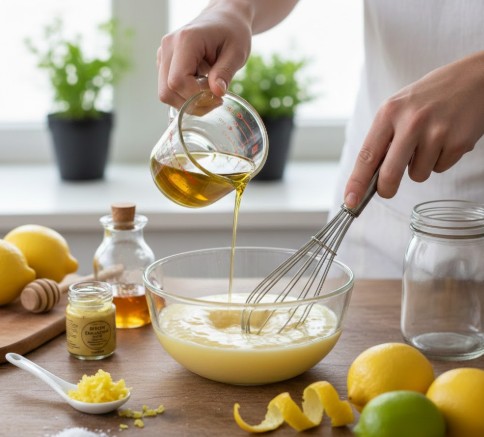
I start by measuring ingredients precisely: fresh lemon juice (about 3 tablespoons), a teaspoon of finely chopped preserved lemon or 1/2 teaspoon zest, 1 tablespoon honey, a teaspoon Dijon mustard, a pinch of salt, and 1/3 cup extra-virgin olive oil. I combine the lemon juice, preserved lemon or zest, honey, mustard, and salt in a bowl or jar first.
I whisk or shake those wet ingredients until the honey dissolves and the mustard thins the mix. Then I slowly drizzle in the olive oil while whisking constantly, or pour oil in a steady stream into a jar and shake vigorously. This helps form a smooth emulsion and keeps the dressing from separating.
Tools I use: a small whisk or fork, a 1-cup glass measure for pouring, or a jar with a tight lid for shaking. I keep everything cold, especially the oil, to preserve bright lemon flavor.
Achieving the Perfect Consistency
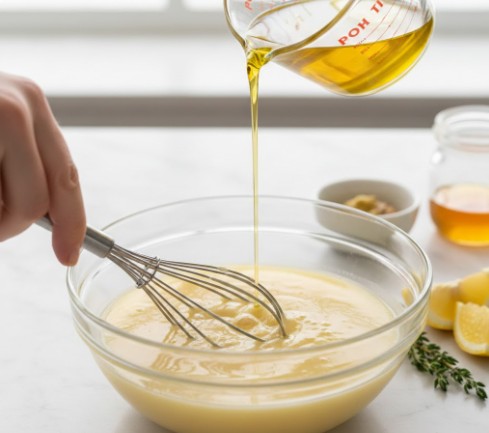
I aim for a pourable vinaigrette that clings lightly to greens. If the dressing looks too thin, I add 1/2 teaspoon more honey or 1 teaspoon more mustard and whisk again. If it’s too thick, I whisk in up to 1 tablespoon cold water or another teaspoon of lemon juice, one small splash at a time.
I watch for a smooth, slightly glossy texture. Tiny oil droplets mean the emulsion is breaking; I whisk quickly and add a pinch of mustard to re-emulsify. For a creamier feel, I sometimes blend briefly with an immersion blender for 5–10 seconds.
Store in a jar in the fridge. If it separates, I shake or whisk before using. Let it sit at room temperature 5–10 minutes before serving if the oil firms in cold weather.
Tasting and Adjusting Flavors
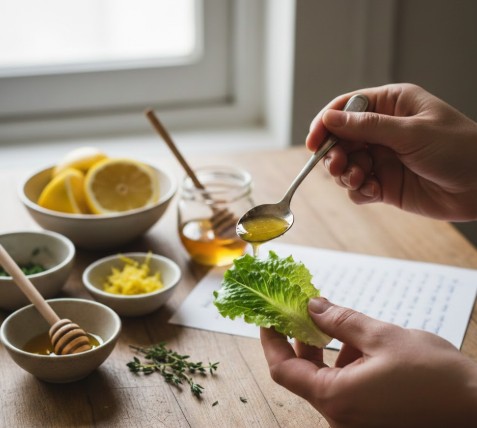
I taste the dressing on a small spoon or by tossing a leaf of lettuce with a teaspoon. I check for three things: brightness (lemon), sweetness (honey), and salt balance. If it tastes flat, I add 1/4 teaspoon salt and stir. If too sour, I add 1/2 teaspoon honey at a time until balanced.
If the lemon flavor is muted, I add 1/2 teaspoon preserved lemon or 1/4 teaspoon lemon zest for more depth. For a savory lift, I add a light pinch of fresh thyme or 1/8 teaspoon garlic powder. I always re-taste after each change and wait a minute for flavors to meld before deciding on another tweak.
Tips for Perfect Lemon Salad Dressing
I taste as I go to balance the lemon and oil. If the dressing feels too sharp, I add a bit of honey or a pinch of sugar to soften the acidity without hiding the lemon flavor.
I use a small whisk or jar to emulsify the dressing. A quick shake in a sealed jar or a 30-second whisk makes the oil and lemon blend smooth and glossy.
I prefer fresh lemon juice over bottled for the best brightness. Fresh juice gives a cleaner, livelier taste, and I always strain it if seeds or pulp are unwanted.
I add salt and pepper last and adjust gradually. Salt brings out the flavors; black pepper adds warmth. I season, taste, then tweak.
I like to include one small ingredient for depth, such as a little Dijon mustard, minced garlic, or preserved lemon. These add complexity with just a small amount and keep the dressing balanced.
Serve the dressing within a day or two for peak freshness. If I must store it longer, I keep it in the fridge in a tight container and bring it back to room temperature before using.
Tip table for quick reference:
| Problem | Fix |
|---|---|
| Too sharp | Add 1/2 tsp honey or a pinch of sugar |
| Separated | Whisk vigorously or shake in jar |
| Lacks depth | Add 1/4 tsp Dijon or a bit of preserved lemon |
| Too thick | Whisk in a teaspoon of warm water or extra lemon |
I recommend tasting with the salad, not alone. The greens and toppings change how intense the dressing will feel.
Customizing the Recipe
I focus on simple swaps that keep the bright lemon flavor while fitting diets and tastes. Small changes to oil, sweetener, or salt make the biggest difference in texture and balance.
Making It Vegan
I replace honey with plant-based sweeteners without losing the dressing’s tang. Good options: maple syrup, agave nectar, or a light brown rice syrup. Start with a 1:1 swap for honey, then taste and add up to 1/2 teaspoon more if you want more sweetness.
For emulsifiers, I use Dijon mustard or a tiny pinch of xanthan gum to help the oil and lemon stay combined. If you prefer creamier, whisk in 1–2 tablespoons of silken tofu or unsweetened vegan yogurt for body.
Check salt and herbs last. Preserved lemon adds a briny note; if you omit it, add 1/8 teaspoon extra salt or a few capers, chopped. Store vegan dressing in a jar and shake well before each use.
Adjusting Sweetness or Tartness
I tune sweetness and tartness in small steps while tasting. If the dressing is too sharp, add 1/2 teaspoon of sweetener at a time (maple, agave, or honey) and whisk until balanced. For a neutral sweet lift, use a mild oil like extra-virgin olive oil or avocado oil to soften the acid.
If it’s too sweet, add 1/2 teaspoon lemon juice or 1/8 teaspoon white wine vinegar at a time. For more brightness without extra acid, add a small pinch of finely grated lemon zest.
Use a teaspoon-measured list to guide changes:
- Too tart: +1/2 tsp sweetener increments.
- Too sweet: +1/2 tsp lemon juice or 1/8 tsp vinegar increments.
- Flat flavor: +1/8–1/4 tsp salt or a pinch of fresh thyme.
Always rest the dressing 10–15 minutes and re-taste; flavors meld and may need a tiny final adjustment.
Serving Suggestions and Pairings
I like this lemon dressing on simple green salads. It brightens mixed greens, arugula, or baby spinach without overpowering them. Add toasted almonds or pecans for crunch.
I often use it on grain bowls. Drizzle over quinoa or farro with roasted vegetables and chickpeas for a light, tangy finish. A sprinkle of feta or goat cheese pairs well.
The dressing works great with seafood. I pour a little over grilled salmon, shrimp, or white fish to lift the flavors. It also complements cold seafood salads.
Try it as a veggie dip. I thin the dressing with a splash of water and serve it with raw carrots, cucumber, and bell peppers. It makes a fresh, low-effort appetizer.
Quick pairing ideas:
- Salads: mixed greens, spinach, arugula
- Proteins: grilled chicken, salmon, shrimp
- Grains: quinoa, farro, bulgur
- Veggies: roasted asparagus, steamed broccoli, raw crudités
I recommend storing extra dressing in the fridge. Shake well before using because the oil may separate. It keeps for about a week.
Storing and Shelf Life of Homemade Lemon Dressing
I store my lemon dressing in a clean glass jar with a tight lid. Glass keeps flavors pure and is easy to wash, so I always chill the jar before adding the dressing.
In the fridge, the dressing stays good for about 1 to 2 weeks. If the recipe includes dairy, fresh garlic, or raw egg, I use it within one week to be safe.
I label the jar with the date I made it. That helps me track freshness and avoids guesswork.
Signs the dressing went bad are a sour or off smell, mold, or unusual cloudiness. If any of those appear, I throw it out immediately.
Tips I follow:
- Shake well before each use; oil and lemon can separate.
- Use clean utensils to avoid introducing bacteria.
- Keep the jar in the main fridge area, not the door, to keep temperature steady.
Quick reference:
| Ingredient type | Fridge life |
|---|---|
| Oil + lemon only | 1–2 weeks |
| With dairy/egg/garlic | Up to 1 week |
I avoid freezing lemon vinaigrette because it can change texture and separate. When in doubt, I make a fresh batch—fresh dressing is fast and tastes best.
Healthy Benefits of Lemon Salad Dressing
I use lemon salad dressing because it adds bright flavor without heavy calories. A basic lemon vinaigrette made with fresh lemon juice and olive oil stays light while providing essential nutrients.
Lemon juice supplies vitamin C, which supports immune function and skin health. It also adds acidity that can help enhance iron absorption from plant foods, so my salads feel more nourishing.
Olive oil brings heart-healthy monounsaturated fats and antioxidants. These fats help me feel satisfied after a meal and support healthy cholesterol levels when used in place of saturated fats.
I often add a touch of honey or mustard for balance, which keeps sugar and additives low compared with many store-bought dressings. Making it at home lets me control salt, sweeteners, and oil quantity.
Benefits at a glance:
- Low calorie: bright flavor without heavy calories.
- Vitamin C: from fresh lemon juice.
- Healthy fats: from extra-virgin olive oil.
- Better iron absorption: acid helps plant iron uptake.
- Customizable: I can reduce sugar and salt easily.
I recommend storing the dressing in the fridge for up to a week and shaking before use. This keeps flavors fresh and helps maintain the dressing’s healthy profile.
Common Mistakes to Avoid
I often see people overdo the lemon. Too much lemon juice can overpower the olive oil and herbs. Start with less, taste, and add more slowly.
I avoid skipping the emulsifier. Without a little mustard or honey the dressing can separate quickly. Use a whisk or jar shake to bind the oil and lemon for a smoother texture.
I warn against using poor-quality olive oil. Cheap oil can taste bitter and ruin the bright lemon flavors. Use extra-virgin olive oil for a cleaner, fruitier result.
I don’t recommend adding too much salt at once. Salt intensifies over time, so season lightly and recheck after the dressing rests. A pinch now and more later keeps balance.
I see people add ice-cold ingredients straight away. Let ingredients sit briefly at room temperature so flavors blend better. Cold lemon or oil can mute the taste.
I advise against storing the dressing too long. Fresh lemon dressings lose brightness after several days. Keep it in the fridge and use within 4–5 days for best flavor.
I make a quick checklist when I mix this dressing:
- Taste as you go
- Whisk until emulsified
- Use good olive oil
- Season slowly
- Store cold and short-term
These small steps help the dressing stay bright, balanced, and true to the First Watch style.
First Watch-Inspired Variations
I focus on two easy swaps that change the dressing’s flavor profile without extra fuss. One adds fresh herbs for depth; the other brings heat and a touch of sweetness to balance the lemon.
Herb-Infused Lemon Salad Dressing
I like to add fresh herbs for a brighter, more complex dressing. Use 2 tablespoons each of finely chopped fresh thyme and parsley, or swap in basil for a sweeter note. Add the herbs to the basic lemon-olive oil base and let the mixture sit for 10–15 minutes so the oils extract the herb flavors.
For texture and aroma, I sometimes pulse the herbs briefly in a blender with the lemon juice and a teaspoon of Dijon mustard. This helps the herbs suspend in the vinaigrette and prevents separation. Season with salt and freshly cracked black pepper to taste.
Tip: If I need a milder herb presence, I use only 1 tablespoon of herbs and add a pinch of lemon zest instead. Store in the fridge up to 3 days; bring to room temperature and whisk before serving.
Spicy Lemon Version
I add heat when I want the dressing to stand up to hearty greens or roasted vegetables. Start with the base recipe and stir in 1/2 to 1 teaspoon of red pepper flakes, or use 1 small minced jalapeño for fresher heat. Remove seeds for milder spice.
To balance the heat, I add 1–2 teaspoons of honey or agave and a splash (about 1 teaspoon) of apple cider vinegar for extra tang. A small clove of minced garlic or 1/2 teaspoon garlic powder deepens the savory flavor without overpowering the lemon.
If I make a larger batch, I taste after 30 minutes and adjust the sweet or spicy elements. Keep refrigerated and use within 3 days; shake or whisk before each use.
FAQs
Q: What makes this lemon salad dressing effective for brightening salads?
I use fresh lemon juice and good olive oil to give a bright, tangy flavor that wakes up greens. A bit of honey or Dijon smooths the sharpness and helps the dressing cling to leaves.
Q: Is this dressing safe for people with food allergies?
I label common allergens like honey or mustard when I share the recipe. You can swap honey for maple syrup and leave out mustard if needed. Always check individual ingredient labels for cross-contamination risks.
Q: How long does the dressing stay fresh?
I store it in a sealed container in the fridge for up to one week. If it smells off or the oil looks cloudy, I discard it. Shake or whisk before using, since oil and lemon can separate.
Q: How much salad will this recipe cover?
I typically find the recipe dresses 4 to 6 servings of greens lightly. For heartier salads or bowls, plan on doubling the recipe to ensure full coverage.
Q: What maintenance does the dressing need after mixing?
I just shake or whisk before each use to re-emulsify the dressing. If you like a smoother texture, I recommend briefly blending it with an immersion blender.
Q: How does this vinaigrette compare with creamy dressings?
I prefer this lemon vinaigrette when I want a lighter, fresher taste and fewer calories. It won’t add the richness of a creamy dressing, but it highlights the salad ingredients instead of masking them.
Q: Can I customize the flavor profile?
I often add fresh herbs, preserved lemon, or a pinch of salt and pepper to tweak the taste. Small changes let you match the dressing to different salads and seasons.
Conclusion
I found this lemon dressing to be bright, fresh, and very easy to make at home. The recipe uses simple ingredients like fresh lemon juice, olive oil, honey, and thyme to create a balanced, restaurant-style vinaigrette.
The dressing works well on leafy salads, grain bowls, and roasted vegetables. It feels lighter and healthier than creamy dressings while still delivering bold flavor.
I trust this recipe for regular use because it relies on fresh, safe ingredients and straightforward technique. It’s also eco-friendly when you use reusable bottles and buy olive oil and honey from responsible sources.
For lasting results, I recommend making a small batch and storing it in the fridge for up to a week. Shake before serving, taste, and adjust lemon or salt to keep the flavor bright over time.
I encourage you to try this dressing and pick quality ingredients for the best outcome. Choose a reliable olive oil and fresh lemons; small upgrades make a big difference. Take action and make the dressing today — it will lift your salads and make healthy eating easier.