Texas de Brazil Potatoes Au Gratin Recipe — Authentic Tips and Quick Prep
You want a rich, creamy potatoes au gratin like the one at Texas de Brazil, and you can make it at home without a lot of fuss. I’ll show you how to get tender, thinly sliced potatoes layered in a velvety cheese sauce that bakes to a golden, bubbly top — restaurant flavor from your oven. You can recreate Texas de Brazil-style potatoes au gratin with simple ingredients and straightforward steps for a crowd-pleasing side.
Follow my clear guide and you’ll learn which ingredients matter, how to build the sauce for the best texture, and the baking tips that give you a crisp, cheesy crust. I’ll also point out easy swaps and quick make-ahead moves so you can match the steakhouse result whether you cook for family or guests.
Key Takeaways
- Use the right potatoes, cream, and cheese for a rich, creamy base.
- Layer carefully and bake until the top is golden and bubbly.
- Make-ahead and storage tips keep the dish convenient and fresh.
Overview of Texas de Brazil Potatoes Au Gratin
I describe what makes this potatoes au gratin stand out, where the dish comes from, and how Texas de Brazil shaped the version many people love. Expect details on ingredients, technique, and restaurant influence.
What Makes This Recipe Unique
I focus on layers of thinly sliced red potatoes soaked in a creamy cheese sauce that clings to each slice. The recipe uses a mix of heavy cream and milk for a silky texture, plus grated cheese that browns into a golden crust. Shallots and garlic add subtle savory notes without overpowering the potatoes.
I pay attention to slicing thickness and oven time. Uniform slices ensure even cooking, while a long, gentle bake concentrates flavors and yields tender centers with a browned top. The result feels indulgent but balanced, suitable next to grilled meats or a simple green salad.
Origin of the Dish
Potatoes au gratin traces back to French cuisine as a gratin-style casserole. Classic gratins layer potatoes with cream and cheese, then bake until bubbly and browned. I note that the method emphasizes slow cooking and caramelization to deepen flavor.
Over time the dish spread globally and adapted to local tastes. In many American steakhouse menus, cooks boost richness and add browned cheese tops to match hearty main courses. The Texas de Brazil version follows this trend, leaning into creaminess and a robust cheese finish.
Texas de Brazil Restaurant Inspiration
I link the recipe to Texas de Brazil’s popular side dish that diners praise for its creamy, cheesy profile. The restaurant pairs the gratin with grilled churrasco meats, so the dish is built to stand up to bold flavors without dominating the plate.
I replicate key traits restaurants use: tender potato slices, a rich cream base, and a well-browned cheese crust. I also consider practical tweaks restaurants make—using shallots for mild onion flavor and finishing under high heat to get that appealing golden top. These choices make a home-baked gratin feel like a steakhouse side.
Essential Ingredients
I focus on three things that make these potatoes rich, creamy, and true to the steakhouse style: the right potato, the cheeses, and the seasonings or add-ins that lift the dish. Each choice affects texture and flavor, so pick with purpose.
Best Potato Varieties
I use Yukon Gold or red potatoes most often. Yukon Gold gives a creamy, buttery texture and holds shape when sliced thin. Red potatoes work well too; they stay firm and give a slightly waxy bite.
Russets are an option if you want a softer, more melded casserole. They soak up sauce more and can break down if sliced too thin. Choose medium-thin slices—about 1/8 inch—to balance tenderness and structure.
Buy similar-sized potatoes so slices cook evenly. I don’t peel every time; leaving skins on adds texture and saves time. If you prefer a silky bite, peel them before slicing.
Key Cheeses for Authentic Flavor
I combine cheeses to get a rich, slightly tangy, steakhouse taste. Sharp cheddar adds boldness and meltability. Gruyère brings nutty, savory depth and browns nicely on top.
For extra creaminess, I stir in a little cream cheese or mascarpone. That smooths the sauce and keeps it from separating during baking. Use about 1/4 cup cream cheese per 3–4 cups shredded cheese.
Grate your cheese from blocks for better melt and flavor. Avoid pre-shredded blends with anti-caking agents; they can make the sauce grainy. Aim for 2 to 3 cups total shredded cheese for a 9×13 pan.
Additional Seasonings and Add-Ins
I keep the seasoning simple: garlic, finely chopped shallot or onion, kosher salt, and freshly ground black pepper. A pinch of nutmeg in the cream adds subtle warmth without tasting spicy.
For liquid, I use heavy cream plus a splash of milk to loosen the sauce. Some recipes mix in a can of cream soup, but I prefer fresh cream and a bit of chicken or vegetable stock for control over saltiness.
Optional add-ins: cooked bacon bits for smokiness, chopped chives for freshness, or thinly sliced herbs like thyme for an earthy note. I add these sparingly so the potato and cheese remain the stars.
Step-by-Step Cooking Instructions
I focus on three key tasks: slicing and prepping the potatoes so they cook evenly, making a thick, well-seasoned cheese cream, and assembling layers to bake until bubbling and golden. Each step shows exact actions, times, and small tips I use to get the best texture and flavor.
Preparing the Potatoes
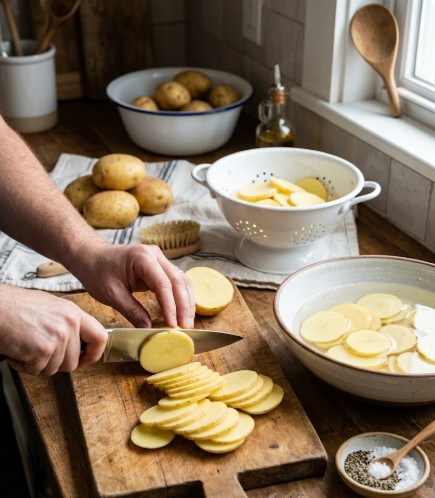
I choose Yukon Gold or red potatoes for their creamy texture and thin skins. I wash them well, then slice them 1/8–1/4 inch thick using a mandoline or sharp knife so each slice cooks evenly. Thicker slices take longer and can leave the center firm.
I rinse the slices in cold water to remove excess starch, then pat them dry with a clean towel. If I want a slightly softer result, I par-cook slices in salted boiling water for 3 minutes, then drain and cool before layering. I always season the potato slices lightly with salt and pepper while I work.
Creating the Creamy Cheese Sauce
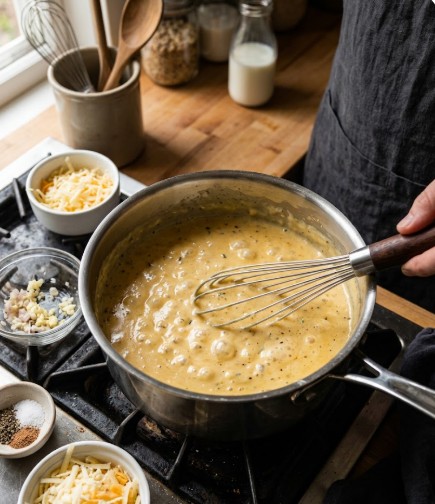
I start by sautéing minced shallots or a small chopped onion in butter until soft and translucent, about 3 minutes. I add minced garlic for 30 seconds, then stir in heavy cream and a splash of milk to thin the sauce slightly.
I bring the cream to a gentle simmer and add grated cheeses—Sharp cheddar plus a melting cheese like Fontina or Gruyère works well. I whisk until smooth, then taste and season with salt, black pepper, and a pinch of nutmeg or smoked paprika if desired. The sauce should coat a spoon thickly but still pour slowly.
Layering and Assembly
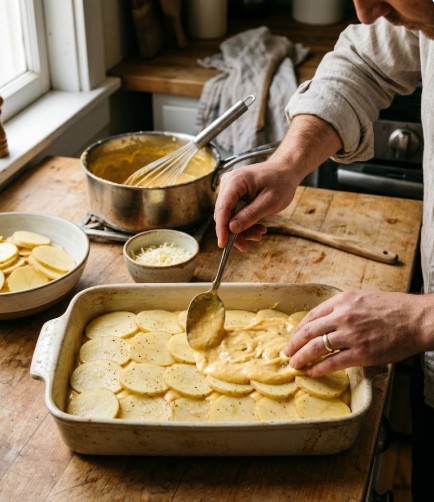
I butter a 9×13-inch baking dish and arrange a single layer of potato slices overlapping slightly. I spoon a third of the cheese sauce over the potatoes, spreading to cover evenly. I repeat with two more layers, saving some sauce for the top.
I sprinkle extra grated cheese on the final layer for a golden crust. I cover the dish tightly with foil and bake at 350°F (175°C) for 45–55 minutes, then remove the foil and bake another 10–15 minutes until bubbling and browned. I let it rest 10 minutes before serving so the sauce sets and slices hold together.
Baking and Finishing Techniques
I focus on precise oven heat and timing, then use simple finishing steps to get a creamy interior and a browned, bubbly top.
Oven Temperatures and Baking Times
I preheat the oven to 375°F (190°C) for a steady bake that softens potatoes without drying the sauce. I bake the dish covered with foil for the first 30–40 minutes to trap steam and let the potatoes become tender.
After that initial bake, I remove the foil and continue at the same temperature for another 20–30 minutes. This lets the cheese melt and the sauce reduce slightly. Total bake time usually runs 50–70 minutes depending on potato slice thickness and dish depth.
I test doneness by inserting a paring knife; it should slide through the center with little resistance. If the knife meets firmness, I return the dish to the oven for 5–10 more minutes, checking every few minutes.
Achieving the Perfect Golden Crust
I aim for a crust that is deep golden, not burned. I sprinkle a final thin layer of grated cheese (Monterey Jack or Gruyère work well) right before removing the foil. Then I broil on high for 2–4 minutes, watching closely to avoid fast burning.
If the top browns unevenly, I rotate the pan once during broil. For extra crunch, I mix panko with a tablespoon of melted butter and scatter it over the cheese before broiling.
If the top is browning too quickly during the bake, I tent a piece of foil loosely over the dish. This prevents over-browning while the center finishes cooking.
Serving Suggestions
I focus on clear ways to serve this rich, cheesy potatoes au gratin so it shines on the plate and pairs well with main dishes. Below I show presentation tips and meal pairings that match the dish’s creamy texture and bold flavor.
Presentation Tips
I like to bake the dish in a shallow 9×13 pan so the top browns evenly and each slice holds together. For a clean serving look, I run a knife around the edges before scooping with a wide spatula.
Garnish choices matter. I sprinkle finely chopped chives or parsley over each portion to add color and a fresh bite. A light dusting of smoked paprika adds a warm color and mild smoky note without overpowering the cheese.
Serve on warm plates to keep the gratin creamy. If you want individual portions, use ramekins and broil briefly to re-crisp the tops. For family-style service, place the pan in the center and provide sturdy serving utensils.
Pairing with Main Courses
I pair this au gratin with grilled or roasted meats that have bold flavors to cut through the richness. Think ribeye, sirloin, or a smoky tri-tip. The creamy potatoes balance the char and salt of grilled beef well.
For poultry, I choose roasted chicken with herbs or a garlic-and-thyme turkey. The herbs lift the cheese while the roast juices mingle with the potatoes.
For a lighter option, serve it alongside sautéed green beans or a crisp arugula salad with a lemon vinaigrette. The acidity and crunch provide contrast and keep the meal balanced.
Variations and Substitutions
I focus on swaps that keep the dish creamy and savory while changing flavor, texture, or diet needs. The ideas below show specific cheeses and dairy-free swaps that work well with thinly sliced potatoes and a rich sauce.
Alternative Cheeses
I like using a mix of cheeses to build flavor and meltiness. Sharp cheddar adds tang and color; use 1 to 1 1/2 cups shredded for a 9×13 pan. Gruyère melts smoothly and gives a nutty note—substitute half the cheddar with 8 ounces grated Gruyère for a more upscale finish. Parmesan brings salty depth; sprinkle 1/3 to 1/2 cup over the top before baking to get a golden crust.
For a milder, creamier result, swap part of the cheddar for Monterey Jack or Colby. If you want extra goo, add 4 ounces of cream cheese to the sauce and whisk until smooth. Avoid pre-shredded cheeses if you can; they contain anti-caking agents that can hinder melting. I recommend grating your own for the best texture.
Vegan and Dairy-Free Options
I replace dairy with creamy, high-fat alternatives to keep the sauce rich. Use full-fat coconut milk or canned oat cream (about 2 cups) mixed with 2 tablespoons of vegan butter and 2 tablespoons of all-purpose flour to make a smooth béchamel-style sauce. Add 1–2 teaspoons nutritional yeast for a cheesy flavor and 1/2 teaspoon onion powder and 1/4 teaspoon garlic powder for depth.
For vegan cheese, choose a meltable block-style product and grate 1 to 1 1/2 cups into the sauce, or use 3/4 cup vegan cheddar shreds plus 1/4 cup vegan Parmesan on top. If you need a lighter option, thinly slice potatoes and layer with sautéed mushrooms and a splash of vegetable broth between layers to reduce cream while keeping moisture. Adjust salt carefully—vegan cheeses vary in saltiness.
Make-Ahead and Storage Tips
I plan ahead so the potatoes stay creamy and food-safe. I explain how long to keep them, the best containers, and the safest ways to reheat for a golden top and even texture.
Storing Leftovers
I cool the dish for no more than two hours before storing to prevent bacteria growth. I transfer leftovers into airtight containers or cover the original baking dish tightly with foil or plastic wrap.
I refrigerate for up to 3–4 days. For longer storage, I freeze portions in labeled freezer-safe containers for up to 2 months. I remove as much air as possible to minimize freezer burn.
To thaw, I move a frozen portion to the refrigerator overnight. If I need it sooner, I use the microwave’s defrost setting in short intervals, then bake briefly to restore texture. I avoid refreezing previously frozen-and-thawed potatoes.
Best Practices for Reheating
I preheat the oven to 325–350°F (160–175°C) for even reheating. I cover the dish with foil for the first 15–20 minutes to keep moisture, then remove foil for the last 5–10 minutes to crisp the top.
Oven method (recommended):
- Place casserole on a sheet pan.
- Reheat covered at 325–350°F until heated through (usually 20–30 minutes for a single portion, 35–45 minutes for a full dish).
- Uncover and broil 1–3 minutes if I want a browned crust.
Microwave method (for single servings): I reheat on medium power in 1–2 minute bursts, stirring or flipping the portion between bursts. Then I transfer to a hot oven or toaster oven for 3–5 minutes to firm the top.
I check internal temperature; it should reach 165°F (74°C) for safety. I add a splash of cream or milk before reheating if the potatoes seem dry.
Common Mistakes to Avoid
I focus on the small steps that most often ruin potatoes au gratin: excess water that makes the dish soupy, and uneven slices that leave some potatoes crunchy while others turn to mush.
Preventing Watery Texture
I drain and dry ingredients carefully. If I rinse or parboil potatoes, I pat them dry with paper towels so they don’t add extra water to the cream. I also avoid using low-fat milk or cream; choose heavy cream or a mix of cream and whole milk to keep the sauce thick.
I control liquid volume. I measure the cream and milk precisely and cook the sauce on medium heat to reduce it slightly before adding potatoes. If the recipe calls for cheese, I grate it fresh; pre-shredded cheese often contains anti-caking agents that release moisture.
I layer with care. I don’t overcrowd the pan; tight layers trap steam. If I notice excess liquid before baking, I spoon a little off or bake uncovered longer to let it evaporate.
Ensuring Even Cooking
I slice potatoes uniformly. I use a mandoline or a sharp knife to cut 2–3 mm slices so every piece cooks at the same rate. Uneven slices are the top cause of hard centers.
I arrange for airflow and heat. I spread slices in an even, single-direction layer and choose an oven temperature that matches the recipe—usually 350–375°F (175–190°C). I cover the dish for the first part of baking to let steam soften the potatoes, then remove the cover to brown the top.
I test doneness properly. I insert a thin knife into the center of the dish; it should slide in with slight resistance. If needed, I tent foil and bake another 10–15 minutes rather than increasing the oven temperature, which can burn the top before the center cooks.
Nutritional Information
I tracked the main nutrition points for this Potatoes Au Gratin recipe so you can see what a serving delivers. The dish is rich and filling, with a high calorie and fat content compared with plain potatoes.
A typical serving often contains about 350–400 calories, depending on portion size and exact ingredients. It usually has high saturated fat from butter, cream, and cheese, and moderate protein from the dairy and cheese.
Key nutrients at a glance:
- Carbohydrates: High, mainly from the potatoes.
- Fat: High, with a notable amount of saturated fat.
- Protein: Moderate, helped by cheese and cream.
- Sodium: Can be high if using canned soups or added salt.
I recommend these simple swaps to reduce calories and saturated fat:
- Use low-fat milk instead of heavy cream.
- Reduce the amount of cheese or choose a lower-fat cheese.
- Replace some butter with a small amount of olive oil.
If you need exact numbers for calories, carbs, protein, fat, or sodium, I can estimate them using your chosen portion size and ingredient brands.
User Reviews and Feedback
I read through comments and notes from cooks who tried the recipe. Many praised the rich, creamy texture and said the dish matched the steakhouse style they expected. A few called it “spot on” compared to Texas de Brazil’s version.
Some users mentioned practical tweaks they made. People often suggested thinner potato slices and longer baking for a softer center. Others swapped heavy cream for a cream-and-milk mix to lighten the sauce.
I noticed repeated tips about seasoning and cheese. Reviewers recommended extra salt and a sharper cheese to boost flavor. A handful warned the original can be too salty for home tastes, so they cut back on added salt.
Here are common praises and concerns I found:
- Praises: authentic flavor, rich sauce, restaurant-like texture
- Concerns: salt level, baking time, need for more cheese crisp on top
I value concrete feedback on prep time and cleanup. Several reviewers loved the one-pot approach and said cleanup was easy. A few said the dish needs a day-of assembly to be best, not reheated after long storage.
FAQs
Q: What makes my version of Texas de Brazil-style potatoes au gratin effective at recreating the restaurant taste?
I layer thinly sliced potatoes with a rich, cheesy cream sauce and let them bake until golden. This method locks in flavor and yields a tender, creamy texture like the steakhouse dish.
Q: Are these potatoes safe for people with dietary limits?
The recipe uses dairy and butter, so it’s not safe for those with lactose intolerance or dairy allergies without swaps. I recommend using lactose-free cream or a plant-based cream and a dairy-free cheese to make it safer.
Q: How large of an area or crowd will this recipe cover?
For a standard 9×13-inch dish, I serve 6–8 people as a side. I halve or double the ingredients to fit smaller or larger gatherings.
Q: How do I keep the dish creamy during storage and reheating?
Cool to room temperature, then refrigerate in an airtight container for up to 3 days. I reheat covered in a 350°F oven until warmed through and add a splash of milk or cream if it seems dry.
Q: What maintenance tips help the dish turn out well every time?
Use uniformly thin potato slices for even cooking. I preheat my oven and let the sauce simmer briefly to thicken before baking. Salt and pepper to taste at each stage.
Q: How does this au gratin compare to mashed potatoes or other sides?
Au gratin is richer and more indulgent than mashed potatoes, with a cheesy crust and layered texture. I choose it when I want a show-stopping, creamy side rather than a simple, lighter option.
Q: Can I swap ingredients or method to make it quicker?
Yes. I sometimes use a mix of heavy cream and milk or a stovetop shortcut to sauce, then finish in the oven. That speeds things up but keeps the core flavor.
Conclusion
I found this Texas de Brazil-style potatoes au gratin recipe both reliable and easy to make at home. The dish delivers creamy, cheesy flavor with simple ingredients and a clear method I can repeat for special meals.
I trust the technique for layering thin-sliced potatoes and a rich cheese sauce. It cooks evenly, gives a golden top, and pairs well with roasted meats or a fresh salad. The recipe feels safe and straightforward for home cooks.
I also value that the ingredients are familiar and mostly pantry staples. That makes the dish eco-friendlier by reducing waste and extra shopping trips. Choosing quality dairy and cheese helps the flavor and supports better long-term results.
I recommend using a good oven-safe dish and following the timing and temperature closely. Small steps—consistent slices, warm cream, and proper seasoning—make a big difference in texture and taste. This approach gives dependable, restaurant-style results.
I encourage you to try the recipe and adapt it to your taste. Make it your own with herbs, a sharper cheese, or a lighter cream mix. You’ll end up with a comforting, crowd-pleasing side that keeps guests asking for seconds.