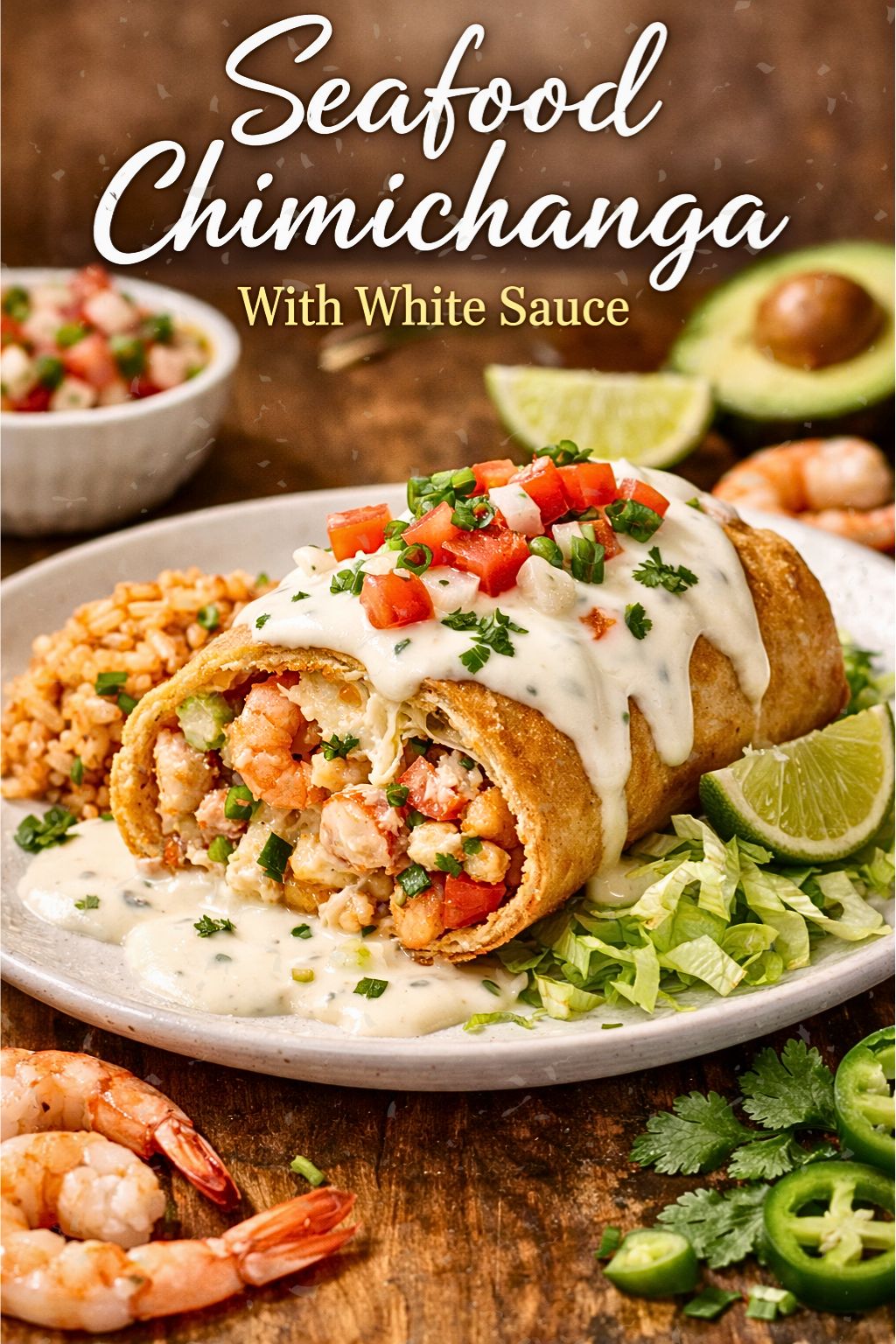
Seafood Chimichanga With White Sauce
I remember the first time I tried a seafood chimichanga with white sauce — the crunchy tortilla, warm seafood filling, and smooth creamy sauce came together in a way that felt balanced and satisfying. The dish mixes familiar Mexican techniques with seafood flavors, and it pairs well with bright, cold sides like a tangy pasta salad or simple guacamole to cut the richness.
I’ll walk through what the dish is, the key ingredients and basic steps to make it, plus tips for storing and serving. I aim to keep the instructions clear and practical so you can recreate the flavors at home without fuss.
Key Takeaways
- The dish blends crispy tortillas with a creamy seafood filling and white sauce.
- Simple ingredients and straightforward steps let you make it at home.
- Light, acidic sides and proper storage keep the flavors fresh.
What Is a Seafood Chimichanga with White Sauce?
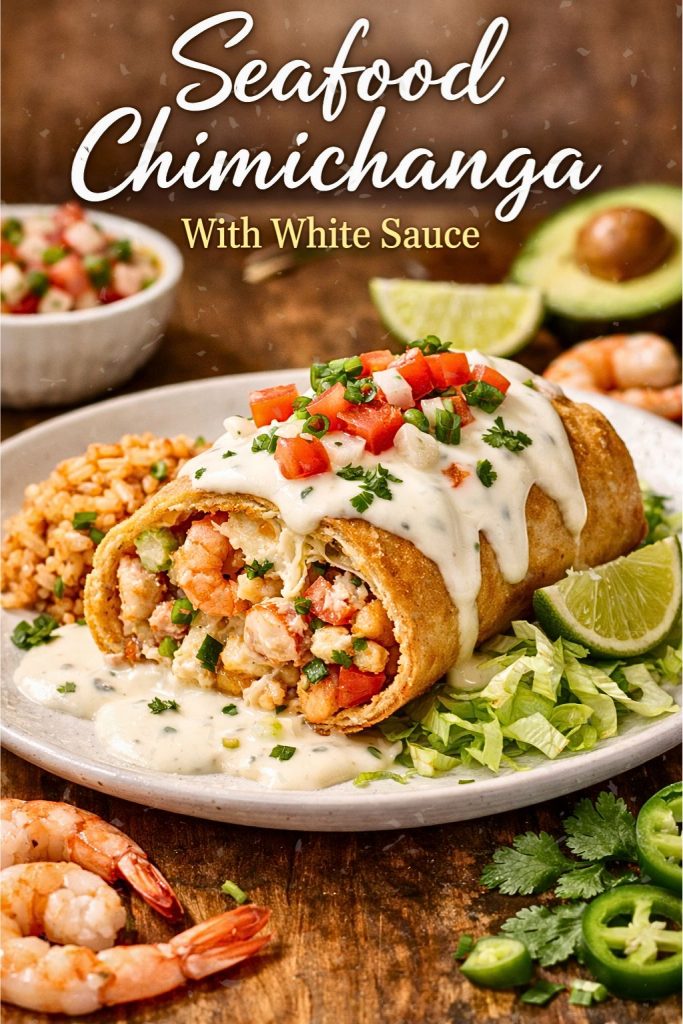
I wrap seasoned shrimp, crab, and scallops in a large flour tortilla, then fry or bake it until the outside turns crispy and golden. I pour a creamy white sauce over the chimichanga — usually made from cheese, sour cream, and mild green chiles — to add richness and a touch of tang. The filling often includes spices like taco seasoning, a squeeze of lime, and a bit of salsa for balance. I serve it with fresh toppings like shredded lettuce, pico de gallo, or avocado to add texture and brightness to each bite.
The Ingredients
I gather ingredients for two parts: a creamy seafood sauce and the chimichanga filling. For the sauce I use butter, flour, and warmed half‑and‑half as a base, then fold in chopped cilantro, smoked paprika, salt, and black pepper to taste.
For the filling I combine diced green onions, minced garlic, and optional minced jalapeño with seeded tomatoes. I use a mix of shrimp, lump or jumbo crabmeat, and bay scallops, seasoned with ground cumin, salt, and pepper. I finish the filling with a bit of butter and fresh cilantro. I also have large flour tortillas on hand and enough oil for frying.
- Sauce: butter, flour, half‑and‑half, cilantro, smoked paprika, salt & pepper
- Filling: green onions, garlic, jalapeño (optional), tomatoes, shrimp, crab, scallops, cumin, butter, cilantro, tortillas, frying oil
How to Make Seafood Chimichanga with White Sauce
Step 1: Make the Creamy White Sauce
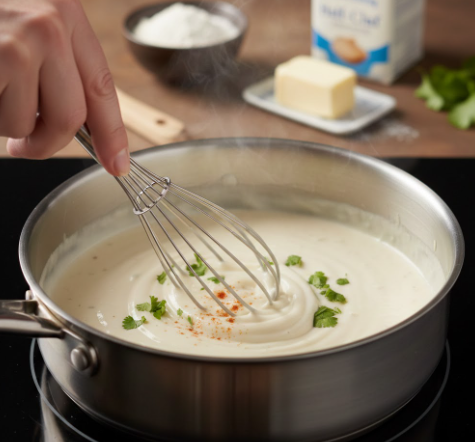
I melt butter in a saucepan, then whisk in flour to form a smooth paste. I slowly add warmed half-and-half while whisking so no lumps form. I cook until thick, then stir in chopped cilantro, smoked paprika, salt, and pepper. I set the sauce aside to cool slightly.
Step 2: Sauté the Aromatics and Veggies
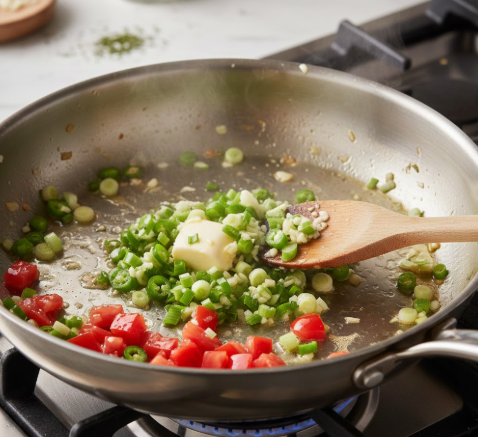
I heat butter or margarine in a large skillet over medium heat. I cook chopped green onions, minced garlic, and diced jalapeño until they give off their aroma. I add diced tomatoes and cook briefly so they soften but keep some texture.
Step 3: Cook the Seafood
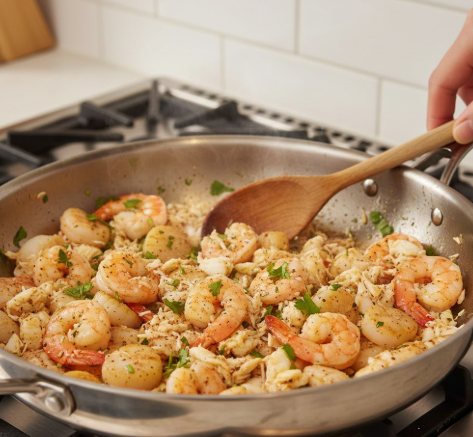
I add shrimp, lump crab, and scallops to the skillet and season with ground cumin, salt, and pepper. I cook until each piece turns opaque and is just done. I finish by stirring in fresh cilantro and removing the pan from the heat.
Step 4: Roll the Chimichangas
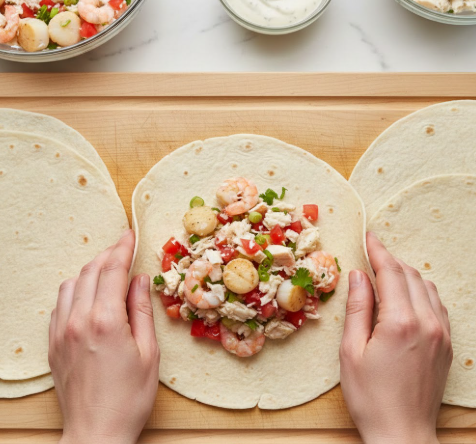
I lay out flour tortillas on a clean surface. I place a portion of the seafood filling in the center of each tortilla. I fold the sides in and roll from the bottom to the top, using a toothpick if needed to hold the seam.
Step 5: Fry Until Crispy
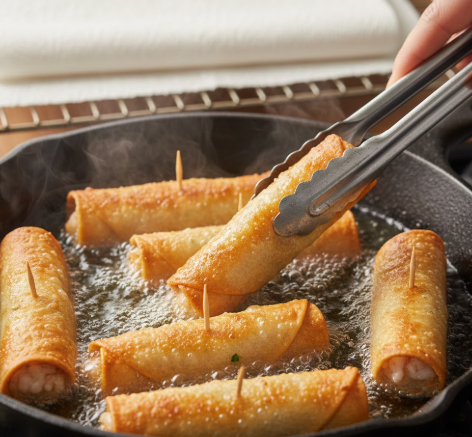
I heat a thin layer of oil in a frying pan until it sizzles. I carefully add the rolled chimichangas and fry, turning so all sides become golden brown. I transfer them to paper towels to drain excess oil.
Step 6: Spoon the White Sauce Over

I warm the white sauce if needed, then drizzle or spoon it over the hot chimichangas. I serve immediately so the tortillas stay crisp and the sauce stays creamy.
Notes
- I use only fresh seafood for best taste and texture.
- I tweak jalapeños so the heat matches my preference.
- I warm half-and-half before adding it to the sauce to keep it smooth.
- I avoid crowding the pan and fry in batches when needed.
- I serve chimichangas right away so they stay crisp and hot.
How I Store Leftovers
- I keep leftover chimichangas in an airtight container in the fridge for up to 2 days.
- I reheat them in the oven to keep the outside crispy.
- I store the white sauce separately and warm it before serving.
Serving Ideas
I like to serve seafood chimichangas with bright, simple sides.
- Fresh salsa cuts the richness with a tangy bite.
- Guacamole adds creamy, mellow flavor that balances the seafood.
- Garden salad offers a crisp, refreshing contrast.
- Rice and beans make the meal heartier and more filling.
- Lime wedges let guests brighten each bite to taste.
What Other Substitutes Can I Use in Seafood Chimichanga with White Sauce?
I swap seafood for shredded cooked chicken when I want a milder taste.
I use a mix of beans and corn for a vegetarian filling that still feels hearty.
I add extra cheese inside for a creamier, gooey texture.
I choose corn tortillas to make it gluten-free.
I lighten the white sauce by replacing half the half-and-half with Greek yogurt.
Seafood Chimichanga With White Sauce
Tools I Use
- Medium saucepan for the sauce
- Whisk to blend smoothly
- Large skillet for the seafood filling
- Frying pan or deep skillet for frying
- Spatula and tongs
- Paper towels for draining
- Toothpicks (optional)
- Measuring cups and spoons
What Goes In It
White cream sauce
- 1/4 cup all-purpose flour
- 1/4 cup unsalted butter
- 2 cups warmed half-and-half
- 1/4 cup chopped fresh cilantro
- 1/4 tsp smoked paprika
- Salt and black pepper to taste
Chimichanga filling
- 1/2 cup finely diced green onions
- 2 garlic cloves, minced
- 1–2 jalapeños, seeded and minced (optional)
- 2 medium tomatoes, seeded and diced
- 1 lb shrimp, peeled and deveined
- 1/2 lb lump or jumbo crabmeat, checked for shells
- 1/2 lb bay scallops
- 1/4 cup chopped fresh cilantro
- 1/2 tsp ground cumin
- Salt and black pepper to taste
- 2 tbsp butter or margarine
- Eight 12-inch flour tortillas
- Oil for frying
Step-by-step Method
- Make the white sauce: Melt butter in the saucepan. Whisk in flour to make a paste. Slowly pour in warmed half-and-half while whisking. Cook until thickened. Stir in cilantro, smoked paprika, salt, and pepper. Set aside and keep warm.
- Sauté aromatics: In the large skillet, melt butter over medium heat. Add green onions, garlic, and jalapeño. Cook until soft and fragrant. Add diced tomatoes and cook another minute.
- Cook seafood: Add shrimp, crab, and scallops to the skillet. Season with cumin, salt, and pepper. Cook until the seafood turns opaque and firms up, about a few minutes. Stir in cilantro and remove from heat.
- Fill tortillas: Lay a tortilla flat. Spoon a portion of the seafood mixture into the center. Fold the sides in, then roll from the bottom up. Secure with a toothpick if needed. Repeat for all tortillas.
- Fry chimichangas: Heat oil in a frying pan to medium-high. Fry chimichangas in batches until golden brown on all sides, turning carefully. Drain on paper towels.
- Finish and serve: Place chimichangas on a plate and drizzle with the warm white sauce. Serve immediately while crisp.
Helpful Tips
- I always pick the freshest seafood I can find for the best texture.
- If you prefer mild heat, I skip the jalapeños or use just one.
- Warming the half-and-half before adding it keeps the sauce smooth and lump-free.
- Fry in small batches so the oil temperature stays steady and the chimichangas crisp evenly.
- Serve right away; they lose crispness as they cool.
Estimated Nutrition
- Servings: 4
- Calories per serving: about 269 kcal
Nutrition can vary by ingredient brands and portion sizes. Adjust quantities or cooking methods to fit dietary needs.
Frequently Asked Questions
Can I bake them instead of frying?
I bake chimichangas when I want a lighter version. I brush them with a little oil and roast at 400°F (200°C) for about 20–25 minutes, turning once, until the tortillas are golden and crisp.
Is frozen seafood okay to use?
I prefer fresh seafood for best flavor and texture. If I use frozen, I fully thaw it in the fridge, pat it dry, and drain any excess liquid before cooking to avoid a soggy filling.
How do I make them less spicy?
I reduce heat by cutting back or leaving out jalapeños, chiles, or hot sauce. I also add more sour cream, cheese, or a squeeze of lime to mellow the spice.
What drinks go well with this meal?
I pair seafood chimichangas with a light white wine like Sauvignon Blanc or a cold margarita. Sparkling water with lime also cleanses the palate.
Can I prepare the filling ahead of time?
I often make the filling a day ahead and keep it refrigerated. I assemble and cook the chimichangas just before serving so the tortillas stay crisp.
Final Thoughts
I love how seafood chimichangas pair bold flavors with simple prep. The crispy tortilla holds a savory mix of shrimp and crab that works well with a creamy white sauce. I often serve it with a fresh salad or roasted vegetables to add brightness and balance.
- I recommend warm tortillas and fresh seafood for the best texture.
- I usually bake instead of deep-frying for a lighter finish.
- I top with cilantro, lime, and a spoonful of extra sauce for more flavor.
Try it for a casual weeknight or a small dinner party — it always goes fast.
FAQs
Q1: What can I expect from a seafood chimichanga with white sauce?
I expect a crispy tortilla filled with seasoned seafood like shrimp, crab, or scallops, then fried or baked until golden. The white sauce usually adds a creamy, slightly tangy layer made from ingredients such as sour cream, cream cheese, cheese, and mild green chiles or spices.
Q2: Is this dish safe for people with shellfish allergies?
No. I do not recommend serving or eating seafood chimichanga if someone has a shellfish allergy. Cross-contamination is common in kitchens, so keep separate utensils and cookware if preparing for someone with allergies.
Q3: How well does the white sauce hold up if I make the chimichangas ahead of time?
The sauce can separate or thicken when stored, so I suggest storing sauce and chimichangas separately. Reheat the chimichangas in the oven to keep them crisp, then warm the sauce gently and stir before serving to restore a smooth texture.
Q4: Which method gives better results: frying, baking, or air-frying?
Frying gives the crispiest exterior and rich flavor, but baking or air-frying makes a lighter, less oily result. I choose frying for traditional texture and air-frying or baking when I want a healthier option with decent crispness.
Q5: How do I keep the filling moist without sogging the tortilla?
I drain and cool cooked seafood before wrapping to reduce excess liquid. I also mix in binders like a little cream cheese, shredded cheese, or a small amount of sauce to hold moisture without making the tortilla soggy.
Q6: How long will leftovers keep, and how should I store them?
I store leftovers in an airtight container in the refrigerator for 2–3 days. To reheat, I use an oven or air fryer to bring back crispness; microwaving will warm them quickly but may make the tortilla soft.
Q7: How does a seafood chimichanga compare to other seafood Tex‑Mex dishes?
Compared to tacos or burritos, chimichangas offer a crisp, fried shell and a richer mouthfeel, especially with white cream sauce. Tacos stay lighter and fresher; burritos are softer and more portable. I pick chimichangas when I want a crunchy, indulgent meal.
Closing Thoughts
I recommend trying a seafood chimichanga with white sauce when you want a rich, satisfying meal that feels special but stays simple to make. Crispy tortillas filled with seasoned shrimp, crab, or scallops pair well with a creamy white sauce made from ingredients like cream cheese, sour cream, or mild chiles. The contrast of crunchy exterior and smooth sauce makes each bite balanced and flavorful.
- Effectiveness: This dish delivers strong savory and creamy flavors while staying adaptable—bake or fry, use different seafood, and adjust spices to suit taste.
- Safety and freshness: Use fresh or properly thawed seafood, cook to safe temperatures, and keep sauce refrigerated to prevent spoilage.
- Eco-friendliness: Choose sustainably sourced seafood and reduce waste by using leftover sauce on salads or tacos.
- Suitability: It fits weeknight dinners, date nights, and small gatherings. Scale the recipe up or down easily.
I encourage selecting reliable, fresh ingredients and a trusted white sauce recipe for the best results. With careful prep and simple swaps, you’ll enjoy a tasty, versatile dish that’s worth making again.