
Barefoot Contessa Tuna Casserole
I love dishes that feel like a warm hug on a cold night, and this tuna casserole fits that bill. It combines canned tuna, tender noodles, mushrooms, onions, peas, and a mix of cheeses and breadcrumbs to make a simple, satisfying meal that feeds a crowd.
I’ll walk you through an easy recipe with clear steps, ingredient notes, and practical tips so you can make the casserole with confidence. You’ll also get basic storage and serving ideas to keep leftovers tasty and safe.

Key Takeaways
- The dish is a comforting, crowd-pleasing baked casserole with simple pantry ingredients.
- The recipe is straightforward and includes clear steps and helpful tips.
- Storage and serving guidance help keep the meal safe and enjoyable later.
What the Barefoot Contessa Tuna Casserole Is
I make this tuna casserole when I want a simple, filling meal. It mixes canned tuna with egg noodles, mushrooms, onions, and peas in a creamy sauce. I often add a splash of white wine, soy sauce, and Worcestershire for a savory boost, and Parmesan for a mild, nutty finish.
A crispy breadcrumb topping gives the dish a pleasant crunch. I can change the recipe easily — swap pasta for gluten-free noodles, use a different cheese, or skip ingredients for dietary needs. The result is a warm, comforting casserole that feels both homey and a little elevated.
How I Make Barefoot Contessa’s Tuna Casserole
I cook egg noodles, sauté onions and celery, then stir in tuna, peas, and a creamy sauce. I mix in cheddar, top with breadcrumbs and more cheese, then bake until bubbly and golden. Serve warm.
Ingredients
I gather the ingredients below to build a rich, creamy tuna noodle casserole with a crunchy top. I list amounts as estimates so you can adjust for taste or servings.
- Protein
- Canned tuna — 2 to 3 cans, drained
- Pasta & Vegetables
- Egg noodles — about 12 ounces (cooked)
- Mushrooms — 8 ounces, sliced
- Frozen peas — 1 cup, thawed
- Onion — 1 medium, diced
- Fresh thyme — 1–2 teaspoons leaves
- Liquid & Flavor Bases
- Chicken broth — 1 to 1 1/2 cups
- Dry white wine — 1/4 cup (optional)
- Whole milk — 1 to 1 1/4 cups
- Lemon juice — 1 tablespoon
- Worcestershire sauce — 1 teaspoon
- Dark soy sauce — 1/2 to 1 teaspoon
- Thickener & Fats
- All-purpose flour — 2 to 3 tablespoons (for the sauce)
- Butter — 3 tablespoons
- Cheese & Topping
- Grated Parmesan cheese — 1/2 to 3/4 cup
- Breadcrumbs — 3/4 cup for a crisp topping
- Seasoning
- Coarse salt — to taste (start with 1 teaspoon)
- Ground black pepper — 1/2 teaspoon
I recommend tasting the sauce as I go and adjusting salt, pepper, lemon, or soy to balance the flavors.
Step-by-step instructions
Step 1 — Preheat and prepare the pan

I heat the oven to 350°F (175°C). I butter a 9×13-inch baking dish so the casserole won’t stick.
Step 2 — Cook the noodles
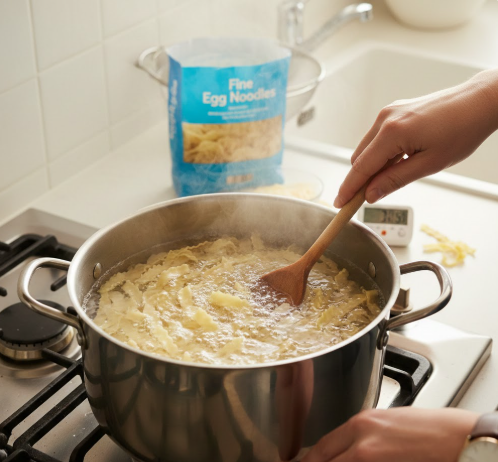
I boil egg noodles following the package directions. I drain them and set them aside to cool slightly.
Step 3 — Sauté vegetables
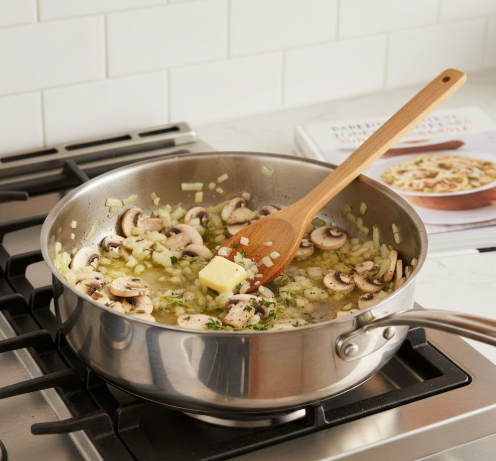
I melt butter in a large saucepan over medium heat. I add sliced mushrooms, chopped onion, thyme, salt, and pepper, and cook until soft (about 5 minutes).
Step 4 — Build the base flavors
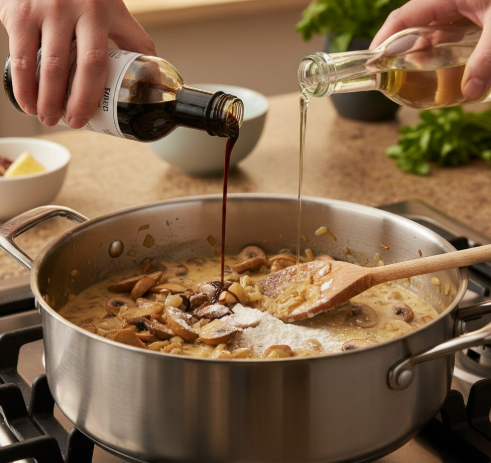
I stir in soy sauce, white wine, and flour, and cook for about 1 minute to combine and remove raw flour taste.
Step 5 — Make the sauce
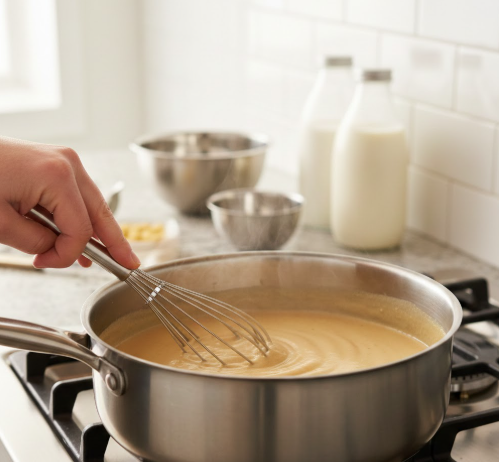
I slowly whisk in milk and chicken broth, bring the mixture to a boil, then lower the heat. I simmer about 10 minutes until it thickens.
Step 6 — Add tuna and seasonings

I mix in Worcestershire sauce, lemon juice, and drained canned tuna, breaking up large chunks gently.
Step 7 — Layer the casserole
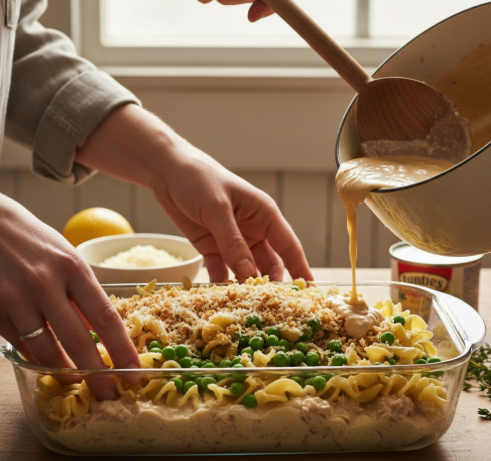
I pour half the tuna sauce into the prepared dish. I add the noodles, peas, grated Parmesan, and breadcrumbs, then pour the rest of the sauce on top and fold lightly.
Step 8 — Bake and rest
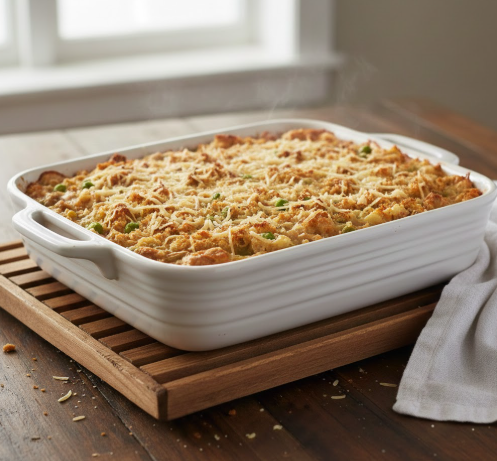
I bake 30–35 minutes until the top is golden. I let the casserole cool a few minutes before serving.
Tips
Tools I Recommend
- Use a 9×13-inch ovenproof dish for even baking and easy serving.
- A large saucepan or skillet helps when making the sauce; a whisk prevents lumps.
- Keep a spatula and measuring cups handy for folding the noodles and tuna into the sauce.
Ingredient Choices
- Swap whole wheat or multigrain noodles and low‑fat milk if you want a lighter casserole.
- For a bolder flavor, I add a splash of dry white wine and a little Worcestershire sauce.
- Use freshly grated Parmesan for a better melt and sharper taste than pre‑grated cheese.
- Frozen peas work well; do not thaw them fully before mixing so they keep some texture.
How I Cook It
- Preheat the oven to 350°F and butter the baking dish so the topping doesn’t stick.
- Cook the noodles until just tender (al dente); they will continue to soften in the oven.
- Sauté mushrooms, onions, and thyme in butter until soft, then add flour and cook briefly to make a roux.
- Slowly whisk in milk and broth off the heat if needed to avoid clumps, then simmer until the sauce thickens.
- Layer half the sauce, noodles, cheese, peas, and breadcrumbs, then top with the rest of the sauce for even coverage.
- Bake until the top turns golden brown, about 30–35 minutes; let it rest a few minutes before serving.
Quick Notes I Use
- For extra crunch, I sprinkle additional Parmesan on top right before baking.
- Season with coarse salt and fresh ground pepper to taste; add lemon juice last to brighten flavors.
- Store leftovers in an airtight container in the fridge for up to 4 days.
- If the topping browns too fast, tent the dish with foil for the remainder of baking.
Nutrition Information
I break down the main nutrition points for a typical serving of Barefoot Contessa–style tuna casserole so you can see what it adds to your meal plan.
- Calories: A single serving usually ranges from about 350 to 550 calories depending on portion size and how much cheese and breadcrumbs I use.
- Protein: Tuna and cheese make this a good protein source — typically 20–30 grams per serving.
- Carbohydrates: Egg noodles and any added peas or vegetables give around 30–45 grams of carbs per serving.
- Fat: Expect 12–25 grams of fat, with higher amounts if I add more cheese, butter, or cream.
- Sodium: Canned tuna and condensed soup raise sodium levels. One serving can contain moderate to high sodium, often 600–1,000 mg or more unless I choose low-sodium ingredients.
- Fiber and Sugars: Fiber is modest (2–4 grams) from noodles and vegetables. Sugars are usually low (around 2–6 grams) unless sweetened ingredients are added.
- Micronutrients: Tuna supplies vitamin D, B12, and selenium. Peas and added vegetables contribute vitamin A, vitamin C, and some iron.
Tips I use to make the casserole healthier:
- Swap regular condensed soup for a low-sodium or homemade white sauce to cut salt.
- Choose whole-wheat or higher-fiber noodles to boost fiber.
- Use reduced-fat cheese or cut the cheese amount to lower saturated fat.
- Drain and rinse canned tuna to reduce sodium and improve texture.
- Add extra vegetables (peas, celery, or mushrooms) to increase vitamins and fiber.
Nutrition estimates vary by recipe and serving size, so I recommend calculating exact values from the ingredients you use if you need precise numbers.
What to serve with Barefoot Contessa Tuna Casserole?
I pair this casserole with a crisp green salad or steamed vegetables for balance. For a fuller meal, I add garlic bread, mashed potatoes, or a bowl of fresh fruit.
How I keep leftover Barefoot Contessa tuna casserole
I cool leftovers, seal them in an airtight container, and refrigerate for up to three days.
For longer storage, I freeze portions in freezer-safe containers and use them within two months.
Can pregnant women eat this?
I avoid canned tuna during pregnancy due to mercury risk.
I choose fresh or frozen tuna instead and limit portions to lower exposure.
FAQs
Which tuna do I recommend for this dish?
I use solid light tuna packed in water for the best balance of mild flavor and low mercury. It mixes well with the creamy sauce and vegetables without overpowering the dish. If you like a stronger tuna taste, albacore or skipjack work too, but reduce added salt because those varieties can taste richer.
Are frozen peas an acceptable swap for canned?
I often choose frozen peas because they keep more texture and nutrients than canned ones. Thaw them before stirring into the casserole so they heat evenly. Fresh peas are great when in season — blanch them briefly — but don’t add frozen straight from the bag or they can release extra water into the dish.
Can I switch the pasta to another kind?
Yes. I usually use egg noodles, but whole wheat, gluten-free pasta, or short shapes like rotini or shells all work. Change the boiling time to match the pasta you pick and drain thoroughly. For a lighter dish, I sometimes use zucchini noodles or serve the casserole over mashed potatoes or rice instead of any pasta.
How do I make this casserole gluten-free?
I make it gluten-free by swapping a few ingredients. I replace regular flour with a gluten-free flour blend or almond flour for the sauce. I buy gluten-free egg noodles or another certified gluten-free pasta. I also check labels on canned tuna, soy sauce, Worcestershire sauce, and breadcrumbs — many processed ingredients can hide gluten. For the crunchy topping, I use gluten-free breadcrumbs or crushed gluten-free crackers. If you want a dairy-free version too, choose a dairy-free milk and cheese substitute.
Tips and quick reminders:
- Taste as you go to balance salt and creaminess.
- Drain tuna well to avoid a watery bake.
- If you use frozen peas or vegetables, remove excess moisture before mixing.
- Label all swaps clearly if cooking for someone with celiac disease or a wheat allergy.
Wrapping Up
I enjoy how this tuna casserole turns simple pantry items into a warm, satisfying meal. It cooks quickly, feeds a group, and lets you tweak ingredients for taste or diet. I often swap cheeses, add more veggies, or use whole-grain pasta to boost fiber without changing the core method.
If you need make-ahead help, I recommend assembling the dish, covering it, and refrigerating for up to 24 hours before baking. Leftovers keep well for up to four days in the fridge, and reheating in the oven preserves the topping’s texture better than the microwave.
Quick tips:
- Use drained tuna and well-cooked noodles to avoid a watery casserole.
- Toast breadcrumbs or panko separately for extra crunch.
- Stir in a splash of milk or broth if the mix seems tight before baking.
Share the recipe with family and friends so they can try these simple swaps and enjoy the dish too.
FAQs
Q1: What makes my Barefoot Contessa–style tuna casserole different from basic boxed versions?
I use fresh aromatics like onion and celery, real cheese, and a creamy sauce made from milk and mushroom soup or a simple béchamel. I add peas and a crunchy breadcrumb or cheese topping for texture. These swaps boost flavor and mouthfeel without adding much extra work.
Q2: Is this casserole safe to serve to kids and older adults?
Yes, it is generally safe if you follow basic food safety. I use fully cooked pasta, drained canned tuna, and heat the casserole to at least 165°F (74°C). Avoid serving if anyone has a seafood allergy. For older adults, I soften ingredients and cut large pieces small to make chewing easier.
Q3: How long does the casserole last, and how should I store it?
I keep leftovers in an airtight container in the fridge for up to 3–4 days. For longer storage, I freeze portions in freezer-safe containers for up to 2 months. Thaw overnight in the fridge before reheating in the oven or microwave until piping hot.
Q4: What simple swaps can I make for diet or taste preferences?
I swap whole milk for low-fat milk, use Greek yogurt or low-fat sour cream to cut fat, and choose light tuna to reduce oil. For gluten-free needs, I use gluten-free pasta and breadcrumbs. To increase veggies, I add mushrooms, bell pepper, or spinach.
Q5: How does this recipe compare to other casserole methods in ease and flavor?
I find this Barefoot Contessa–style version balances ease and flavor well. It uses mostly pantry staples and takes about 30–40 minutes, but the fresh ingredients lift the taste above simpler boxed mixes. It’s quicker than from-scratch béchamel-only bakes but more flavorful than pre-made mixes.
Q6: What maintenance or prep tips keep the dish from getting soggy?
I slightly undercook the pasta so it holds up during baking. I drain tuna and vegetables well and avoid excess liquid in the sauce. Letting the dish rest 5–10 minutes after baking helps the sauce set and makes serving cleaner.
Q7: Are there any safety tips for using canned tuna and dairy together?
I check expiry dates and store opened tuna in the fridge and use within 1–2 days. I keep dairy cold until mixing and heat the finished casserole to a safe internal temperature. If anyone in my household is pregnant or immunocompromised, I follow guidance on mercury and canned fish limits and consult a healthcare provider if needed.
Final Thoughts
I recommend the Barefoot Contessa tuna casserole when you want a simple, reliable meal that still feels a bit special. I find its creamy sauce, tender noodles, and savory tuna balance comfort and flavor without complicated steps.
- Effectiveness: The recipe delivers consistent, crowd-pleasing results that reheat well and feed a family easily.
- Safety and ease: It uses common pantry ingredients and straightforward techniques, so it’s low risk for kitchen mistakes.
- Eco-friendliness: Choosing sustainably caught tuna and minimal packaging ingredients helps reduce environmental impact.
- Suitability: This dish fits weeknight dinners, potlucks, and meal prep. It adapts well to add-ins like vegetables or different cheeses.
I suggest picking high-quality tuna and fresh ingredients for the best long-term results. Try this casserole for a dependable, comforting meal that’s easy to make and share.