
Recipes Using Frozen Plums: Quick, Flavorful Desserts and Savory Ideas
I keep frozen plums on hand to capture peak-season flavor without the rush to use fresh fruit. Freezing preserves their sweetness and nutrients, so I can pull them straight into smoothies, bakes, sauces, or savory glazes with minimal prep and consistent results.
Using frozen plums also cuts waste and saves time since I don’t worry about rapid spoilage. Their firm-but-yielding texture after thawing lets me experiment across desserts and main courses, turning a simple bag from the freezer into multiple easy, flavorful recipes.
Key Takeaways
- Frozen plums preserve peak flavor and nutrients for year-round use.
- They simplify prep and reduce food waste while suiting sweet and savory dishes.
- Frozen plums work well in smoothies, baked recipes, and sauces with minimal effort.
Recipes Using Frozen Plums
Plum Smoothie Bowl Remix
I blend 1 cup chopped frozen plums with a sliced banana, 1/2 cup Greek yogurt, and 1/4 cup almond milk for a thick base.
I sweeten with a tablespoon of honey or maple syrup, then adjust consistency with more almond milk if needed.
I pour the mixture into a bowl and finish with crunchy toppings like granola, chia seeds, and fresh berries for texture and extra nutrients.
This makes a quick, antioxidant-rich breakfast that balances creamy, tart, and crunchy elements.
Savory Plum Glaze
I cook about 2 cups thawed, chopped frozen plums with 1/4 cup brown sugar, 2 tablespoons apple cider vinegar, a teaspoon grated ginger, 1/2 teaspoon cinnamon, and a pinch of salt.
I simmer the mixture until the fruit breaks down and the sauce thickens, then blend it smooth if I want a glossy glaze.
I use the sauce as a finishing glaze for grilled chicken, pork, or roasted vegetables, where the sweet-tart profile adds depth.
Store leftovers refrigerated and reheat gently before serving.
Plum Crisp with Oat Topping
I toss 4 cups thawed, pitted frozen plums with 1/2 cup sugar, 2 tablespoons lemon juice, and 1 teaspoon vanilla, then spread them in a baking dish.
For the topping I mix 3/4 cup rolled oats, 1/4 cup brown sugar, 1/4 cup almond flour, 1/2 teaspoon cinnamon, and cut in 1/4 cup cold cubed butter until crumbly.
I sprinkle the oat mixture over the plums and bake at 350°F (175°C) for 35–40 minutes until the top is golden and the filling bubbles.
Serve warm with yogurt or ice cream to contrast the tangy fruit and buttery crisp.
Key Ingredient Nutrition at a Glance
I summarize important nutrition data for recipe planning:
| Ingredient | Typical Serving | Calories | Fiber (g) | Vitamin C (approx) | Antioxidant Note |
|---|---|---|---|---|---|
| Frozen plums | 1 cup (165 g) | 70 | 2.5 | ~15% DV | High |
| Greek yogurt | 1/2 cup (125 g) | 60 | 0 | 0% | Moderate |
| Almond milk | 1/4 cup (60 ml) | 10 | 0 | 0% | Low |
| Rolled oats | 3/4 cup (70 g) | 260 | 8 | 0% | Moderate |
| Brown sugar | 1/2 cup (110 g) | 420 | 0 | 0% | Low |
I use this table to choose portion sizes and balance fiber, calories, and antioxidant sources across recipes.
Practical Tips for Cooking with Frozen Plums
I thaw plums in the refrigerator when I want firmer texture, or I cook with them frozen for purées and smoothies.
I taste and adjust sweetener because frozen plums can lean tarter than fully ripe fresh fruit.
I decide between blending and chopping based on mouthfeel: blend for sauces and smooth fillings, chop for chunky crisps and bowls.
I freeze excess plums at peak ripeness in single-layer trays, then bag them to prevent clumping and preserve flavor.
Ingredients
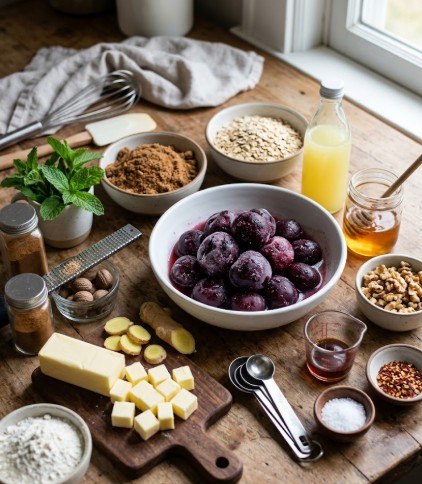
Staple Components for Plum Dishes
I rely on a set of core ingredients to build most recipes that highlight frozen plums. These items balance the fruit’s sweet-tart profile, add structure, and create pleasing textures.
- Frozen plums — thawed, partially thawed, or used frozen depending on the recipe.
- Granulated or brown sugar — adjust quantity to taste and plum ripeness.
- Fresh lemon juice — brightens flavor and balances sweetness.
- Water or fruit juice — for thinning sauces, compotes, or smoothies.
- Rolled oats — essential for crisps, crumbles, and some breakfast bakes.
- Cold butter — diced for pastry toppings or incorporated into doughs.
- All-purpose flour — provides body in baked goods and toppings.
- Honey or maple syrup — natural sweetener alternatives for depth.
- Salt — a small pinch to amplify overall flavor.
I keep these on hand and tweak amounts to suit the texture and sweetness I want in each dish.
Additional Flavorings and Optional Mix-ins
I use these extras to layer flavor or add contrast. They let me tailor recipes toward dessert, savory, or spiced profiles.
- Cinnamon — warm, works well in crumbles, sauces, and baked goods.
- Nutmeg — subtle and earthy for richer desserts.
- Ginger (fresh or ground) — brings warmth and bite; great in both sweet and savory preparations.
- Vanilla extract — rounds and enhances sweet flavors.
- Chopped almonds or walnuts — add crunch in toppings and salads.
- Fresh mint leaves — bright, herbal garnish for drinks and fruit dishes.
- Red chili flakes — small amounts give a pleasant heat in sauces or chutneys.
I choose combinations from this list depending on whether I want mellow sweetness, aromatic spice, nutty texture, or a savory contrast.
Equipment Needed
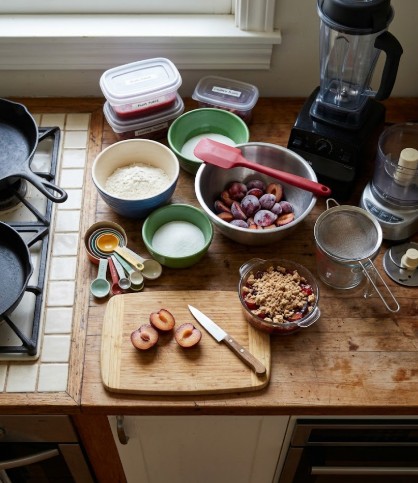
Basic Tools I Rely On
- Measuring cups & spoons — I use these for precise sugar, salt, and spice amounts so textures and sweetness stay consistent.
- Cutting board — A sturdy, easy-to-clean board gives me a safe surface for trimming thawed plums and chopping mix-ins.
- Paring knife — I prefer a small, sharp knife to remove stems, cut away blemishes, and halve plums cleanly.
- Mixing bowls (various sizes) — I keep several bowls on hand for macerating fruit, combining batters, and staging ingredients.
- Rubber spatula — I scrape every bit of puree or batter from bowls to avoid waste and ensure even mixing.
- Ovenproof baking dishes — For crisps, cobblers, and baked plum desserts I use dishes that distribute heat evenly and handle high temperatures.
- Fine-mesh sieve or strainer — I push sauces and juices through a sieve when I want a silky, seed-free texture.
Appliances I Recommend for Frozen Fruit
- High-speed blender — I use a robust blender for silky plum purees, smoothies, and emulsified sauces; strong blades and a tight seal matter.
- Food processor — When I need to chop fruit, quick-mix crumble toppings, or pulse dough, a processor with multiple blades and an easy-clean bowl speeds the job.
- Stand mixer (optional) — I bring a stand mixer in for consistent batters and doughs when making larger batches or frequent pastries.
- Cooktop or stovetop — I reduce plum sauces and simmer fillings on a burner that gives precise heat control to prevent burning.
- Oven — I bake crisps and roasted plum desserts in an oven that maintains even heat for reliable browning and texture.
- Freezer-safe storage — I store extra purees and leftovers in airtight, freezer-rated containers to prevent freezer burn and preserve flavor.
Prep Work
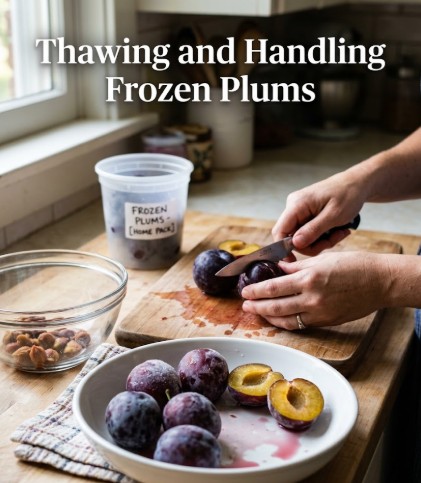
Thawing and Handling Frozen Plums
I let frozen plums thaw using the method that fits the recipe and the time I have. For best texture I thaw them overnight in the refrigerator, placing the fruit in a bowl and covering it; this keeps them firm and preserves structure for toppings or fresh sauces. When I need them faster, I seal the plums in a watertight bag and submerge in cold water, changing the water every 15 minutes until pliable. For immediate use in blended drinks or soft fillings, I let them sit at room temperature for a short time, then use them right away.
Quick checklist:
- Refrigerator: 6–8 hours, best texture
- Cold-water bag: 30–60 minutes, check frequently
- Room temp: 1–2 hours, use immediately
Ready the Fruit for Cooking or Baking
After thawing, I always remove excess liquid, pit the fruit, and cut it to consistent sizes so the plums cook evenly. I drain or reserve the juices depending on the recipe — I’ll keep juices for sauces or compotes and discard (or save separately) if they would make a crisp or tart soggy. I use a paring knife or a pitter to extract pits, then slice or dice uniformly.
Flavor adjustment:
- Taste and sweeten as needed; frozen plums vary in tartness.
- If a recipe calls for sugar and the plums are sweet, reduce the sugar by a tablespoon or two per cup of fruit.
Recipe 1: Plum Smoothie
Ingredients I Use for the Plum Smoothie
- 1 cup frozen plums — pitted and chopped if the pieces are large.
- 1/2 cup plain Greek yogurt — adds creaminess and protein.
- 1/2 cup almond milk (or any milk you prefer).
- 1 ripe banana — for natural sweetness and a silky texture.
- 1 tablespoon honey (optional; adjust to taste).
- 1/2 teaspoon ground cinnamon — brings out the plum’s flavor.
- 1/2 teaspoon vanilla extract (optional for aroma).
- Ice cubes (optional, for extra chill and thickness).
| Ingredient | Amount | Purpose |
|---|---|---|
| Frozen plums | 1 cup | Fruit base, flavor and antioxidants |
| Greek yogurt | 1/2 cup | Creaminess, protein |
| Almond milk | 1/2 cup | Thins and blends smoothly |
| Ripe banana | 1 | Sweetener and texture |
| Honey | 1 tbsp | Optional sweetener |
| Ground cinnamon | 1/2 tsp | Flavor enhancer |
| Vanilla extract | 1/2 tsp | Optional aroma |
| Ice cubes | As desired | Chill and thickness |
How I Make the Plum Smoothie
- I check the frozen plums and remove pits, cutting any large pieces so the blender handles them easily.
- I add the plums, Greek yogurt, almond milk, and the ripe banana to the blender jar.
- I drizzle in honey, sprinkle the cinnamon, and add vanilla if I want extra fragrance.
- I blend on high for about 45–60 seconds, stopping once to scrape down the sides so everything becomes smooth.
- If I want a thicker, colder drink, I toss in a few ice cubes and blend another 10–15 seconds.
- I taste the smoothie and add more honey if it needs sweetness.
- I pour into glasses and serve immediately to preserve the fresh flavor and texture.
Recipe 2: Plum Compote
Ingredients I Use for the Plum Compote
- 3 cups frozen plums — thawed, pitted, and cut into bite-sized pieces
- 1/2 cup granulated sugar — I adjust this up or down depending on how sweet the plums are
- 2 tablespoons fresh lemon juice — I squeeze fresh lemon to brighten the compote
- 1 teaspoon vanilla extract — I add this for subtle warmth
- 1/2 teaspoon ground cinnamon (optional) — I include it when I want extra spice complexity
- 1/4 cup water — I use this to prevent sticking and to help the fruit break down
| Ingredient | Amount | Prep |
|---|---|---|
| Frozen plums | 3 cups | Thawed, pitted, chopped |
| Granulated sugar | 1/2 cup | Adjust to taste |
| Lemon juice | 2 tbsp | Freshly squeezed |
| Vanilla extract | 1 tsp | — |
| Ground cinnamon | 1/2 tsp | Optional |
| Water | 1/4 cup | — |
Steps I Follow to Make the Plum Compote
- Place the thawed plums, sugar, lemon juice, vanilla, cinnamon (if using), and water in a medium saucepan. Stir once or twice so the sugar starts dissolving into the fruit juices.
- Set the pan over medium heat and bring the mixture to a gentle simmer, stirring occasionally to prevent scorching.
- Reduce the heat to medium-low and let it bubble gently for about 15–20 minutes. The plums will soften and release juices that thicken into a syrupy consistency.
- Taste and adjust sweetness or lemon if needed. For a chunkier texture, mash some fruit with the back of a spoon; for a smoother, more jam-like result, cook a few minutes longer.
- Continue cooking until the syrup coats the back of a spoon for a thicker compote; remember it will firm up slightly as it cools.
- Remove from heat and let the compote cool to room temperature. Transfer it to an airtight container and refrigerate. I store mine up to one week.
Tips I use: keep the heat moderate to avoid burning, and tweak sugar and lemon to match the plum variety and your taste preferences.
Recipe 3: Frozen Plum Crisp
Ingredients — Filling and Topping
I list ingredients separately so preparation stays organized.
- Filling
- 4 cups frozen plums, thawed, pitted, and sliced
- 1/2 cup granulated sugar
- 2 tablespoons all-purpose flour
- 1 tablespoon fresh lemon juice
- 1 teaspoon vanilla extract
- 1/2 teaspoon ground cinnamon
- Pinch of salt
- Topping
- 1 cup old-fashioned rolled oats
- 1/2 cup all-purpose flour
- 1/3 cup packed light brown sugar
- 1/2 teaspoon ground cinnamon
- 1/4 teaspoon salt
- 6 tablespoons unsalted butter, cold and cut into cubes
I recommend keeping the butter cold for a better crumb texture.
Preparing the Plum Filling
I combine the thawed plums with sugar, the two tablespoons of flour, lemon juice, vanilla, cinnamon, and a pinch of salt in a large bowl. I toss gently so the fruit stays intact and let the mixture rest for about 10 minutes to draw out juices and meld flavors. I spread the mixture evenly in a lightly greased 9-inch baking dish, making sure excess syrup stays in the bowl if you prefer a less runny filling.
Making the Oat Crumble
I stir oats, 1/2 cup flour, brown sugar, cinnamon, and salt in a medium bowl until evenly mixed. I add the cold, cubed butter and use my fingers or a pastry cutter to work it in until the mixture forms coarse crumbs with pea-sized lumps. I sprinkle the crumble uniformly over the plum layer so the topping covers the fruit without packing it down.
Oven Instructions and Finishing
I preheat the oven to 350°F (175°C) and place the dish on the middle rack. I bake for 40–45 minutes, watching for a golden-brown top and bubbling fruit beneath. If the topping darkens too fast, I tent loosely with foil for the final 10 minutes. I let the crisp rest about 15 minutes to thicken before serving; it pairs well with vanilla ice cream or whipped cream.
Recipe 4: Plum Sauce for Savory Dishes
Ingredients I Use for This Plum Sauce
- 2 cups frozen plums — thawed, pitted, and diced
- 1/4 cup packed brown sugar
- 2 tablespoons apple cider vinegar
- 1 garlic clove, minced
- 1 teaspoon fresh ginger, grated
- 1/2 teaspoon ground cinnamon
- 1/4 teaspoon ground cloves
- 1/4 teaspoon red chili flakes (more or less to taste)
- 1/2 teaspoon salt
- 1/4 cup water
- 1 tablespoon cornstarch mixed with 2 tablespoons cold water (slurry for thickening)
I keep a quick reference table below for amounts and prep notes.
| Ingredient | Amount | Prep note |
|---|---|---|
| Frozen plums | 2 cups | Thawed, pitted, chopped |
| Brown sugar | 1/4 cup | Packed |
| Apple cider vinegar | 2 tbsp | — |
| Garlic | 1 clove | Minced |
| Fresh ginger | 1 tsp | Grated |
| Ground cinnamon | 1/2 tsp | — |
| Ground cloves | 1/4 tsp | — |
| Red chili flakes | 1/4 tsp | Adjust to heat preference |
| Salt | 1/2 tsp | — |
| Water | 1/4 cup | — |
| Cornstarch slurry | 1 tbsp + 2 tbsp water | For finishing |
How I Cook the Plum Sauce
- Combine everything: In a medium saucepan I add the chopped plums, brown sugar, apple cider vinegar, minced garlic, grated ginger, cinnamon, cloves, chili flakes, salt, and the 1/4 cup of water. I stir so the ingredients are evenly distributed.
- Simmer gently: I bring the pot to a light boil over medium heat, stirring occasionally to prevent sticking. Then I reduce to low and simmer uncovered for 15–20 minutes, until the plums break down and the flavors meld.
- Puree: After removing the pan from heat, I blend the mixture with an immersion blender or in batches in a countertop blender. I aim for a mostly smooth texture with a touch of body; I handle hot liquids carefully.
- Thicken: I return the puréed sauce to low heat and whisk in the cornstarch slurry gradually. I keep stirring until the sauce thickens, about 2–3 minutes.
- Taste and tweak: I taste the sauce and adjust salt, vinegar, or chili flakes to balance sweet, tangy, and spicy notes.
- Cool and store: I let the sauce cool to room temperature, then transfer it to an airtight container. I refrigerate for up to one week or freeze in portions for later use.
Tips for Cooking with Frozen Plums
Boosting Plum Flavor and Aroma
I thaw frozen plums slowly in the fridge whenever possible to keep their texture and taste intact.
To balance their natural tartness I add a sweetener like honey or maple syrup and a squeeze of lemon or lime to lift bright notes.
I layer warm spices—cinnamon, ginger, cardamom, or a pinch of nutmeg—to deepen flavor without masking the fruit.
When making sauces or compotes I simmer gently so the fruit softens and releases juices without turning to mush.
Fresh herbs such as basil, mint, or thyme joined near the end of cooking add a crisp, aromatic contrast to the rich plum profile.
Swaps, Mix‑Ins, and Recipe Twists
I choose substitutes with a similar sweet‑tart balance when plums aren’t available. Reasonable swaps include frozen peaches, apricots, or cherries; adjust sugar and acid to match plum intensity.
For sweetening, I’ll use honey, agave, coconut sugar, or maple syrup—each changes flavor slightly, so I taste as I go.
If a recipe needs more acidity, I prefer orange juice or a splash of apple cider vinegar over too much lemon, which can dominate.
I often blend frozen plums with tropical fruits like mango or pineapple in smoothies or frozen desserts to add body and contrast.
In baking, I use plum purée as a direct replacement for applesauce to keep moisture while adding a tangy fruit note.
For savory dishes, dried apricots, chutney, or reduced fruit sauces can replicate plums’ sweet‑tart function; adjust salt and spices to keep the dish balanced.
Bold quick reference
- Thaw: refrigerator, overnight.
- Sweeten: honey/maple; brighten: citrus.
- Spice: cinnamon, ginger, cardamom.
- Cook: gentle simmer for sauces.
- Substitutes: peaches/apricots/cherries; tropical mix‑ins for variety.
Storage and Make-Ahead Tips
Keeping Leftover Plum Recipes Fresh
I let cooked plum dishes cool completely before storing to prevent sogginess from condensation. I transfer portions into airtight containers to lock in moisture and block other fridge odors.
I always label containers with the date and contents so I can track freshness easily.
- Refrigerator timelines I follow:
- Plum compote: up to 4 days — stir gently before serving.
- Plum sauce: up to 4 days — reheat slowly to avoid breakdown.
- Plum crisp (prepared/baked): up to 3 days — reheat in the oven to restore crispness.
When reheating, I warm on the stovetop or microwave in short bursts, stirring frequently to heat evenly and preserve texture. For crisps, I prefer oven reheating at moderate heat to revive the topping.
Freezing Plum Preparations for Future Use
I cool plum dishes fully before freezing to reduce ice crystals and protect texture. I portion into single-serving or family-size freezer-safe containers or heavy-duty bags, squeezing out excess air to prevent freezer burn.
I mark each package with the dish name and freeze date to rotate stock easily.
- Freezing guidelines I use:
- Best quality timeframe: 2–3 months for most plum preparations.
- Plum compote and sauce: freeze in airtight, freezer-safe containers; thaw in the refrigerator overnight.
- Plum crisp (unbaked): wrap tightly and freeze up to about 2 months; bake from frozen or thaw briefly before baking.
Thawing in the fridge overnight gives the best texture and lets me reheat gently. If I must thaw at room temperature, I use the product immediately and avoid refreezing.
Pro tip: freezing the crisp topping or assembling an unbaked crisp and freezing it lets me bake a fresh dessert straight from the freezer with minimal prep.
Closing Thoughts
I find frozen plums make cooking simpler and more flexible, whether I add them to smoothies, sauces, or baked goods.
They save time, reduce waste, and keep peak-season flavor on hand.
- Tips I follow: thaw appropriately, adjust liquid for texture, and use sharp knives or sturdy blenders.
- Favorite uses: compotes, crumbles, and quick sauces for meat or desserts.
I encourage experimenting with measurements and pairings to match personal taste and kitchen tools.
Frequently Asked Questions
Are frozen plums as healthy as fresh ones?
I find that frozen plums keep most of their vitamins and flavor because they get frozen when fully ripe. Their nutrient profile stays largely intact, so they serve as a convenient, nutritious substitute for fresh plums.
What’s the best way to thaw frozen plums for cooking?
I prefer thawing plums in the refrigerator for the best texture. For faster results I use sealed bags in cold water, and I’ll use room temperature thawing only when I need them immediately.
Can I use frozen plums in both desserts and savory dishes?
Yes—I use frozen plums in smoothies, baked desserts, compotes, and also in savory applications like glazes, sauces for meats, or roasted-vegetable accompaniments. Their sweet-tart profile fits both categories.
Which kitchen tools should I have on hand when working with frozen plums?
I keep these basics ready:
- Knife and cutting board for pitting and slicing
- Mixing bowls and spatulas
- Blender or food processor for smoothies and sauces
- Baking dishes and an oven for crisps or cobblers
- Airtight containers for storage
How do I modify sweetness when cooking with frozen plums?
I taste as I go and add sweeteners slowly—sugar, honey, or maple syrup work well. I also balance flavor with a splash of lemon juice or a pinch of warm spices if the plums taste too tart.
How long will plum-based dishes keep?
I store prepared plum dishes in the refrigerator for a few days in airtight containers. For longer storage I freeze them; most homemade plum dishes stay good for about 2–3 months.
What are go-to recipes using frozen plums?
I often make:
- Smoothie bowls or blended drinks
- Plum compote for yogurt or pancakes
- Oat-topped plum crisp
- Tangy plum sauce or glaze for grilled meats
Do I need to remove pits from frozen plums before cooking?
I always pit plums before using them in recipes to avoid biting into a hard pit and to improve final texture. Frozen plums generally require pitting prior to most preparations.
Can I freeze dishes I make with plums?
Yes—I freeze compotes, sauces, and crisps after they cool completely, using freezer-safe containers or bags. Label and date them to track quality.
Which spices pair well with frozen plums?
I like cinnamon, nutmeg, ginger, and cloves for sweet preparations. For savory uses I add a little coriander or star anise depending on the dish to complement the plum’s flavor.
FAQs
- What can I make with frozen plums that keeps flavor and texture? I use frozen plums in recipes where their softened texture and concentrated flavor help rather than hurt. They work well in smoothies, sauces, compotes, jams (thawed first), quick breads, crisps, and cakes where the fruit will be cooked or pureed.
- Do I need to thaw frozen plums before cooking or baking? I usually thaw plums when I want even cooking, reliable measurements, or to remove pits easily. For smoothies or recipes that accept frozen fruit (like ice cream or blended sauces), I keep them frozen to preserve cold and texture.
- How do I prevent soggy batters when adding frozen plums to cakes or muffins? I pat thawed plums dry and toss them lightly in a tablespoon of flour or cornstarch before folding into batter. I also fold fruit in at the end and avoid overmixing; that helps keep batter structure and prevents sinking or excess moisture.
- Are frozen plums safe and nutritious to use? Yes. Freezing preserves most nutrients and makes plums safe to eat when handled properly. I store them at 0°F (-18°C) or colder and use within 8–12 months for best quality. Thaw in the fridge or at room temperature depending on the recipe.
- How do I adapt recipes intended for fresh plums when using frozen ones? I adjust liquid and timing: drain or pat excess juice from thawed plums and reduce added liquids slightly. If the recipe relies on firm fruit, I incorporate plums later in the process or chop them coarsely. For jams or sauces, I cook until the desired consistency is reached.
- Can I make jam, preserves, or plum butter with frozen plums? I do—frozen plums make excellent preserves once thawed. Thaw, remove pits, and simmer until the mixture reaches the right set. Expect a bit more released juice, so cook down to concentrate flavors and adjust pectin or sugar as needed.
- How do frozen plums compare to other frozen fruits in recipes? Compared with berries or stone fruits like peaches, frozen plums have a balanced sweet-tart profile and become saucy when thawed. I treat them similarly to peaches in baking and to berries in sauces, adjusting sugar and thickening agents to match taste and moisture.
Closing Thoughts
I find frozen plums to be a practical, flavorful ingredient that works well across sweet and savory dishes. They retain much of their flavor and nutrients when frozen at peak ripeness, which makes them reliable for smoothies, sauces, jams, bakes, and ice creams without wasting fresh fruit.
I recommend thawing them before recipes that need even texture, and using them directly from the freezer for smoothies or swirls in frozen desserts. They cut prep time, reduce food waste, and let you enjoy seasonal flavor year-round.
Benefits at a glance:
- Convenience: ready-to-use year-round.
- Versatility: suits sweet and savory recipes.
- Safety and quality: freeze preserves nutrients when handled properly.
- Sustainability: helps avoid spoilage and makes efficient use of harvests.
I suggest choosing ripe plums for freezing and storing them in airtight packaging to maximize shelf life and flavor. With a little planning, frozen plums become a dependable pantry staple that elevates recipes and reduces waste—so give them a try in your next dish.