Butternut Squash Ravioli Sauce: Creamy Sage Brown Butter for Elegant Weeknight Meals
I love butternut squash ravioli because it feels both cozy and special. The pasta brings soft, sweet squash together with rich cheese, and the sauce decides whether the dish tastes simple or memorable. A few sauces—like brown butter with sage or a creamy garlic-Parmesan—match the squash’s sweet notes and boost the overall flavor.
I will cover easy ingredient lists, the key tools you need, clear steps for a smooth cream sauce, and small tips that make the best sauce every time. I will also suggest side dishes that pair well so you can serve a balanced meal that looks and tastes great.
Key Takeaways
- Choose a sauce that balances the squash’s sweetness with savory or buttery notes.
- Keep a short ingredient list and a few essential tools for quick, reliable results.
- Pair the ravioli with simple sides and follow a few tips for best texture and flavor.
Ingredients Of Ravioli Sauce Recipe
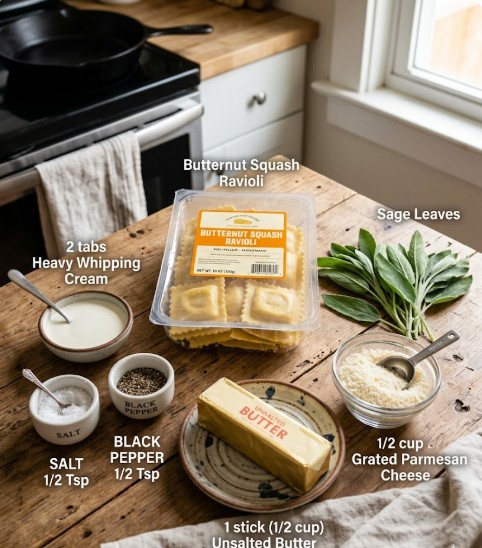
18 oz Butternut Squash Ravioli
I use a 18-ounce package of butternut squash ravioli as the main element. This pre-filled pasta brings a sweet, creamy squash flavor that pairs well with a buttery sage sauce. Choose fresh or frozen ravioli depending on convenience.
20 Fresh Sage Leaves
I add about 20 fresh sage leaves for an herbal, slightly peppery note. I brown the leaves in butter to release their aroma and make them crisp, which gives the sauce a pleasant texture contrast.
1 Stick Unsalted Butter
I melt one stick of unsalted butter to form the base of the sauce. Using unsalted butter lets me control the seasoning and helps create a rich, silky finish that coats each ravioli.
½ Teaspoon Salt
I season with half a teaspoon of salt to lift the flavors. I taste and adjust at the end, since the cheese and butter can add saltiness as they melt into the sauce.
½ Teaspoon Ground Black Pepper
I add half a teaspoon of black pepper for a mild, warming bite. Freshly ground pepper works best to give the sauce a clean, sharp edge.
2 Tablespoons Heavy Whipping Cream
I stir in two tablespoons of heavy cream for a smooth, slightly thickened texture. A small amount keeps the sauce silky without overpowering the ravioli’s filling.
½ Cup Grated Parmesan Cheese
I fold in half a cup of finely grated Parmesan to deepen the flavor and help thicken the sauce. The cheese melts into the warm butter and cream, creating a glossy coating for the pasta.
Essential Kitchen Tools for Butternut Squash Ravioli Sauce:
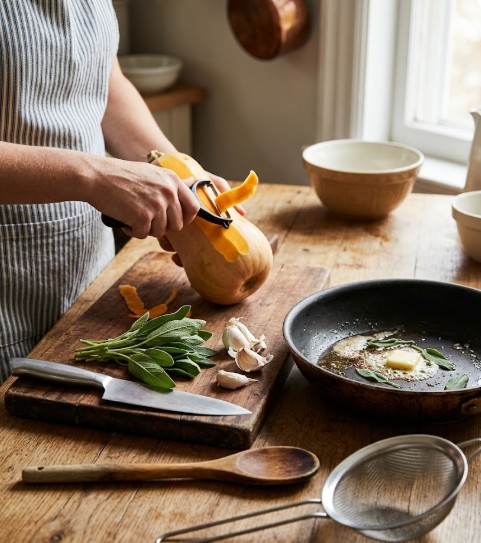
I keep a Y-peeler for fast skinning, a sharp chef’s knife for chopping sage and garlic, and a nonstick skillet to brown butter cleanly.
I use a wooden spoon to stir without harming pans and a fine-mesh strainer to lift and drain ravioli gently.
How To Make Cream Sauce For Pumpkin Ravioli?
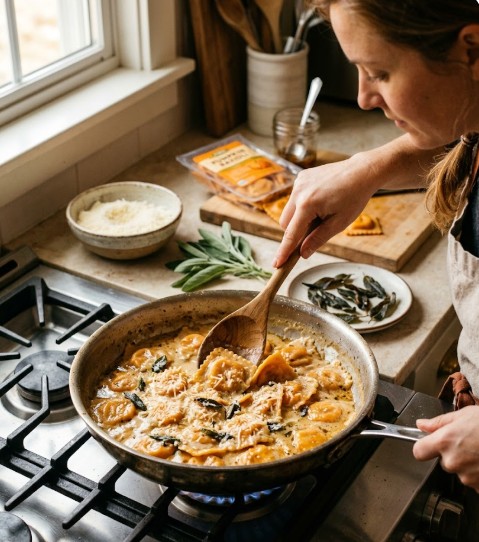
Step 1: Cook the ravioli and save pasta water
I boil salted water and cook the pumpkin ravioli until they float.
I lift them gently with a slotted spoon or drain carefully so they stay intact.
I reserve about ½ cup of the starchy pasta water before discarding the rest.
Step 2: Brown the butter
I melt unsalted butter in a large skillet over medium heat.
I cook it until it smells nutty and turns a light golden brown, about 3–4 minutes.
I watch closely so it doesn’t burn.
Step 3: Crisp the sage
I add fresh sage leaves to the browned butter and fry them for 2–4 minutes.
The leaves become crisp and fragrant.
I remove and set aside a few for garnish.
Step 4: Build the cream base
I lower the heat and stir in heavy cream or half-and-half to the skillet.
I add a splash of the reserved pasta water to loosen the sauce.
I simmer gently until the sauce thickens slightly.
Step 5: Finish and toss
I stir grated Parmesan into the sauce until melted and smooth.
I return the ravioli to the pan and toss gently to coat.
I top with the crispy sage and extra cheese before serving.
Tips for Best Sauce for Pumpkin Ravioli
Make Extra for Later
I double the sauce and store portions in the fridge or freezer.
Use airtight containers or freezer bags and label with the date.
Reheat gently over low heat to keep the texture smooth.
Round Out the Plate
I pair ravioli with a crisp salad or roasted vegetables.
A light white wine or a simple grilled chicken works well for heartier meals.
Add a sprinkle of toasted nuts or fresh herbs for contrast.
Cook Ravioli Carefully
I watch ravioli closely and cook until just al dente.
Avoid overboiling to stop tearing or air pockets forming.
Transfer with a slotted spoon to keep them intact.
What Goes With Butternut Squash Ravioli Sauce?
What You’ll Need
- 18 oz butternut squash ravioli
- 1 stick (8 tbsp) unsalted butter
- About 20 fresh sage leaves
- 2 tbsp heavy cream
- 1/2 cup grated Parmesan
- 1/2 tsp salt and 1/2 tsp black pepper
- Reserved pasta water (about 1/2 cup)
Step-by-Step Method
- Bring a large pot of salted water to a boil and cook the ravioli until they float. Save 1/2 cup of the pasta water before draining.
- Melt butter in a wide skillet over medium heat. Cook until it turns golden and smells nutty, about 3–4 minutes.
- Add sage leaves and let them crisp briefly in the butter. Remove a few for garnish if you like.
- Stir in a small amount of the reserved pasta water, then pour in the cream while whisking to combine; watch for splatter.
- Mix in the Parmesan until the sauce is smooth. Season with salt and pepper to taste.
- Toss the drained ravioli gently in the sauce, adding a splash more pasta water if needed to reach your desired consistency. Serve with extra Parmesan and the crisped sage.
Estimated Nutrition Per Serving
- Calories: ~400 kcal
- Fat: ~17 g (Saturated: ~12 g, Monounsaturated: ~3 g)
- Protein: ~10 g
- Carbs: ~51 g
- Fiber: ~4 g
- Sugar: ~9 g
- Sodium: ~705 mg
- Cholesterol: ~98 mg
- Potassium: ~573 mg
Final Words
I like keeping a few reliable sauce ideas on hand for butternut squash ravioli. A simple brown butter with sage brings warmth and nuttiness, while a light balsamic drizzle adds bright, tangy contrast. For richer meals, I reach for a cream-based sauce with Parmesan and garlic; for lighter plates, a lemony herb oil works well.
- Try chopped walnuts or toasted hazelnuts for crunch.
- Use fresh sage or thyme for aromatic lift.
- Adjust salt and lemon to balance sweetness.
I encourage small experiments. Swap one ingredient at a time to learn what each change does, and you’ll find sauces that match your taste quickly.
FAQs
- What sauce do I usually choose for butternut squash ravioli?
I like sauces that balance the sweet squash. Brown butter with sage, a light cream sauce, or a parmesan garlic sauce work well. Each adds richness without hiding the filling. - Can I make a lighter sauce that still tastes good?
Yes. I replace heavy cream with whole milk or a mix of milk and a little cream. I also use olive oil, lemon, and fresh herbs to keep flavor while cutting fat. - Is it safe to use milk instead of cream?
Yes. Milk is safe but the sauce will be thinner and less rich. To thicken, I reduce it gently, add a small slurry of cornstarch, or stir in grated cheese. - How do I store and reheat leftover sauced ravioli?
I cool leftovers quickly, store them in an airtight container for up to 3 days, and keep sauce separate if possible. To reheat, I warm sauce gently on low and add ravioli to the pan until heated through to avoid overcooking. - Which sauce holds up best if I serve the ravioli at a party?
I use a butter-based sauce like brown butter with herbs. It stays stable off heat longer than cream sauces and still tastes fresh when plated. - How does a brown butter sage sauce compare to a creamy parmesan sauce?
Brown butter sage highlights the squash’s nuttiness and stays lighter. Creamy parmesan gives a richer, more indulgent bite. I pick brown butter for balance and cream for comfort. - Any tips for making the sauce cling to ravioli?
I drain ravioli but keep a little pasta water. I toss ravioli with the sauce and add a splash of pasta water to help the sauce coat each piece evenly.
Conclusion
I recommend a simple, well-balanced sauce for butternut squash ravioli that focuses on fresh ingredients and straightforward technique. A brown-butter and sage sauce or a light cream sauce with Parmesan both pair well with the squash’s natural sweetness. I prefer minimal seasoning—salt, pepper, and a touch of nutmeg—to let the filling shine.
I value safety and sustainability in my kitchen choices. I use butter or olive oil from trusted sources and grate real Parmesan or Parmigiano-Reggiano sparingly. When possible, I choose local squash and herbs to reduce waste and support eco-friendly practices.
To keep this dish reliable for regular cooking, I recommend these habits:
- Use low to medium heat to avoid burning butter or breaking cream.
- Cook ravioli gently so it doesn’t split.
- Taste and adjust seasoning at the end.
If you want a sauce that lasts in your meal rotation, pick one base (brown butter or light cream), keep the method consistent, and swap garnish items like toasted walnuts, crispy sage, or lemon zest for variety. Try it tonight and you’ll have a cozy, dependable dish that’s easy to repeat.