
Nacho Cheese Sauce: Creamy, Homemade Recipe and Serving Tips
I love nacho cheese sauce because it makes simple snacks feel special. In this article I cover where the sauce came from, what common ingredients create its smooth, cheesy texture, and ways to tweak heat and flavor so it fits your taste. I also explain quick tips to keep the sauce creamy and how to reheat it without losing texture.
I will walk through basic ingredient roles, suggest cheeses that melt well, and share easy tricks for thicker or spicier versions. Expect clear, practical steps you can use the next time you want perfect nacho cheese for chips, fries, or tacos.
Key Takeaways
- The sauce relies on a roux, milk, and melting cheese for a smooth base.
- Small technique changes keep the sauce creamy and help for reheating.
- Choose melting cheeses and adjust spices to control texture and heat.
What Is Nacho Cheese Sauce Made Of?
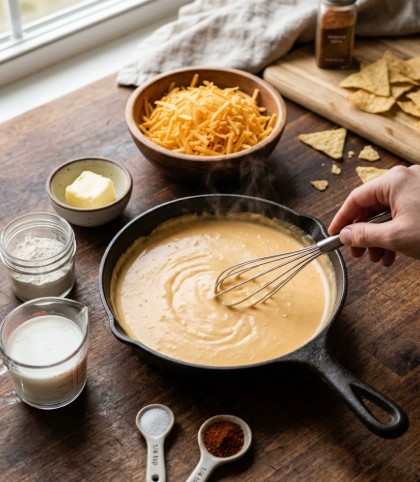
I use 2 tablespoons of butter
I melt butter first to build a rich base. The butter gives the sauce a smooth, silky mouthfeel and helps carry the cheese flavor.
I add 2 tablespoons of flour
I whisk flour into the melted butter to make a roux. This step thickens the sauce so it coats chips and stays creamy instead of watery.
I pour in 1 cup whole milk
I slowly add whole milk while whisking to make a smooth sauce. The milk adds body and creaminess that helps the cheese melt evenly.
I stir in about 6 ounces (1.5 cups) medium cheddar, shredded
I use medium cheddar for a balance of sharpness and cream. Shredded cheese melts faster and blends into the milk-roux for a velvety finish.
I season with 1/4 teaspoon salt
I add a small pinch of salt to brighten the flavors. Salt lifts the cheese and balances the richness from butter and milk.
I finish with 1/4 teaspoon chili powder
I mix in chili powder for a mild heat and a touch of smoky depth. It adds subtle spice without overpowering the cheese.
Notes:
- For best texture, grate the cheese fresh and add it off heat to avoid graininess.
- Whisk continuously when combining milk and roux to prevent lumps.
- Taste and adjust seasoning you like; a little more chili or salt changes the profile quickly.
How I Keep Nacho Cheese Sauce Smooth and Creamy
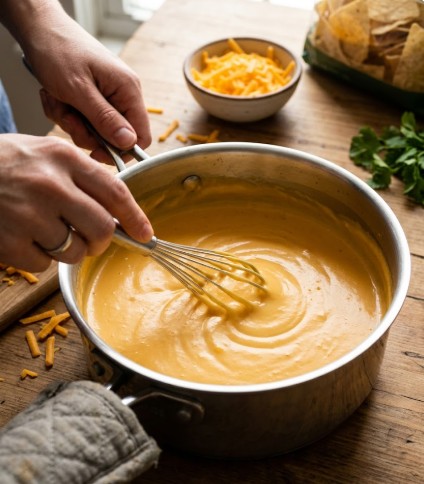
I start by making a roux: equal parts butter and flour cooked gently until it bubbles. I whisk for about a minute so the raw flour taste cooks out but the mix does not brown.
Next I whisk in milk slowly and bring it to a simmer. I watch until the sauce thickens enough to coat a spoon, then I remove it from high heat. Keeping the base warm but not boiling helps the cheese melt evenly.
I add small handfuls of grated cheddar, stirring each addition until fully melted before adding more. If the sauce needs help, I return it to the lowest heat—never high—to avoid grainy separation.
I finish with salt and pepper, tasting as I go. If the sauce becomes too thick, I thin it with a splash of milk and whisk until smooth. To keep the texture, I hold the sauce over low heat and stir occasionally; high heat or rushing causes it to break.
Can I Reheat Nacho Cheese Sauce?
Yes — I can reheat nacho cheese sauce safely. I heat it in short bursts in a microwave-safe bowl, stirring between intervals so it warms evenly. On the stove, I use low heat and stir often to stop scorching.
If the sauce gets grainy or thick, I add a splash of milk and whisk until smooth. I avoid high heat because it can separate the sauce. Below I show quick steps.
- Microwave: 20–30 sec, stir, repeat.
- Stovetop: low heat, constant stirring, add milk as needed.
What Cheeses I Prefer for Smooth, Flavorful Nacho Sauce
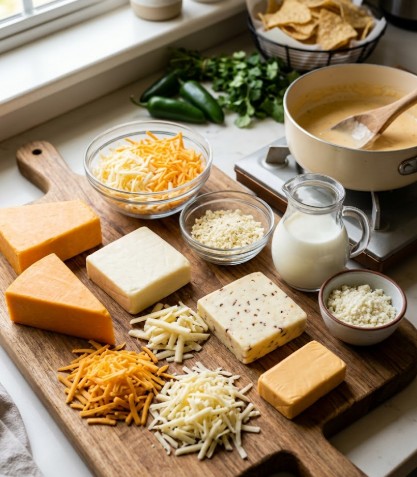
I pick cheeses that melt easily and bring a bold taste. My top choices are cheddar for sharpness, Monterey Jack for creaminess, and pepper jack for a spicy kick. I sometimes blend in Velveeta or processed cheese to keep the sauce extra smooth.
Tips I use:
- Use a 2-cheese mix for balance.
- Add a few tablespoons of milk or cream to control thickness.
- Crumble a little cotija or queso fresco on top for contrast.
Tips For Making Spicy Nacho Cheese Sauce
Ingredients I Recommend
Choose cheeses that melt smoothly. I pick sharp or medium cheddar for body and pepper jack if I want built-in heat. Grate cheese fresh — pre-shredded cheese can make the sauce grainy.
Use whole milk or a mix of milk and cream for creaminess. I add a tablespoon of butter and an equal amount of flour to create a roux that stabilizes the sauce. For spice, I rotate between fresh jalapeños, chipotle in adobo, and a pinch of cayenne so I can control flavor and heat.
Keep these measurements in mind as a base:
- 2 Tbsp butter
- 2 Tbsp flour
- 1 cup whole milk
- 1–1.5 cups shredded cheese
- 1/4 tsp salt and 1/4 tsp chili powder (adjust to taste)
I also keep optional extras on hand: a squeeze of lime to brighten, a dash of smoked paprika for depth, and a little mustard powder to sharpen the cheese flavor.
How I Make It
I melt butter over low heat, then whisk in flour until it smells slightly nutty and looks bubbly. I slowly pour in cold milk while whisking to avoid lumps. Once the mixture thickens and simmers gently, I remove it from the heat.
I add cheese in small handfuls, stirring each batch until melted before adding more. Keeping the pot off high heat prevents the cheese from becoming stringy or grainy. If the sauce is too thick, I thin it with a splash of warm milk rather than cold milk.
I introduce spicy elements slowly. For fresh peppers, I seed and finely chop them, then taste as I go. For canned chipotle, I start with a small spoonful of the puree and increase if needed. I always taste and tweak salt and heat before serving.
Nutrition Notes I Track
I watch portion size because the sauce is calorie- and fat-dense. A typical serving (about 1/4 cup) runs around 180–200 kcal, with roughly 13–15 g fat and about 8 g protein, depending on the cheese used.
To lower calories, I sometimes use 2% milk and reduce butter by half. For lower sodium, I choose a low-salt cheese and cut added salt by half, then adjust after tasting.
Final Words
I love how a simple cheese sauce lifts a snack into something special. I use it to coat chips, spoon over nachos, or serve with raw veggies for a quick hit of comfort.
Make it fresh and you control the flavor, spice, and thickness. A small pot and a few good ingredients give a creamier, cleaner taste than processed jars.
Tips I follow:
- Warm gently to keep it smooth.
- Thin with milk if it gets too thick.
- Add chili powder or paprika to taste.
Keep it easy, and you’ll reach for this sauce again and again.
FAQs
Ways I Boost Nacho Cheese Flavor
I like to swap part of the cheddar for pepper jack for a little heat. Adding a small can (about 4 oz) of drained diced green chiles or a can of drained Rotel gives a fresh, zesty kick. I sometimes stir in sliced green onions for texture. For spices, a pinch of garlic powder, ground cumin, or a little cayenne lets me control the warmth.
How I Make Cheese Sauce Thicker
I make a slurry with 1–2 tablespoons of cornstarch or flour and 1 cup cold water, then whisk it until smooth. I add the slurry slowly while stirring over medium-low heat. Once the sauce reaches a gentle boil, it will thicken; I keep stirring until it reaches the texture I want. If it gets too thick, I thin it with a splash of milk.
FAQs
Q: How long will my nacho cheese sauce stay good in the fridge?
I store homemade cheese sauce in an airtight container for up to 4 days. If it smells sour or shows mold, I toss it. Reheat gently on low heat or in short microwave bursts, stirring often.
Q: Is it safe to freeze nacho cheese sauce?
I can freeze it, but the texture may change. Freeze in small portions for up to 2 months. Thaw in the fridge overnight and reheat slowly while stirring to smooth out any separation.
Q: How do I keep the sauce smooth and not grainy?
I use shredded cheese that melts well and add it off the heat or over very low heat. A little starch (cornstarch or flour) mixed with milk helps bind the sauce. Stir constantly and avoid high heat that can cook the proteins and make it grainy.
Q: Can I make the sauce spicier or milder?
Yes. I adjust heat with jalapeños, canned green chiles, hot sauce, or chili powder. For milder sauce, I use less spice and choose a milder cheese. Taste as I go to get the balance I want.
Q: Is homemade nacho cheese healthier than store-bought?
I control ingredients, so it can be simpler and have fewer additives than processed versions. But calorie and fat content depend on the cheeses and creams I choose. Using lower-fat milk or mixing with pureed cooked vegetables can cut calories.
Q: How does homemade sauce compare to processed nacho cheese products?
I find homemade sauce tastes fresher and melts better over chips. Processed products stay smooth longer at high heat because of stabilizers. If I need very long-lasting pourable cheese for a party, processed options may hold up better.
Q: What basic equipment and ingredients do I need to make it?
I need a saucepan, whisk or spatula, and a heat source. Basic ingredients are cheese (like cheddar), milk, butter, and a small amount of flour or cornstarch. Salt, pepper, and optional spices finish the flavor.
Q: How do I reheat the sauce without breaking it?
I reheat slowly over low heat and stir constantly. If it looks separated, I whisk in a splash of milk or a little water to bring it back together. Microwaving in short intervals with stirring also works.
Conclusion
I recommend making nacho cheese sauce at home for the best taste and texture. Homemade sauce uses simple ingredients, melts smoothly when warmed gently, and avoids anti-caking additives found in some pre-shredded cheeses. It also freezes poorly, so I suggest preparing only what you will use soon.
I find the sauce effective for dipping, topping, and drizzling. It pairs well with salsa, guacamole, and sour cream to balance heat and richness. For safer results, I melt cheese over low heat and add a little starch or cream to keep it stable.
I prefer recipes that use real cheddar or processed cheese blends for a creamy, reliable result. Choosing quality ingredients reduces waste and often feels more eco-friendly than buying single-use packaged sauces. For long-term satisfaction, pick a recipe or product you trust and stick with it.
Try a small batch first, adjust the seasoning to your taste, and enjoy the control that homemade nacho cheese gives you.