
Alfredo Sauce Recipe: Easy Classic Technique for Creamy Homemade Sauce
I love a good Alfredo sauce because it turns plain pasta into a creamy, rich meal that feels special. Made with butter, cream, and Parmesan, it also pairs well with chicken, seafood, or roasted vegetables, and people of all ages enjoy its cheesy flavor.
I will walk you through a simple, classic recipe with clear steps, point out common mistakes to avoid, and share easy tips to cut calories without losing taste. You’ll also get answers to common questions about swaps, pairings, and storage so you can make Alfredo confidently at home.
Key Takeaways
- The article gives a clear, classic method to make creamy Alfredo sauce.
- It highlights common errors and easy ways to lower calories without losing flavor.
- It answers practical questions about ingredients, pairings, and storage.
Homemade Alfredo Sauce Ingredients
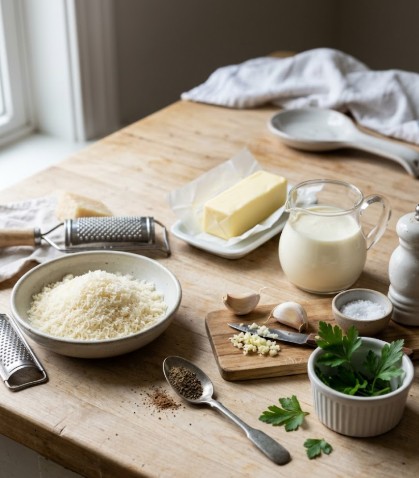
I use a small set of simple ingredients to make a classic, creamy Alfredo. Below I list the amounts and a short note on why each one matters.
- Unsalted butter — 1 cup
Butter gives the sauce its rich body. I choose unsalted so I can control the final seasoning. - Heavy cream — 1 1/2 cups
Heavy cream makes the sauce smooth and silky. It’s the main liquid that creates the creamy texture. - Garlic, minced — 2 cloves
I mince garlic finely for a clear, savory bite that blends into the sauce without large pieces. - Freshly grated Parmesan — 1 1/2 cups
Parmesan adds the cheesy, savory flavor the sauce is known for. I grate it fresh for the best melt and taste. - Salt — 1/2 teaspoon (or to taste)
I start with 1/2 teaspoon and adjust after tasting, since Parmesan and butter can add saltiness. - Ground black pepper — 1/4 teaspoon
A small amount of pepper gives a mild, sharp note that balances the cream and cheese. - Nutmeg — a pinch (optional)
I sometimes add a pinch of nutmeg for a warm, subtle depth. Use sparingly. - Fresh parsley — for garnish (optional)
Chopped parsley brightens the look and adds a light herbal touch when sprinkled on top.
Tip: Measure the cheese after grating for an accurate 1 1/2 cups. I prefer using fresh ingredients and tasting as I go so the sauce ends up balanced and not too salty.
How to Make Alfredo Sauce: 8 Simple Steps
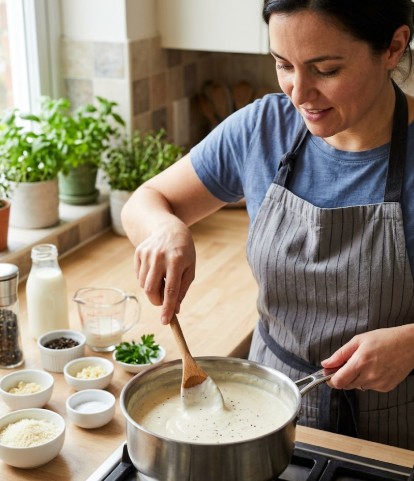
Step 1 — Get Everything Ready
I gather and measure all ingredients before I start.
I finely mince the garlic and grate the Parmesan so they are ready to add.
I use proper measuring cups and spoons to keep the balance right.
Step 2 — Melt Butter and Cook Garlic
I heat a large saucepan over medium heat and add unsalted butter.
I let the butter melt while stirring to prevent browning.
Once melted, I add the minced garlic and cook about 1–2 minutes until fragrant.
Step 3 — Stir in the Heavy Cream
I slowly pour in heavy cream while keeping the heat low.
I keep the mixture at a gentle simmer and stir often.
I avoid boiling so the cream stays smooth.
Step 4 — Work in the Grated Cheese
I add Parmesan a little at a time and stir constantly.
I keep the heat low so the cheese melts into the cream without clumping.
I continue stirring until the sauce becomes smooth and creamy.
Step 5 — Season to Taste
I add a pinch of salt, freshly ground black pepper, and a small pinch of nutmeg.
I mix and then taste, adjusting salt and pepper as needed.
I keep seasoning simple so the cheese and cream stay the main flavors.
Step 6 — Simmer to Thicken
I let the sauce simmer gently for 3–5 minutes, stirring often to prevent sticking.
If it needs more thickness, I simmer a little longer.
If it becomes too thick, I thin it with a splash of cream or reserved pasta water.
Step 7 — Combine with Pasta
I remove the pan from heat when the texture is right.
I toss the sauce with hot, drained pasta so it coats each strand.
If I want a lighter sauce, I add a small amount of pasta water and mix.
Step 8 — Finish and Garnish
I plate the pasta and sprinkle chopped fresh parsley on top.
I may add extra grated Parmesan and a crack of black pepper.
I serve immediately so the sauce stays creamy and warm.
4 Common Mistakes to Avoid When Making Alfredo Sauce
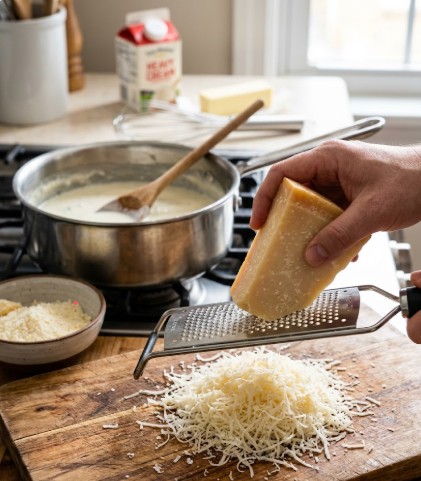
I make Alfredo often, and four errors keep coming up that ruin texture and flavor. Avoid these to keep the sauce smooth and creamy.
- Skipping fresh Parmesan. I always grate real Parmesan myself. Pre-grated cheese has anti-caking additives that can make the sauce grainy or chalky. Freshly shredded cheese melts better and gives a cleaner, creamier finish.
- Letting the butter-cream mix boil. I keep the butter and cream at a gentle simmer. Rapid boiling can cause the dairy to separate and the cheese to curdle. Low, steady heat lets the ingredients blend into a silky emulsion.
- Not stirring enough. I stir the sauce often. If you leave it alone, the cream and butter can cling to the pan, and cheese may form clumps. Stir occasionally while cooking and stir continuously when adding the cheese.
- Overheating the cream. I monitor the temperature closely and use low to medium heat. Too much heat breaks the cream’s structure and makes the sauce thin or split. A controlled, moderate temperature keeps the sauce stable.
Tip: Use a heatproof spatula to scrape the pan and mix gently. This prevents sticking and helps the sauce come together without breaking.
3 Simple Ways I Cut Calories in Alfredo Sauce
I swap heavy cream for skim or low‑fat milk plus plain nonfat yogurt. The milk thins the sauce; the yogurt adds tang and body without the fat. Warm the milk slowly and whisk in the yogurt off‑heat to prevent curdling.
I cut back on butter and cheese. I use half the butter I’d normally add and a smaller amount of Parmesan, grated fine so it melts quickly. A little lemon juice or garlic boosts flavor so I don’t miss the extra fat.
I choose plant‑based creams when I want dairy‑free or lower‑calorie options. I use canned light coconut milk for richness or blend soaked cashews with unsweetened almond milk for a smooth, creamy base. Both give texture with fewer calories.
Tips at a glance:
- Use milk + nonfat yogurt instead of heavy cream.
- Reduce butter and grated cheese; add lemon or garlic for flavor.
- Try light coconut milk or cashew cream as plant alternatives.
FAQs
Can I make Alfredo without heavy cream?
Yes. I often swap heavy cream for milk mixed with plain yogurt to keep the sauce creamy. For dairy-free options, I use coconut cream or a blended cashew cream made with almond milk. Heat gently and whisk so the sauce stays smooth.
Which pasta works best with Alfredo?
I prefer wide, flat noodles like fettuccine because they hold the sauce well. Tagliatelle or pappardelle also work. Short shapes like penne or rigatoni are fine if you want chunks of sauce between pieces.
How should I store extra Alfredo sauce?
Cool the sauce to room temperature, then seal it in an airtight container. Refrigerate for up to 3–4 days. For longer storage, freeze in heavy-duty freezer bags or small containers for up to 2 months. Thaw in the fridge and reheat gently.
What goes into a classic Alfredo?
- 1 cup unsalted butter
- 1½ cups heavy cream
- 2 cloves minced garlic
- 1½ cups grated Parmesan
- ½ tsp salt, ¼ tsp black pepper, pinch of nutmeg
- Fresh parsley to garnish
Nutrition snapshot
One serving contains about 250 kcal.
Conclusion
I show clear, simple steps that help you make a silky, creamy Alfredo sauce without guesswork. Follow the ingredient list and method I give, and use the tips I share to avoid common mistakes that ruin texture or flavor. I also offer easy swaps and calorie-cutting ideas so you can enjoy a lighter version without losing richness. Trusting these guidelines will help you achieve a smooth, restaurant-style sauce on your first try.
FAQs
Q: How much sauce should I use per person?
I usually plan for about 1/2 to 3/4 cup of Alfredo sauce per serving of pasta. That gives a creamy coating without drowning the noodles. For richer plates or if the sauce is the main feature, use closer to 1 cup per person.
Q: Is homemade Alfredo sauce safe to store and how long will it last?
I keep homemade Alfredo in an airtight container in the fridge for up to 3–4 days. Reheat gently over low heat or in short bursts in the microwave, stirring often. If it smells off or changes color, I throw it out.
Q: Can I make Alfredo sauce ahead of time and still get good texture?
Yes. I make it ahead and chill it, but the sauce will thicken when cold. To restore the smooth texture, I reheat slowly and add a splash of milk or cream while stirring until it loosens to the right consistency.
Q: What are simple swaps for cream if I don’t have any?
I replace heavy cream with a mix of whole milk and a little butter for a lighter sauce. Another option is to use half-and-half. Using low-fat milk can make the sauce thin; add a small amount of cream cheese or a cornstarch slurry to help thicken it.
Q: How do I keep the sauce from splitting or becoming grainy?
I cook over low to medium heat and avoid boiling the sauce. I add grated Parmesan off the heat or on very low heat and stir constantly. Also, using freshly grated cheese rather than pre-shredded helps prevent a gritty texture.
Q: Is Alfredo sauce a good choice compared to tomato-based sauces?
Alfredo offers a rich, creamy flavor and pairs well with simple pasta, chicken, or vegetables. I choose it when I want a hearty, indulgent dish. Tomato sauces are lighter and more acidic, and they hold up better with heavier or spicy ingredients.
Q: How do I keep the sauce tasting fresh and not too heavy?
I balance richness by adding a squeeze of lemon juice or a little white wine for brightness. Fresh herbs like parsley or a pinch of black pepper also cut through heaviness without changing the sauce’s character.
Conclusion
I recommend this Alfredo sauce approach because it delivers a rich, creamy result with simple, reliable steps. I use butter, heavy cream, and freshly grated Parmesan for smooth texture and real flavor. Light seasoning and fresh garlic keep the sauce balanced and safe for most diets when made and stored properly.
I favor methods that work quickly and use pantry ingredients, so this sauce fits weeknight meals and special dinners. It heats and holds well over pasta, chicken, or vegetables without breaking if stirred gently and kept on low heat.
- Effectiveness: produces a silky, restaurant-style sauce every time
- Safety: use fresh dairy and refrigerate within two hours; consume within 3 days
- Eco-friendliness: homemade sauce reduces packaging waste compared with jars
- Suitability: adaptable for family meals, meal prep, and simple weeknight cooking
Choose quality Parmesan and fresh ingredients for long-term, consistent results. I encourage you to try this method and make it your go-to Alfredo for reliable, delicious meals.