Crab Cake Sauce Essentials: Simple Recipes and Serving Tips
If you love seafood, a great sauce can make your crab cakes shine. I will walk you through the flavors, ingredients, and small tricks that lift crab cakes from good to memorable, from classic remoulade to tangy tartar and spicy aioli.
I will also cover practical details like basic tools, step-by-step methods, easy variations, and lighter or mayo-free options so you can match the sauce to your taste and meal. Expect simple tips for serving, storing, and adjusting spice or texture to suit family or guests.
Key Takeaways
- Learn core sauce types and what flavors each brings to crab cakes.
- Find easy ingredient swaps and step-by-step tips for a smooth sauce.
- See practical serving, storage, and healthier or mayo-free options.
What I Mean by Crab Cake Sauce
Crab cake sauce is a creamy, tangy condiment I use with delicate seafood like crab, flaky white fish, scallops, or sautéed squid.
I build it on a mayonnaise base, then add lemon juice for brightness and a touch of ketchup or honey for gentle sweetness.
A bit of mustard or Worcestershire can add depth, while fresh herbs or paprika lift the flavor.
I often use this sauce as a dip for crab cakes or fried seafood, a spread on sandwiches, or a simple dressing for pasta or potato salad.
Its texture is smooth and pourable, so it clings well to hot, crispy bites without overpowering the seafood.
Crab Cake Sauce Ingredients
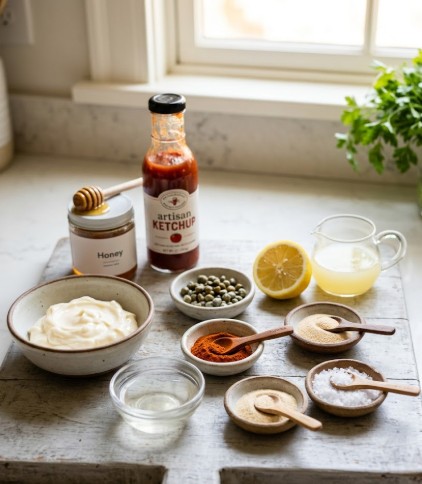
Mayonnaise — 1/2 cup
I use a smooth mayo as the sauce base. It gives the sauce creaminess, helps bind the flavors, and lets the other ingredients spread evenly over each crab cake.
White vinegar — 1 tablespoon
I add a splash of vinegar to lift the richness. It brings a bright, mild tang that balances the mayo.
Ketchup — 1 tablespoon
I include a bit of ketchup for sweet-tang depth. It rounds out savory flavors without making the sauce overtly tomato-forward.
Fresh lemon juice — 1 tablespoon
I squeeze lemon for a clean, zesty note. The citrus cuts through fat and brightens every bite.
Capers — 7–8, chopped
I chop the capers small so their briny pop blends into the sauce. They add a salty, pickled bite that pairs well with crab.
Honey — 2 teaspoons
I stir in honey to soften sharp edges. The mild sweetness balances acidity and salt.
Garlic powder — 1/2 teaspoon
I use garlic powder for steady, warm garlic flavor without fresh garlic’s intensity. It mixes into the mayo smoothly.
Onion powder — 1/2 teaspoon
I add onion powder to deepen the savory profile. It gives a faint sweetness and body to the sauce.
Paprika — 1/2 teaspoon
I sprinkle paprika for mild smokiness and color. It lifts the look and adds a subtle spice.
Coarse kosher salt — 1/2 teaspoon
I finish with kosher salt to season the sauce. It enhances all flavors while keeping the crab’s delicate taste in focus.
- Quick note: Taste as you mix and adjust salt, lemon, or honey to suit your preference.
Essential Kitchen Tools for Crab Cake Sauce

I rely on a few simple tools to make crab cake sauce quickly and well. I use measuring spoons for exact seasoning, a citrus juicer for bright lemon juice, and a small food processor when I want a silky texture. A whisk helps me blend and emulsify, and mixing bowls keep ingredients organized while I taste and adjust.
How I Make the Crab Cake Dipping Sauce — Step by Step
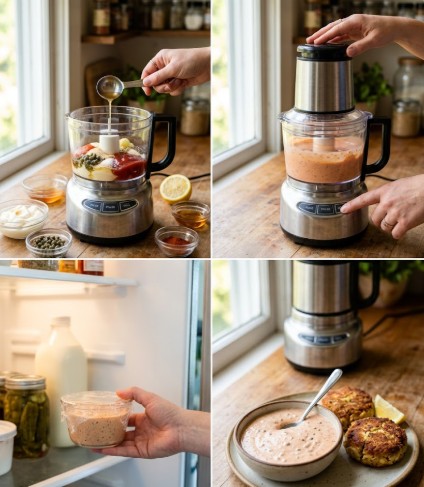
- Combine in a small food processor: vinegar, lemon juice, mayonnaise, ketchup, capers, honey, garlic powder, onion powder, paprika, and salt.
- Pulse until smooth and the capers are finely chopped.
- Chill the sauce for about 1 hour so the flavors meld.
- Taste and adjust seasoning before serving.
Tips & Tricks for a Creamy Crab Cake Sauce
I chill the crab cake mix about 30 minutes so breadcrumbs soak up liquid and the cakes hold their shape. I use an ice-cream scoop to portion the mix—this makes about eight cakes, each ~3 tablespoons. For the sauce, I store it covered in the fridge; it stays good for up to two weeks. Keep the sauce cold until serving and taste for balance—add a splash of lemon or a pinch of salt if needed.
How I Serve Crab Cake Dipping Sauce
I like to use this sauce beyond just crab cakes. I often serve it as a smooth dip for crunchy snacks like fries, fried pickles, zucchini fries, or tempura vegetables.
I also spoon it over seafood dishes — try it with baked salmon, Cajun shrimp, salmon cakes, or crab-crusted fish. It adds a bright, creamy contrast to poached fish and sushi rolls.
For sandwiches, I spread a thin layer on burgers, lobster rolls, or cheesesteaks to boost flavor. I’ll also use it as a rich topper for steaks like filet mignon or prime rib.
Serve a dollop on hearty stews or stroganoff for extra creaminess, or use it as a sauce for veggie cakes and mashed potatoes.
Best Crab Cake Sauce Variations
Worcestershire boost
I like adding a splash of Worcestershire for a deep, savory note. A little goes a long way — start with a teaspoon and taste. It brings salt and umami that lifts the sauce without hiding the crab.
Old Bay hint
I usually skip Old Bay in the sauce if I’ve already used it in the cakes, but a light pinch can tie flavors together. Use sparingly so the seasoning doesn’t dominate.
Hot sauce kick
I add a few drops of hot sauce when I want heat and brightness. Adjust to your heat tolerance and stir well to blend the spice.
Cajun or Creole twist
A small amount of Cajun or Creole spice gives the sauce a Southern edge. I use this when I want a spiced, peppery flavor that pairs with crispy cakes.
Fresh herb mix
I chop parsley, dill, or chives and fold them in for fresh flavor and color. Fresh herbs brighten the sauce and keep it tasting light.
Sliced green onions
Thinly sliced green onions add mild onion flavor and a crisp bite. I use the green tops for color and a subtle sharpness.
Ground black pepper
I grind black pepper into the sauce for warm, sharp heat. It amps flavor without changing texture.
Dill-mustard blend
I like stirring in dill mustard for tang and herbal depth. It adds slight sweetness and a savory edge that matches crab well.
Cayenne for heat
I sprinkle a tiny bit of cayenne when I want focused heat. Use it cautiously — a pinch can change the whole sauce.
Finely diced bell pepper
I dice bell pepper very small to add crunch and a fresh, sweet note. Red or green both work; red gives more sweetness.
Sour cream swap
I sometimes swap part of the mayo for sour cream to make the sauce tangier and lighter. It smooths texture and adds a cool finish.
Yellow onion pieces
I prefer chopped yellow onion over powder when I want texture and a stronger onion taste. Rinse if you want milder flavor.
Fresh garlic
I mince fresh garlic and add just a little for clear, bright garlic flavor. Raw garlic is stronger than powder, so use less.
Smoked paprika touch
I finish with a dash of smoked paprika when I want a gentle smoky note. It should be subtle so it doesn’t overwhelm the crab.
Can I Make a Healthy Crab Cake Sauce?
I swap mayo for plain Greek yogurt to cut fat and add protein.
I brighten the sauce with lemon juice and a touch of Dijon mustard for tang.
I fold in fresh herbs like parsley or dill and season with paprika, salt, and pepper.
- Use low‑fat yogurt to reduce calories.
- Add a teaspoon of olive oil if I want more richness.
- Taste as I go and adjust acid, salt, and spice.
I keep portions small so the sauce adds flavor without undoing a healthy meal.
Crab Cake Sauce Without Mayo
I make a creamy, tangy sauce using Greek yogurt instead of mayo. I mix 1 cup Greek yogurt with 1–2 teaspoons Dijon mustard, 1 tablespoon lemon juice, and 1 teaspoon Worcestershire sauce. I add a few drops of hot sauce for heat and salt and pepper to taste.
I like to stir in chopped fresh herbs—dill or parsley—or 1/2 teaspoon Old Bay for a classic seafood note. For texture, I fold in 1–2 tablespoons finely chopped scallions or shallots. Serve chilled; it brightens the crab cakes and keeps the flavors balanced.
What to Serve With Crab Cakes?
I like serving crab cakes with bright, tangy sauces and simple fried sides. Try a trio of dips—cocktail sauce, tartar, and garlic aioli—so guests can mix flavors. Offer zucchini fries, fried green tomatoes, or hush puppies for crunch. For a seafood pairing, add scallops, salmon croquettes, or fried fish. Hearts of palm cakes and fried pickles give variety. Serve sauces in small bowls or use a squeeze bottle or pastry bag to drizzle for a neat presentation.
FAQ
Is this sauce hot or mild?
I make this sauce with a mild bite from creamy horseradish, so it stays mostly mild.
If you do not like any heat, skip the horseradish or swap it for pickle relish.
To make it spicier, I add chipotle peppers, hot sauce, or a little cayenne for a stronger kick.
How do I make it ahead and store it?
I store the sauce in an airtight container in the fridge.
It keeps well for about two weeks.
You can freeze it, but expect some separation when it thaws; stir or whisk to bring it back together.
How is remoulade different from tartar sauce?
Tartar sauce is a mayo-based mix with pickles, capers, onions, and herbs for tang.
Remoulade often adds mustard, hot sauce, and Creole spices, giving it more depth and heat.
I use remoulade when I want a bolder, spicier partner for crab cakes.
What goes into this sauce?
- ½ cup mayonnaise
- 1 tbsp white vinegar
- 1 tbsp ketchup
- 1 tbsp lemon juice
- 7 capers (chopped)
- 2 tsp honey
- ½ tsp garlic powder
- ½ tsp onion powder
- ½ tsp paprika
- ½ tsp coarse kosher salt
I list these so you can check pantry items before starting.
How do I make it step by step?
- Combine all ingredients in a small food processor or bowl.
- Pulse or mix until the capers are finely chopped and the sauce is smooth.
- Chill the sauce for about an hour to let flavors meld.
- Taste and adjust salt, lemon, or spice as needed.
I recommend chilling; it helps the flavors blend.
What are the nutrition facts?
Per batch (approximate):
- Calories: 1,112 kcal
- Fat: 112 g (Saturated: 17 g; Monounsaturated: 25 g; Polyunsaturated: 67 g)
- Cholesterol: 63 mg
- Sodium: 2,813 mg
- Potassium: 163 mg
- Protein: 2 g
- Carbohydrates: 26 g
- Trans Fat: 0.3 g
I suggest dividing into portions to estimate per-serving values for your use.
Final Words
I like keeping a few sauce options ready so each crab cake gets the right match. A tangy remoulade, creamy aioli, or bright cocktail sauce each bring out different qualities in the crab. I encourage trying small batches of each and noting which balance of spice, acid, and creaminess you prefer. Mix and tweak ingredients until the sauce feels just right for your taste.
FAQs
- What makes a good crab cake sauce?
I look for a sauce that is creamy, mildly tangy, and lets the crab flavor shine. A base of mayonnaise or Greek yogurt adds richness. I add an acid like lemon juice or vinegar for brightness, a pinch of spice for balance, and fresh herbs or chopped pickles for texture. - Is this sauce safe to serve to kids and pregnant people?
Yes, if you avoid raw-egged sauces. I use pasteurized mayonnaise or fully cooked mayo-based dressings for safety. Pregnant people should also avoid raw seafood and choose fully cooked crab cakes. - How long does homemade crab cake sauce last?
I store homemade sauce in an airtight container in the fridge for up to 5 days. If it smells off or changes color, I throw it out. Always keep it chilled and use clean utensils to avoid contamination. - Can I make the sauce ahead of time?
Absolutely. I often make it a day ahead to let flavors meld. If it thickens in the fridge, I stir in a little water or lemon juice to reach the right consistency before serving. - How does this sauce compare to tartar or cocktail sauce?
My sauce is creamier and more versatile than cocktail sauce, which is tomato-based and tangier. Compared with tartar sauce, my version can be spicier or herbier depending on added ingredients. Each pairs well with different styles of crab cakes. - What variations do you recommend for different diets?
For a lighter option, I substitute Greek yogurt for mayo. To make it vegan, I use vegan mayo and skip fish-based ingredients. For a low-sodium version, I use unsalted mayo and fresh lemon instead of added salt. - How can I keep the sauce from becoming runny on hot crab cakes?
I serve sauce on the side or spoon it sparingly over the cakes. If I want to coat the cakes, I make a slightly thicker sauce by reducing watery ingredients and chilling it before use so it holds up better to heat.
Conclusion
I recommend choosing a simple, well-balanced sauce for crab cakes that highlights the crab rather than masking it. A mayo-based remoulade or lemon aioli brings creaminess and brightness without overwhelming the sweet, delicate meat. For heat, I add a small amount of sriracha or horseradish; for herb freshness, I fold in chopped dill or parsley.
I value sauces that are safe and easy to make at home using fresh ingredients. They store well in the fridge for a few days, cut waste, and let you control salt and spice levels. Homemade options also avoid unnecessary additives and often cost less than store-bought versions.
To pick the right sauce, match the flavor intensity to how your crab cakes are prepared: lighter sauces with lump crab, bolder remoulades with heavily seasoned or fried cakes. If you want one go-to, I keep a tangy remoulade on hand—versatile, crowd-pleasing, and reliable.
Try a small batch first, tweak it to your taste, and use that version for future meals. A good sauce makes crab cakes better and keeps your cooking consistent and enjoyable.