Longhorn White Balsamic Vinaigrette Recipe
I love a simple dressing that lifts a salad or makes a marinade taste brighter. The Longhorn white balsamic vinaigrette blends white balsamic vinegar with olive oil, Dijon mustard, garlic, and herbs to give a balance of sweet, tangy, and savory flavors that works well on greens, roasted vegetables, or grilled proteins.
I will walk through the ingredients, step-by-step method, storage tips, nutrition notes, serving ideas, and helpful substitutions so you can make and use this vinaigrette with confidence.
Key Takeaways
- The dressing pairs white balsamic with oil, mustard, garlic, and herbs for a balanced flavor.
- I provide clear steps, storage advice, and simple swaps to make the recipe your own.
- The vinaigrette works for salads, marinades, and many easy meal ideas.
What I Know About LongHorn’s White Balsamic Dressing
I make this dressing when I want a bright, slightly sweet vinaigrette that still has a tangy bite.
It centers on white balsamic vinegar, which tastes milder and sweeter than traditional dark balsamic.
Key elements I expect in the dressing:
- White balsamic vinegar for sweetness and acidity
- Olive oil or a neutral oil to mellow the vinegar
- Dijon mustard and honey for balance and body
- Garlic and herbs for savory depth
I use it on salads, roasted vegetables, and grilled meats. It keeps well refrigerated and mixes easily before serving.
The Ingredients I Use
I keep this vinaigrette simple and balanced. Below I list the items I use and why each one matters.
- White balsamic vinegar — I choose this for its mild, sweet-tart flavor and light color. It gives the dressing bright acidity without darkening the salad.
- Extra virgin olive oil — I use this as the base fat. It creates a smooth texture and adds a fruity, rounded taste that pairs well with the vinegar.
- Dijon mustard — I add Dijon to help the oil and vinegar blend smoothly. It also lends a sharp, tangy edge that deepens the dressing’s flavor.
- Minced garlic — I include a small amount for savory aroma and a subtle bite. Fresh garlic gives the vinaigrette more character.
- Honey — I balance the acidity with honey for gentle sweetness. It softens sharp flavors and creates a pleasing contrast.
- Dried basil — I sprinkle in basil for a mild, herbal note. It adds an earthy freshness that complements the other ingredients.
- Dried oregano — I use oregano to introduce a savory, slightly peppery hint. It gives the dressing a faint Mediterranean touch.
- Salt and black pepper — I season to taste. Salt brightens flavors and pepper adds gentle heat, so I adjust both to suit the dish.
I usually measure the core items as follows (adjust to taste):
| Ingredient | Typical amount |
|---|---|
| White balsamic vinegar | 1/4 cup |
| Extra virgin olive oil | 1/2 cup |
| Dijon mustard | 1–2 tsp |
| Minced garlic | 1 clove |
| Honey | 1–2 tbsp |
| Dried basil | 1/2 tsp |
| Dried oregano | 1/2 tsp |
| Salt & pepper | To taste |
I recommend tasting and tweaking. If the mix feels too sharp, I add more honey or oil. If it tastes flat, a pinch more salt or a drop of vinegar helps.
How I Make Longhorn White Balsamic Vinaigrette?
I whisk white balsamic, olive oil, Dijon, honey, minced garlic, salt, and pepper until smooth.
I taste and adjust sweetness or acidity.
I chill it thirty minutes for flavors to meld.
I store leftovers in a sealed jar up to one week.
Step by step directions
Step 1.

I mix white balsamic vinegar, Dijon mustard, minced garlic, honey, dried basil, dried oregano, salt, and pepper in a small bowl. I whisk until the ingredients form a uniform blend.
Step 2.

I slowly pour in extra-virgin olive oil while whisking constantly. This creates an emulsion and gives the dressing a smooth texture.
Step 3.

I taste the vinaigrette and tweak the seasoning—adding more salt, pepper, or honey as needed. I adjust until the balance suits my palate.
Step 4.
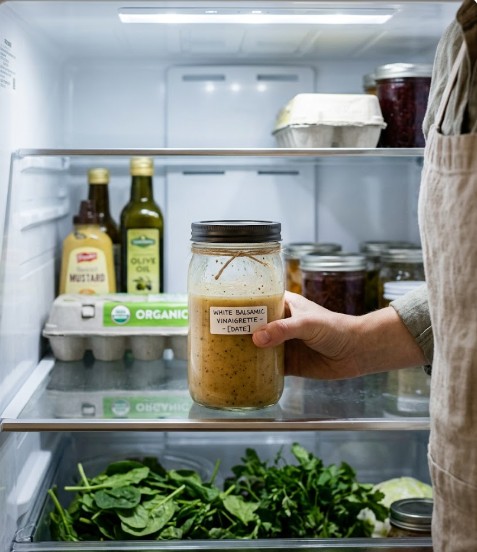
I pour the dressing into a sealed glass jar or bottle. I refrigerate it so flavors meld and it stays fresh.
Notes
I recommend using top-quality extra virgin olive oil because it changes the dressing’s mouthfeel and flavor. I mince fresh garlic right before mixing to keep the bright, sharp taste.
I adjust sweet and tart levels to fit my palate: more honey if I want sweetness, more white balsamic if I want tang. I often stir in chopped fresh herbs like parsley, thyme, or chives for extra green notes.
Before serving, I shake or whisk the vinaigrette well so oil and vinegar combine evenly. For storage, I keep it refrigerated and give it another shake before each use to restore the emulsion.
Storage Tips
I keep the vinaigrette in a tight glass jar in the fridge to protect flavor.
It stays good for about 1–2 weeks.
I always shake the jar well before using, since the oil and vinegar may separate.
Nutrition Details
I list estimated values for a 2-tablespoon serving of this vinaigrette:
- Calories: 162
- Fat: 18 g
- Carbs: 1 g
- Protein: 0 g
- Sodium: 66 mg
These numbers can change with ingredient choice and portion size.
Serving Ideas
I use this white balsamic vinaigrette in lots of ways to lift simple meals. Try it as a dressing over mixed greens with cherry tomatoes, cucumber slices, and crumbled feta for a bright, tangy salad.
Brush or toss it with zucchini, bell peppers, or eggplant before grilling to add sweet-acid balance that matches smoky char. I also drizzle it on Caprese-style skewers—cherry tomatoes, basil, and small mozzarella balls—for an easy, fresh appetizer.
For weeknight dinners, I spread the vinaigrette over chicken breasts or thighs before roasting; it keeps the meat moist and adds a mild, sweet tang. I also toss it with cooked pasta, diced veggies, olives, and feta to make a light pasta salad that holds up well at room temperature.
Bold tip: taste and adjust with a pinch of salt or a little honey to match your preference.
What other swap can I use for the Longhorn white balsamic dressing?
I often change one or two ingredients when I don’t have the original items. Try these simple swaps to keep the dressing balanced:
- Red wine vinegar — Use this if you lack white balsamic. It gives tang and body but makes the dressing a bit sharper.
- Maple syrup — Swap for honey to add sweetness with a mild maple note.
- Whole-grain mustard — I use this instead of Dijon for a bit of texture and a nuttier mustard flavor.
- Fresh herbs — Replace dried basil or oregano with fresh basil, oregano, or thyme for brighter, greener taste.
- Lemon juice — Add lemon for a lighter, citrusy tang that brightens the dressing.
I usually adjust salt, pepper, and oil after any swap to keep the flavor balanced.
Longhorn White Balsamic Vinaigrette Recipe
Tools I Use
- Medium bowl
- Whisk or fork
- Measuring cups and spoons
- Airtight jar or bottle for storing
What Goes In
- 1/2 cup white balsamic vinegar
- 2 tbsp Dijon mustard
- 1 cup extra virgin olive oil
- 2 cloves garlic, minced
- 2 tsp honey
- 1 tsp dried oregano
- 1 tsp dried basil
- Salt and black pepper, to taste
Step-by-Step Method
- In the bowl, whisk the white balsamic vinegar and Dijon mustard until smooth.
- Stir in the minced garlic and honey so the sweet and sharp flavors blend.
- Add the dried oregano and dried basil and mix briefly.
- Season with salt and pepper to your liking.
- While whisking constantly, slowly pour in the olive oil to create an emulsion.
- Whisk until the dressing looks glossy and well combined.
- Taste and tweak: add more honey for sweetness or more vinegar for tang.
- Transfer the vinaigrette to a jar with a tight lid. Shake before using.
- Use immediately or refrigerate; shake well before each use.
Helpful Tips
- I prefer good extra virgin olive oil because it affects flavor and texture.
- Mince garlic right before mixing for the freshest taste.
- To switch fresh herbs for dried, use about three times the amount of fresh.
- If the dressing separates after chilling, a quick shake or whisk brings it back.
- Adjust honey and vinegar slowly so you get the balance you like.
Nutritional Snapshot (per ~1/2 cup serving)
- Calories: ~135 kcal
- Main contributors: olive oil and honey
- Note: Exact values vary by ingredient brands and portion size
Frequently Asked Questions
Q1. Can I swap regular balsamic for white balsamic?
You can, but expect a stronger, sweeter taste and a darker color.
Regular balsamic changes the dressing’s balance and can overpower delicate greens.
If you try it, start with less and taste as you go.
Q2. Can I replace extra virgin olive oil with vegetable oil?
Yes, vegetable oil works, but the flavor will be milder.
Extra virgin olive oil adds fruitiness and body that vegetable oil lacks.
Use vegetable oil if you need a neutral taste or lower cost.
Q3. Is this dressing okay for someone following a vegan diet?
Yes.
The basic recipe has no animal-derived ingredients, so it fits a vegan diet.
Double-check store-bought components like honey or pre-made mixes if you avoid those.
Q4. Can I prepare the vinaigrette ahead of time?
Definitely.
Making it a few hours or the day before helps the flavors blend.
Store it chilled and give it a good shake before serving.
Q5. How long will the dressing stay good in the fridge?
I keep it in a sealed container for about 1–2 weeks.
If it smells off or separates in a strange way, discard it.
Always use clean utensils to avoid contamination.
Q6. Can I use this vinaigrette as a marinade?
Yes, it works well as a marinade for meats and vegetables.
It adds flavor and can help tenderize proteins when marinated a short time.
Avoid overly long marinating for delicate items to prevent texture changes.
Final Thoughts
I find this white balsamic vinaigrette very useful in my kitchen. Its balance of sweet and tangy flavors brightens salads and lifts simple roasted vegetables. I also use it as a quick marinade for chicken or shrimp when I want a light, flavorful finish without heavy sauces.
Try making a small batch first and tweak the honey, mustard, or garlic to match your taste. Store leftovers in the fridge for up to a week and shake before using. Small adjustments let this dressing fit many dishes and meals.
FAQs
Q1: What makes this dressing taste like the one at LongHorn Steakhouse?
I base the flavor on a mix of white balsamic vinegar for gentle tang, olive oil for body, Dijon mustard for slight heat and emulsification, and a touch of sweetener like honey. Small amounts of garlic and herbs add depth without overpowering the balance.
Q2: Is this vinaigrette safe to store and how long will it last?
I keep homemade vinaigrette refrigerated in a sealed jar. It stays good for about 7–10 days. If it uses fresh garlic or dairy, I use it within 4–5 days. Always check for off smells or separation that won’t re-emulsify.
Q3: Can I use alternatives for any ingredients to suit diet or taste?
Yes. I swap olive oil for a lighter oil or a neutral oil if you prefer. I use maple syrup or agave instead of honey for vegan versions. I sometimes add a spoon of mayo or Greek yogurt if I want a creamier texture.
Q4: How should I re-emulsify the dressing after storage?
I shake the jar vigorously or whisk the dressing for 20–30 seconds until it blends again. An immersion blender or small food processor works quickly for a stable emulsion.
Q5: How does this vinaigrette compare to heavier dressings like ranch?
This vinaigrette is lighter and more tang-forward than creamy dressings. I find it highlights greens and roasted vegetables without masking their flavors. It has fewer calories and less saturated fat than ranch-style dressings.
Q6: Is this dressing good on foods other than salad?
Yes. I use it as a marinade for grilled chicken or shrimp, a drizzle for roasted vegetables, or a light sauce for grain bowls. It brightens dishes without adding heaviness.
Q7: What small tips improve the final flavor and texture?
I always taste and adjust acidity and sweetness at the end. I add salt gradually to bring out flavors. Using room-temperature ingredients helps the oil and vinegar combine more smoothly.
Conclusion
I recommend this white balsamic vinaigrette for its bright flavor and easy prep. It blends white balsamic, olive oil, Dijon, and a touch of sweetener to create a balanced dressing that works on salads, grilled veggies, and as a light marinade.
- It performs well: the acidity and oil bind ingredients and cling to greens.
- It is safe and simple: fresh ingredients and basic pantry staples keep it low-risk.
- It is eco-friendly: homemade dressing cuts packaging waste from store-bought bottles.
- It suits many diets: you can make it vegan, low-sugar, or lighter by swapping ingredients.
I suggest keeping a small jar in the fridge for quick use and choosing quality vinegar and oil for the best long-term results. Try it, adjust it to your taste, and use it regularly to brighten meals.