Best Rice For Fried Rice: Expert Picks and Cooking Tips
I always wondered why restaurant fried rice tastes so even and never gets clumpy or mushy. After learning from a chef, I realized the key is choosing the right rice and preparing it correctly — that makes the grains separate, absorb flavors, and hold texture when stir-fried.
I used to pay for lessons to learn those tricks, and now I want to share them so you can make better fried rice at home without guesswork.
Key Takeaways
- Choosing the right rice and prep method changes fried rice texture and flavor.
- Jasmine is a top choice, but good alternatives also work well.
- Properly cooked and cooled rice prevents clumping and gives restaurant-style results.
Does Rice Type Really Change Fried Rice?
I think the rice choice matters a lot for fried rice. I avoid short-grain rices like Arborio because they clump and become gummy. I also steer clear of most brown rice; its chewy texture and bran layer make it harder to soak up sauces and flavors evenly.
I prefer long-grain white rices—especially jasmine—because they stay separate and dry enough after cooling. If you must use leftovers, make sure the rice is chilled and slightly dry so the pan can fry each grain rather than steam them into a paste.
Top Rice Variety for Fried Rice: Jasmine Rice
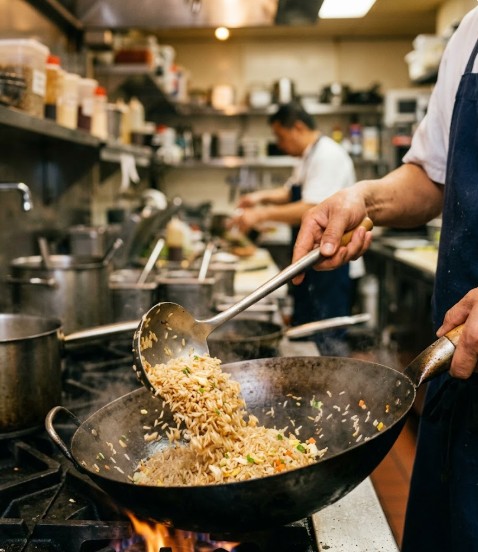
Jasmine Grain Choice
I prefer jasmine when I want a true takeout-style fried rice. Its long grains separate easily and hold their shape during high-heat stir-frying. Cook the rice, then cool it in the fridge so each grain firms up; this step stops clumping and helps the rice handle the oil and sauces without turning mushy.
- Use a slightly drier batch of rice rather than steaming-hot rice.
- If pressed for time, rest the rice at room temperature for 1–2 hours before frying.
- For best results, refrigerate overnight to let moisture redistribute.
Why Jasmine Works Well in Fried Rice
I choose jasmine because it balances aroma, texture, and flavor absorption.
- Aroma: Jasmine gives a mild, floral scent that becomes more noticeable when you stir-fry. It adds a subtle layer of fragrance without overpowering other ingredients.
- Flavor uptake: The grain structure soaks up soy sauce, aromatics, and seasonings well, so each bite tastes seasoned, not just the mix-ins.
- Texture: Jasmine stays tender but firm. It resists sticking together, which helps you get those loose, separate grains many people expect in great fried rice.
Practical tips I use: fluff the cooled rice before frying, use a hot pan with enough oil, and spread the rice while cooking so steam escapes. These small steps let jasmine show its strengths—fragrant, flavorful, and non-clumpy fried rice.
Go-to Runner-ups
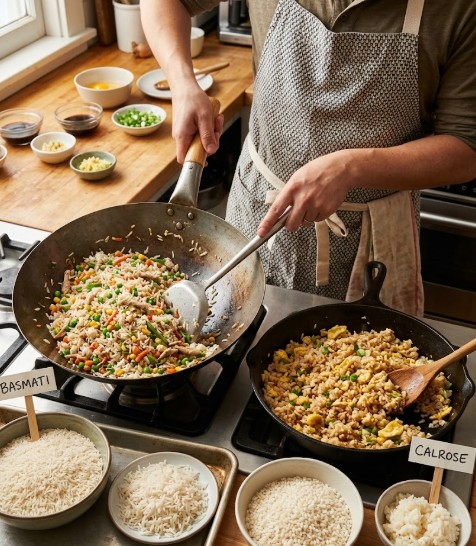
Fragrant Long-Grain Option (Basmati)
I reach for basmati when I want rice that stays separate and holds up to heavy stir-frying. The grains are long and fragrant, but they cook drier and firmer than jasmine. That texture gives a pleasant chew that contrasts with crunchy veggies and tender meats.
Use basmati when you plan to toss rice aggressively in a hot wok or when you want a less sticky final dish. Cook slightly less water than usual and cool the rice before frying to keep the grains distinct.
Quick tips:
- Rinse well to remove surface starch.
- Undercook by a minute for firmer grains.
- Spread on a tray to cool and dry before frying.
Soft, Slightly Sticky Choice (Calrose)
I pick Calrose when I want a softer, stickier fried rice that soaks up sauces and flavors. Its medium-grain texture clings together more than long-grain types, which makes it easy to eat with chopsticks and helps flavors stay locked in each bite.
Use Calrose for a creamier mouthfeel or dishes where you want the rice to bind slightly with eggs and sauces.
Quick tips:
- Rinse lightly to keep some stickiness.
- Cook to tender, not dry.
- Cool briefly so it’s not steaming hot before frying.
Rice for Fried Rice: Not Just a Filler
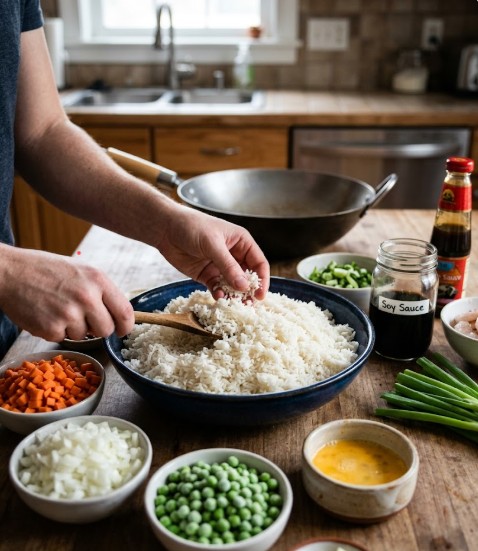
Ingredients I Use
- 4 cups cooked rice, preferably refrigerated at least overnight — it keeps grains separate.
- 2 tablespoons unsalted butter, split.
- 3 eggs, beaten.
- 1 cup cooked shrimp or another protein I prefer (chicken, tofu, or pork).
- 2 medium carrots, diced small.
- 1 medium onion, diced.
- 3 cloves garlic, minced.
- 1/2 cup frozen peas, thawed.
- 3 tablespoons soy sauce.
- 2 tablespoons oyster sauce.
- 1 teaspoon sesame oil.
- 1 teaspoon grated ginger (optional).
- 1 tablespoon fish sauce (optional).
- Salt and black pepper to taste.
- Sliced green onions for garnish.
Notes:
- I choose long-grain or jasmine rice for a drier, separate texture; short-grain will clump more.
- Day-old rice resists clumping and soaks up sauces better than freshly cooked rice.
Cooking Steps I Follow
- Heat a large skillet or wok over medium heat. Melt 1 tablespoon of butter.
- Pour in beaten eggs and scramble until just set. Remove eggs and set aside.
- Add the remaining tablespoon of butter to the pan.
- Sauté diced carrots and onion until softened, about 3–4 minutes.
- Stir in garlic and grated ginger; cook 30–60 seconds until fragrant.
- Add chilled rice and thawed peas. Break up any clumps and stir-fry until rice starts to brown, about 3–4 minutes.
- Return scrambled eggs to the pan and add your cooked protein.
- Pour in soy sauce, oyster sauce, and sesame oil. Stir constantly for 1–2 minutes so the rice absorbs the sauces evenly.
- Taste and adjust seasoning with salt, pepper, or a splash of fish sauce for extra umami.
- Plate and sprinkle with sliced green onions.
Quick tips:
- Use a hot, roomy pan so ingredients fry rather than steam.
- Keep movements brisk and avoid over-stirring; that preserves grain texture.
- If rice seems dry, add a teaspoon of water or broth while stir-frying.
FAQs
Q: Which rice do I pick for the best fried rice texture?
I recommend long-grain rice, especially jasmine. It stays separate and slightly firm after frying, so the dish won’t turn mushy. If I want a chewier bite, I sometimes use day-old rice so the grains dry out a bit.
Q: Is freshly cooked rice or leftover rice better for fried rice?
I use leftover rice whenever possible. Rice that’s chilled overnight dries and firms up, which helps it fry without clumping. If I must use fresh rice, I spread it on a tray to cool and remove steam before frying.
Q: Can I use short-grain or sticky rice in fried rice?
I avoid short-grain and sticky rice for classic fried rice because they clump together. They work for dishes that need a stickier texture, but not for the loose, stir-fried style most people expect.
Q: How does brown rice compare to white rice for fried rice?
Brown rice gives a nuttier flavor and more fiber, but it’s drier and chewier. I adjust liquid and frying time when I use it. For a closer texture to white rice, I cook it with slightly more water and let it cool well.
Q: Are parboiled or converted rices good choices?
Parboiled rice can hold up well under high heat and resists becoming mushy. I use it when I want firmer grains and a reliable result, though its texture and flavor differ from jasmine.
Q: What cooking tips help improve fried rice no matter the rice type?
I rinse rice before cooking to reduce surface starch and help grains separate. I also cool rice completely—preferably overnight—and fry on high heat with a small amount of oil to keep grains distinct and slightly toasted.
Q: Is there a safe way to store leftover fried rice?
I cool fried rice quickly, then refrigerate it within two hours. I keep it in an airtight container and eat it within 3–4 days. When reheating, I heat it until steaming hot to reduce food-safety risks.
Conclusion
I recommend using long-grain, day-old rice—especially jasmine or similar varieties—for the best fried rice results. Long-grain rice stays separate when stir-fried, giving a light, non-mushy texture that holds up during high-heat cooking. Using rice that has cooled and dried slightly also helps prevent clumping and improves the final mouthfeel.
For consistent success, I suggest these practical steps:
- Cook rice with a little less water than usual and let it cool completely before frying.
- Use leftover rice from the fridge or spread freshly cooked rice on a tray to cool quickly.
- Stir-fry over high heat with a small amount of oil, and add ingredients in stages so everything cooks evenly.
I find jasmine rice offers the best balance of aroma and grain separation for many home cooks, while standard long-grain white rice and some medium-grain varieties work well if you prefer a different texture. Brown rice can be used, but it needs more care to avoid chewiness.
I encourage you to pick a rice you can rely on regularly, prepare it so grains remain separate, and practice the technique above. That combination delivers tasty, restaurant-style fried rice every time.