
How to Make Brown Rice Taste Good: Simple Techniques and Flavor Boosts
I started cooking brown rice after switching from white rice and found its flavor and texture quite different. Brown rice tastes nuttier and chewier, so it can seem bland or firm if you expect the softness of white rice.
I learned simple ways to improve its flavor and make it more appealing. I will share seven practical methods that boost taste and texture so brown rice becomes a dish I actually enjoy.
Key Takeaways
- I explain why brown rice can taste different and feel chewier than white rice.
- I offer several easy techniques to make brown rice more flavorful.
- I focus on practical tips you can try right away.
7 Ways to Make Brown Rice Taste Good
1. Butter, Garlic, and Sautéed Onions

I start by melting butter in a pot, then sauté chopped onions and garlic until they smell soft and sweet.
I add rinsed brown rice and toast it briefly in the butter mix to coat each grain.
Then I pour in water, season lightly, cover, and simmer until the rice is tender.
This gives the rice a creamy, savory base that hides blandness and lifts texture.
2. Toasted-Spice Pilaf Method

I heat a little oil and toast the brown rice until it smells nutty.
I drop in whole warm spices like a bay leaf, cardamom pods, a cinnamon stick, and a couple of cloves.
After toasting briefly, I add liquid and simmer with the lid on until the rice is fluffy.
The spices infuse the grains and add a gentle, layered aroma without extra sides.
3. Cook in Chicken Stock Instead of Water

When I want quick flavor with no chopping, I replace water with chicken broth in the same ratio.
I reduce added salt because broth often contains sodium.
Cooking the rice in stock gives it a savory depth and fuller mouthfeel with almost no extra work.
4. Olive Oil with Lemon and Fresh Herbs

I toast the rice in olive oil, squeeze in bright lemon juice, and finish with chopped parsley or basil.
I keep the herbs light so they don’t overpower the rice.
A pinch of chili flakes works if I want heat.
The result tastes clean, bright, and a little herbal — great for salads or alongside fish.
5. Sesame-Salt Topping (Gomasio Style)
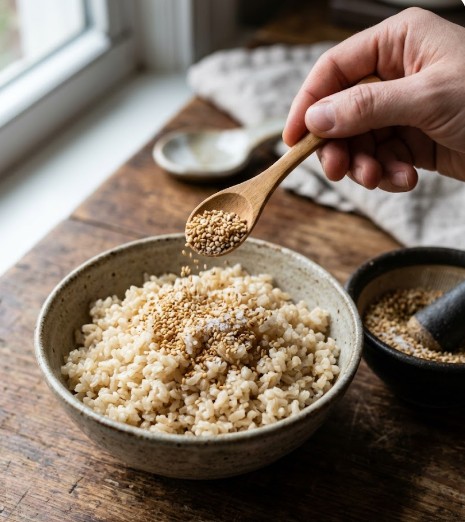
I toast sesame seeds until golden, then grind them with a small amount of salt to make a coarse powder.
I sprinkle one to two teaspoons over cooked rice or mix it into the pot near the end of cooking.
This adds a toasty, nutty note and a little crunch without changing the rice’s core texture.
6. Stir-Fried Brown Rice (Quick Fried Rice)
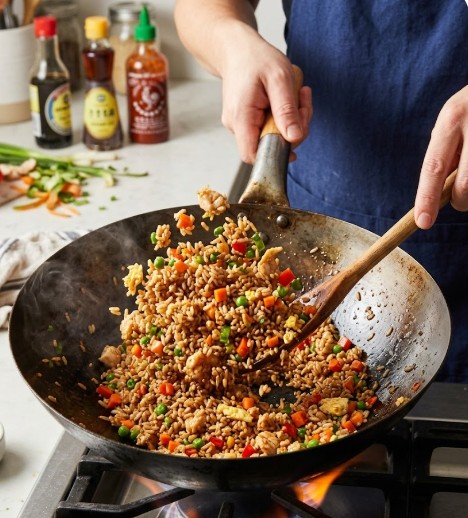
I use leftover chilled brown rice for the best texture, then stir-fry it on high heat with oil and aromatics like garlic.
I add diced vegetables and cook until they get a bit of char, then toss in the rice and a splash of soy sauce or vinegar.
Finishing with sesame oil or a dash of fish or oyster sauce boosts umami.
High heat develops smoky notes and separates the grains for a satisfying stir-fry.
7. Cheesy Brown Rice

I shred a flavorful melting cheese and sprinkle it over hot, cooked brown rice, stirring until it melts and coats the grains.
I choose sharp or creamy cheeses depending on how bold I want the dish.
Cheese softens the chew and adds richness, turning plain rice into a satisfying, creamy side.
Final Thoughts
I keep a few simple tricks ready for brown rice. A tablespoon of butter or olive oil adds richness and smooths the grain’s chew. Stir-frying with onions, veggies, or a mix of herbs and spices lifts the flavor fast.
Pick the approach that matches the meal—creamy, herby, or boldly spiced—and adjust salt and acid to taste. These small changes make brown rice something I actually enjoy eating.
FAQs
- Can I make brown rice taste better without adding many extra ingredients?
I can. Start by rinsing the rice and toasting it briefly in a little oil or butter. Then cook it in broth instead of water and finish with a small pat of butter or a squeeze of lemon. These steps add flavor without many extra items. - Is it safe to use flavored liquids like broth or coconut milk for every batch?
Yes, as long as the broth or coconut milk is fresh and stored properly. I watch for added salt in store-bought broths and reduce any other salty ingredients to keep sodium levels safe. - How do I keep brown rice from being chewy or gummy?
I use the right rice-to-liquid ratio (usually 1:2), bring it to a boil, then simmer low and cover tightly. I avoid stirring while it cooks and let it rest covered for 10 minutes after cooking. That gives a fluffier texture. - Which flavor add-ins work best and are easy to maintain over time?
I favor aromatics like garlic, onion, and ginger, plus dried herbs and toasted spices. Fresh herbs and citrus zest added after cooking keep well in small amounts and don’t require complex prep. Store spices in a cool, dry place to keep them potent. - How does brown rice compare to white rice for flavor and use?
Brown rice has a nuttier, heartier taste and chewier texture than white rice. I find it pairs better with robust sauces and strong seasonings. It also holds up well in salads and grain bowls where texture matters. - Can I mix brown rice with white rice to improve taste and texture?
I often mix them. Blending can give you a milder flavor and lighter texture while keeping some whole-grain benefits. Adjust cooking time and liquid because the grains cook at different rates. - What simple finishing touches make the biggest difference in flavor?
I add a splash of acid (vinegar or lemon), a small amount of fat (olive oil or butter), and fresh herbs or scallions at the end. These three small steps lift the flavor without extra cooking time.
Final Thoughts
I recommend using simple, reliable steps to make brown rice taste great. Start by cooking rice in broth or coconut milk instead of water. Toasting the grains briefly before adding liquid adds a warm, nutty flavor. I also suggest adding aromatics like sautéed onion, garlic, or ginger for depth.
I find fresh herbs, citrus zest, or a splash of vinegar brightens the rice without extra calories. For savory richness, fold in a small amount of butter, olive oil, or a sprinkle of grated cheese. To boost umami, I use soy sauce, miso, or toasted seeds sparingly.
Safety and sustainability matter to me. I choose whole-grain brown rice from trusted sources and store it in a cool, dry place. Cooking only what I need cuts waste and keeps leftovers tasty. When reheating, I add a little water and cover the rice to keep it moist.
I believe these methods are practical, healthy, and easy to use regularly. Pick the combination that fits your taste and routine, and you’ll have flavorful brown rice that works well in meals for the long term.