
Ina Garten Chilean Sea Bass: Simple Pan-Seared Recipe
You discovered a recipe that felt both healthy and indulgent: Ina Garten’s Chilean sea bass. The dish uses rich, flaky fillets and simple seasonings to create a tender, flavorful meal that feels special even though the core steps are straightforward.
You will get clear guidance to make this at home, including tips to handle the fish, useful swaps, and basics for storage and leftovers. The goal is to help you cook a restaurant-quality plate with confidence, using familiar ingredients and practical techniques.
Key Takeaways
- The recipe balances rich fish with simple, fresh seasonings.
- Clear steps and helpful swaps make the dish approachable at home.
- Practical tips cover storage, leftovers, and common questions.
What Is Ina Garten’s Chilean Sea Bass?
Ina Garten’s Chilean sea bass is a rich, simple fish dish you can make at home. You cook flaky sea bass fillets and finish them with a glossy sauce that mixes butter, shallots, garlic, and fresh parsley. A sweet-and-savory glaze with honey, mustard, and soy sauce often brightens the flavor without masking the fish.
- Flavor profile: buttery, slightly sweet, and mildly savory
- Texture: tender, moist, and flaky
- Serving ideas: serve as the main course with vegetables or rice, or alongside lighter sides for a special meal
This recipe keeps the fish tasting fresh while adding a touch of elegance.
Where You First Tasted Ina Garten’s Chilean Sea Bass
You first tried Ina Garten’s Chilean sea bass while in college, following her Barefoot Contessa recipe step by step. The fish felt silky and almost melted when you bit into it, with a tender, flaky texture that still held up to the sauce.
A simple mix of honey, mustard, soy, butter, shallots, garlic, and parsley built layers of flavor without hiding the fish. You were surprised by how few steps it took to get that restaurant-style result at home.
You prepped a few ingredients, cooked the fillet briefly, and finished with the sauce — and the dish came together fast. That first meal convinced you that great tasting seafood can be easy to make in your own kitchen.
Ingredients You’ll Need
- Sea bass fillets — Choose fresh, firm fillets with a clean look and no discoloration. Aim for even thickness so they cook uniformly.
- Salt and freshly ground black pepper — Season to taste; salt brings out natural fish flavor and pepper adds mild heat.
- All-purpose flour — Use for a light dredge to promote a golden, slightly crispy exterior when seared.
- Dijon mustard — Adds tang and bright acidity to the sauce and pairs well with butter.
- Honey — A small amount balances the savory and acidic elements with gentle sweetness.
- Soy sauce — Provides savory umami depth; low-sodium works if you want to control salt levels.
- Unsalted butter — Use for the pan sauce so you can control the salt; butter lends richness and a silky texture.
- Shallots — Finely chopped; they give a sweet, mild onion flavor without overpowering the fish.
- Garlic — Mince or press for a subtle pungent note that rounds out the sauce.
- Chicken stock — Use low-sodium stock to build a flavorful base for the sauce without making it too salty.
- Fresh parsley — Finely chopped to garnish; it adds a bright, herbal finish.
Notes:
- Measure ingredients for four servings: about 1–1.5 lb total sea bass, 2–3 tbsp flour, 2 tsp Dijon, 1 tbsp honey, 1 tbsp soy sauce, 3–4 tbsp butter, 2 tbsp chopped shallot, 1–2 garlic cloves, 1/2–3/4 cup chicken stock, and 1–2 tbsp parsley.
- Adjust salt depending on the soy sauce and stock used.
Cooking Directions
Step 1 — Preheat and Season
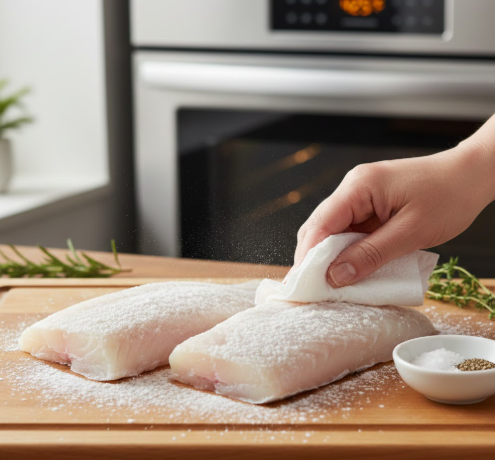
Preheat your oven to 425°F. Pat the fillets dry, then season both sides with salt and pepper. Lightly dust each piece with flour and shake off any excess.
Step 2 — Sear the Fish
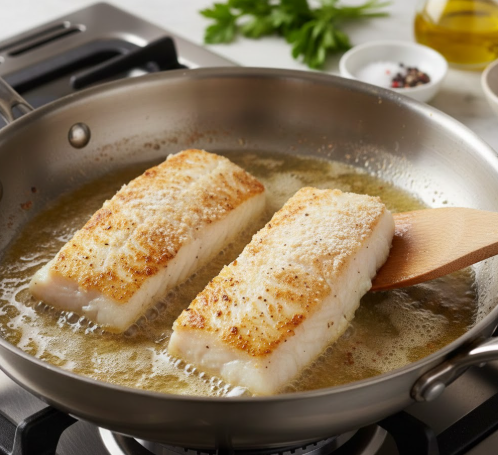
Heat 2 tablespoons of butter in a large ovenproof skillet over medium-high heat until the foam subsides. Add the fillets and sear about 2 minutes per side, until they develop a golden crust.
Step 3 — Finish in the Oven
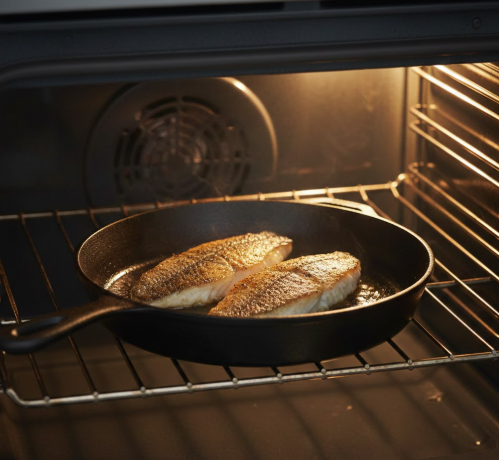
Transfer the skillet to the preheated oven and bake the fish 12–15 minutes. The fillets are done when they flake easily and reach an opaque center.
Step 4 — Make the Pan Sauce

In a separate sauté pan, melt 2 tablespoons of butter over medium-low heat. Add minced shallots and garlic and cook about 5 minutes until soft. Stir in chicken stock, Dijon mustard, honey, and soy sauce, then simmer on low until the liquid reduces by half (about 5 minutes).
Step 5 — Finish and Serve
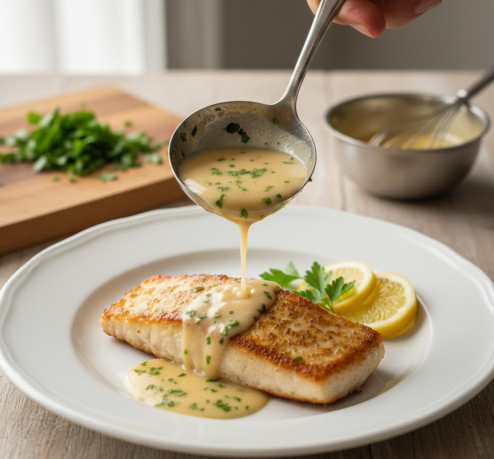
Remove the sauce from heat and whisk in the remaining butter and chopped parsley. Taste and adjust seasoning. Spoon the warm sauce over the hot sea bass and serve immediately.
Cooking Tips
- Choose firm, fresh sea bass fillets; they hold up better while cooking and taste cleaner.
- Watch cooking time closely and stop when the flesh flakes easily with a fork.
- For a crisp crust, lightly dust fillets with flour before searing and finish in a hot oven.
- Use unsalted butter in the sauce so you can control salt levels and balance flavors to your taste.
What Ingredients Can I Replace or Substitute While Making It?
Swaps for the main ingredients
- Fish: If you can’t get Chilean sea bass, use firm, mild white fish such as cod, halibut, or tilapia. These hold up well to pan-searing and baking.
- Flour coating: Use cornstarch or rice flour for a gluten-free crisp. Panko gives extra crunch but browns faster.
- Butter: Swap with olive oil, avocado oil, or ghee. Olive oil makes the sauce lighter; ghee adds a rich, nutty note.
- Stock: Replace chicken stock with white wine, vegetable broth, or low-sodium fish stock for a similar depth of flavor.
Alternative flavorings and sweeteners
- Sweetener: Use maple syrup, agave, or light brown sugar instead of honey. Match sweetness levels to taste.
- Mustard: Whole-grain or yellow mustard can stand in for Dijon, but use slightly less of a spicier mustard.
- Soy sauce: Use tamari for gluten-free or reduced-sodium soy sauce to cut saltiness. Coconut aminos offer a milder, slightly sweeter umami.
- Herbs: Fresh parsley can be swapped for chopped fresh basil, tarragon, or cilantro. If you only have dried herbs, use one-third the amount and add earlier in cooking.
- Shallots and garlic: Substitute 1 small onion for shallots, or use 1/2 teaspoon onion powder if fresh aromatics are unavailable.
Ingredient measurement tips
- Salt control: Use unsalted butter and low-sodium stock or soy sauce to control final salt levels. Taste as you go.
- Acid: If lemon is missing, add a splash of white wine vinegar or a small amount of white wine to brighten the sauce.
- Thickness: If the sauce is too thin, simmer a bit longer or whisk in a small pat of cold butter off heat to enrich and thicken. For a gluten-free thickener, mix a little cornstarch with cold water and stir into the simmering sauce.
Tools and technique alternatives
- Pan choice: If you lack an oven-safe skillet, sear in a heavy pan and finish the fillets on a baking sheet in the oven.
- Baking method: If you prefer not to use the oven, cover the seared fillets and cook gently on the stovetop over low heat until done.
- Dredging: To keep a lighter crust, skip dredging and simply pat the fish dry, season well, and sear in hot fat.
Cooking adjustments for dietary needs
- Lower fat: Use olive oil instead of butter and reduce the final butter whisked into the sauce.
- Lower sodium: Choose low-sodium soy sauce, unsalted butter, and low-sodium stock. Taste before adding extra salt.
- Gluten-free: Substitute all-purpose flour with rice flour, cornstarch, or a gluten-free flour blend for the dredge.
- Vegan/vegetarian option: Use firm tofu or thick cauliflower steaks instead of fish; swap butter with olive oil or vegan butter and use vegetable stock.
How to change the steps without losing flavor
- Timing: If you use thinner fish or alternative proteins, shorten searing and baking times to prevent drying.
- Flavor layering: Add replacements early (like dried herbs) so they have time to bloom, and add delicate fresh herbs at the end for brightness.
- Balancing tastes: When swapping sweeteners, acids, or umami elements, adjust in small amounts and taste. Aim for a balance between savory, sweet, and tangy.
Quick reference table
| Original | Substitute | Notes |
|---|---|---|
| Chilean sea bass | Cod, halibut, tilapia | Adjust cook time for thickness |
| All-purpose flour | Cornstarch, rice flour, panko | Use gluten-free option if needed |
| Unsalted butter | Olive oil, ghee, vegan butter | Olive oil lowers saturated fat |
| Chicken stock | White wine, vegetable stock | White wine adds acidity |
| Honey | Maple syrup, agave | Match sweetness to taste |
| Dijon mustard | Whole-grain, yellow mustard | Use less if spicier |
| Soy sauce | Tamari, coconut aminos | Tamari = gluten-free |
Final pointers and reminders
- Taste the sauce as you swap ingredients and adjust seasonings.
- Reduce cooking time when using leaner or thinner fish to keep it moist.
- Use unsalted components when possible so you can control salt at the end.
Nutrition Information
- Serving calories: 137 kcal
- Protein: 18.6 g — helps support muscle and repair.
- Total fat: 0.2 g; Cholesterol: 80 mg.
- Carbohydrates: 13.9 g; Fiber: 0.4 g; Sugars: 0 g.
- Sodium: 190 mg; Potassium: 22 mg.
- Minerals: Calcium ~2%, Iron ~54% (daily values).
How to keep leftover Ina Garten Chilean sea bass fresh
- Cool the fish to room temperature, then place it in an airtight container.
- Store in the fridge for up to 3 days. For longer storage, freeze for up to 2 months; wrap tightly to prevent freezer burn.
When reheating, warm gently over low heat and stir occasionally until hot. Avoid the microwave to prevent the fish from turning tough or rubbery.
FAQs
Is this safe to eat during pregnancy?
You can eat this dish while pregnant if the fish reaches a safe internal temperature and the sauce uses unsalted butter or a non-dairy fat. Cook the fillet until it flakes easily and there’s no translucent center. The dish offers omega-3s, which support fetal brain and eye development, so it can be a helpful part of your diet.
Can I use previously frozen Chilean sea bass?
Yes. Thaw frozen fillets fully in the refrigerator before cooking. Pat them dry to remove excess moisture so they sear evenly. If you cook from partly frozen, expect longer cook times and uneven texture.
What changes make the recipe healthier?
Swap butter for extra-virgin olive oil or avocado oil. Cut back on added sweeteners like honey and choose low-sodium soy sauce or reduce salt. Serve with a side of steamed vegetables or a whole-grain, low-fat starch to boost fiber and nutrients.
Any plant-based alternatives?
Replace the fish with firm tofu or thick king oyster mushroom slices and use olive oil or vegan butter for the sauce. Adjust cook time so the substitute browns without falling apart.
Wrapping Up
You now have a simple plan to make a restaurant-style Chilean sea bass at home with only a few ingredients and little hands-on time. Follow basic searing and sauce steps, keep seasonings light, and finish with lemon or butter for clean, bright flavors.
If you want consistency, pat fillets dry and heat your pan until it’s hot before adding oil. Sear just long enough to get a golden crust, then finish in the oven if pieces are thick. Use a meat thermometer or check for opaque, flaky flesh to avoid overcooking.
Try these quick tips:
- Season both sides with salt and pepper just before cooking.
- Use a neutral oil with a high smoke point for searing.
- Add butter and lemon toward the end to keep the sauce fresh and tangy.
Serve the fish with simple sides that balance richness, such as steamed greens, roasted root vegetables, or a light grain. Share the dish with friends and family or save leftovers for an easy next-day meal. Enjoy the straightforward technique and clean flavors that let the fish shine.
FAQs
- What makes Ina Garten’s Chilean sea bass recipe worth trying?
You get a rich, flaky fish with simple seasoning and a buttery lemon sauce. The method focuses on quick searing and a short oven finish so the fish stays moist and cooks fast. - Is Chilean sea bass safe and sustainable to cook at home?
Chilean sea bass can be high in mercury and has had sustainability concerns. Check current seafood guides and buy from reputable sellers who provide sustainably sourced or certified fish. Limit portion size if you worry about mercury. - How do you know when the fish is done without overcooking it?
Cook until the flesh flakes easily with a fork and looks opaque throughout. Aim for an internal temperature of 130–135°F (54–57°C) for moist, tender fillets; carryover heat will finish cooking after you remove it from the pan. - What simple sides and wines pair well with this dish?
Light sides like steamed asparagus, roasted baby potatoes, or a simple green salad balance the rich fish. For wine, choose a crisp white such as Sauvignon Blanc, unoaked Chardonnay, or a dry Riesling. - How should you season and prepare the fillets for best results?
Pat fillets dry, season with kosher salt and pepper, and dust lightly with flour if you want a light crust. Sear in a hot pan with butter and oil, then finish briefly in a hot oven. Finish with lemon juice and a bit of butter for a bright sauce. - Can you substitute another fish if Chilean sea bass isn’t available?
Yes. Choose other firm, high-fat white fish like halibut, cod, or sablefish. Cook time may vary, so watch thickness and doneness rather than strict times. - How do you store and reheat leftovers safely?
Refrigerate leftovers within two hours in an airtight container and use within 2–3 days. Reheat gently in a low oven (about 300°F / 150°C) until warmed through to avoid drying the fish.
Final Thoughts
You can make Ina Garten’s Chilean sea bass recipe a reliable go-to for special dinners or simple weeknight meals. The dish uses minimal ingredients and straightforward steps, so you get rich, buttery flavor, a bright lemon finish, and a flaky, restaurant-style texture without fuss.
Key benefits:
- Easy to prepare in about 15–20 minutes.
- Uses common pantry items like butter, olive oil, salt, pepper, and lemon.
- Delivers a tender, luxurious fish that pairs well with vegetables, rice, or a light salad.
Safety and sourcing:
- Choose fresh, well-handled fish from a trusted seller to keep the dish safe.
- Consider sustainable sourcing options if you want an eco-friendlier choice.
Make it last:
- Practice simple techniques—patting the fillets dry, using medium-high heat, and finishing with lemon and butter—to get consistent results every time.
- Invest in good-quality fillets and a reliable pan to maintain texture and flavor over many meals.
Trust this approach for a dependable, elegant seafood dish that’s safe, eco-conscious when you choose responsibly, and easy to repeat. Try it tonight and enjoy a restaurant-quality meal at home.