
Mary Berry Cornish Pasty Recipe
I love sharing simple, classic recipes that anyone can make at home. Mary Berry’s Cornish pasty blends a crisp, flaky pastry with a warm, savory filling of meat and vegetables. It feels traditional but stays easy to follow, so cooks at any skill level can get good results.
I’ll walk you through what makes this pasty special, list the ingredients you’ll need, and give clear steps and tips to help you bake reliably. You’ll also find quick notes on storage, serving ideas, and sensible substitutions to fit your pantry or diet.

Key Takeaways
- The recipe pairs a flaky crust with a hearty, seasoned filling.
- Clear steps and simple ingredients make the pasty approachable for most cooks.
- Tips cover storage, serving, and easy ingredient swaps.
What I Know About Mary Berry’s Cornish Pasty
I see Mary Berry’s take on the Cornish pasty as a simple, robust hand pie. It holds a filling of diced beef, potatoes, onion, and swede (rutabaga) wrapped in a flaky pastry.
I think of it as a miner’s meal—easy to carry and filling enough for a long day.
Key traits: a crimped edge for handling, a golden crust, and a warm, savory center that stays intact while you eat.
Why You’ll Love This Mary Berry Cornish Pasty?
I love how simple ingredients turn into a warm, filling meal. The pastry bakes crisp and golden, giving each bite a pleasing crunch that contrasts with the soft, savory filling. I can hide vegetables like swede and potato inside, so picky eaters still enjoy a balanced plate.
I also appreciate how quick it is to assemble—no fancy skills needed—and how portable the pasty is for lunches or picnics. It feels both homey and a bit special, so it works for weeknight dinners and for serving guests.
The Ingredients
I list the items I need for the pastry and the filling, with simple notes on why each matters.
For the pastry
- 300g all-purpose flour — gives structure and a flaky texture.
- 125g unsalted butter, cold and cubed — adds richness and creates layers.
- 2 egg yolks — deepen color and enrich the dough.
- 1 tsp baking powder — gives a slight lift to the crust.
- 4–6 tbsp cold water — brings the dough together without warming the butter.
- 1/2 tsp salt — balances flavor.
For the filling
- 400–500g skirt steak, trimmed and diced — provides beefy flavor and tender bites.
- 2 medium potatoes, peeled and diced — add bulk and a creamy bite.
- 1 small rutabaga (swede), peeled and diced — gives a slightly sweet, earthy note.
- 1 medium onion, finely chopped — adds sweetness and depth.
- 25g butter — enriches the filling and helps cook the veg.
- 1/2 tsp salt (adjust to taste) — seasons the filling.
- 1 egg, beaten — for brushing the pasty to get a golden finish.
I keep quantities flexible to suit four servings and personal taste.
Directions
Step 1 — Heat the oven

I preheat the oven to 375°F (190°C). I line a baking tray with parchment paper so the pasties won’t stick.
Step 2 — Combine ingredients for pastry

I pulse flour and cold butter in a food processor until it looks like coarse crumbs. I add egg yolks, baking powder, cold water, and salt and pulse until the mixture forms a rough dough.
Step 3 — Work the dough

I turn the dough onto a lightly floured surface and knead it gently for about 5 minutes until smooth and even.
Step 4 — Let dough relax
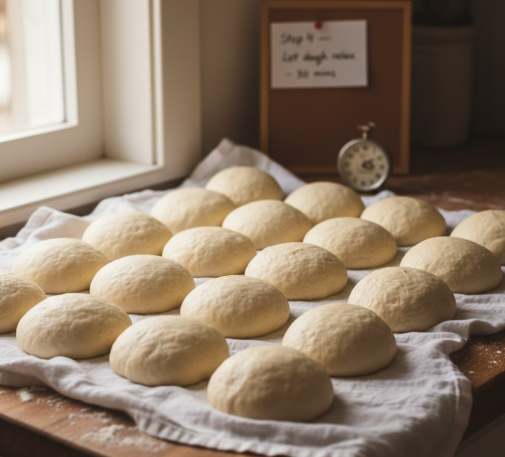
I divide the dough into 16 equal pieces and let them rest, covered, for 30 minutes to relax the gluten.
Step 5 — Brown the meat

I slice skirt steak thinly and cook it quickly in a hot pan until browned. I remove the meat and set it aside to cool slightly.
Step 6 — Cook the vegetables for filling

In the same pan I sauté diced potatoes, swede (rutabaga), and onions with salt and pepper until tender and cooked through. I mix the cooked beef back in and adjust seasoning.
Step 7 — Flatten dough rounds

I roll each dough portion into a circle about 10 inches across on a floured surface, keeping the thickness even.
Step 8 — Spoon in the filling

I place a portion of the meat-and-veg mixture on one half of each dough circle, leaving a clear edge all around.
Step 9 — Egg wash the rim
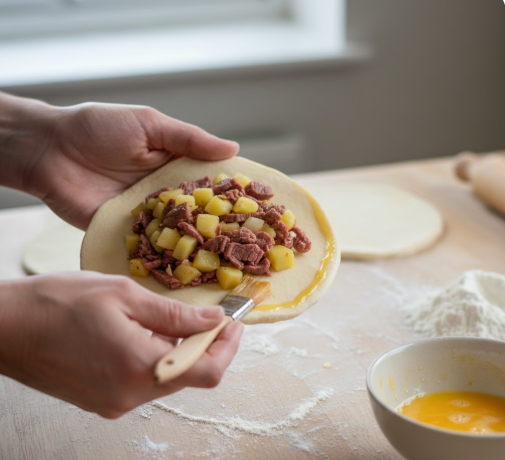
I beat an egg and brush a thin line around the edge of the dough to help seal the pasty.
Step 10 — Crimp the seam

I fold the dough over the filling and press the edges together. I crimp the rim firmly to seal the pasty so the filling stays inside.
Step 11 — Ready the tray

I set the pasties on the prepared tray, brush their tops with the beaten egg, and cut a small slit in each one to let steam escape.
Step 12 — Bake until golden

I bake the pasties for 45–50 minutes, until the pastry is deep golden and the filling is hot.
Step 13 — Serve warm

I let the pasties cool slightly, then serve them warm. I refrigerate any leftovers promptly.
Notes
- I avoid overfilling the pastry so the filling stays inside while baking.
- I choose lean ground meat, but any lean variety works well.
- I often tweak the seasoning by adding extra herbs or spices to taste.
- I swap in ready-made pie crust when puff pastry isn’t available.
- I use a large pot if I don’t have a skillet; it performs the same job.
Storage Tips
I keep pasties in an airtight container in the fridge and use them within three days.
To warm one, I preheat the oven to 375°F and bake for about 10 minutes until heated through.
Nutrition Facts
I list values per pasty (one serving):
- Calories: ~600 kcal
- Protein: 25 g
- Carbohydrates: 55 g
- Fat: 30 g (of which saturated ~12 g)
- Fiber: 4 g
- Salt (sodium): 1.2 g
I recommend adjusting portions and ingredients to change these numbers, for example using leaner beef, less butter in pastry, or more vegetables to lower calories and saturated fat.
Serving Ideas
I like to pair a Cornish pasty with a crisp side salad for a lighter meal.
For comfort food, I serve it with mashed potatoes and a rich gravy.
A few steamed vegetables add color and nutrition.
I also offer ketchup or a favorite dipping sauce on the side.
To finish, I often enjoy it with a hot cup of tea or coffee.
What Other Options Can I Use in Mary Berry Cornish Pasty?
I swap ingredients often to match taste or what I have.
- Potatoes → sweet potato, squash, or pumpkin.
- Beef → ground turkey, chicken, or pork.
- Puff pastry → ready-made pie crust.
- Frozen peas → fresh peas, corn, or carrots.
- Parsley → thyme, oregano, or rosemary.
Mary Berry Cornish Pasty Recipe
Tools I Use
- Rolling pin
- Food processor
- Sharp knife
- Large frying pan or skillet
- Baking sheet lined with parchment
- Pastry brush
- Measuring cups and spoons
What Goes In
Dough
- 6 1/2 cups all-purpose flour
- 250 g unsalted butter, chilled and cubed
- 4 egg yolks
- 4 tsp baking powder
- 1 cup cold water
- 2 tsp salt
Filling
- 500 g skirt steak, very thinly sliced or finely chopped
- 600 g potatoes, diced small
- 300 g swede (rutabaga), diced small
- 300 g onion, chopped
- 6 tbsp butter, diced into small pieces
- 1.5 tsp salt
- 2 tsp ground black pepper
- 2 eggs, beaten (for egg wash)
How I Make Them
- Pulse flour and chilled butter in the food processor until the mix looks like coarse crumbs.
- Add egg yolks, baking powder, cold water, and salt. Pulse until dough gathers.
- Turn dough onto a floured surface and knead briefly, about 3–5 minutes.
- Divide dough into 16 equal pieces, shape each into a ball, and let rest 30 minutes.
- Preheat oven to 375°F (190°C). Line a baking sheet with parchment.
- Brown the steak in a hot pan; remove and set aside. Keep pan heat low.
- In the same pan, sauté potatoes, swede, and onion with a little oil or butter until tender. Season with salt and pepper. Stir in the cooked beef and diced butter; remove from heat.
- Roll each dough ball to roughly 10 inches (25 cm) across. Place a spoonful of filling on one half, leaving a clear edge.
- Brush the edge with beaten egg, fold the dough over, and press edges together. Crimp the edges to seal.
- Place pasties on the prepared sheet. Brush tops with egg wash and cut a small slit in each for steam.
- Bake 45–50 minutes until deep golden and cooked through. Let rest a few minutes before serving.
Practical Tips
- I avoid overfilling to stop leaks during baking.
- Use lean cuts of beef or a ground alternative if preferred.
- Chill the butter and work quickly for flakier pastry.
- If dough becomes sticky, chill it 10–15 minutes before rolling.
- Cut uniform pieces of potato and swede so they cook evenly with the meat.
Estimated Nutrition
- Serving size: 1 pasty (recipe makes 16)
- Calories per pasty: about 304 kcal
- Note: Nutrition varies with meat cut, butter amount, and exact portion sizes. Adjust ingredients for lower calories or different macros.
Frequently Asked Questions
Can I swap potatoes and turnips for other veggies?
I often swap in sweet potato, squash, or pumpkin. Root vegetables like carrots or parsnip also work. Cut them to similar sizes so they cook evenly.
How do I stop the filling from leaking while baking?
I avoid overfilling each pasty and leave a clear margin around the edge. I press and crimp the edges well, and brush with egg wash to seal and help brown.
Is store-bought pie crust OK instead of puff pastry?
I use ready-made pie crust when I want a quicker option. It gives a firmer, less flaky crust than puff pastry but still bakes well.
Closing Thoughts
I find this Cornish pasty hits the right balance of flaky pastry and savory filling with just a few basic ingredients. It cooks quickly and makes a filling meal that works for lunch, dinner, or a picnic. I like to serve mine with mashed potatoes, steamed vegetables, or a crisp salad, and a warm cup of tea feels fitting. Try baking a batch to see how simple, homey flavors can become a new favorite.
Quick serving ideas
- Mashed potatoes and gravy
- Steamed veg and salad
- Hot tea or coffee
FAQs
Q: What ingredients do I need to make a Mary Berry–style Cornish pasty?
I use simple, classic ingredients: good-quality diced beef (skirt or chuck works well), peeled potatoes, swede (rutabaga), onion, salt, pepper, and shortcrust or puff pastry. A little butter and an egg wash help the crust brown nicely.
Q: How do I ensure the filling cooks through without the pastry going soggy?
I cut the vegetables and beef into small, even pieces so they cook quickly and evenly. I also keep the filling fairly dry by removing excess moisture from potatoes and swede and using a light hand with any added liquid. Partial blind-baking the base is not traditional, but you can bake on a preheated baking tray to get a crisper bottom.
Q: Is it safe to make and store Cornish pasties ahead of time?
Yes. I cool cooked pasties to room temperature then refrigerate in an airtight container for up to 2 days. For longer storage, I freeze pasties individually wrapped for up to 3 months. Reheat from frozen in a moderate oven until piping hot in the center.
Q: How do I shape and crimp the pasty so it stays sealed?
I place the filling off-center on a rolled pastry circle, fold the pastry over to form a D-shape, press the edges together, then fold and crimp the rim by rolling and pinching with my thumb and fingers. A firm, tight crimp helps keep juices inside during baking.
Q: How does a Mary Berry–style pasty compare to other homemade pasty recipes?
I find Mary Berry’s approach focuses on balance: hearty filling, reliable pastry technique, and straightforward seasoning. Compared with shortcut recipes that use pre-cooked fillings or heavy gravies, this style stays truer to the traditional miner’s pasty—simple ingredients, raw filling baked inside the pastry.
Q: Can I make vegetarian or alternative fillings and still get good results?
Yes. I swap meat for firm vegetables (like mushrooms, root veg, or lentils) and adjust seasoning and moisture. Use ingredients with low water content or precook and drain them to avoid a soggy pastry. The baking and crimping techniques stay the same.
Q: What oven temperature and baking time give the best result?
I bake pasties at a moderate to high oven temperature (around 200°C / 390°F) on a preheated tray for roughly 30–40 minutes, until the pastry is golden and the filling is hot. Times vary by size and filling moisture, so check that the center is piping hot before serving.
Final Thoughts
I recommend trying Mary Berry’s Cornish pasty for a reliable, homemade meal that balances taste and simplicity. I find the mix of beef (or a vegetarian alternative), potatoes, swede, and onion wrapped in a sturdy, flaky pastry gives consistent results that hold up well for lunches or picnics.
- Effectiveness: The classic filling and method produce a filling that stays moist inside a crisp crust.
- Safety and ease: Short ingredient lists and straightforward steps make this recipe safe and approachable for most home cooks.
- Eco-friendliness: Using local meat and seasonal vegetables lowers food miles and supports sustainable choices.
- Long-term suitability: The pasty stores and reheats well, so it works for meal prep and repeated use.
I suggest using quality ingredients and a trusted recipe when you make pasties. Choose sensible substitutes if needed, and you’ll have a durable, tasty dish that serves well over time.