No Knead Three Seed Bread: Easy Artisan Loaf with Sunflower, Pumpkin, and Flax
I grew up watching my grandmother make bread, and those kitchen smells shaped how I think about baking. Over time I wanted the same warm, homemade loaf without long kneading or complex steps, so I started exploring simpler methods that still give great flavor and texture.
No-knead three-seed bread fits that goal. It pairs ease with a mix of seeds for crunch and taste, and it bakes into a loaf that works for toast, sandwiches, or a simple snack.
Key Takeaways
- This recipe delivers homemade bread with minimal hands-on work.
- A mix of seeds adds texture and nutty flavor to the loaf.
- The bread suits many meals and stores well for later use.
What I mean by no-knead three-seed loaf
I make this bread by simply mixing flour, water, and a few seeds—no kneading needed. The seeds I use are sunflower, flax, and chia, which add crunch and extra nutrients. The dough rests slowly to develop flavor and air pockets, then bakes into a crisp crust with a soft, open crumb.
- Texture: crunchy crust, tender inside
- Seeds: sunflower, flax, chia
- Effort: minimal hands-on time, simple steps
Why I Love This Easy Three-Seed No-Knead Loaf
I enjoy this bread because it’s simple and dependable. I only stir the ingredients, let the dough rise, and bake — no kneading or special skills needed.
I feed my body more fiber, protein, and healthy fats when I use seeds like sunflower, flax, and chia. That small swap boosts nutrition without changing flavor.
I use the loaf for many meals: sandwiches, toast, or alongside soup and salad. It stores well, so I bake once and use it through the week.
I also appreciate how good it looks and smells. Freshly baked bread makes an ordinary meal feel more special.
The Ingredients
I use a short list of pantry staples and seeds to get a hearty, crunchy loaf. The dry base is mainly bread flour, about 3 cups (390 g) measured by spooning and leveling. I add 1 cup (85 g) old-fashioned rolled oats for texture and a nutty taste.
For seeds and crunch I mix sunflower seeds (¼ cup / 30 g), pumpkin seeds or pepitas (¼ cup / 30 g), and a blend of smaller seeds: 2 tablespoons (18 g) flax or sesame and 1 tablespoon (8 g) chia. I reserve a small amount of seeds and oats for sprinkling on top.
I flavor the dough with 1 teaspoon ground cinnamon and 2 tablespoons (43 g) golden honey. I salt the dough with 2 teaspoons coarse sea salt. To make the dough rise I use 2 teaspoons (about 6 g) instant yeast and 1½ cups (360 ml) warm water (about 95°F / 35°C).
Optional: I dust the pan with fine cornmeal for a crisp bottom crust.
Quick ingredient list (for reference)
- 3 cups (390 g) bread flour
- 1 cup (85 g) rolled oats
- ¼ cup (30 g) sunflower seeds
- ¼ cup (30 g) pumpkin seeds
- 2 tbsp (18 g) flax or sesame seeds
- 1 tbsp (8 g) chia seeds
- 2 tsp instant yeast (≈6 g)
- 1½ cups (360 ml) warm water
- 2 tsp coarse sea salt
- 2 tbsp (43 g) honey
- 1 tsp ground cinnamon
- Optional: fine cornmeal for the pan
Step by Step Instructions
Step 1 — Get the Dough Started

I mix warm water with honey in a large bowl until the honey dissolves. I sprinkle instant yeast on top and wait about 5 minutes for it to foam. That foam tells me the yeast is active and ready.
Step 2 — Combine the Dry Ingredients

I add bread flour, oats, sunflower seeds, flax, chia, cinnamon, and salt to the bubbly yeast mixture. I fold everything together with a spatula or my hands until it forms a shaggy, sticky dough. I avoid overworking it — a rough texture is normal.
Step 3 — Long First Rise
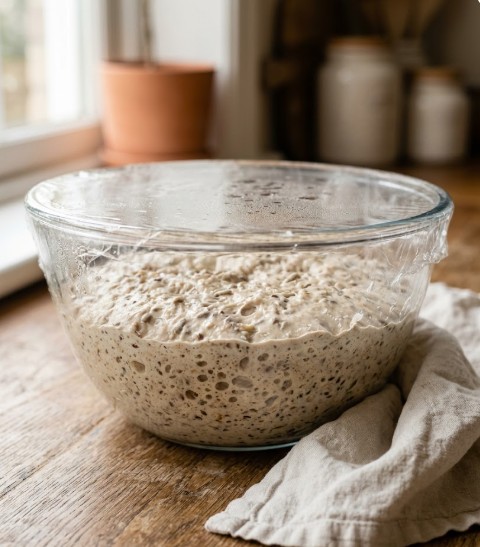
I cover the bowl with plastic wrap or a clean towel and leave it at room temperature for 12–18 hours, often overnight. I look for the dough to double in size and show bubbles on the surface. That indicates good fermentation and flavor development.
Step 4 — Form the Loaf

I lightly flour a clean work surface and turn the dough out onto it. With floured hands, I fold the edges toward the center several times to create a loose round. I aim for a rough ball; it does not need to be perfect.
Step 5 — Final Proof

I move the shaped dough onto a sheet of parchment paper and dust a Dutch oven base with cornmeal if I’m using one. I cover the dough with a towel and let it rise 1–2 hours until it puffs up and nearly doubles. This second rise improves oven spring and crumb.
Step 6 — Heat the Oven

I preheat the oven to 450°F (230°C). If I plan to bake in a Dutch oven, I place it inside while the oven heats. A hot pot creates steam and helps form a crisp crust.
Step 7 — Bake the Bread
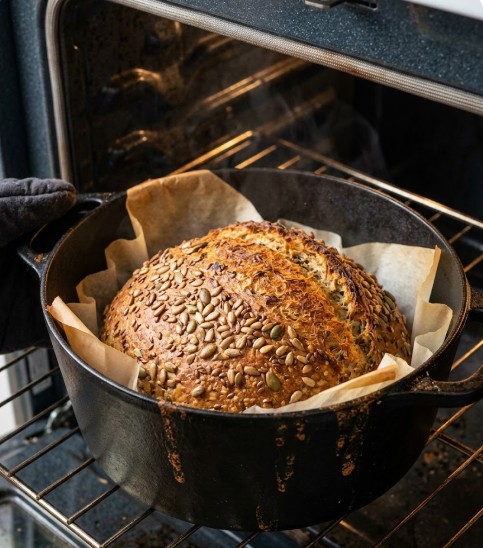
I carefully remove the hot Dutch oven, lift the dough on its parchment, and place it into the pot. I cover it and bake for 30 minutes. Then I remove the lid and bake another 15–20 minutes until the crust turns deep golden brown.
Step 8 — Cool Before Slicing
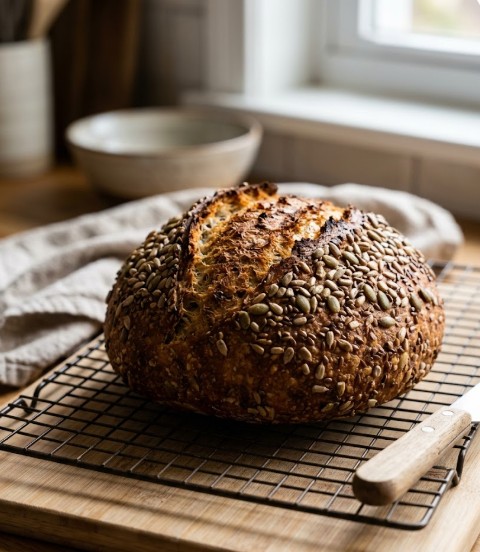
I lift the baked loaf out by the parchment and set it on a wire rack. I let it cool at least 30 minutes to finish setting the crumb. I wait before slicing so the inside stays tender and not gummy.
Tips & Tricks
- I pick the best ingredients I can find; fresher flour and good seeds make a noticeable difference.
- I test water temperature with a thermometer: aim for about 100–110°F (38–43°C) to wake the yeast without killing it.
- I let the dough rise slowly; longer, gentler rises build better flavor and texture.
- I like to add small mix-ins (nuts, dried fruit, or spices) but keep quantities moderate so the crumb holds together.
- I check doneness by thumping the loaf’s base — a hollow sound means it’s baked through.
Nutrition Information
I list the typical nutrition for one slice (1 of 12) of this three-seed no-knead bread:
- Calories: 130
- Total fat: 4 g (Saturated: 0.5 g)
- Carbohydrates: 22 g
- Fiber: 3 g
- Protein: 5 g
- Sugar: 1 g
Can I Store No-Knead Three-Seed Bread?
I let the loaf cool completely, then keep it in a paper bag at room temperature for 2–3 days. For longer storage, I slice the bread and seal portions in an airtight container or freezer bag. Frozen slices stay good up to about 3 months; I toast or thaw slices straight from the freezer for best texture and flavor.
What I Pair with No-Knead Three Seed Bread
I like to serve this bread with warm soups and stews — its crust soaks up broth nicely.
It works well beside green or pasta salads for a light meal.
I often offer spreads like hummus, mashed avocado, or plain butter.
For breakfast, I toast slices and top them with jam or use them for avocado toast.
Variations
Ingredients tweaks and swaps
I often change seeds, nuts, or flours to suit taste or what I have on hand. Swap sunflower, pumpkin, chia, or flax for sesame, hemp, or poppy seeds. Add 1/4 to 1/2 cup chopped walnuts or almonds for crunch.
For a sweeter loaf, replace part of the white flour with whole wheat and stir in 1–2 teaspoons ground cinnamon plus 1/3–1/2 cup raisins. For a cheesy version, fold 3/4 to 1 cup shredded cheese into the dough before the second rise.
If you want a herby loaf, add 1–2 teaspoons dried oregano, rosemary, or mixed Italian herbs. Adjust salt if the cheese or nuts are salty.
Technique and timing changes
I change the method a little depending on the add-ins and schedule. For dense add-ins (nuts, seeds, dried fruit), gently mix them in after the initial combine so the dough keeps its slack, then shape as usual.
If I’m short on time, I use slightly warmer water (not above 110°F / 43°C) and a touch more yeast to shorten the first rise to 6–8 hours. For better flavor, I stick to a long, cool overnight rise (12–18 hours) at room temperature.
When shaping, I do a few gentle folds to trap air and push large add-ins inward. If I bake in a Dutch oven, I preheat it at 450°F (230°C) for a crisp crust. Bake covered for 30 minutes, then uncovered 15–20 minutes until deeply browned.
Nutrition and serving ideas
Changing ingredients shifts the nutrition a fair bit. Adding nuts raises calories and healthy fats; swapping white flour for whole wheat increases fiber and protein. Seeds boost omega fats, fiber, and minerals.
Typical slice estimate: about 120–160 kcal per slice depending on mix-ins. A nutty, seed-heavy slice will be higher in calories but more filling.
Serve toasted with butter or cream cheese, or use thick slices for hearty sandwiches. For breakfast, pair a cinnamon-raisin slice with yogurt or fruit for a balanced meal.
Practical tips and reminders
I always check water temperature to protect the yeast: warm, not hot. Test the dough’s readiness by looking for surface bubbles after the long rise and a doubled volume.
Dust parchment or the pan with fine cornmeal to prevent sticking and add a bit of texture to the crust. Let the loaf cool at least 30 minutes before slicing to avoid a gummy crumb.
If you want a glossy top, brush the loaf with a little olive oil before baking. For a crunchy seed topping, press the seed mix lightly onto the loaf right before the second rise and bake as directed.
Frequently Asked Questions
1. Can I swap bread flour for all-purpose?
Yes. I often use all-purpose flour when I don’t have bread flour. The loaf will still work, but the crumb may be a bit softer and less chewy because all-purpose has less protein.
2. What if my dough won’t rise?
Check the yeast first — I test it in warm water with a pinch of sugar to make sure it foams. I also keep dough in a warm spot; cold temperatures slow or stop rising. If yeast is old, replace it.
3. Can I make twice as much dough?
I double this recipe often. Use a larger bowl and expect slightly longer rise times. Divide the dough into two pans if your oven or pot is too small.
4. May I use other seeds?
Absolutely. I mix sunflower, pumpkin, chia, flax, or sesame depending on taste. Keep the total seed amount similar so the dough’s hydration and structure stay balanced.
5. Is a gluten-free version possible?
Yes — I use a gluten-free bread blend made for yeast breads. Texture changes, so I often add a binder (like xanthan gum) if the mix lacks it and adjust liquids as needed.
Closing Thoughts
I love how this easy, no-knead three-seed loaf makes baking feel doable and rewarding. The mix of seeds adds texture and good nutrients without extra fuss.
Use it for sandwiches, toast, or as a warm side with soup to stretch meals and add flavor.
I recommend baking a loaf when you want fresh bread fast and simple. Try small tweaks like more seeds or a longer rise to match your taste.
• Crusty outside, soft inside
• Minimal hands-on time
• Flexible for many meals
FAQs
Q1: How do I know this no-knead three-seed bread will rise without kneading?
I rely on a simple mix of flour, water, salt, and a small amount of yeast. The long, slow resting time lets the dough develop gluten and trap gas so the loaf rises. Use active dry or instant yeast and give the dough at least 8–18 hours at room temperature or a longer cold ferment in the fridge.
Q2: Is this bread healthy and safe to eat every day?
Yes, the bread can be part of a healthy diet. Seeds like sunflower, flax, and chia add fiber, healthy fats, and some protein. I watch portion sizes and balance it with vegetables, protein, and other whole foods. Store leftovers properly to avoid spoilage.
Q3: How should I store and keep the bread fresh?
I cool the loaf completely, then wrap it in a clean tea towel for short-term use (2–3 days). For longer storage, I slice and freeze portions in a sealed bag. Thaw or toast slices straight from the freezer for best texture.
Q4: Can I change the seed mix or use different flours?
Yes. I swap seeds based on taste or what I have—pumpkin, sesame, or poppy work well. I also adjust flours: all-purpose or bread flour gives a lighter crumb, while part whole wheat adds flavor and density. If I add whole wheat, I sometimes increase hydration slightly.
Q5: How does this no-knead method compare to kneaded bread?
I find no-knead bread needs less hands-on time but more waiting. Kneaded dough develops structure faster with active work, giving a different crumb and faster rise. No-knead loaves often have an open, rustic crumb and a crisp crust with minimal effort.
Q6: What common problems happen and how do I fix them?
If my loaf is dense, I check yeast freshness and give more time for fermentation. If it spreads flat, I reduce hydration slightly or shape the dough tighter before the final rise. If the crust burns before the inside cooks, I lower oven temperature or tent the loaf with foil.
Q7: Is this method safe for people with allergies?
I always check seeds and flours for cross-contamination. The recipe contains seeds that can trigger allergies for some people. I substitute seeds or flours as needed and clearly label homemade loaves when serving others.
Conclusion
I recommend trying no-knead three-seed bread if you want simple, healthy homemade bread with little hands-on work. It delivers a crisp crust, soft crumb, and a boost of nutrition from seeds like sunflower, flax, and chia without needing kneading or special skills.
- Effectiveness: The long, slow rise builds flavor and texture while leaving you just a few minutes of active prep.
- Safety: The recipe uses common, safe ingredients and standard baking temperatures, so it is easy to make reliably at home.
- Eco-friendliness: Making bread at home cuts packaging waste and lets you control ingredient sourcing for lower-impact choices.
- Suitability: This loaf fits many uses—sandwiches, toast, or a side for soups—and works for most home bakers, including beginners.
I advise choosing quality seeds and unbleached flour for the best taste and durability. With a small time investment and simple steps, you’ll get a wholesome, versatile loaf that rewards you every time.