Cilantro Lime Sauce: Versatile Fresh Sauce
Cilantro lime sauce brightens plain meals with a mix of fresh cilantro, zesty lime, and creamy base. I’ll show a simple homemade recipe that anyone can follow, plus easy steps to blend, season, and store the sauce for regular use.
I will also share five tasty ways to use the sauce and three practical tips to get the best flavor and texture at home. The goal is to make a versatile, quick condiment you’ll feel confident making and pairing with many dishes.
Key Takeways
- Homemade cilantro lime sauce uses few ingredients and comes together quickly.
- A clear five-step method helps you blend, season, and store the sauce properly.
- Simple tips and pairing ideas make the sauce versatile for many meals.
Cilantro Lime Sauce Ingredients
I use simple, fresh items to make this sauce.
- Fresh cilantro — 1 cup packed leaves, stems removed.
- Sour cream — 1/2 cup (I swap Greek yogurt for a lighter option).
- Mayonnaise — 1/4 cup (optional for more creaminess).
- Garlic — 2 cloves, minced.
- Olive oil — 1 tablespoon.
- Lime juice — from 1 medium lime.
- Salt — 1/2 teaspoon.
- Black pepper — 1/2 teaspoon.
- Water — 1–2 tablespoons to thin, if needed.
How to Make Cilantro Lime Sauce: 5 Easy Steps
Step 1 — Get Everything Ready
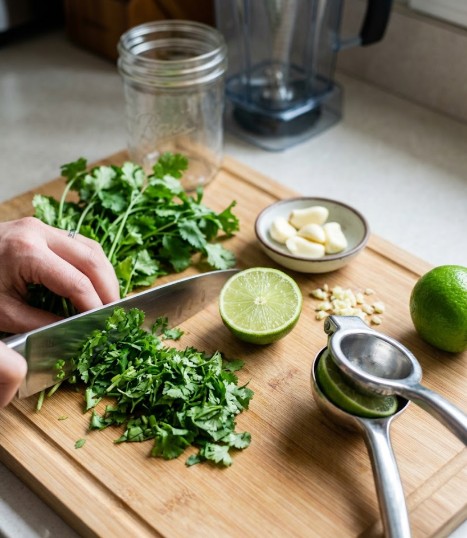
I gather all ingredients before I start. I peel the garlic, rinse the cilantro and limes, and pat them dry. I roughly chop the cilantro and mince the garlic so they mix easily.
I slice the limes and squeeze out the juice, using a citrus press if I want less mess. A sharp chef’s knife and a solid cutting board make the chopping faster and neater.
Step 2 — Combine and Purée
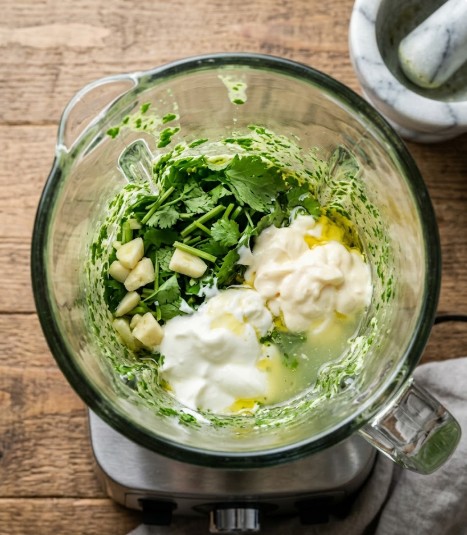
I add the cilantro, garlic, sour cream, mayonnaise (or a vegan base), lime juice, and a splash of olive oil to a blender or food processor. I run the machine until the mixture looks smooth and evenly green.
If you don’t have a blender, finely chop the cilantro and garlic and whisk them into the creamy base. The texture will be thicker, so add a little lime juice or water if you want it thinner.
Step 3 — Add Salt and Pepper
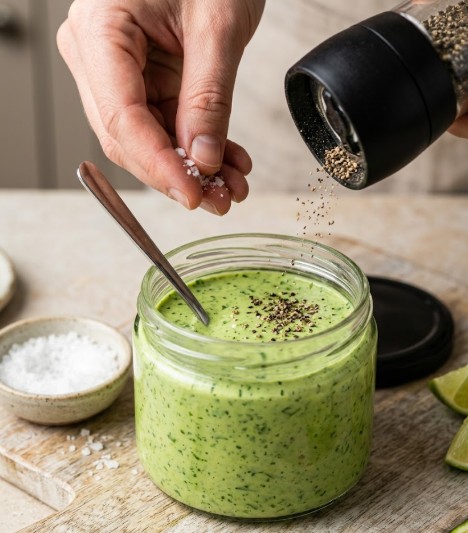
I season the sauce with salt and freshly ground black pepper. I pulse the blender a few more times so the seasoning fully blends in.
If the sauce feels too thick, I add small amounts of water or more lime juice until it reaches the texture I want. If it’s too thin, I fold in extra sour cream or mayonnaise to thicken it.
Step 4 — Taste and Fine-Tune
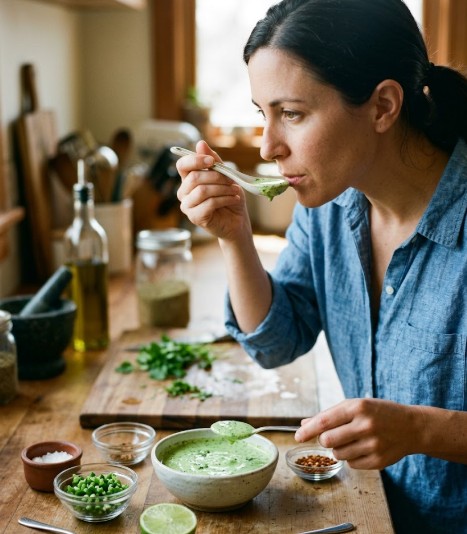
I spoon a small taste and decide what to change. For heat, I add red pepper flakes, a dash of cayenne, or chopped jalapeño. For more brightness, I squeeze in extra lime juice. If it’s too sharp, I stir in a pinch of sugar or more creamy base.
I adjust salt and pepper last, tasting after each small change until the flavor fits my preference.
Step 5 — Serve Now or Keep for Later
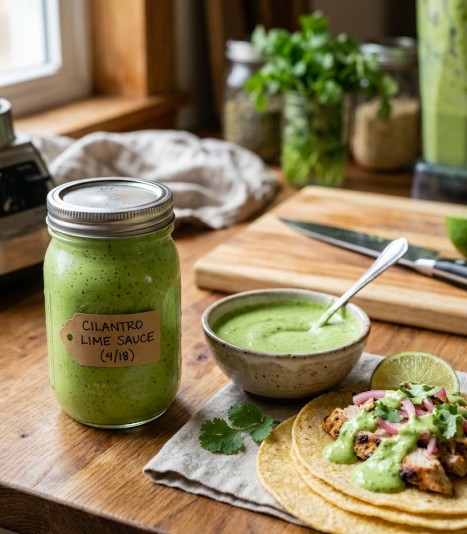
I transfer the sauce to a clean jar or container. I use it right away on tacos, grilled meat, salads, or as a dip.
To store, I seal the container and refrigerate. In a glass container the sauce stays fresh about a week. Labeling with the date helps me keep track of freshness.
5 Best Uses for Cilantro Lime Sauce
I use cilantro lime sauce in lots of ways because it lifts simple dishes with bright, creamy flavor. Try these five go-to uses:
- Tacos and Wraps — I drizzle the sauce over chicken,fish, or veggie tacos. It adds a fresh, tangy kick that ties fillings together without overpowering them.
- Grilled or Roasted Chicken — I spoon it over grilled breasts, thighs, or a whole roasted bird. The lime cuts through fat and the cilantro adds herbal brightness.
- Seafood — I serve it with grilled or pan-seared fish and shrimp. The zesty, herby notes complement seafood’s natural richness and add a light, tangy contrast.
- Salad Dressing — I thin the sauce with a splash of water or extra lime juice and toss it with mixed greens, grain bowls, or chicken salad. It works with leafy greens, roasted veggies, and grain salads alike.
- Dip for Fries and Veggies — I use it as a dip for fries, sweet potato wedges, or raw vegetables. The creamy texture and bright flavor make fried or roasted sides more interesting.
I keep a jar in the fridge so I can add this sauce quickly to lunches and weeknight dinners.
3 Magical Tips for Preparing Cilantro Lime Sauce at Home
What to use for best flavor
I always pick the freshest ingredients I can find. Bright green cilantro leaves, freshly squeezed lime juice, and raw garlic give the sauce its lively taste and color. I swap sour cream for Greek yogurt if I want a lighter version, but I never use wilted herbs or bottled lime juice when I want real flavor.
How to get the right thickness
I check the sauce thickness before serving and adjust as needed. If the sauce is too thick, I thin it with a tablespoon of water or milk at a time until it pours easily. If it gets too thin, I add a little more sour cream or yogurt to firm it back up. Small changes make a big difference, so I add liquid or cream slowly and taste as I go.
Ways to vary the flavor
I like to try small twists to find new flavors. Adding half an avocado makes the sauce silkier and richer. A few fresh mint leaves brighten the aroma and pair well with lime. For heat, I blend in a jalapeño or a pinch of cayenne. I test one change at a time so I can repeat any variation I like.
Ingredients I use
- 1 cup fresh cilantro leaves (packed)
- 1/2 cup sour cream or Greek yogurt
- 1/4 cup mayonnaise (optional for extra creaminess)
- 2 garlic cloves, minced
- 1 tablespoon olive oil
- Juice of 1 medium lime
- 1/2 teaspoon salt
- 1/2 teaspoon ground black pepper
- 1–2 tablespoons water (to thin if needed)
Step-by-step method
- Wash cilantro and peel garlic. Roughly chop cilantro.
- Add cilantro, garlic, sour cream (or yogurt), mayo (if using), lime juice, and olive oil to a blender or food processor.
- Blend until smooth, pausing to scrape down the sides once.
- Season with salt and pepper, blend 1–2 more minutes.
- Check texture; add 1 tablespoon water at a time to thin, or a bit more sour cream to thicken.
- Taste and adjust salt, lime, or heat. Transfer to a bowl and serve, or refrigerate in a sealed container.
Nutrition note
- Approximate calories: 80 kcal per serving (varies by ingredient choices).
Final Thoughts
I keep a jar of cilantro-lime sauce in my fridge to make meals quicker and more flavorful. It stores well, so I can pull it out for tacos, bowls, grilled proteins, or snacks without extra prep. The recipe I follow takes just a few simple steps and a handful of ingredients, and the tips I use shave off time and boost taste. Try it once and you’ll find it becomes a go-to condiment that makes weekday cooking easier and more enjoyable.
FAQs
Can I make this sauce without dairy?
Yes. I often swap dairy for plant-based ingredients. Use blended cashews or almond paste with lime for a creamy base. Plain coconut yogurt or a non-dairy sour-style yogurt also works. Mashed avocado gives a rich, dairy-free texture and a mild flavor.
What’s the best way to keep leftover sauce?
I store the sauce in a clean glass jar with a tight lid. Wash and dry the jar well, then pour in the sauce and seal it. Keep the jar in the fridge and use within about 5–7 days. If the sauce thickens, I add a splash of lime juice or water and stir before serving.
How does cilantro-lime sauce differ from chimichurri?
They are quite different. I think of cilantro-lime sauce as smooth and creamy, made with cilantro, lime, garlic, and a dairy or dairy-free creamy base. Chimichurri is oil-based and chunky, using parsley, oregano, garlic, vinegar, and oil. Flavor-wise, cilantro-lime is bright and citrusy, while chimichurri tastes herbaceous and tangy. Cilantro-lime comes from Mexican-style cooking; chimichurri comes from Argentina.
Essential Kitchen Tools
I use six simple tools to make the cilantro-lime sauce with sour cream.
- Blender or food processor — for a smooth, even texture.
- Citrus press (or manual juicer) — to squeeze fresh lime juice fast.
- Mixing bowls — to hold ingredients and the finished sauce.
- Measuring cups and spoons — to keep proportions consistent.
- Knife and cutting board — to chop cilantro and mince garlic.
- Tasting spoon — to check seasoning and texture as I go.
FAQs
- What makes my cilantro lime sauce taste bright and fresh?
I use plenty of fresh cilantro and freshly squeezed lime juice. The acidity from the lime wakes up the flavors, while cilantro adds herbal brightness. A small amount of salt and a touch of garlic round out the taste. - Is this sauce safe for people with common food allergies?
I keep the base simple to avoid allergens. You can make it dairy-free by using olive oil, avocado, or a plant-based yogurt instead of sour cream. Always check individual ingredient labels and tell people what’s in the sauce if you serve it to others. - How long will the sauce stay fresh in the fridge?
I store the sauce in an airtight container and use it within 4–5 days. If you used fresh dairy like sour cream or yogurt, stick to the lower end of that range. Smell and taste a small amount before using if it’s been stored for several days. - Can I freeze cilantro lime sauce?
I don’t recommend freezing dairy-based versions because texture can change after thawing. For oil- or avocado-based blends, freezing can work but the texture may shift. If you freeze, thaw slowly in the fridge and stir well before using. - Which dishes pair best with this sauce?
I drizzle it on tacos, grilled chicken, shrimp, roasted vegetables, and grain bowls. It also works well as a salad dressing, a dip for chips, or a spread for sandwiches and wraps. - How can I adjust the heat or consistency?
I add jalapeño or serrano for spice and remove seeds to mellow the heat. To thin the sauce, I stir in water, lime juice, or olive oil a tablespoon at a time. To thicken it, I use more yogurt, sour cream, or a bit of mayo. - How does this sauce compare to other sauces like salsa verde or chimichurri?
I find cilantro lime sauce is creamier and tangier than salsa verde, which is more acidic and chunky. Compared to chimichurri, it’s smoother and often dairy-based, while chimichurri is oil-forward and herb-focused. Each has a different texture and best uses depending on the dish.
Conclusion
I recommend cilantro lime sauce as a versatile, flavor-boosting choice for many meals. It pairs well with tacos, bowls, grilled meats, and salads. I find its bright citrus and herb notes lift dishes without overpowering them.
I trust recipes that use fresh cilantro, lime juice, garlic, and a creamy base like yogurt, sour cream, or mayo. These ingredients keep the sauce safe to eat when handled and stored properly. Making it at home also cuts waste from store-bought packaging and uses simple, reusable tools.
For lasting results, I suggest using fresh herbs, storing the sauce in a sealed container in the fridge, and using it within 4–5 days. If you want a lighter option, I use Greek yogurt or lime juice to reduce calories while keeping flavor.
Choose a reliable recipe or brand that lists clear ingredients and storage guidance. I encourage you to try a batch at home and adjust herbs, acid, and creaminess to your taste. You’ll likely find it a useful, eco-friendly addition to your regular meals.