Cheesecake Factory Key Lime Cheesecake Recipe
I love the Cheesecake Factory Key Lime Cheesecake for its bright, tangy flavor and silky texture. In this article I’ll explain what makes the cake work, show how to recreate it at home, and suggest simple sides and swaps that pair well with the lime filling.
I’ll also cover practical tips for ingredients, step-by-step directions, storage ideas, and common questions I’ve learned from testing recipes. My goal is to help you make a balanced, flavorful dessert that tastes fresh and stays creamy.
Key Takeaways
- The cheesecake balances tangy lime with a creamy filling and a crisp crust.
- Simple pairings and small swaps can boost flavor and texture.
- Clear steps and storage tips make homemade success more likely.
What I Know About Cheesecake Factory’s Key Lime Cheesecake
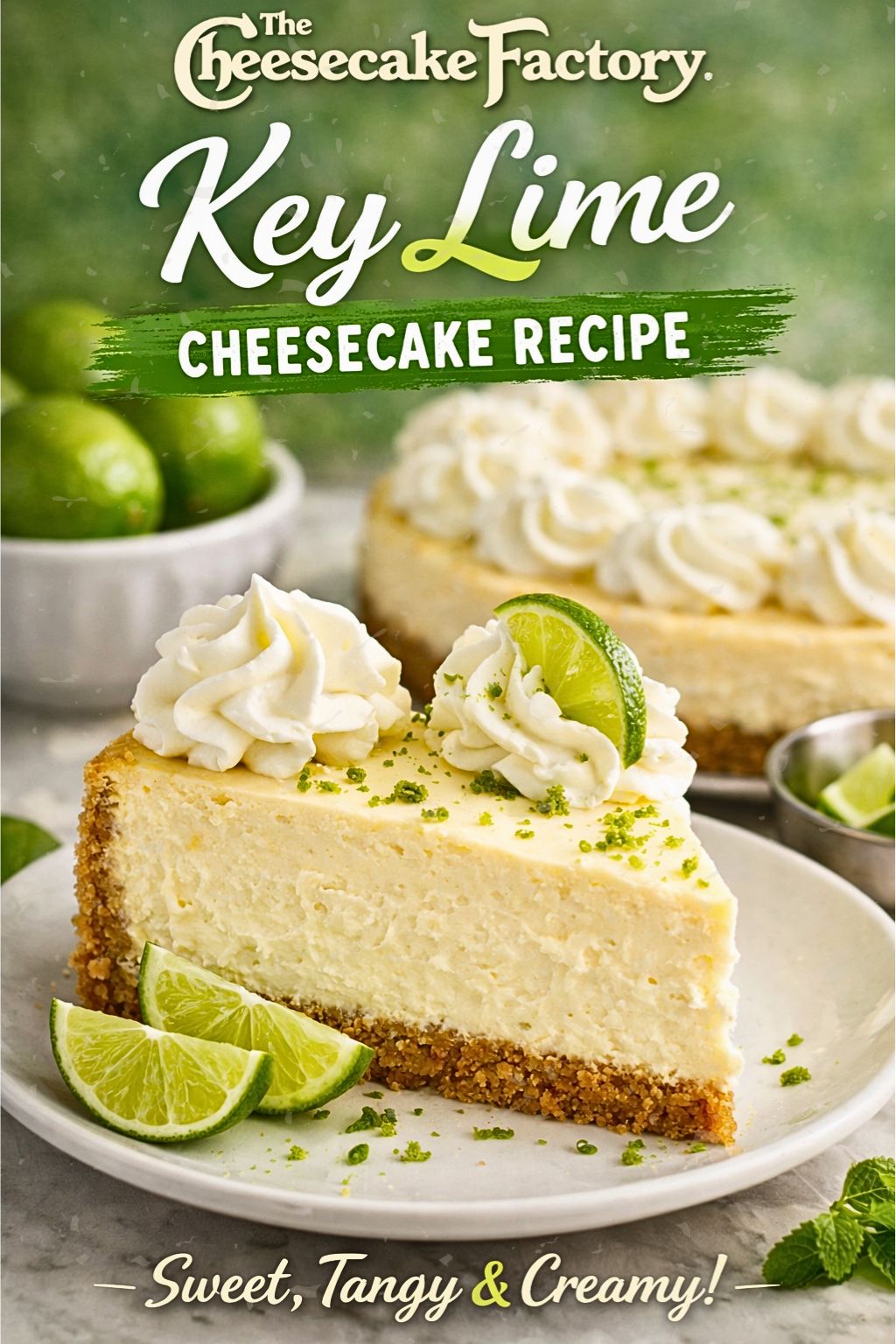
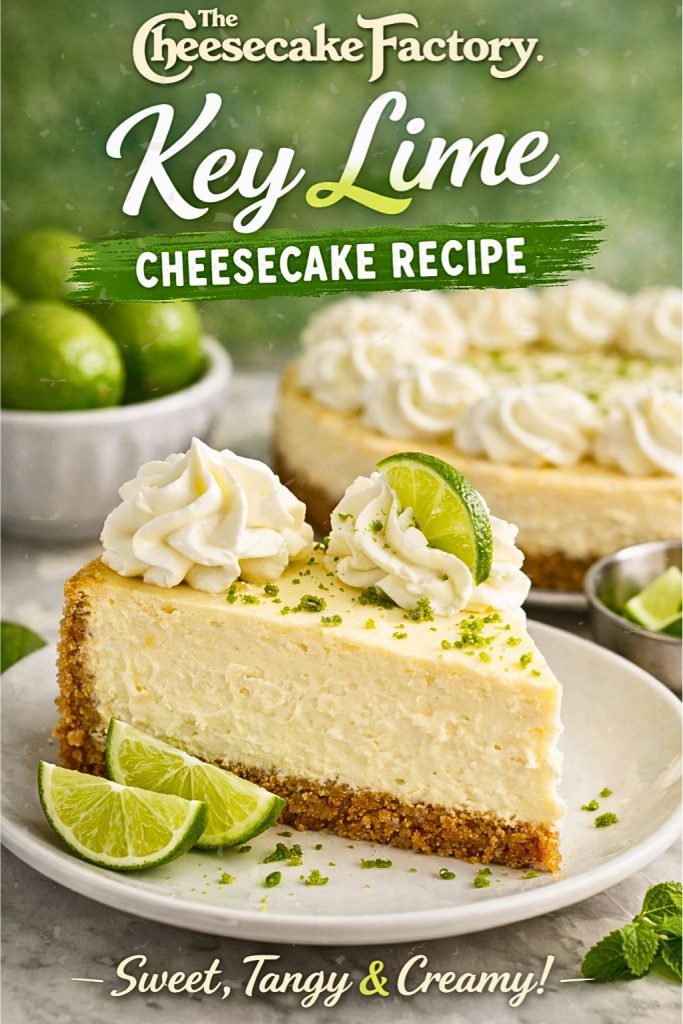
I describe a rich cheesecake with a crisp graham cracker base and a smooth, tangy filling made from cream cheese and fresh lime juice and zest. I note the contrast of bright citrus and creamy texture. I point out the sweet whipped cream on top that adds lightness and visual appeal. I consider each bite to deliver a balanced tart-sweet flavor with a slight tropical note.
What It Tastes Like to Me
I get an immediate bright lime tang that wakes up my taste buds. The tang quickly softens as the dense cream cheese filling coats my mouth with a silky, slightly sweet richness. A buttery graham cracker crust adds a light crunch and mild caramel note that balances the tartness. The mix of zesty, creamy, and crunchy keeps me reaching for another bite.
Why This Recipe Works
1. Good Ingredients Make Better Flavor
I use fresh limes and full-fat cream cheese to get real taste. Fresh lime gives bright acidity that bottled juice lacks. Room-temperature cream cheese blends smoothly, so the filling becomes silky instead of lumpy.
2. A Clear Tang–Sweet Balance
I aim for a balance between tart lime and creamy sweetness. The lime’s acidity lifts the dense cheesecake and prevents it from feeling too rich. The sweet elements round the tartness so each bite feels fresh and satisfying.
3. Straightforward Steps, Big Results
I keep the method simple so the texture turns out right without fuss. A solid crust, well-blended filling, and careful baking make the cheesecake set correctly. Small, clear steps let cooks of any skill level get great results.
4. Easy to Adjust for Personal Taste
I build in room for tweaks so the recipe fits your preferences. Want more zip? Add lime zest or juice. Prefer a smoother mouthfeel? Use slightly more cream cheese or add sour cream. These small changes let you shape the dessert without breaking the recipe.
Ingredients for Cheesecake Factory Key Lime Cheesecake
Ingredients for the Key Lime Filling
- 3 (8 oz) cream cheese — softened to room temperature for a smooth batter.
- 1 cup granulated sugar — balances the lime tartness.
- 1 tablespoon cornstarch — helps set the filling and reduce cracks.
- Zest of 1 lime — brightens the lime flavor.
- 1/2 cup fresh lime juice — I use fresh juice for the best tang.
- 3 large eggs — at room temperature to blend evenly.
Ingredients for the Graham Cracker Base
- 1 1/2 cups graham cracker crumbs — forms the crunchy crust.
- 2 tablespoons granulated sugar — adds a little sweetness to the base.
- 6 tablespoons unsalted butter, melted — I use this to bind the crumbs.
Ingredients for Sweetened Whipped Topping
- 1 cup heavy whipping cream — whipped until soft peaks form.
- 1/4 cup powdered sugar — sweetens without graininess.
- 1/2 teaspoon vanilla extract (optional) — I add this for depth.
- Lime zest or thin lime slices (optional) — for garnish and extra zing.
Step by Step Instructions
Step 1: Make the Crust Ready
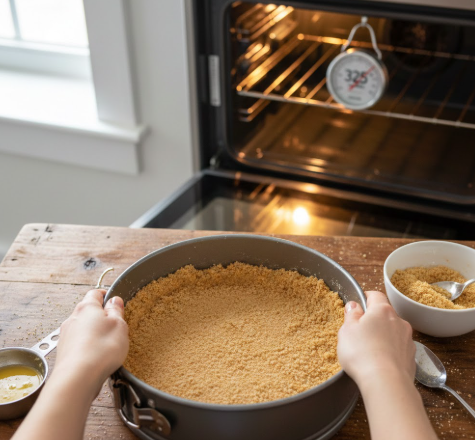
I preheat the oven to 325°F (160°C). I mix graham cracker crumbs, a bit of sugar, and melted butter in a bowl until the crumbs are evenly moistened. I press the mixture into the bottom of a 9-inch springform pan, making a firm, level layer. I bake the crust about 10 minutes, then take it out and let it cool before adding the filling.
Step 2: Prepare the Lime Filling
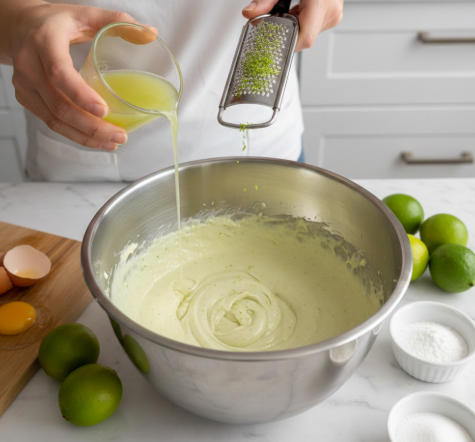
I beat softened cream cheese with sugar at medium speed until smooth and lump-free. I stir in cornstarch and grated lime zest, then slowly add fresh lime juice while mixing gently. I add eggs one at a time, mixing only until each is incorporated to avoid adding extra air.
Step 3: Bake the Cheesecake
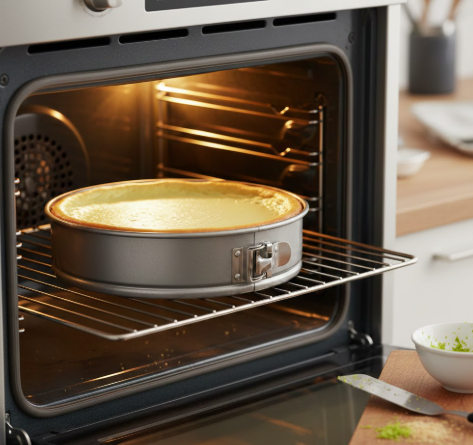
I pour the filling over the cooled crust and smooth the top with a spatula. I bake 50–60 minutes, until the edges look set and the center still jiggles slightly when nudged. I turn off the oven, open the door a little, and let the cake cool inside for about an hour to reduce cracking.
Step 4: Chill and Plate
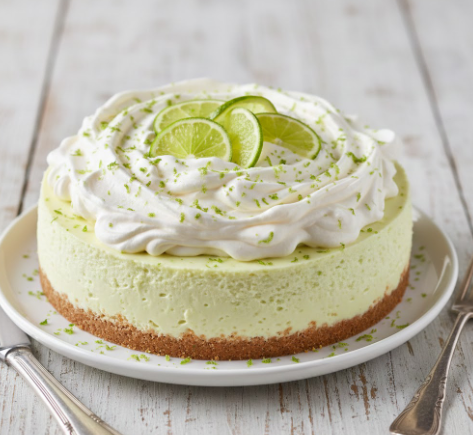
I cover the cooled cheesecake and chill it in the refrigerator for at least 4 hours, preferably overnight, to firm up. When I’m ready to serve, I whip heavy cream with powdered sugar to soft peaks. I spread or pipe the whipped cream on top and finish with extra lime zest or thin lime slices for garnish.
Notes
I recommend bringing cream cheese and eggs to room temperature for about 30 minutes so they mix without lumps. I stop mixing as soon as ingredients are uniform to avoid trapping air, which can cause cracks.
If I want an extra-silky texture, I use a water bath: I wrap the springform pan well in foil and set it inside a larger pan with hot water. I cool the cheesecake slowly, often leaving it in the turned-off oven with the door ajar to reduce sudden temperature shifts.
For finishing touches, I add lime zest and whipped cream for brightness and a clean look.
How I Keep Leftover Cheesecake Fresh
I wrap the cheesecake tightly in plastic wrap or place it in an airtight container to keep its texture and flavor.
I store it in the fridge for up to 5 days.
- For longer storage, I freeze single slices.
- I wrap each slice well and label the date.
- I eat frozen slices within 2 months for best taste.
Sides for Cheesecake Factory Key Lime Cheesecake
1. Mixed Fresh Fruit Bowl
I serve a small bowl of mixed fruit alongside the cheesecake. I choose kiwi, pineapple, and strawberries for bright, tangy notes that cut through the richness. Arrange slices or cubes for easy fork access and a colorful plate.
2. Refreshing Sorbet Scoop
I add a scoop of lime or coconut sorbet to cleanse the palate between bites. The cold, smooth texture balances the dense cheesecake and adds a lighter choice for guests. Place sorbet in a chilled dish to keep it firm.
3. Warm Pecan-Praline Drizzle
I warm a pecan-praline sauce and spoon a little over the slice for nutty sweetness and crunch. The sauce pairs well with the lime flavor and gives a contrast in texture. Keep extra sauce on the side so guests can control how much they want.
4. Dark Chocolate Drizzle
I finish with a thin stream of dark chocolate sauce for those who like a richer touch. The chocolate complements the tart lime without overpowering it. Serve the sauce on the plate or in a small ramekin for dipping.
What are Some Alternative Choices to the Ingredients?
1. Cream Cheese Replacements
I swap cream cheese when I run out or want a lighter texture. A mix of ricotta and Greek yogurt gives a creamy, slightly tangy filling that holds up well. For a richer but still different option, mascarpone works but adds more fat and a milder tang.
2. Sweetener Options
I replace granulated sugar to cut calories or change flavor. Erythritol or stevia can be used at a 1:1 ratio for sweetness, though texture may feel a bit drier. For a more natural flavor, use honey or maple syrup, but reduce liquids slightly and lower oven time if the batter becomes looser.
3. Plant-Based Choices
I make a vegan cheesecake by swapping dairy and eggs. Soaked cashews blended with a little plant milk create a thick, creamy base. Store-bought vegan cream cheese also works and saves time. I replace eggs with a flax “egg” (1 Tbsp ground flax + 3 Tbsp water per egg) to bind the filling.
4. Crusts Without Gluten
I use nut flours or gluten-free crumbs instead of standard graham crackers. Almond flour or crushed gluten-free graham crackers press into a firm crust and add a pleasant, toasty flavor. Coconut flour can be blended with a little extra butter or oil, but use less coconut flour since it absorbs more moisture.
Ingredients (swap guide)
- Cream cheese → ricotta + Greek yogurt, mascarpone, cashew cream, or vegan cream cheese
- Granulated sugar → erythritol, stevia, honey, or maple syrup (adjust liquid)
- Cornstarch → arrowroot or tapioca starch (same amount)
- Lime zest & juice → same; fresh juice gives best flavor, bottled may work in a pinch
- Eggs → flax eggs for vegan, or 2 Tbsp aquafaba per egg for a lighter set
- Graham cracker crumbs → gluten-free graham, almond flour, or crushed gluten-free cookies
- Unsalted butter → coconut oil or vegan butter for dairy-free crust
- Heavy cream → coconut cream or chilled full-fat coconut milk for non-dairy whipped topping
- Powdered sugar → powdered erythritol or a small amount of maple syrup reduced into whipped cream
Method adjustments and tips
- When using liquid sweeteners (honey, maple), reduce other liquids slightly and watch baking time; the filling may set faster or browner.
- With nut-based or cashew fillings, blend until ultra-smooth to avoid grainy texture. Strain if needed.
- Vegan and dairy-free versions benefit from a slightly longer chill time to firm up. I refrigerate at least 6–8 hours.
- If using coconut cream for topping, chill a can overnight and scoop only the solid part to whip. Add a touch of vanilla to balance flavor.
- For gluten-free crusts, press firmly and prebake 8–10 minutes to help the crust set and avoid sogginess.
Nutrition notes for swaps
- Replacing cream cheese with ricotta + Greek yogurt lowers fat and slightly raises protein.
- Using erythritol or stevia cuts sugar and calories but may change mouthfeel.
- Nut-based crusts raise healthy fats and calories; coconut flour lowers carbs but absorbs more liquid.
- Vegan swaps often reduce cholesterol and saturated fat if you use plant oils instead of butter.
Extra pointers
- I let dairy or vegan cream ingredients reach room temperature before mixing; this helps the batter become smooth.
- I avoid overmixing to reduce air bubbles that cause cracks. Mix just until combined.
- If I want the creamiest result, I sometimes bake the cheesecake in a water bath and cool it slowly in the oven with the door cracked.
- For a decorative finish, I zest lime over the top or add thin lime slices after chilling.
Frequently Asked Questions
- Can I swap bottled lime juice for fresh?
I recommend fresh lime juice. It gives a brighter, cleaner lime taste that makes the cheesecake more lively. Use bottled juice only if fresh limes are unavailable. - Why did my cheesecake crack?
Cracks usually come from quick temperature changes or too much air in the batter. I cool my cheesecake slowly—leave it in the turned-off oven with the door ajar—to reduce cracking. I also mix gently to avoid adding excess air. - Can I freeze the cheesecake?
Yes. I let the cheesecake cool completely, wrap it tightly in plastic, then freeze. It keeps well for up to two months. Thaw it overnight in the refrigerator before serving. - How do I know when it’s done baking?
I look for firm edges and a slightly wobbly center. The center will finish setting as it cools. I avoid overbaking to keep the texture smooth and creamy.
Final Thoughts
I nailed the key points of making a tangy, smooth key lime cheesecake that feels special and homemade. I recommend gathering fresh limes, quality cream cheese, and a sturdy springform pan before you start.
If you want variety, I suggest small tweaks: a graham crust with extra butter for crunch, more lime zest for brightness, or a light whipped topping for contrast. I find chilling the cake overnight gives the best texture and makes slicing cleaner.
Try serving with thin lime slices or a sprinkle of zest. Keep notes on any changes so you can repeat what you loved. Happy baking — enjoy sharing a dessert that likely becomes a favorite.
FAQs
- What makes my version similar to the Cheesecake Factory Key Lime Cheesecake?
I focus on a creamy, tangy filling with a buttery graham cracker crust and a light sour cream or whipped topping. I use cream cheese, key lime juice and zest, and sugar to balance tartness and richness. The texture and flavor aim to match the restaurant-style dessert without copying any single recipe. - Is this cheesecake safe to serve to others (food safety)?
I recommend using pasteurized dairy and eggs or baking the cheesecake fully to reduce risk. Cool the cake completely, chill it for at least 4–6 hours, and store it below 40°F (4°C). Discard leftovers after 3–4 days in the fridge. - How effective is the recipe at holding its shape and texture?
Using room-temperature cream cheese, a stabilizer like cornstarch or sour cream, and gentle mixing prevents cracks and yields a smooth filling. A water bath or low, even baking temperature also helps maintain a dense, creamy texture and reduces splitting. - What coverage or serving size can I expect from one recipe?
A standard 9-inch springform cheesecake typically serves 10–12 slices. If you need more servings, I suggest using a larger pan or making two cheesecakes rather than thinning the filling, which can affect texture and baking time. - How do I maintain the cheesecake’s fresh flavor and appearance?
I store the cake lightly covered in the fridge to protect it from absorbing other odors. Add toppings like whipped cream or lime zest just before serving to keep them bright. If transporting, chill the cake well and use a stable container to prevent sliding. - How does this recipe compare to other key lime desserts?
Unlike a simple key lime pie, this cheesecake delivers a richer, creamier mouthfeel and denser texture. It has more body thanks to cream cheese, while still offering the bright citrus notes found in pies and mousse-style desserts. - Can I substitute regular limes or bottled lime juice for key limes?
I suggest fresh key lime juice for its unique floral, tangy flavor, but regular fresh lime juice works as a good substitute. Avoid bottled juice if possible; fresh juice yields brighter, fresher flavor. If you must use bottled, taste and adjust sugar to balance acidity.
Final Thoughts
I recommend this Cheesecake Factory–style key lime cheesecake for anyone who wants a bright, creamy dessert that still feels reliable and safe to make at home. I find the graham cracker crust, smooth cream cheese filling, and tangy lime flavor work together well, and the recipe scales for small families or larger gatherings.
Key reasons I trust this recipe:
- Flavor balance: The tart lime cuts the richness without overpowering it.
- Simple ingredients: Most items are pantry staples, so it’s practical and low-waste.
- Gentle technique: No extreme steps are required, which keeps results consistent.
Tips I follow for best results:
- Use room-temperature cream cheese to avoid lumps.
- Measure lime juice and zest carefully for a steady tartness.
- Chill the cheesecake well before slicing to keep clean edges.
I encourage choosing reliable ingredients and following the method closely for repeatable success. Try the recipe and adjust the lime intensity to your taste — you’ll get a bright, crowd-pleasing dessert that’s eco-friendly in practice and great for sharing.