
Cheesecake Factory Cheesecake Recipe
I love how a good pairing can lift a dish. On a warm afternoon, the smell of baking cheesecake brings people together, and I often serve it with a scoop of fresh, ripe berries to add bright, juicy contrast to the rich, creamy texture.
Strawberries, blueberries, and raspberries cut through the cheesecake’s silkiness and make each bite more lively. This simple match started my own cheesecake journey and shaped how I think about flavor and balance in desserts.
Key Takeaways
- A simple fruit pairing brightens the richness of cheesecake.
- Fresh berries add texture and a tangy contrast to creamy filling.
- Thoughtful pairings can transform an everyday dessert.
What Makes My Cheesecake Factory Cheesecake Special
I describe Cheesecake Factory cheesecake as a very creamy, smooth dessert sold in large slices. I note it comes in many flavors, from classic to seasonal, so there’s usually something for every taste.
- Texture: dense but velvety
- Portion: generous slices
- Use: good for parties or a simple treat
I focus on the rich flavor and consistent quality that make it a reliable dessert choice.
The Ingredients
Filling Components I Use
- Cream cheese (4 packages, 8 oz each), softened — the main ingredient for a dense, creamy texture.
- Granulated sugar (1 1/4 cups) — balances the tang and sweetens the batter.
- Full-fat sour cream (1/2 cup) — adds a mild tang and silkiness.
- Pure vanilla extract (2 teaspoons) — gives warm, rounded flavor.
- Large eggs (5, room temperature) — provide structure and help the filling set.
Crust Ingredients I Prefer
- Crushed graham crackers (1 1/2 cups) — forms a crisp, buttery base.
- Ground cinnamon (1/4 teaspoon, optional) — a small touch of warmth if desired.
- Unsalted butter (5 tablespoons, melted) — binds crumbs and adds richness.
Topping Mix I Add
- Sour cream (1/2 cup) — creates a smooth, mild top layer.
- Granulated sugar (2 teaspoons) — lightly sweetens the topping.
- Fresh lemon juice (1 teaspoon, optional) — brightens the flavor if you want a subtle lift.
How to Make Cheesecake Factory Cheesecake?
Step-by-Step Directions I Follow
I break the process into clear stages so each part turns out right. Work in order: crust, filling, bake, topping, then chill. Use room-temperature ingredients and avoid over-mixing to keep the texture smooth.
Step 1: Make the Base
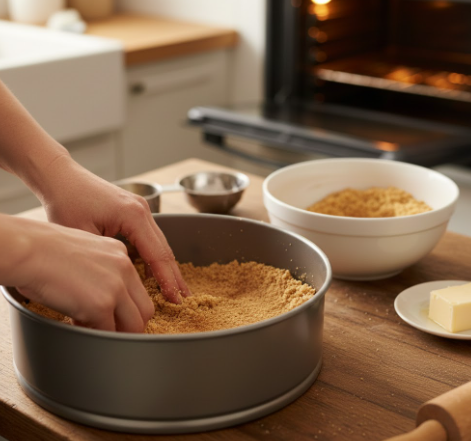
I preheat the oven to 325°F (160°C) and use a 9-inch springform pan. I mix 1 ½ cups crushed graham crackers with melted butter and a pinch of cinnamon if I want. I press the crumbs firmly into the pan bottom and bake for 10 minutes. After baking, I set the crust aside to cool while I prepare the filling.
Step 2: Whip the Cheese Filling
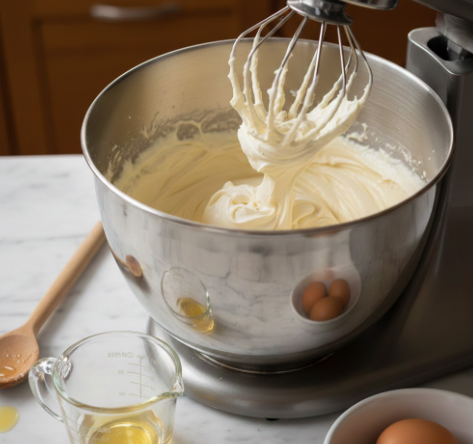
I beat softened cream cheese until it’s completely smooth. I add 1 ¼ cups granulated sugar gradually, then blend in ½ cup sour cream and 2 teaspoons vanilla extract. I add the eggs one at a time on low speed to avoid trapping air. The batter should be thick, silky, and lump-free before I pour it into the crust.
Step 3: Put It Together and Bake
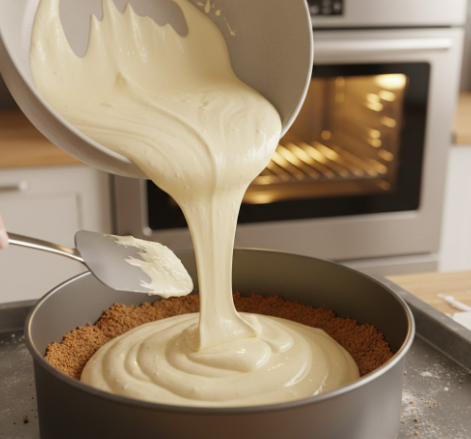
I pour the filling over the cooled crust and spread it evenly with a spatula. I bake the cheesecake for 60–70 minutes until the edges are set and the center still jiggles slightly. I then turn off the oven and leave the cake inside with the door ajar for one hour to cool down slowly. This step reduces the chance of cracks.
Step 4: Make and Add the Top Layer
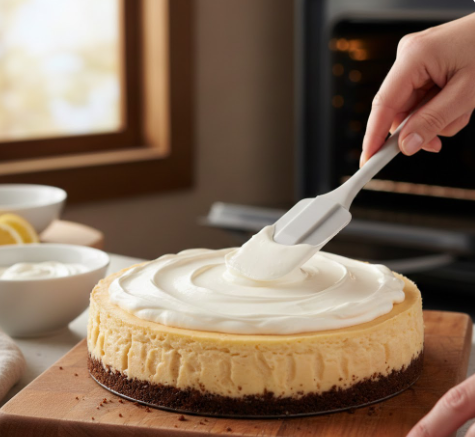
I mix ½ cup sour cream with 2 teaspoons sugar and 1 teaspoon fresh lemon juice for the topping. After the initial bake and slow cool, I spread this topping gently over the cake. I return the cheesecake to the oven for 10 more minutes to set the topping.
Step 5: Chill and Cut
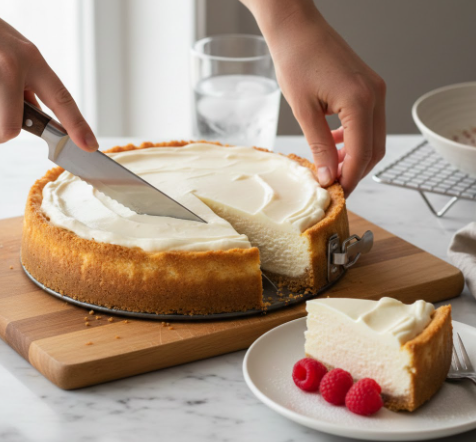
I remove the cheesecake from the oven and let it cool to room temperature. Then I cover it and refrigerate for at least four hours, preferably overnight, so it firms up and the flavors meld. Before serving, I run a knife around the springform edge, release the pan, and slice the cheesecake with a clean, warm knife for neat pieces.
Notes
I keep ingredients at room temperature so the batter blends smoothly. I cool the cheesecake slowly to avoid cracks and maintain texture. I mix gently to prevent air from getting into the batter, which reduces splitting. I like trying small flavor changes, such as extracts or fruit purées, for variety. When I want very even baking, I use a water bath—it helps the cake cook uniformly and lowers the risk of overbrowning.
Storage Tips
I keep cheesecake cold and covered in the fridge; that preserves texture and flavor for up to a week.
For longer storage, I wrap slices tightly in plastic wrap, then in foil, and freeze them — they keep well for about three months.
I store sauces and fruit separately in airtight containers and add them only after the cheesecake thaws in the refrigerator to avoid soggy toppings.
Serving Ideas I Like
I pair the cheesecake with fresh berries for color and a tart bite. Strawberries, blueberries, or raspberries cut the richness and brighten each slice.
I often drizzle warm chocolate or caramel sauce for a richer dessert. A thin stream adds elegance without overpowering the cake.
I serve a spoonful of whipped cream on the side. I prefer homemade whipped cream with a splash of vanilla to keep the texture light.
For a warm contrast, I spoon a fruit compote—berry or cherry—over the top. I also sprinkle chopped pecans or walnuts when I want a crunchy finish.
What Other Substitutes Can I Use in Cheesecake Factory Cheesecake?
Swaps for the main ingredients
I swap full-fat cream cheese with Neufchâtel or a plant-based cream cheese when I want less fat or a dairy-free option. These keep the filling creamy though the texture can be a touch lighter.
I replace sour cream with plain Greek yogurt for a tangy boost and extra protein. It still adds creaminess while cutting some fat.
For the crust, I trade graham crackers for crushed cookies (shortbread, digestive, or chocolate) or gluten-free crackers to fit diets or change the flavor. Using different crumbs gives a new base taste without changing the method.
I use coconut oil or vegan butter instead of dairy butter to make the crust dairy-free. Coconut oil can add a mild coconut flavor that works well with many cheesecake types.
I substitute granulated sugar with honey, maple syrup, or another liquid sweetener for a different flavor note. Reduce other liquids slightly if the recipe becomes too wet.
Changes to how I make it
I often bring all dairy and eggs to room temperature before mixing. This prevents lumps and helps the batter blend smoothly.
When I use egg replacers or reduce eggs for a lighter set, I lower mixing speed and time to avoid excess air. Less air means fewer cracks during baking.
If I use Greek yogurt or plant-based cream cheese, I check baking time closely; these swaps can change how long the cheesecake needs to set. I test by watching for a slightly jiggly center rather than relying only on a set time.
I sometimes bake the cheesecake in a water bath (wrapped springform or covered pan) to keep edges from cooking too fast. This gives a more even bake, especially with alternative ingredients.
Nutrition changes and what to expect
Swapping to Neufchâtel or lower-fat cream cheese reduces total fat and calories per slice. The difference is noticeable but keeps the creamy mouthfeel.
Using Greek yogurt adds protein and cuts fat, which lowers calories slightly and increases satiety. Flavor stays tangy but pleasant.
Switching to honey or maple syrup changes sugar composition and adds trace minerals, but calories stay similar so portion control still matters.
Choosing coconut oil for the crust keeps the recipe dairy-free but raises saturated fat compared with some plant-based margarines. Crust calories will vary by crumb type and fat used.
Gluten-free crumbs remove gluten but do not automatically lower calories. Crush density and fat content of your binding fat determine crust calories.
Practical tips and reminders
- I always measure wet sweeteners by weight or reduce other liquids slightly when using honey or maple syrup.
- I press the crust firmly and pre-bake it for 8–12 minutes to avoid a soggy base.
- I add eggs one at a time and mix on low to reduce air; that helps prevent cracks.
- I cool the cheesecake slowly: oven off with the door ajar for an hour, then room temperature, then chill. Gradual cooling preserves texture.
- I use a thin layer of sour cream or yogurt mixed with a touch of sugar and lemon for a top glaze; it works with most substitutions and bakes briefly to set.
Bold choices change texture and bake time, so I adjust small steps and watch the cake rather than relying only on the clock.
Frequently Asked Questions (FAQs)
- Can I bake a cheesecake without a springform pan?
I often use a regular round cake pan. I line it with parchment and lift the cake out by the paper. I run a thin knife around the edge before removing to keep the sides neat. - How will I know the cheesecake is finished?
I look for a mostly set top with a slight jiggle in the center. The cheesecake firms as it cools, so a little wobble is fine. If the top is cracked, I likely baked it too long. - Can I mix chocolate into the filling?
I can fold in melted chocolate or chocolate chips after the batter is mixed. Adding chocolate can change how long it needs to bake, so I watch the oven closely. - Do I need to chill the cheesecake overnight?
I don’t always, but I recommend chilling it at least several hours. Refrigerating it overnight improves flavor and gives a firmer, creamier texture. - What steps help stop cracks from forming?
I use room-temperature eggs, mix gently, and cool the cheesecake slowly—often by turning the oven off and leaving the door slightly ajar. These steps cut down on cracks.
Closing Thoughts
I found making a Cheesecake Factory–style cheesecake at home both satisfying and doable. With a handful of quality ingredients and careful timing, I can get a dense, creamy texture that feels special. Small steps—measuring precisely, bringing ingredients to room temperature, and avoiding overmixing—make a big difference in the final result.
I enjoy serving it chilled with a simple sour cream topping or fresh fruit to balance the richness. Sharing the cake turns the effort into something social, and I often get asked for the recipe after one bite.
FAQs
- What makes my version of the Cheesecake Factory cheesecake so creamy?
I use full-fat cream cheese and a small amount of heavy cream to give the filling a smooth, rich texture. I mix on low speed to avoid adding air, and I bake gently in a water bath to prevent cracks and overcooking. - Is this cheesecake recipe safe to make for others (food safety)?
Yes, if you handle ingredients properly. I keep cream cheese and eggs refrigerated until use, avoid cross-contamination, and chill the finished cheesecake at least 4 hours, preferably overnight, before serving to ensure food safety and proper set. - How well does this recipe hold up for transport or parties?
The cake stays stable if fully chilled. I transport it in a rigid, shallow container and keep it cool with ice packs. For long trips, I freeze the whole cake and thaw it in the fridge the day before the event. - What upkeep does the cheesecake need after baking?
I remove it from the water bath, let it cool to room temperature, then refrigerate. I cover it tightly to prevent drying and allow flavors to meld. It keeps 3–5 days in the fridge or up to one month frozen. - How does this homemade version compare to the restaurant original?
My version aims for the same dense, creamy feel and a tangy sour-cream topping. While exact taste varies with ingredient brands and baking conditions, I can match the texture and overall flavor closely using the same techniques: richer filling, gentle baking, and a sweet-tangy top layer. - Can I adapt the recipe for dietary needs (lower fat, gluten-free)?
I can make changes but expect texture shifts. Lower-fat cheeses and milks may make the cake less rich and slightly looser. For gluten-free, I swap the crust for certified gluten-free crackers or nuts. Taste and firmness will differ from the original. - What common problems happen and how do I fix them?
If cracks form, I cover them with the sour-cream topping or a thin glaze. If the center is underdone, I bake a bit longer at low heat and then chill until set. If the crust becomes soggy, I prebake it longer and cool before adding the filling.
Conclusion
I recommend the Cheesecake Factory–style cheesecake for anyone who wants a rich, reliable dessert that works for gatherings and special treats. I find the creamy texture, balanced sweetness, and sturdy graham-cracker crust make it both crowd-pleasing and easy to serve.
I trust recipes that use simple, high-quality ingredients—cream cheese, eggs, sugar, vanilla, and a touch of sour cream—because they deliver consistent results. When baked gently and cooled slowly, the cake stays smooth and crack-free, which makes it safe and dependable for serving to guests.
Tips I rely on for long-term success:
- Use room-temperature ingredients for even mixing.
- Bake in a water bath or at low heat to prevent cracks.
- Chill thoroughly before slicing to keep clean edges.
I view this style of cheesecake as practical and versatile. It adapts well to flavor twists (fruit, chocolate, or citrus) without losing its classic appeal, and it stores well in the fridge or freezer when handled properly.
Choose a trusted recipe and follow clear steps. With a little attention to technique, you’ll get a delicious, professional-feeling cheesecake that lasts and impresses.
