
Alfredo Sauce Recipe: Creamy, Quick Homemade Sauce
I love a good Alfredo sauce because it turns simple pasta into a richer, more satisfying meal. Its creamy, buttery texture and cheesy flavor work well with pasta, roasted vegetables, chicken, or seafood, and learning to make it at home lets you control taste and quality.
I will walk you through a clear, step-by-step version of the classic recipe, point out common mistakes to avoid, and share easy tips to cut calories without losing flavor. You’ll also find answers to common questions like cream substitutions, best pasta pairings, and storage advice.
Key Takeaways
- Learn a simple, reliable method to make creamy Alfredo sauce at home.
- Avoid common errors and follow tips to keep the sauce smooth and flavorful.
- Use small changes to lower calories while keeping rich taste.
Homemade Alfredo Sauce Ingredients
I list the exact items and amounts I use to make a smooth, classic Alfredo. Keep measurements close for best texture, and adjust salt and spice to taste.
- Unsalted butter — 1 cup
I use unsalted butter so I can control the salt level. It gives the sauce a rich mouthfeel. - Heavy cream — 1 1/2 cups
Heavy cream creates the silky body of the sauce. It’s the main liquid and cream component. - Garlic, minced — 2 cloves
I finely mince two garlic cloves for a bright, savory note without overpowering the sauce. - Freshly grated Parmesan — 1 1/2 cups
I grate Parmesan fresh for the best melt and flavor. Pre-grated cheese can be drier and less smooth. - Salt — 1/2 teaspoon (or to taste)
I start with half a teaspoon and adjust after the sauce comes together. - Freshly ground black pepper — 1/4 teaspoon
I add a quarter teaspoon for a mild, warm bite. Freshly ground pepper tastes best. - Nutmeg — a pinch (optional)
I sometimes add a small pinch of nutmeg to deepen the flavor, but it’s optional. - Fresh parsley — for garnish (optional)
I chop a little parsley to sprinkle on top for color and a fresh finish.
Notes: I recommend using high-quality butter and cheese. Measure cream and cheese carefully to keep the sauce thick but pourable. If you like a lighter sauce, reduce cream slightly and add a splash of pasta cooking water when mixing.
How to Make Alfredo Sauce: 8 Simple Steps
Step 1: Get Everything Ready

I gather and measure all ingredients before I start.
I finely chop the garlic and grate fresh Parmesan.
I set out measuring cups and spoons so nothing slows the cooking.
Step 2: Melt Butter and Cook Garlic

I warm a large saucepan over medium heat and add unsalted butter.
I melt the butter while stirring so it does not brown.
When the butter is melted, I add the minced garlic and cook about 1–2 minutes until fragrant.
Step 3: Pour in Heavy Cream

I slowly add heavy cream to the pan with the melted butter.
I reduce the heat and keep the mixture at a gentle simmer.
I stir occasionally and avoid boiling the cream.
Step 4: Stir in Fresh Parmesan

I add the grated Parmesan a little at a time while stirring.
I keep the heat low so the cheese melts smoothly into the cream.
I stir until the sauce feels silky and uniform.
Step 5: Season the Sauce

I season with salt, freshly ground black pepper, and a small pinch of nutmeg.
I taste the sauce and adjust seasoning as needed.
I mix well after each addition.
Step 6: Thicken Gently

I simmer the sauce for 3–5 minutes, stirring often to prevent sticking.
If it’s still loose after 5 minutes, I simmer 1–2 minutes more.
If it becomes too thick, I thin it with a little extra cream or reserved pasta water.
Step 7: Combine and Serve
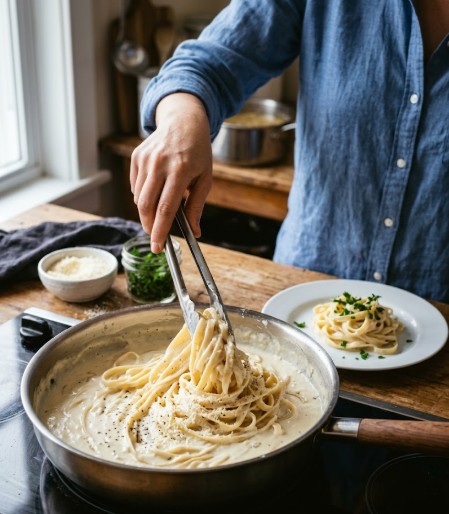
I remove the pan from heat when the sauce reaches the texture I want.
I toss the sauce with cooked pasta or spoon it over chicken or vegetables.
If I want a lighter coating, I add a splash of pasta water while tossing.
Step 8: Finish with Garnish

I sprinkle chopped fresh parsley over the plated dish for color and freshness.
I may add extra grated Parmesan or a drizzle of olive oil if desired.
I serve immediately so the sauce stays creamy and warm.
4 Common Mistakes to Avoid When Making Alfredo Sauce
I cook Alfredo often and I watch for four mistakes that spoil the sauce. I always grate whole Parmesan myself. Pre-grated cheese has anti-caking additives that make the sauce grainy, so fresh cheese gives a smoother texture and better melt.
I keep the butter and cream at a gentle simmer. If I boil that mix, the fats separate and the sauce breaks. Low, steady heat keeps the sauce cohesive and lets the cheese blend in.
I stir constantly, especially when adding cheese. Skipping stirring lets cream and butter cling to the pan and creates lumps. I use a whisk or wooden spoon and work quickly as I fold the cheese in.
I never let the cream get too hot. Overheated cream can curdle and thin the sauce. I keep the stove on low to medium and remove the pan from heat if it starts to steam or bubble.
Quick checklist (for easy reference):
- Use freshly grated Parmesan only.
- Simmer butter and cream; do not boil.
- Stir continuously while adding cheese.
- Keep the cream at a low, steady temperature.
Follow these steps and the sauce will be smooth, rich, and well combined.
3 Simple Ways I Cut Calories in Alfredo Sauce
I swap heavy cream for low-fat milk and plain non-fat yogurt to keep creaminess but cut fat. I heat milk gently and whisk in yogurt off the heat so it blends smooth without curdling.
I cut back on butter and cheese and use smaller amounts while boosting flavor with garlic, lemon zest, and black pepper. A little Parmesan goes a long way when paired with strong seasoning.
I use plant-based creams like canned coconut cream or a cashew cream made by blending soaked cashews with almond milk. These give a silky texture and fewer saturated fats when I choose unsweetened, low-fat options.
Tips at a glance:
- Use low-fat milk + non-fat yogurt instead of heavy cream
- Reduce butter and cheese; add bold seasonings
- Swap in coconut or cashew-based creams for a lighter base
FAQs
Can I make Alfredo without heavy cream?
Yes. I often swap heavy cream for milk plus plain yogurt to keep the sauce creamy. For a dairy-free option, I use coconut cream or a cashew cream made by blending soaked cashews with a little almond milk.
Which pasta works best with Alfredo?
I prefer wide, flat pastas like fettuccine because they hold the sauce well. Short shapes or twisted pastas also work if you want more texture or bite.
How should I store extra Alfredo sauce?
I put leftovers in an airtight container and refrigerate for up to 3–4 days. For longer storage, I freeze portions in heavy-duty freezer bags and thaw in the fridge before reheating gently.
What goes into a classic Alfredo?
Common ingredients I use:
- 1 cup unsalted butter
- 1½ cups heavy cream (or substitutes above)
- 2 cloves garlic, minced
- 1½ cups grated Parmesan
- ½ tsp salt, ¼ tsp pepper, pinch of nutmeg
- Fresh parsley to garnish
What about calories and nutrition?
A rough estimate is about 250 kcal per serving, depending on portion size and any ingredient swaps I make.
Conclusion
I show a simple path to a silky Alfredo that you can make at home. Follow the steps and avoid the common mistakes I point out to get a smooth, creamy sauce on your first try. Use my tips to adjust flavor and texture without adding extra calories. With practice and those guidelines, you’ll consistently make a restaurant-style Alfredo that works for pasta, chicken, or vegetables.
FAQs
Q1: How much Alfredo sauce should I make per person?
I usually plan about 1/2 to 3/4 cup of sauce per serving of pasta. For richer dishes or if the sauce is the main feature, I lean toward 3/4 cup. For lighter meals, 1/2 cup is often enough.
Q2: Is homemade Alfredo sauce safe to store and reheat?
Yes. I store cooled sauce in an airtight container in the fridge for up to 3–4 days. Reheat gently on low heat, stirring often. If the sauce thickens or separates, I add a splash of milk or cream and whisk until smooth.
Q3: Can I make Alfredo sauce without heavy cream?
I often substitute with whole milk mixed with a little butter or a combination of milk and cream cheese for a similar texture. The sauce will be less rich, so I adjust seasoning and use lower heat to avoid curdling.
Q4: How do I keep Alfredo sauce from becoming grainy or breaking?
I cook over low to medium heat and add cheese off the heat or when the sauce is warm, not boiling. I grate cheese finely and use freshly grated Parmesan. Constant gentle stirring helps maintain a smooth texture.
Q5: Is Alfredo sauce a good choice for people watching calories or fat?
Traditional Alfredo is high in fat and calories because of butter and cream. I make lighter versions by using lower-fat dairy, smaller amounts of butter, or adding pureed cauliflower or Greek yogurt to stretch the sauce while cutting calories.
Q6: How does Alfredo compare to tomato-based pasta sauces?
Alfredo is cream-based and richer, giving a smooth, velvety texture and milder flavor. Tomato sauces are tangier and usually lower in fat. I choose Alfredo when I want a creamy, indulgent dish and tomato sauce for a lighter, acidic profile.
Q7: What maintenance or tips keep the sauce tasting fresh when I prepare it ahead?
I cool it quickly, store in the fridge, and reheat slowly with a splash of liquid. If freezing, I use a freezer-safe container and thaw in the fridge overnight. Freeze sparingly, as texture can change after thawing; reheating slowly and stirring restores some creaminess.
Conclusion
I recommend making Alfredo sauce at home because it tastes fresher and you control the ingredients. A simple mix of butter, heavy cream, Parmesan, and garlic makes a rich, smooth sauce that works well with pasta, chicken, or vegetables.
I find this sauce both effective and safe when you use fresh dairy and store leftovers in an airtight container in the fridge for up to three days. It’s also eco-friendlier than many store-bought jars because you can avoid single-use packaging and choose local or organic ingredients.
For reliable results, use high-quality Parmesan, melt the cheese slowly, and keep the heat low to prevent breaking. Those small steps make the texture creamy and the flavor balanced.
I encourage you to try a homemade batch and adjust salt, pepper, or garlic to your taste. Once you master the basics, this sauce becomes a versatile, go-to option for quick, satisfying meals.
