Raspberry Sauce: Simple, Versatile Recipe and Serving Ideas
Raspberry sauce brightens many dishes with a lively mix of sweet and tart flavors. I’ll show you how to make a simple, foolproof sauce using fresh or frozen raspberries and common pantry ingredients, and I’ll explain choices that affect taste and texture.
I cover practical steps like cooking, straining seeds, and thickening, plus tips for storage and ways to use the sauce on breakfasts and desserts. Follow my guide to make a versatile raspberry topping you can tweak to suit any recipe or mood.
Key Takeaways
- Learn a straightforward method to make bright, flavorful raspberry sauce.
- Find easy tips for texture, seed removal, and safe storage.
- Discover simple variations and common uses for the sauce.
What Raspberry Sauce Is to Me
I make a bright, tangy sauce from fresh or frozen raspberries, sugar, and a bit of acid. I use it to top desserts, breakfasts, or to add a fruity touch to savory dishes.
Ingredients of Fresh Raspberry Sauce
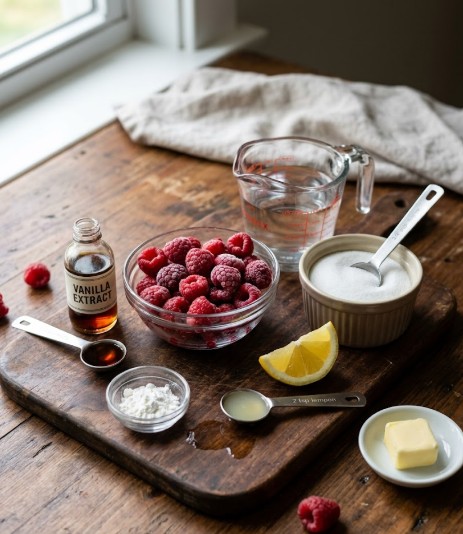
Raspberries (fresh or frozen)
I use 2 cups of raspberries, fresh when possible or frozen if not. Either works; frozen berries thaw and release juices that make the sauce flavorful.
1/2 cup water
I add 1/2 cup of water to loosen the fruit and help the raspberries break down while cooking. This keeps the sauce from becoming too thick before I add the thickener.
3/4 cup granulated sugar
I use 3/4 cup of granulated sugar to balance the berries’ tartness. You can reduce the amount slightly for a less sweet sauce.
2 teaspoons lemon juice
I squeeze in 2 teaspoons of lemon juice for brightness and to sharpen the raspberry flavor. Lemon also helps preserve the color.
1 teaspoon cornstarch
I mix 1 teaspoon of cornstarch with a little cold water to make a slurry, then stir it into the hot sauce to thicken it without lumps.
1/2 teaspoon vanilla extract
I stir in 1/2 teaspoon of vanilla for a warm, rounded flavor that complements the fruit without overpowering it.
1 teaspoon butter
I finish with 1 teaspoon of butter off heat for a glossy, smooth texture and a hint of richness.
How to Make Raspberry Sauce (Step-by-step Guide)
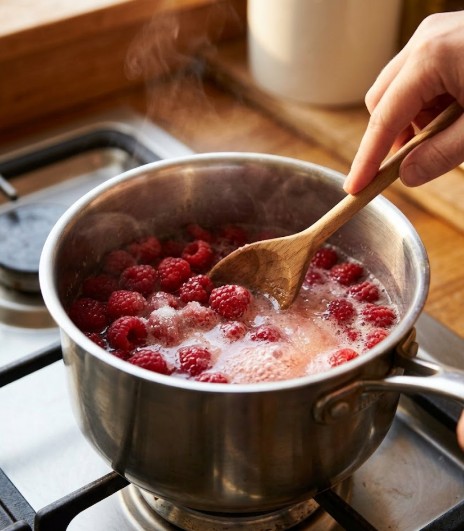
Step 1 — Heat the berries and sweeten
I place a saucepan over medium heat and add the raspberries, water, and sugar.
I stir gently and keep stirring until the sugar fully dissolves and the mixture comes to a simmer.
Step 2 — Add flavor and prepare thickener
I turn the heat down once it simmers and stir in the vanilla.
In a small bowl I whisk together cornstarch and 2 tablespoons lemon juice to make a smooth slurry.
Step 3 — Thicken the sauce
I pour the cornstarch slurry into the pan and stir constantly.
I bring the sauce back to a gentle boil and cook 4–5 minutes until it thickens to the texture I want.
Step 4 — Finish with butter
I remove the pan from the heat and stir in the butter until it melts and the sauce becomes glossy.
Step 5 — Fold in extra raspberries
After the sauce cools about 20 minutes, I fold in the remaining fresh or frozen raspberries.
Step 6 — Mix and serve
I stir until the raspberries are spread evenly.
I serve the sauce warm or chilled over ice cream, cheesecake, pancakes, or other desserts.
How I Get Raspberry Sauce Smooth and Seed-Free
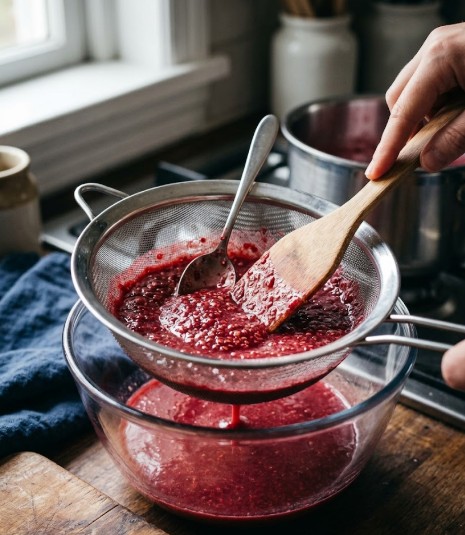
I cook the raspberries gently until they break down and soften. Then I pour the warm mixture into a fine-mesh strainer over a bowl.
I press the puree through with the back of a spoon or a spatula, leaving the seeds in the strainer. I discard the seeds and return the smooth sauce to the pan to finish cooking or cool for use.
- Tip: Work in small batches for easier straining.
Tips For Perfect Homemade Raspberry Sauce
I keep the sauce moving in the pan so it never sticks or burns. I stir often and cook over medium heat to melt the sugar without scorching the base.
I crush the raspberries thoroughly to free their juices. Pressing the fruit with a spoon or potato masher speeds cooking and helps the sauce thicken evenly.
I always push the cooked fruit through a fine-mesh sieve with firm pressure. That extra force removes seeds and makes the sauce silky smooth.
- Use medium heat
- Crush fruit fully before and during cooking
- Strain firmly through a tight mesh
These steps give a glossy, seed-free sauce every time.
Variations of Raspberry Sauce
I often swap raspberries for blueberries, strawberries, or blackberries; strawberries may need more cooking. I cut the sugar when I want a less sweet sauce, or use a stevia-based sweetener. I sometimes thicken with arrowroot instead of cornstarch, but only when I know how it behaves. These small changes shift texture and sweetness to match the dish.
Uses for Raspberry Sauce
I use raspberry sauce to lift simple breakfasts and baked goods. I drizzle it over waffles, crepes, pancakes, muffins, and scones to add bright, fruity flavor. I also spoon it on toasted English muffins, croissants, or warm biscuits for a quick treat.
I stir a few spoonfuls into yogurt, cottage cheese, or cereal. I fold it into whipped cream or icing to make a pink, fruity garnish for cakes and cupcakes. I also use it inside lemon or blueberry cupcakes as a sweet-tart filling.
I top cheesecakes, pound cakes, angel food cake, pavlova, and ice cream with the sauce and fresh berries. I pour it over chocolate desserts like brownies, chocolate cake, and flourless chocolate cake for contrast. I even drizzle it on cream puffs, choux pastry, or a simple bowl of vanilla ice cream for extra flair.
How I Thicken Raspberry Sauce
I often use a few simple tricks to firm up raspberry sauce. The fastest is a cornstarch slurry: mix 1 tsp cornstarch with 1 tbsp cold water, stir it into the simmering sauce, and cook until it thickens.
For a cleaner, natural option I add 1 tsp chia seeds and let the sauce rest 10–15 minutes so they swell. I also use tapioca starch like cornstarch, but dissolve it first.
If I want no additives, I simmer the sauce gently until enough liquid evaporates. I taste and adjust sugar or lemon at the end.
Storage and Shelf Life of Raspberry Sauce
I store raspberry sauce in an airtight container in the fridge and use it within seven days. I label the container with the date so I know when to toss it.
For longer storage, I freeze the sauce in freezer-safe containers for up to three months. I prefer dividing it into small portions so I can thaw only what I need.
Thawing overnight in the refrigerator gives the best texture. Reheat gently or serve cold on pancakes, yogurt, or desserts.
FAQ
Can I use raspberries from the freezer?
Yes. I often use frozen raspberries when fresh ones are not available. They save money and time. I thaw them slightly or add them straight to the pot; either works. Frozen berries may release more juice, so I watch the cooking time to reach the right thickness.
What exactly is a raspberry coulis and how does it differ from a compote?
A coulis is a smooth, strained berry sauce. I puree the fruit and usually pass it through a sieve for a silky texture. A compote keeps the fruit pieces whole or chunky and does not get strained. Both are great toppings, but a coulis gives a cleaner, more refined finish.
What ingredients do I need?
- 12 oz fresh or frozen raspberries
- 1/2 cup water
- 3/4 cup granulated sugar
- 2 tsp lemon juice (plus 2 tbsp if making a cornstarch slurry)
- 2 tsp cornstarch
- 1/2 tsp vanilla extract
- 1 tsp butter
I list the optional extra lemon separately — I use 2 tbsp of lemon mixed with cornstarch to prevent lumps.
How do I make the sauce?
- Put raspberries, water, and sugar in a pot over medium heat. Stir until the sugar dissolves.
- Bring the mixture to a gentle boil, stirring often.
- Reduce heat, add vanilla, and prepare a slurry: mix cornstarch with 2 tbsp lemon juice until smooth.
- Stir the slurry into the pot and boil 4–5 minutes until the sauce thickens.
- Remove from heat and stir in butter until melted. Let cool about 20 minutes, then fold in any reserved fresh or frozen raspberries for texture.
- Serve warm or chilled over desserts like cheesecake, ice cream, or pancakes.
What about the nutrition?
Per recipe serving (approximate):
- Calories: 170 kcal
- Carbohydrates: 42 g
- Sugar: 31 g
- Protein: 106 g (note: this value seems high and likely reflects a labeling error; expect very little protein)
- Sodium: 7 mg
- Vitamin A: 20 IU
I recommend adjusting portion sizes if you need fewer calories or less sugar.
Final Thoughts
I love how a simple raspberry sauce lifts a dish. I use it to brighten desserts, stir into drinks, or spoon over roasted meats for a sweet contrast. It only takes a few ingredients and little time, yet it adds fresh, tangy flavor and color. Try varying sweetness and texture to match the dish. Keep a jar in the fridge — it makes quick meals feel more special and invites creative uses across sweet and savory recipes.
FAQs
Q: How long will my raspberry sauce keep in the fridge?
I store raspberry sauce in a sealed container for up to 7 days. If I want it longer, I freeze portions in an airtight bag or container for 2–3 months. Thaw in the fridge overnight before using.
Q: Is homemade raspberry sauce safe for kids and people with weak immune systems?
Yes, as long as I use fresh or properly thawed frozen fruit and keep everything clean. I avoid cross-contamination, heat the sauce to a simmer if I’m using it for infants or someone with a weak immune system, and cool it quickly before storing.
Q: How do I keep the sauce from becoming too thin or too thick?
I adjust texture by changing the cooking time or adding a thickener. For thicker sauce, I simmer a few minutes longer or stir in a small amount of cornstarch slurry. For thinner sauce, I add a splash of water or simmer less time.
Q: What’s the best way to remove seeds for a smooth sauce?
I press the cooked raspberries through a fine mesh strainer with the back of a spoon or a spatula. That leaves a smooth purée and keeps seeds out. A blender and then straining also works well.
Q: How does raspberry sauce compare to other fruit sauces?
Raspberry sauce gives a bright, tart flavor that pairs well with sweet desserts. Compared with strawberry or blueberry sauces, it’s usually more tart and intense, so I often balance it with a bit of sugar or lemon juice to match the dessert.
Q: Can I use raspberry sauce as a topping beyond desserts?
Absolutely. I use it on yogurt, oatmeal, pancakes, and even on savory dishes like roasted meats or salads for a sweet-tart glaze. It adds a fruity note and bright color to many dishes.
Q: How do I maintain consistent flavor batch to batch?
I taste and adjust each batch for sweetness and acidity before storing. I note the fruit source (fresh vs frozen) and sugar amount so I can repeat the same balance next time. Keeping a simple recipe card helps me stay consistent.
Conclusion
I recommend raspberry sauce as a simple, versatile way to lift many dishes. It works well warm or cold, pairs with sweet and savory foods, and needs just a few ingredients to make: fruit, a bit of sweetener, and an acid like lemon to brighten the flavor.
I trust homemade or high-quality store-bought versions for better taste and transparency about ingredients. When made or chosen carefully, raspberry sauce is safe, eco-friendly, and fits into many diets because you can control sugar, thickeners, and additives.
Tips I follow: use ripe or frozen raspberries for true flavor, strain for a seedless finish when desired, and store properly in the fridge or freezer for longer life.
Choose a reliable recipe or brand that lists simple ingredients and clear storage guidance. Try it on desserts, breakfast foods, or savory dishes, and enjoy the boost it gives to your meals.