
Creole Seasoning: Essential Guide to Flavors, Uses, and Homemade Blends
I often keep a jar of Creole seasoning on hand because it lifts simple meals with bold, savory flavor. This blend mixes herbs and spices like paprika, garlic, onion, and cayenne to add heat and depth to seafood, meats, vegetables, and stews. I’ll show an easy, small-batch method to make the mix at home, plus tips on measuring, mixing, and storing so you get a fresh, balanced blend every time.
Making Creole seasoning yourself saves money and lets you control the heat and salt. I explain the key ingredients, a clear step-by-step process, and quick answers to common questions about how it differs from Cajun seasoning and how to use it in different dishes.
Key Takeaways
- Homemade Creole seasoning brings bold, savory flavor to many dishes.
- You can make and adjust the blend at home with simple measuring and mixing steps.
- Proper storage keeps the seasoning fresh and ready to use.
What I Mean by Creole Seasoning
Creole seasoning is a spice mix built to add bold, layered flavor to food. I use it on meats, seafood, vegetables, and rice to give dishes a savory, slightly spicy kick.
The blend combines warm paprika and peppers with garlic, onion, and dried herbs like thyme and oregano. Its roots trace back to Louisiana, where French techniques mixed with local and Indigenous ingredients to shape Creole cooking.
I find its aroma adds depth without overwhelming a dish. Many classic recipes—gumbo, shrimp creole, and crawfish—rely on this mix to reach their signature taste.
Key Ingredients in Classic Creole Seasoning
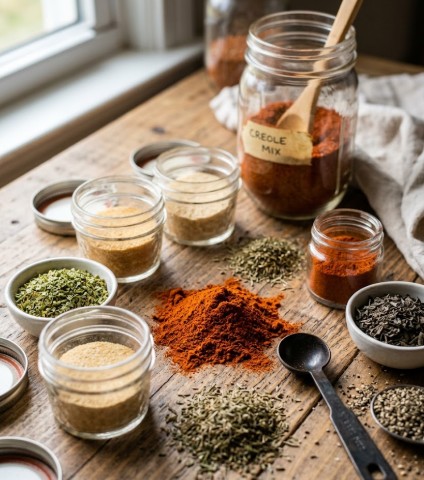
I use a reliable mix of herbs and spices to build classic Creole seasoning. This blend balances savory, herbal, smoky, and spicy notes so it works well on seafood, poultry, and vegetables.
- Onion powder (about 2 tbsp): Adds savory depth and a mild sweetness that supports other flavors.
- Garlic powder (about 2 tbsp): Lends a warm, aromatic base that boosts overall savory character.
- Smoked paprika (around 5 tbsp): Gives a rich, smoky color and flavor. It’s the dominant ingredient and helps the blend look and taste bold.
- Dried oregano (about 2 tbsp): Brings a slightly bitter, herbaceous edge that lifts the mix.
- Dried basil (about 2 tbsp): Provides a sweet, fragrant herb note that softens the sharper spices.
- Dried thyme (about 1 tbsp): Adds an earthy, slightly minty tone that deepens the blend.
- Cayenne pepper (about 1 tbsp): Supplies the main heat. I adjust this amount to control spiciness.
- Black pepper (about 1 tbsp): Sharpens the blend and adds a clean, biting warmth.
Optional: I often leave out salt when I make a large batch. Salt (about 1½ tsp) improves taste but can draw moisture and shorten shelf life. I prefer to salt the finished dish instead, so I can control sodium for each recipe.
Mixing tip: I combine the dry ingredients in a jar, shake well, and taste on a small sample of food. If it needs more heat, I add cayenne. If it needs more smokiness, I increase smoked paprika.
How to Make Creole Seasoning at Home

Gathering the ingredients I need
I check the ingredient list and set everything out before I start. Gathering items a day ahead helps me spot anything I need to buy. I place measuring spoons, a mixing bowl, and an airtight jar nearby so I can work without stopping.
Measuring each spice precisely
I measure each spice with the appropriate spoon and add them to the bowl one at a time. Working in order keeps me from missing an ingredient. Accurate measuring helps the blend stay balanced every time.
Blending the mix evenly
I use a whisk to combine the spices until the color and texture look uniform. If I don’t have a whisk, I stir with a spoon and scrape the bowl sides to mix well. I take my time so no spice clumps and the flavors spread evenly.
Keeping the seasoning fresh
I transfer the mix into a clean, airtight glass jar and seal it tightly. I store the jar in a cool, dry, dark spot like a pantry or cupboard. While the mix can last several months, I prefer to use it within three months for best flavor.
Ingredients
- 2 tbsp onion powder
- 2 tbsp garlic powder
- 2 tbsp dried oregano
- 2 tbsp dried basil
- 1 tbsp dried thyme
- 1 tbsp cayenne pepper
- 1 tbsp black pepper
- 5 tbsp smoked paprika
- 1 1/2 tsp salt
Instructions
- Check the ingredient list and gather everything you need.
- Measure each spice into a mixing bowl using proper spoons.
- Whisk or stir until the blend looks even and free of lumps.
- Spoon the seasoning into an airtight glass jar and seal it.
- Store the jar in a cool, dark, dry place and use within three months for best taste.
Nutrition
- Serving size: about 1/4 teaspoon
- Calories per serving: 5 kcal
- Note: Nutrition will vary slightly depending on exact brands and measurements used.
Final Thoughts
I encourage you to make Creole seasoning at home to boost flavor in Southern and Cajun-style dishes. My simple recipe and practical tips make the process quick and reliable. Homemade blends let you control heat and herbs, so you can match the mix to your taste. Try a small batch first, adjust spices, and keep leftovers in a sealed jar for easy use.
FAQs
How do I tell Creole and Cajun blends apart?
I look for herbs and heat. Creole blends usually include dried herbs like oregano, thyme, and basil, so they taste more herbal and milder. Cajun blends focus more on ground peppers and bold spices, so they come across hotter and simpler.
Ways I use Creole seasoning across meals
I use it as a rub, a sprinkle, or a mix-in.
- Meats: rub on chicken, pork, or steak before grilling or roasting.
- Seafood: sprinkle on shrimp, fish, or crab after cooking or while searing.
- Rice and grains: stir a pinch into cooked rice, quinoa, or jambalaya.
- Vegetables: toss roasted or sautéed veggies with the blend for extra flavor.
Can I swap Creole for Cajun in recipes?
Yes, I often swap them. Creole will give a milder, herb-forward result. If I want more heat, I add cayenne or extra black pepper to match a Cajun-style kick.
FAQs
- What is Creole seasoning, and how do I use it?
I see Creole seasoning as a mix of herbs and spices built for bold, savory dishes. I use it on seafood, chicken, vegetables, rice, and stews. Sprinkle it as a rub, add it to sauces, or mix it into marinades for a quick flavor boost. - Is Creole seasoning spicy and how strong is the heat?
I find Creole seasoning usually has moderate heat from cayenne or black pepper. It tends to be milder than straight Cajun blends because it includes more herbs like oregano and thyme. Adjust heat by cutting back on cayenne or adding more paprika or herbs. - Can people with dietary restrictions use Creole seasoning?
I often use or make blends without gluten or dairy. The basic spices are naturally gluten-free, but packaged mixes can include fillers or anti-caking agents. I always check labels for added salt, MSG, or allergens if I’m cooking for someone with restrictions. - How should I store Creole seasoning to keep it fresh?
I store the mix in an airtight container away from light and heat. A cool, dark pantry works well. The flavor stays best for about 6 to 12 months; after that the spices lose punch but remain safe to use. - How does Creole seasoning differ from Cajun seasoning?
I see Creole as more herb-forward and slightly milder, while Cajun often leans heavier on heat and smokier notes. Creole typically adds more garlic, onion, and dried herbs; Cajun focuses on a bolder, spicier profile. - Can I use Creole seasoning in vegetarian or vegan dishes?
Absolutely. I use it on roasted vegetables, tofu, beans, and grain bowls. The blend adds savory depth and a touch of heat that lifts plant-based meals. - Is homemade Creole seasoning better than store-bought?
I prefer homemade mixes because I control salt and spice levels. Store blends are convenient and consistent, but making it at home lets me tweak heat, herbs, and sodium to match the dish or dietary needs.
Conclusion
I recommend Creole seasoning as a reliable way to add bold, balanced flavor to many dishes. It blends warm spices like paprika and cayenne with savory herbs like thyme and oregano, giving food a layered taste without extra effort. I find it works well on meats, vegetables, soups, and rice dishes, and it adapts to milder or hotter preferences by adjusting the cayenne.
I trust homemade or simple-store blends for safety and clarity of ingredients. Many commercial blends are gluten-free, but I always check labels for additives or hidden ingredients if I need strict allergen control. For eco-friendliness, I prefer buying from brands that use minimal packaging or refill options, or I make my own mix using bulk spices.
Use this seasoning regularly to simplify meal prep and boost flavor. Choose a reputable blend or make a small batch at home, store it in a cool, dry place, and replace it after about 6–12 months for best taste. I encourage you to pick a dependable option and start adding Creole seasoning to your cooking today.