

Spicy Beer Mustard Recipe
I love finding small flavor boosts that lift everyday meals, and spicy beer mustard is one of those finds. Its tangy heat and malty depth work with many foods, so I use it on soft pretzels, grilled sausages, sandwiches, and cheese boards to add a bright, savory kick.
I developed my version after experimenting in the kitchen and have kept it simple so anyone can make it at home. The rest of the article will cover why this mustard works, what you need, step-by-step instructions, storage tips, serving ideas, and easy swaps for missing ingredients.

Key Takeaways
- Spicy beer mustard adds tang and heat to snacks and mains.
- The recipe balances mustard seeds, beer, and acid for lasting flavor.
- Simple prep and storage tips make it easy to use at home.
What I Call Spicy Beer Mustard
I make spicy beer mustard by combining mustard seeds, spices, and beer. The beer deepens the flavor and adds a bright tang.
- Texture: can be smooth or whole-grain
- Flavor: spicy, tangy, malty
- Uses: sandwiches, sausages, dressings
Why This Version Works for Me
I balance spicy mustard seeds with the rich notes of dark beer to build depth. Vinegar adds sharp acidity that brightens the flavor, while honey and brown sugar bring a soft sweetness to temper the heat.
- Texture: Whole or crushed seeds give a pleasant bite.
- Flavor balance: Acid, sweet, and bitter elements keep each bite interesting.
- Control: Making it myself lets me adjust heat, sweetness, and tang to taste.
What I Need to Make This Mustard
- Liquids: 2 cups dark beer (stout or doppelbock) and 1½ cups malt vinegar
- Seeds & powder: ½ cup black mustard seeds, ½ cup yellow mustard seeds, 1 cup dry ground mustard
- Sweeteners & salt: 5 tbsp raw honey, ½ cup packed dark brown sugar, 2 tsp sea salt
- Spices: 2 tsp ground allspice, ¾ tsp turmeric, 1 tsp smoked paprika, ½ tsp garlic powder
How to Make Spicy Beer Mustard
Step 1: Gather Your Ingredients
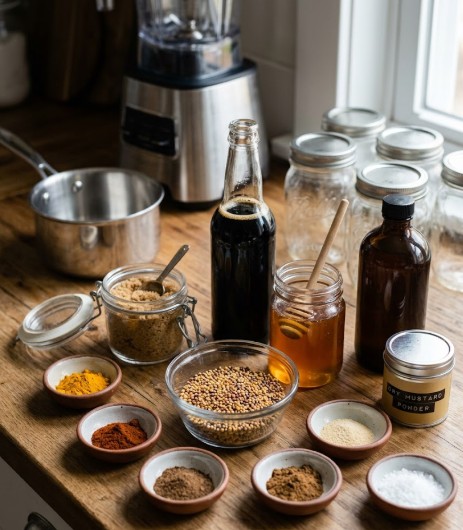
I pull together everything before I start. Typical items include yellow and brown/black mustard seeds, a dark beer, malt or apple cider vinegar, dry mustard powder, sweeteners like honey or brown sugar, salt, and spices such as turmeric, smoked paprika, allspice, and garlic powder. I also ready a blender, saucepan, and sterilized jars.
Step 2: Hydrate the Seeds
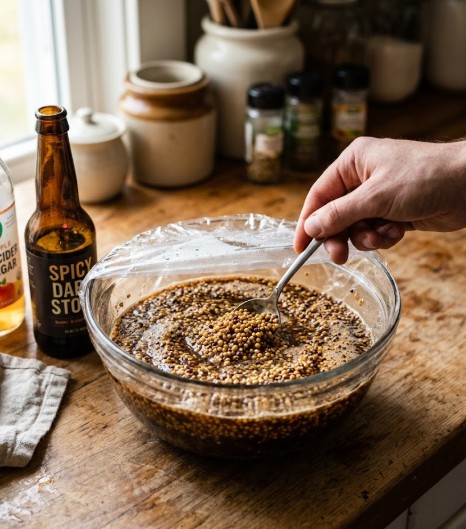
I mix the mustard seeds with beer and vinegar in a bowl. I cover and let them sit at least 12 hours (overnight works best). This rehydrates the seeds and lets their flavor open up, which gives the mustard more depth.
Step 3: Combine and Puree
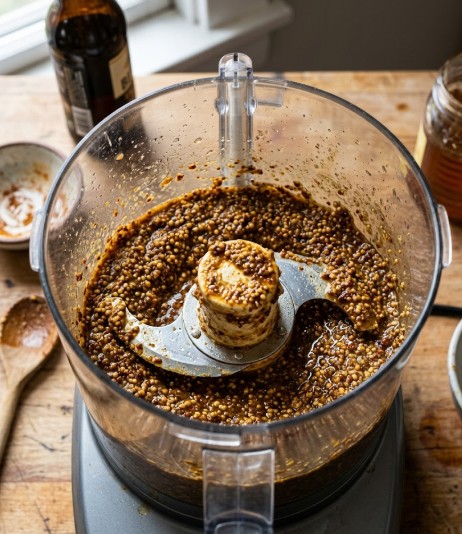
I pour the soaked seeds into a food processor or blender. I add dry mustard, sweetener, salt, and the spices. I pulse until the texture is how I like it — smooth for a creamy mustard or slightly coarse for a grainy bite.
Step 4: Gently Heat the Mixture
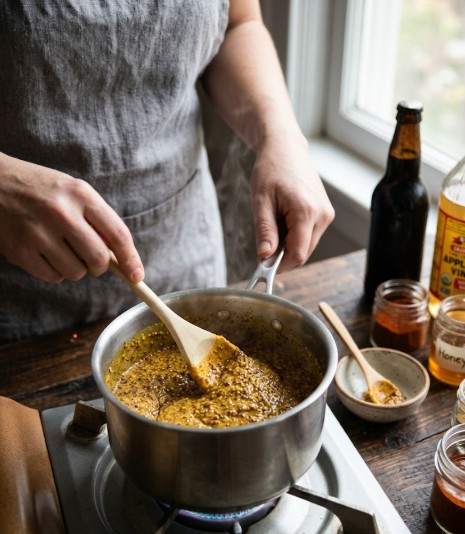
I transfer the blended mustard to a saucepan and warm it over medium-low heat. I stir constantly for about 8–12 minutes until it thickens a bit. I avoid high heat so the flavor stays bright and the mustard doesn’t become bitter.
Step 5: Cool, Jar, and Chill
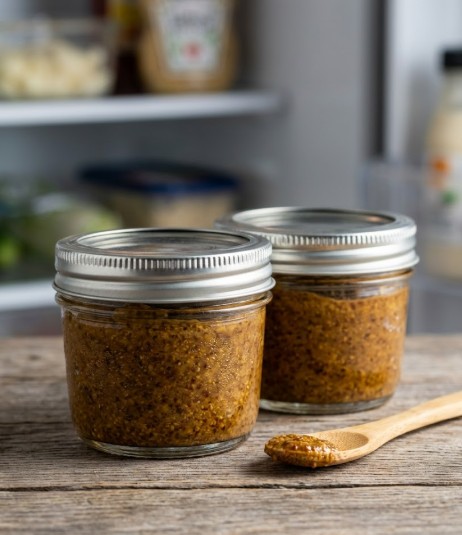
I remove the pan from heat and let the mustard cool to room temperature. Then I spoon it into sterilized jars, seal them, and refrigerate. Properly stored, it will keep quality for several weeks to a few months.
Tips for Perfecting Spicy Beer Mustard
I test different beers to change the flavor — darker brews add roast and caramel notes, while lighter beers keep it brighter. I tweak sweetness with honey or brown sugar until it balances the heat. To raise the spice, I add more ground mustard or a few drops of hot sauce, tasting as I go. I always use clean utensils to scoop mustard to prevent contamination. I let my mustard rest in the fridge for at least a week so the flavors mellow and blend.
- Bold tip: start mild; you can always add heat.
- Quick checklist: beer choice, sweetener level, spice, cleanliness, aging.
How I Keep Extra Mustard Fresh
- I store leftover mustard in clean, airtight jars and keep them in the fridge.
- I label jars with the date and use within about three months.
- I expect the flavor to sharpen over time; that change is normal.
How I Serve Spicy Beer Mustard
I spread it on grilled burgers and chicken to boost smoky flavors. A thin layer gives heat without overpowering the meat.
I stir a spoonful into vinaigrette for salads. It wakes up plain greens and works well with bitter lettuces.
I use it as a dip for raw veggies, pretzels, or potato chips. Guests enjoy the tangy bite with crunchy snacks.
I pair it with cheeses on a board. A dab on crackers or next to sharp cheddar and aged gouda adds a bright, spicy contrast.
What I Use When Key Ingredients Aren’t on Hand
- Beer: I swap dark beer for a non-alcoholic dark beer to keep the malty taste without alcohol.
- Malt vinegar: I reach for apple cider vinegar for a bright, tangy note that still lifts flavors.
- Brown sugar: I use coconut sugar as a one-to-one substitute to keep sweetness with a mild caramel hint.
- Smoked paprika: I replace it with regular paprika plus a small pinch of cayenne to mimic the smoky heat.
Spicy Beer Mustard Recipe
Ingredients I Use
- 2 cups dark beer (doppelbock, stout, or similar)
- 1½ cups malt vinegar
- ½ cup black mustard seeds
- ½ cup yellow mustard seeds
- 1 cup dry ground mustard
- 5 tbsp raw honey
- ½ cup packed dark brown sugar
- 2 tsp sea salt
- 2 tsp ground allspice
- ¾ tsp ground turmeric
- 1 tsp smoked paprika
- ½ tsp garlic powder
How I Make It
- Gather everything so the work goes smoothly.
- Combine the black and yellow mustard seeds with the beer and vinegar in a large bowl. Cover and refrigerate for at least 12 hours to let the seeds swell and release flavor.
- Pour the soaked seeds and their liquid into a blender or food processor. Add the dry ground mustard, honey, brown sugar, salt, allspice, turmeric, smoked paprika, and garlic powder.
- Blend until it reaches the texture you like. I blend longer for a smooth mustard or pulse a few times to keep some grain.
- Transfer the blended mix to a saucepan. Cook over medium-low heat, stirring constantly for about 10 minutes until it thickens slightly. It will firm up more as it cools.
- Let it cool to room temperature, then spoon into clean jars. Refrigerate. It keeps for up to three months if you use clean utensils each time.
Tips and Tricks
- Try different dark beers to change the flavor profile; stouts give roast notes while doppelbocks add malty sweetness.
- Increase honey or brown sugar if you want a sweeter mustard.
- Raise the heat by adding more ground mustard or a dash of hot sauce.
- Always use a clean spoon to avoid contamination.
- Let the mustard rest in the fridge for a week to let flavors meld and deepen.
Nutrition Snapshot
- Serving yield: about 5 cups total
- Calories per serving (approximate): 20 kcal
- Carbohydrates: 5 g
- Protein: 1 g
- Fat: 0.5 g
- Sugars: 3 g
Bold note: I recommend labeling jars with the date so you know how long it has been stored.
Frequently Asked Questions
Can I prepare this mustard in advance?
I often make this mustard ahead. Seal it tightly and keep it in the fridge. It stays good for days to weeks depending on ingredients and storage.
What if I don’t have whole mustard seeds?
I sometimes use only ground mustard. The texture becomes smoother and the flavor shifts. Try small batches to find a balance you like.
Is this beer mustard safe for a gluten-free diet?
I check the beer label when I need gluten-free. Most other ingredients are usually gluten-free, but the beer can contain gluten unless labeled otherwise.
May I swap in a different mustard seed type?
I switch seeds for different results. Yellow gives milder flavor; brown or black adds more punch. Mix seeds to tune the taste.
How do I make it milder or hotter?
I change heat by varying ground mustard, using less for milder or more for hotter. I also add cayenne or chopped chilies to increase spice.
Final Thoughts
I find spicy beer mustard an easy way to lift simple meals. It adds bold, tangy heat to sandwiches, grilled foods, and snack platters without much work. I like keeping a jar on hand for quick flavor boosts and for sharing at gatherings. Try adjusting heat and sweetness to match your taste. Below are quick serving ideas:
- Brush on sausages or burgers
- Dollop on roasted potatoes
- Pair with pretzels or a cheese board
Keep it refrigerated and enjoy experimenting with blends of beer and spices.
FAQs
What makes my spicy beer mustard different from store-bought mustards?
I blend whole mustard seeds with beer and a touch of vinegar to get a bold flavor and textured bite. The beer adds malty depth that you usually don’t find in commercial mustards, and using whole seeds gives a more rustic mouthfeel.
Is this mustard safe to store at room temperature?
I recommend refrigerating the mustard after it rests. The vinegar and beer help preserve it, but cold storage slows flavor loss and keeps it fresh longer. I keep mine in the fridge and use it within a few months.
How long should I steep the mustard seeds before blending?
I soak the seeds at least 8–12 hours, often overnight. That softens the seeds, tames the raw heat, and lets the beer and vinegar soak into the seeds for better flavor and texture.
How spicy will the mustard be, and can I control the heat?
The heat depends on the seed types and steep time. I use a mix of yellow and brown (or brown and black) seeds for layered heat. To reduce spice, I soak seeds longer or use more yellow seeds. To raise heat, I add more brown/black seeds or a pinch of crushed chili.
How do I use this mustard in recipes?
I use it on sausages, burgers, sandwiches, and pretzels. It also mixes well into salad dressings, marinades, potato salad, and dipping sauces. A small spoonful can lift many savory dishes.
How does beer mustard compare to plain-vinegar mustards?
I find beer mustard has a richer, maltier background and often more complex flavor. Vinegar-only mustards tend to be brighter and more acidic. Both preserve spiciness, but beer adds body and a slightly sweeter note.
Do I need special equipment to make this mustard?
No. I use a jar to soak the seeds and a blender or food processor to grind them to the texture I want. A fine-mesh strainer helps if I want a smoother mustard, but it’s not required.
Conclusion
I recommend making spicy beer mustard at home because it packs big flavor while using simple, natural ingredients. I find the mix of whole mustard seeds, beer, and a touch of vinegar creates a lively tang and lasting heat without artificial additives.
- Effectiveness: This mustard brightens sandwiches, sausages, and dips with bold taste and texture.
- Safety: When made and stored properly in clean jars and refrigerated, it stays safe to eat for weeks.
- Eco-friendliness: Homemade batches cut packaging waste and let you choose local or organic ingredients.
- Suitability: The recipe adapts well—adjust beer, seed types, and peppers to match your heat preference.
I encourage choosing reliable ingredients and following basic food-safety steps so your mustard stays flavorful and fresh. Try a small batch, tweak the recipe to your taste, and keep making it—your meals will benefit from the boost.
