
Prime Rib Roast Recipe: Expert Step‑By‑Step Guide for Juicy, Perfectly Seasoned Beef
I love substituting prime rib for the usual Thanksgiving turkey when I want a richer, more impressive centerpiece. A well-roasted rib delivers tender, juicy slices thanks to its marbling, and it lifts the whole meal with a beefy, buttery flavor that feels special.
I often serve it with a sharp, creamy horseradish sauce to cut the richness and add a bright contrast. The roast takes center stage, so simple sides and careful resting make carving and serving easy and satisfying.
Key Takeaways
- Choose a well-marbled roast for the best texture and flavor.
- Season and rest the meat to enhance taste and ease carving.
- Pair with a tangy sauce and simple sides for a balanced meal.
How I Pick the Best Roast
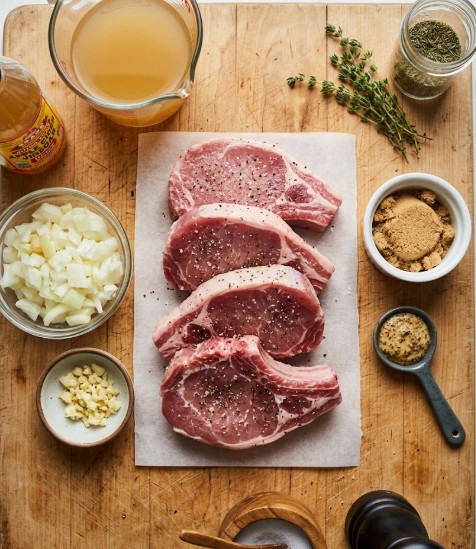
I choose a bone-in rib roast because the bones help keep the meat moist and add flavor. I look for even marbling — thin white streaks of fat through the muscle — since that fat melts and keeps the roast tender.
I usually ask a butcher for a standing rib roast with 2–3 bones; it cooks evenly and fits a home oven. If budget allows, I pick Prime grade, but Choice gives excellent results too.
What Spices and Seasonings I Use
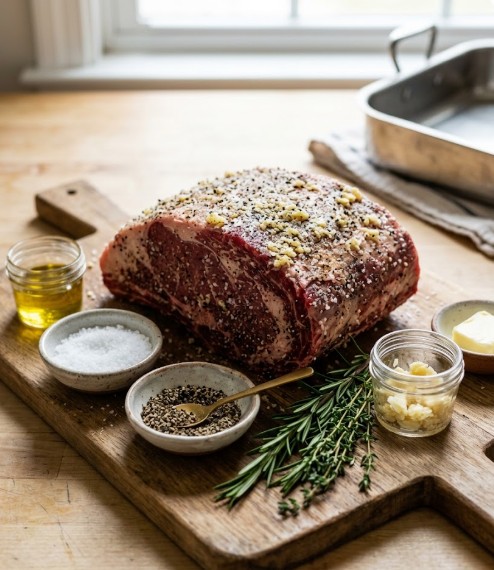
I keep the rub simple and bold: coarse salt, freshly ground black pepper, and garlic. I add chopped rosemary and thyme for a warm, herbal note that pairs well with beef.
I dry-brine the roast by rubbing it with salt and pepper a day ahead and leaving it uncovered in the fridge. Before roasting, I spread a thin layer of olive oil or melted butter, press on crushed garlic, and scatter the herbs. This lets the fat carry the aromatics into the meat and helps form a rich, browned crust.
Tips for Cooking and Prepping
I keep a meat thermometer handy and aim for these targets: 120°F (49°C) for rare, 130°F (54°C) for medium-rare, and 140°F (60°C) for medium. If you don’t have a thermometer, I press the roast to judge doneness — soft and bouncy means rare, slightly firmer is medium-rare, and firm indicates medium.
I start by roasting hot for 20 minutes at 450°F (230°C) to form a crust, then lower the oven to 325°F (165°C) to finish cooking slowly and evenly. I always let the roast rest at least 20 minutes after cooking; this lets the juices settle so slices stay moist.
If an oven isn’t available, I sear the roast in a heavy pan, then finish in an air fryer or a covered grill set to low heat. Use a clean cutting board and a sharp knife for even slices.
What to Serve With It
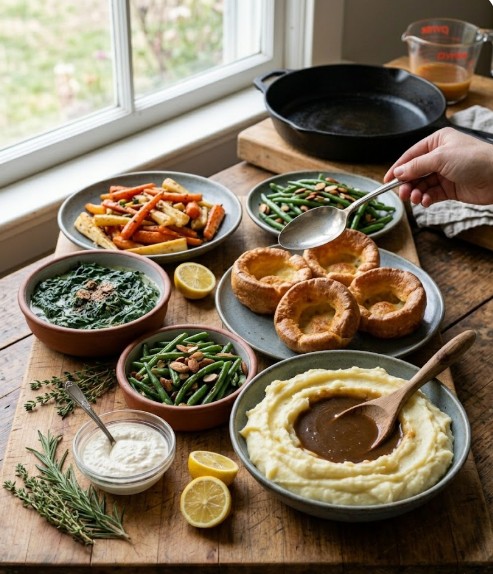
I like to pair prime rib with rich, simple sides that match its flavor. My top picks: roasted or mashed potatoes, fluffy Yorkshire pudding, and creamy spinach. I also serve green beans or a crisp arugula salad for balance. For root-vegetable sweetness, roasted carrots and parsnips work well. I always add a creamy horseradish sauce to cut the richness.
Storage and Make-Ahead Tips
I roast prime rib early when I need time, then slice and warm slices slowly at 250°F (120°C), covered with foil.
I store leftovers in the fridge for up to 4 days in airtight containers.
I freeze slices for up to 2 months, wrapping them tightly to prevent freezer burn.
Reheat wrapped in foil in a low oven until just warmed through.
Avoid overcooking to keep the meat juicy.
What to Do With Leftovers
I toss sliced prime rib into sandwiches with horseradish, stir it into fried rice, or mix it with noodles for a quick stir-fry.
I also chop it for a rich beef soup, simmering with stock and vegetables until flavors meld.
Frequently Asked Questions
Do I have to use a thermometer for prime rib?
I strongly recommend a meat thermometer. It tells me the roast’s internal temperature so I avoid overcooking. Without one, I use the touch test and watch the color and juices, but that is less reliable.
Which sauce works best with prime rib?
I prefer a creamy horseradish sauce or a rich red wine gravy. The sharpness of horseradish cuts the beef’s fat, and a wine gravy adds depth. Both sit on the side so guests can choose.
How can I cook prime rib if I don’t own an oven?
I will cook smaller cuts in an air fryer, slow cooker, or on a grill. I keep the heat low for even cooking, then finish with a quick high-heat sear to build a brown crust.
Is freezing prime rib a good idea?
Yes. I slice the meat and pack it in airtight containers or freezer bags. Properly stored, it keeps up to about two months. I thaw it overnight in the fridge before reheating.
What spices should I use for prime rib?
I stick to salt, black pepper, garlic, rosemary, and thyme as a base. For variation, I add smoked paprika or mustard powder for a subtle smoky or tangy note.
What ingredients do I need?
- 5–6 lb bone-in prime rib
- 2 tbsp olive oil
- 2 tbsp kosher salt
- 1 tbsp black pepper
- 2 tsp garlic powder
- 2 tsp chopped fresh rosemary
- 2 tsp chopped fresh thyme
For horseradish cream:
- 1/2 cup sour cream
- 2 tbsp prepared horseradish
- 1 tbsp Dijon mustard
- 1 tbsp mayonnaise
- 1 tsp lemon juice
- Salt and black pepper to taste
How do I cook and serve prime rib?
- Pat the roast dry and rub it with oil, salt, pepper, garlic powder, rosemary, and thyme. Let it sit at room temperature for about an hour.
- Preheat to 450°F (230°C) and put the roast bone-side down in a pan. Roast 20 minutes.
- Lower the oven to 325°F (165°C) and continue until the thermometer reads about 130°F (54°C) for medium-rare.
- Tent the roast with foil and rest 20–30 minutes before slicing against the grain.
- For the horseradish sauce, mix sour cream, horseradish, Dijon, mayonnaise, and lemon juice. Season to taste and chill.
- Serve slices with the sauce on the side.
Preparation time: about 15 minutes. Cook time: roughly 1 hour 45 minutes. Total time: near 2 hours.
FAQs
- How long should I roast prime rib for a perfect medium-rare?
I aim for an internal temperature of 125–130°F (52–54°C) before resting. That usually means roasting at 325°F (163°C) about 15–20 minutes per pound, then letting the roast rest 20–30 minutes. Resting raises the temp a few degrees and lets juices redistribute for even doneness. - Is reverse searing better than roasting at one temperature?
I find reverse searing gives more even cooking and a larger rosy center. I cook low and slow first, then blast with high heat or a hot pan to form a crust. Traditional single-temperature roasting is faster and still good, but you may get a narrower band of perfect medium-rare. - How do I season prime rib so it tastes great but not overpowered?
I use a simple mix of kosher salt, coarse black pepper, garlic, and fresh herbs like rosemary or thyme. I salt the roast at least a few hours before cooking, or overnight, to let flavors penetrate. Avoid heavy sauces that mask the beef’s natural flavor. - What safety steps should I take when handling and cooking prime rib?
I keep raw meat chilled until I’m ready to cook and wash hands, knives, and surfaces after contact. Use a meat thermometer to confirm safe cooking temperatures, and cool and store leftovers within two hours to prevent bacterial growth. - How should I carve the roast for best slices?
I let the roast rest, then slice across the grain into even slices about 1/4–1/2 inch thick. For presentation, start near the center so each guest gets a juicy portion. Use a long, sharp carving knife for clean cuts. - How do I maintain quality if I make prime rib ahead of time?
I cook to just below serving temp, cool quickly, and refrigerate in an airtight container. Reheat gently in a low oven (about 250°F/120°C) until warm to avoid overcooking. For best texture, slice after reheating rather than before. - How does prime rib compare to other beef roasts like chuck or strip loin?
I prefer prime rib for tenderness and rich marbling. Strip loin is leaner with good flavor and a firmer bite. Chuck is more economical but needs low, slow cooking to break down connective tissue and won’t match prime rib’s silky texture. - What serving tips help guests enjoy prime rib most?
I serve it with simple sides that complement beef: horseradish sauce, au jus, roasted potatoes, or green vegetables. Keep portions reasonable—about 3/4 pound per person for bone-in roasts—and slice just before serving for best juiciness.
Conclusion
I recommend this prime rib roast method for cooks who want a reliable, restaurant-quality result without fuss. The high-heat start followed by gentle finishing locks in juices and builds a golden crust, while simple seasoning lets the beef’s flavor shine.
I find this approach effective and safe when you use a meat thermometer and follow proper food-handling steps. It also minimizes energy waste by using residual heat, which makes it more eco-friendly than long, high-temperature roasts.
Key benefits:
- Consistent medium-rare results with a tender interior and crisp crust.
- Simple ingredients and steps that work for many roast sizes.
- Safer cooking when you check internal temperature and rest the meat.
Choose a trusted recipe and reliable tools—oven, thermometer, and a sturdy roasting pan—to get the best long-term results. I encourage you to try this method on your next special meal and enjoy a dependable, flavorful prime rib roast.

