
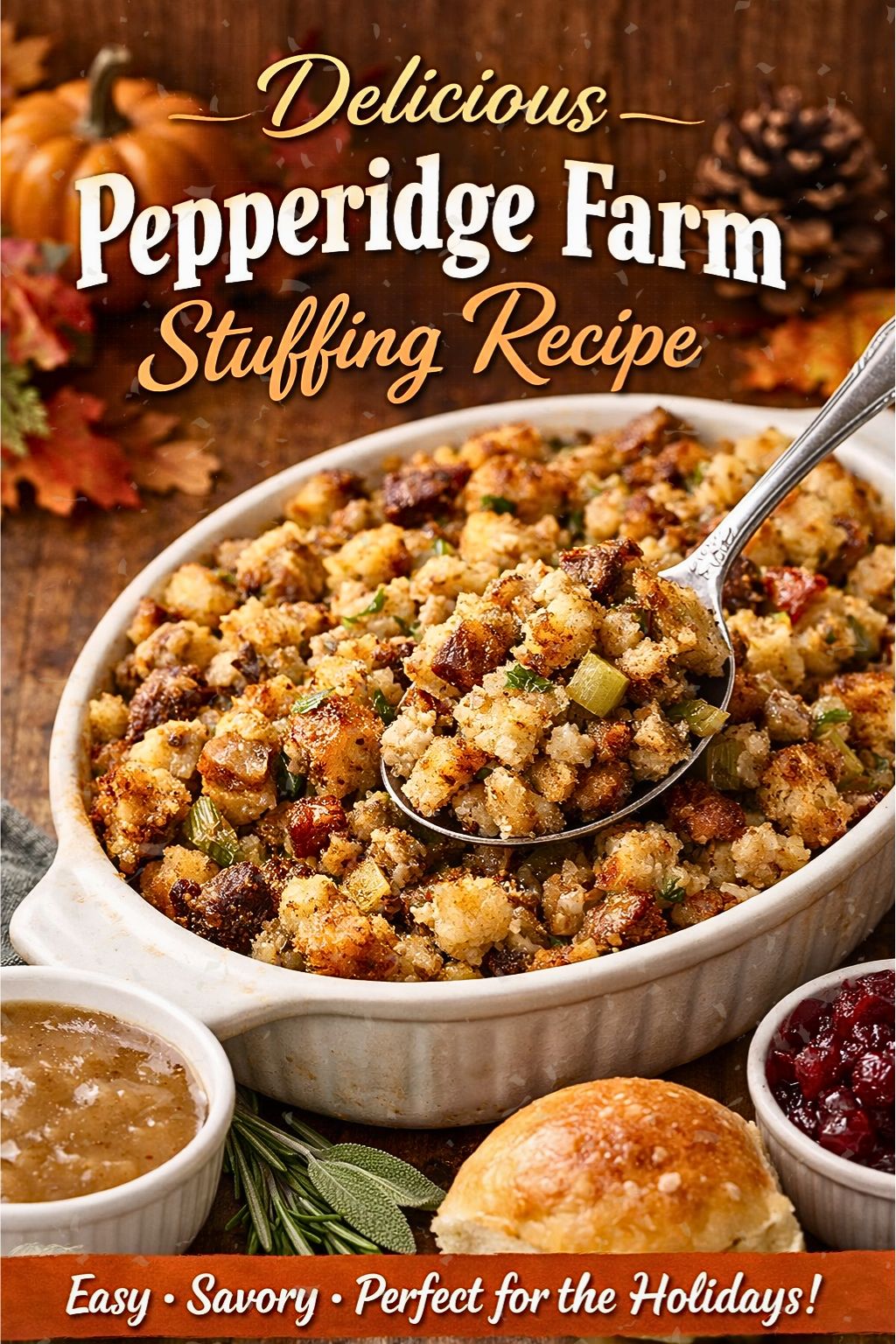
Pepperidge Farm Stuffing Recipe
I love how a simple side dish can bring back memories and make a meal feel like home. My Pepperidge Farm stuffing recipe blends a few easy ingredients with quick prep to give you that familiar, comforting flavor without a lot of fuss.
This recipe gives a crisp top and a moist, seasoned middle that guests always reach for. I’ll share clear steps, smart tips, and ways to tweak the mix so you can make it your own every time.
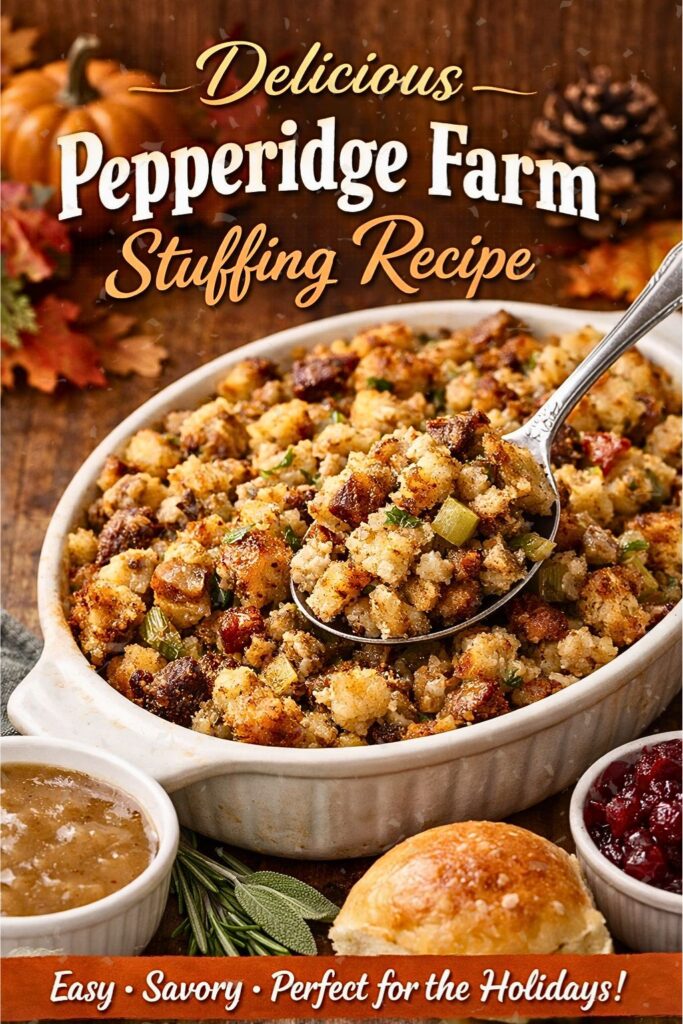
Key Takeaways
- The recipe is quick to prep and uses simple ingredients.
- It balances a crispy top with a moist, flavorful center.
- Tips and variations help you customize the stuffing easily.
Why You’ll Love This Pepperidge Farm Stuffing Recipe
I make this stuffing because it saves time and still tastes homemade. The mix does most of the work, so you only add a few fresh ingredients and get reliable results. The bread cubes crisp up on the edges while staying soft inside, giving a great mouthfeel every time. I also like that it adapts to any taste—add sausage, apples, herbs, or keep it simple. And leftovers are a bonus: fried in a skillet the next day, it becomes a quick, savory meal topped with a runny egg. Simple, flexible, and consistently good.
Ingredients for Pepperidge Farm Stuffing Recipe
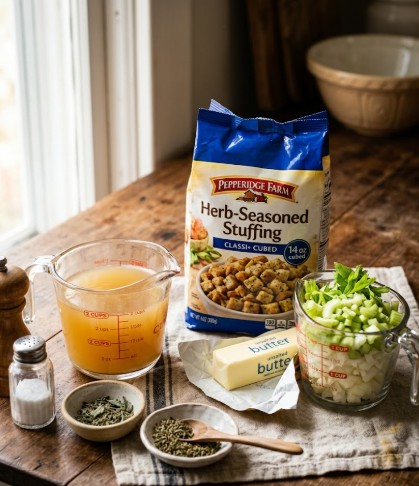
I use simple pantry staples to make this classic stuffing.
- 1 (14 oz) package Pepperidge Farm Herb-Seasoned cubed stuffing — the seasoned mix forms the base.
- 1/2 cup (1 stick) unsalted butter — I melt it to sauté vegetables and add richness.
- 1 cup chopped yellow or white onion — about one medium onion, finely diced.
- 1 cup chopped celery — include the leafy tops for extra flavor.
- 2 cups low-sodium chicken broth — I add a bit at a time to reach the right moisture.
- 1 teaspoon dried sage and 1 teaspoon dried thyme — I rub them between my palms to release oils.
- Salt and black pepper to taste — I season carefully before baking.
Equipment You’ll Need
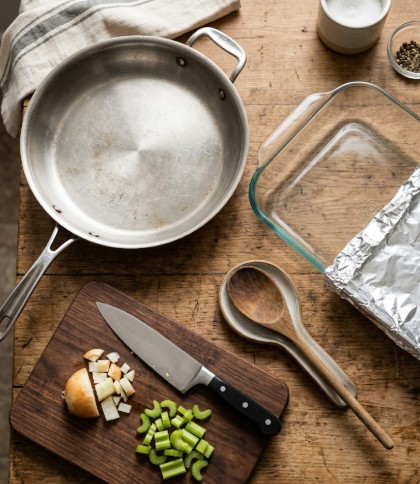
I use a few simple tools that make the stuffing easy and reliable.
- Large skillet — to sauté onions and celery until soft.
- 9×13-inch baking dish — for an even bake and the right depth.
- Aluminum foil — to trap steam and keep the top from drying.
- Wooden spoon — to stir without damaging pans.
- Chef’s knife & cutting board — to chop vegetables cleanly and safely.
How to Make Pepperidge Farm Stuffing
Preparing the Veggies
I chop one onion and two celery stalks into small, even pieces — about 1/4-inch dice — so they cook at the same rate. I include the celery leaves when I can; they add a bright, savory note. I melt butter in a skillet and sauté the onion and celery until they are soft and fragrant, about 5–7 minutes.
Mixing Everything Together
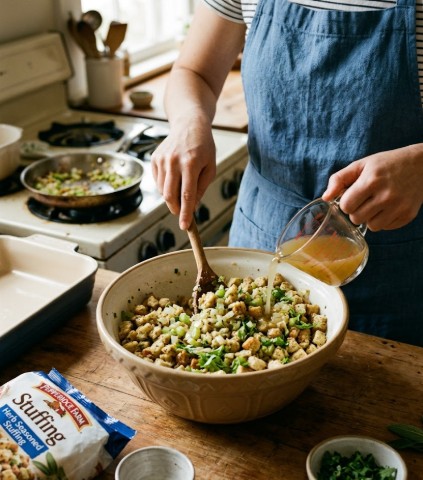
I transfer the cooked vegetables to a large bowl and add the Pepperidge Farm stuffing mix and any dried herbs I want. I stir so the butter and veggies coat the bread pieces evenly. Then I pour warm chicken broth in slowly, stirring until the mix feels like damp sand — moist but not soggy. I let the mixture rest for about 5 minutes so the bread absorbs the liquid.
Baking the Stuffing
I lightly grease a 9×13-inch baking dish and spread the stuffing evenly. I cover the dish tightly with foil to trap steam and bake at 350°F (175°C) for 30 minutes. After that, I remove the foil and bake 10–15 more minutes until the top turns golden. For extra crispness, I briefly broil the top 1–3 minutes while watching closely. I let the stuffing sit about 5 minutes before serving.
Tips for Making My Best Pepperidge Farm Stuffing
- Toast the bread mix first. I spread the cubes on a sheet and bake at 300°F for about 5 minutes to deepen the flavor and add a light crunch.
- Use fresh herbs when you can. I trade dried sage and thyme for a tablespoon of each fresh; the smell and taste are much brighter.
- Warm the broth. I heat the chicken broth slightly before adding so the bread soaks up liquid faster and more evenly.
- Handle the mix gently. I fold ingredients together with care to keep the bread cubes from turning into mush.
- Add extras sparingly. I toss in small amounts of sautéed onion, celery, or cooked sausage to keep texture balanced.
Variations I Use for Pepperidge Farm Stuffing
I like changing the base recipe with simple add-ins to suit the meal. I often brown 1/2 pound of breakfast sausage with the onions for a richer, meaty taste. Sliced cremini mushrooms sautéed until golden add a deep, earthy note. For texture and a touch of sweetness, I mix in one diced apple and 1/2 cup toasted walnuts. Dried cranberries (about 1/2 cup) give a bright, tart contrast.
- Sausage: hearty, savory
- Mushrooms: earthy depth
- Apple + walnuts: sweet crunch
- Cranberries: tart pop
Serving Ideas
I serve this stuffing beside roast turkey or put it center stage topped with a fried egg for a simple meal.
A few chopped parsley leaves brighten the dish and add freshness.
Try it with garlic mashed potatoes and green bean casserole for a cozy holiday plate.
- Sprinkle parsley for color
- Add a fried egg for protein
Storing and Reheating Leftover Stuffing
I store leftover stuffing in an airtight container in the fridge. It stays good for about 3–4 days.
To reheat, I prefer the oven: cover the dish and bake at 350°F (175°C) for roughly 15 minutes until hot and the top crisp. For a quicker option, I use the microwave and sprinkle a few drops of water over the stuffing to keep it from drying out, then heat until warm.
Tips:
- Fridge time: 3–4 days.
- Oven: 350°F / 175°C, ~15 minutes.
- Microwave: add moisture, heat in short bursts.
Nutritional Information
I estimate the nutrition below for a typical serving of this stuffing. Values will change with your choice of broth, butter, or add-ins.
- Serving size: about 3/4 cup (25–30 g)
- Calories: ~90–170 per serving (varies by recipe)
- Carbohydrates: main source; roughly 18–30 g
- Protein: about 2–4 g
- Fat: roughly 1–6 g depending on butter used
- Sodium: can be high; choose low-sodium broth to reduce it
I recommend checking package labels and adjusting ingredients to match your dietary needs.
Frequently Asked Questions
- Can I swap vegetable broth for chicken broth?
Yes — I use vegetable broth when I want a meat-free version. Pick a flavorful brand or homemade broth. For more depth, try mushroom broth; it adds a rich, savory note. - What if my stuffing turns out dry?
Dry stuffing usually means not enough liquid or too-hot oven heat. I add an extra 1/4 cup of broth and confirm the oven temp with a thermometer. The mix should be moist but not soupy before it goes in the oven. - Can I make the stuffing ahead of time?
I often assemble it the night before and keep it tightly covered in the fridge. Cold stuffing needs about 5–10 minutes more baking time. Chilling first can actually improve the flavor. - How should I reheat leftovers for best texture?
I sprinkle a little broth over the top, cover with foil, and bake at 350°F until hot. Then I remove the foil for the last few minutes to crisp the surface. Microwaving works, but the oven gives the best texture. - Quick tips I rely on:
- Use good-quality broth; it shapes the dish’s taste.
- Check oven temperature accuracy.
- Keep the mix moist before baking for tender results.
Share Your Experience
What I Made
I tried this Pepperidge Farm stuffing and it came out moist with a golden top. I used the herb-seasoned cubed stuffing, sautéed onions and celery in butter, then mixed in chicken broth and dried herbs. I baked it covered, then uncovered to brown the surface.
Tips and Extras
- I added cooked sausage once for more savory depth.
- For a crisper crust, I broiled the dish for 2–3 minutes at the end.
- I let it rest about 5 minutes before serving so it set up and sliced cleaner.
- Prep was about 10 minutes and baking roughly 40 minutes.
- If you want more vegetables, fold in sautéed mushrooms or carrots.
- Season to taste: a pinch more salt or pepper can brighten the flavor.
Nutrition and Portions
I portioned this recipe into six servings. Typical values per serving I observed:
| Nutrient | Amount |
|---|---|
| Calories | ~250 |
| Fat | ~12 g |
| Saturated Fat | ~7 g |
| Carbohydrates | ~30 g |
| Protein | ~5 g |
| Sodium | ~800 mg |
These values will change if you add sausage, extra butter, or different broth.
FAQs
Q1: Can I make Pepperidge Farm stuffing from the box and still get a moist result?
I often add sautéed onions, celery, and butter, then moisten with hot chicken or vegetable broth. Covering the dish while baking for part of the time helps trap steam and keeps the stuffing tender.
Q2: Is it safe to stuff a turkey with Pepperidge Farm stuffing?
I avoid stuffing the turkey to be safe. Cooking stuffing inside a bird can raise food-safety risks because the center may not reach a safe temperature. I cook stuffing separately to ensure even, safe cooking.
Q3: How can I make boxed stuffing taste more homemade?
I boost flavor by browning onions and celery in butter, adding fresh herbs like sage or thyme, and mixing in toasted nuts, cooked sausage, or dried cranberries. Using real broth instead of water also adds depth.
Q4: Can I prepare Pepperidge Farm stuffing ahead of time?
Yes. I assemble the mixture and refrigerate it up to 24 hours before baking. Bring it close to room temperature before baking and add a little extra broth if it looks dry.
Q5: Is the classic Pepperidge Farm stuffing gluten-free?
The standard boxed mixes contain wheat and are not gluten-free. I look for labeled gluten-free alternatives or use gluten-free bread crumbs to recreate a similar dish safely.
Q6: How long and at what temperature should I bake boxed stuffing?
I bake stuffing at 350°F (175°C). If the mixture is already hot from stovetop steps, it usually needs 25–35 minutes covered, then 10–15 minutes uncovered to brown the top. Times vary with dish depth and oven accuracy.
Q7: How does boxed stuffing compare to homemade from scratch?
Boxed stuffing offers convenience and consistent seasoning. I find homemade versions allow more control over texture and ingredients, like bread type and herb levels. Both can be tasty; it depends on time and preference.
Conclusion
I recommend Pepperidge Farm stuffing as a reliable, easy choice when you want a tasty side without extra fuss. It cooks quickly, adapts well to add-ins like herbs, sausage, or apples, and gives consistent results whether baked in a pan or used inside a bird.
I find it effective because the seasoning and bread cubes hold moisture and flavor well. It is safe when cooked to proper temperature and handled per package directions. Choosing simple, fresh mix-ins keeps the dish both tasty and health-conscious.
For an eco-friendlier meal, I suggest adding local produce and limiting single-use packaging where possible. That keeps the recipe practical and kinder to the environment.
I trust Pepperidge Farm stuffing for holiday meals and weeknight dinners alike. Pick a version that fits your needs, customize it lightly, and enjoy a dependable, crowd-pleasing side that makes meal planning easier.