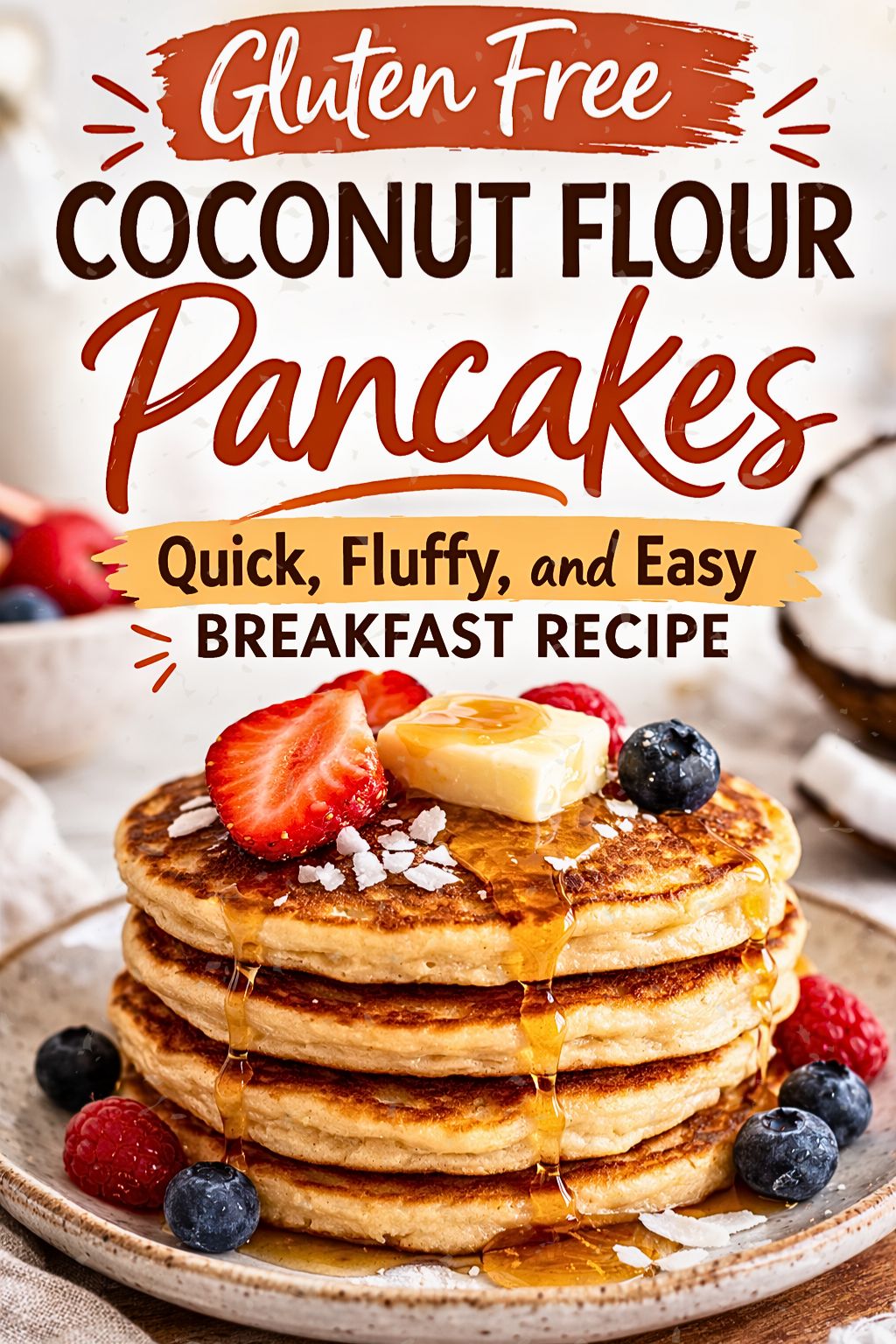
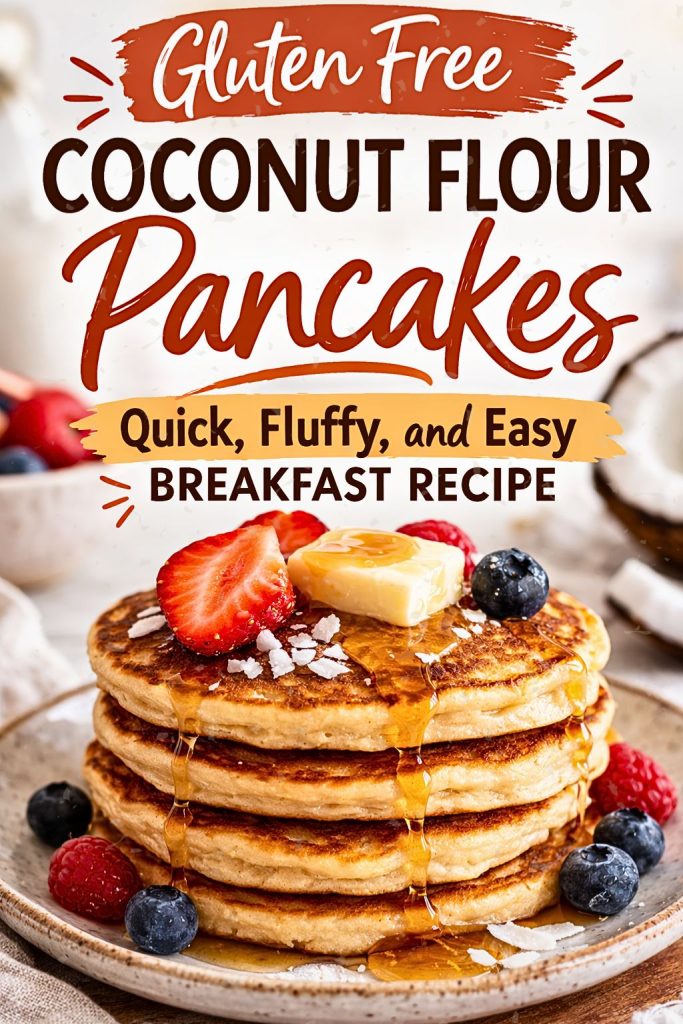
Gluten Free Coconut Flour Pancakes — Quick, Fluffy, and Easy Breakfast Recipe
I love pancakes, but after my sister learned she was sensitive to gluten I had to rethink the classic stack. I worked through recipes until I found a coconut flour version that bakes up tender, lightly sweet, and reliably tasty without wheat or gluten.
These pancakes feel a bit more delicate than regular ones and carry a mild coconut note that makes them special. I now make them often because they are simple to prepare, hold up well for guests, and suit gluten-free needs without sacrificing flavor.
Key Takeaways
- These pancakes offer a gluten-free option with a mild coconut flavor.
- The recipe is easy to make and works well for everyday or weekend breakfasts.
- They have a tender texture and are a reliable choice for gluten-sensitive eaters.
Why You’ll Love These Gluten Free Coconut Flour Pancakes
Fast, No-Fuss Morning Pancakes
I can have batter ready in about five minutes and cook the pancakes in just a few more. This recipe uses few ingredients and simple steps, so it works great on busy mornings or when I want breakfast fast.
Light, Fluffy Pancakes with a Gentle Coconut Taste
The pancakes turn out soft and airy, not dense. They carry a mild coconut note that adds flavor without being too strong, so they pair well with fruit, syrup, or yogurt.
Nutritious Choice That Still Tastes Good
Coconut flour brings extra fiber and healthy fats to the plate. I get a more filling breakfast that supports steady energy without feeling heavy.
Gluten Free Coconut Flour Pancakes Ingredients
I use simple, measured ingredients to get consistent, tender pancakes every time. Below is what I gather before mixing.
- Dry:
- ½ cup sifted coconut flour
- ¼ tsp fine sea salt
- ½ tsp aluminum-free baking soda
- Wet:
- 3 large eggs, lightly beaten
- ½ cup unsweetened almond milk (or any milk you prefer)
- 2 tbsp melted coconut oil, cooled
- 1 tbsp pure maple syrup
- ½ tsp pure vanilla extract
Tips I follow: always sift the coconut flour for a lighter batter, measure ingredients by volume or weight for accuracy, and let the melted oil cool slightly before adding to the eggs.
Step-by-Step Guide: How to Make Gluten Free Coconut Flour Pancakes
Mixing the Coconut Flour Pancake Batter
I start by sifting the coconut flour into a large bowl, then add a pinch of salt and a small amount of baking soda. I whisk those dry ingredients so there are no clumps.
In a separate bowl I beat the eggs, then stir in almond milk, melted coconut oil, maple syrup, and vanilla. I pour the wet mix into the dry mix and gently whisk until the batter is mostly combined. A few small lumps are fine — I avoid overmixing.
I let the batter rest for 5–10 minutes so the coconut flour can absorb the liquids and thicken. If the batter becomes too thick after resting, I add 1 tablespoon of almond milk at a time until it reaches a thick cream-like pourable consistency.
Key notes:
- Measure coconut flour carefully; it soaks up liquid.
- Resting time is essential for texture.
- Adjust liquid gradually; small additions prevent a runny batter.
Cooking the Coconut Flour Pancakes
I heat a nonstick skillet or griddle over medium heat and lightly brush or spray it with coconut oil. When the pan is hot but not smoking, I spoon about 1/4 cup of batter for each pancake.
I cook each pancake 2–3 minutes per side. I watch for small bubbles on the surface and the edges setting before I flip. I use a thin, wide spatula and flip gently because these pancakes are more fragile than wheat pancakes.
I remove pancakes when both sides are golden brown and they feel springy to the touch. I serve them immediately with toppings like fresh fruit, nut butter, or a light drizzle of maple syrup.
Tips for Perfect Gluten Free Coconut Flour Pancakes
Getting the batter texture right
I check batter thickness before cooking. If it feels like dough, I add 1 tablespoon of milk at a time until it flows like thick cream. Aim for pourable but not runny. Stir gently to avoid overmixing; coconut flour soaks liquid fast and can make batter gummy.
Cooking technique for best results
I set the pan to medium heat so pancakes brown evenly without burning. Use a nonstick skillet or light oil and let the surface heat fully before pouring. Flip only when edges look set and small bubbles form on top. Handle pancakes gently with a thin spatula to keep them from falling apart.
Gluten Free Coconut Flour Pancakes Variations
Mix-Ins to Brighten My Coconut Flour Pancakes
I fold small add-ins into the batter before cooking. Fresh or frozen blueberries work well and keep the pancakes moist. Mini chocolate chips make them sweeter without changing texture. I also like stirring in a pinch of cinnamon or nutmeg for warm spice notes.
My Favorite Finishing Choices for Coconut Flour Pancakes
I top pancakes with fresh fruit like sliced bananas, strawberries, or peaches for brightness. A spoonful of yogurt or whipped cream adds creaminess. Nut butters—almond or peanut—give protein and richness. Lastly, I drizzle real maple syrup or honey for a simple sweet finish.
FAQ About Gluten Free Coconut Flour Pancakes
- Are these pancakes truly gluten-free?
Yes. I use coconut flour, which has no gluten. I also pick gluten-free baking soda and pure maple syrup to avoid hidden gluten in additives. - How long will leftovers stay good?
I store extras in an airtight container in the fridge. They stay fresh about 2–3 days. - Can I swap the milk?
Definitely. I often use almond milk, but regular, oat, soy, or any unsweetened milk works fine. Adjust thickness if needed. - Can I freeze them?
Yes. I let pancakes cool, layer them with parchment paper, then put them in a freezer bag. They keep up to one month. Reheat in a toaster or microwave. - Any quick reheat tips?
I prefer the toaster for crisp edges and the microwave for fast, soft reheating. Use low power if microwaving to avoid drying. - Do they taste very coconutty?
They have a mild coconut flavor and a slightly different texture than wheat pancakes—light and a bit delicate. - Any storage warning?
I avoid leaving them at room temperature more than a few hours. For safety and texture, refrigerate or freeze promptly.
Storing and Reheating Gluten-Free Coconut Pancakes
I let pancakes cool fully, then stack and seal them in an airtight container. Store in the fridge for 2–3 days. For reheating, I prefer the toaster for a crisp edge. The microwave works faster but makes them softer. If freezing, wrap each pancake and thaw before reheating to keep texture steady.
Nutritional Snapshot for My Gluten-Free Coconut Pancakes
I estimate calories, carbs, fiber, protein, and fat per serving.
- Calories: ~220–300
- Carbs: ~10–20 g
- Fiber: ~6–10 g
- Protein: ~8–12 g
- Fat: ~12–18 g
Values vary with ingredients and portion size.
Enjoy Your Gluten Free Coconut Flour Pancakes!
What They Are Like
I make these pancakes when I want a light, grain-free breakfast that still feels like a treat. They turn out tender with a mild coconut flavor and a soft, slightly cakey texture. The batter thickens as it rests, so the pancakes hold their shape on the pan and flip without falling apart. I like them plain or topped with fresh fruit, nut butter, or a small drizzle of maple syrup.
Helpful Tips and Tricks
- Rest the batter. Coconut flour soaks up liquid quickly. Letting the batter sit for 5–10 minutes gives it time to thicken and makes the pancakes easier to cook.
- Adjust consistency. If the batter is too dense, add 1 tablespoon of milk at a time until it pours slowly but still holds shape.
- Pan heat. Use medium heat and a light layer of oil. Too-hot pans brown the outside before the center cooks.
- Portion control. I use 1/4 cup batter for each pancake to keep sizes even and cook times predictable.
- Storage. Keep leftovers in an airtight container in the fridge for up to 3 days. Reheat in a toaster or microwave.
- Make-ahead option. You can freeze cooked pancakes between layers of parchment and heat them straight from the freezer for a quick breakfast.
- Flavor swaps. Try almond milk, a teaspoon of cinnamon, or mashed banana for variation.
Nutrition Snapshot
Below I give approximate nutrition per one pancake based on my usual portion size.
| Nutrient | Amount (approx.) |
|---|---|
| Calories | 150 |
| Carbohydrates | 10 g |
| Fiber | 4 g |
| Sugar | 3 g |
| Fat | 10 g |
| Saturated Fat | 7 g |
| Protein | 4 g |
| Sodium | 150 mg |
| Cholesterol | 50 mg |
These numbers help me plan meals while keeping portions in check. If you need exact values for a specific brand or ingredient swap, I recommend using a nutrition calculator with your exact ingredients.
FAQs
- What makes my coconut flour pancakes different from regular pancakes?
I use coconut flour, which soaks up more liquid and gives a denser, slightly sweet batter. That means I add extra eggs or liquid to keep the pancakes tender and fluffy. The result is gluten-free, often lower in carbs, and higher in fiber than wheat pancakes. - Are these pancakes safe if I have celiac disease or gluten sensitivity?
Yes. Coconut flour itself is gluten free. I recommend checking all other ingredients—baking powder, flavorings, and any mix-ins—for a certified gluten-free label to avoid cross-contamination. - How do I store and reheat leftovers so they stay good?
I cool pancakes completely, stack them with parchment between layers, then keep them in an airtight container in the fridge for 3–4 days. To freeze, I wrap individual pancakes and freeze up to 2 months. Reheat in a toaster, oven at 350°F (175°C) for 8–10 minutes, or microwave briefly until warm. - Do coconut flour pancakes need special cooking or maintenance tips?
Yes. The batter is thicker, so I cook over medium-low heat to avoid burning while the center cooks. I lightly oil the pan, wait for bubbles at the edges, and flip gently. If batter is too thick, I add a splash of milk or water to loosen it. - How do these pancakes compare nutritionally to other gluten-free pancakes?
Compared with other gluten-free flours, coconut flour is high in fiber and often lower in net carbs. I find it more filling, but it can be denser and drier unless balanced with enough eggs or liquid. For higher protein, I sometimes add protein powder or eggs. - Can people with coconut allergies eat these?
No. I do not recommend these pancakes for anyone with a coconut allergy. Use an alternative gluten-free flour like oat or rice flour if you need a coconut-free option. - Will these pancakes work for low-carb or keto diets?
They can fit low-carb or keto plans because coconut flour is low in digestible carbs, but I adjust eggs and sweeteners accordingly. Using a low-carb syrup or sugar substitute keeps the overall carbs down.
Conclusion
I recommend gluten-free coconut flour pancakes as a smart, healthy choice for breakfast. They use high-fiber, low-carb coconut flour and simple ingredients, so they keep you full longer and fit many diets like gluten-free, paleo, or low-carb.
I find them effective because they deliver a tender texture and mild coconut flavor without refined wheat or excess sugar. They cook quickly and work well with common swaps—eggs or flax for binding, and dairy or plant milk for moisture—so you can tailor them to allergies or taste.
I also view them as a safe and eco-friendly option. Coconut flour is plant-based and often made from byproducts of coconut processing, which can reduce waste. When you pick quality, minimally processed ingredients, you lower additives and support cleaner eating.
To get the best long-term results, choose reliable brands for coconut flour and fresh eggs or trusted plant-based alternatives. Use recipes that balance flour, liquid, and eggs to avoid dryness or crumbling.
I encourage you to try a tested recipe, tweak it for your needs, and make these pancakes a regular part of your routine for a tasty, nutritious morning.