
Palacsinta Hungarian Pancakes: Authentic Recipe
I traveled to Hungary and discovered palacsinta, thin crepe-like pancakes that people often fill with sweet or savory fillings. I learned how locals fill them with a creamy cottage cheese mixture and top them with fruit jam, which gives each bite a mix of soft, tangy, and sweet flavors.
I tried making them myself and noted which ingredients and steps mattered most for light, flexible pancakes that roll without breaking. I will share what worked for me, along with simple tips to get the right texture and flavor at home.

Key Takeaways
- I introduce what palacsinta are and why they stand out in Hungarian cooking.
- I describe the main fillings and the balance of textures and flavors to expect.
- I highlight practical tips for making reliable, tender pancakes at home.
What palacsinta (Hungarian thin pancakes) are
I describe palacsinta as very thin, crepe-like pancakes from Hungary. I make them light by adding sparkling water to the batter.
They often get filled with sweet cottage cheese or jam, giving a mild sweet-and-salty taste.
I cook them quickly in a hot pan and roll or fold them before serving.
How This Version Stands Out
I use dry cottage cheese or ricotta in the filling, which gives the palacsinta a creamier, richer bite than usual. I also add a touch of lemon zest and a splash of vanilla to brighten the flavor.
- Texture: creamier filling
- Flavor: light citrus and warm vanilla notes
This combination balances sweet and savory without overpowering the thin crepe.
What It Tastes Like to Me
I bite into a warm palacsinta and notice the thin crepe gives way easily. The soft pancake wraps a creamy cottage cheese center that feels rich but not heavy. A light dusting of powdered sugar adds quick sweetness, while a spoonful of apricot jam brings bright, fruity contrast. The mix of tender texture and balanced flavors makes each mouthful simple and satisfying.
Ingredients You’ll Need:
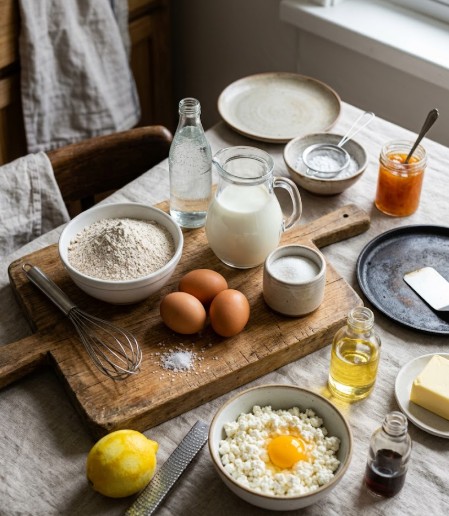
I list the items I use to make tender, thin palacsinta and a simple cottage cheese filling. I group them into batter, cooking fat, and filling/toppings so you can shop quickly.
- Batter
- 3 large whole eggs — they bind the batter and add body.
- 1 cup all-purpose flour — gives structure and the right texture.
- 1 cup whole milk — adds richness and moisture.
- 1/2 cup sparkling water — lightens the batter for a delicate, airy crepe.
- 1 pinch of salt — balances flavors.
- 1–2 tablespoons granulated sugar — sweetens the batter and helps browning.
- Cooking fat
- Sunflower oil or unsalted butter — for coating the pan and adding flavor.
- Cottage cheese filling
- 1 cup dry cottage cheese or ricotta — creamy base for the filling.
- 1 egg yolk — makes the filling richer and helps it bind.
- Zest of 1 lemon — adds a fresh citrus note.
- 1 teaspoon vanilla extract — gives a sweet, aromatic lift.
- Finishing and optional toppings
- Powdered (confectioners’) sugar — for dusting before serving.
- Apricot jam — a classic fruity filling or spread for serving.
I recommend measuring ingredients before you start. For a lighter batter, keep the sparkling water cold and fold it in last. If you prefer less sweetness, reduce the sugar in the batter and rely on jam or powdered sugar when serving.
Notes and simple swaps:
- Use any neutral oil in place of sunflower oil. Butter gives richer taste but browns faster.
- Substitute plant-based milk for whole milk if needed; texture will be slightly thinner.
- For a smoother filling, press cottage cheese through a sieve or use ricotta.
- Increase or decrease sugar and lemon zest to suit your taste.
I find these amounts make about 8–10 thin crepes, depending on pan size and thickness.
Step by Step Directions:
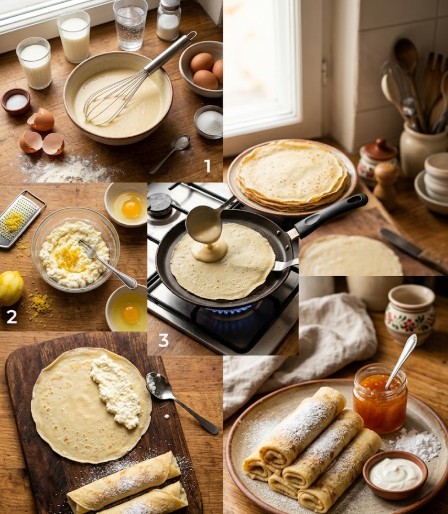
Step 1 — Make the Thin Pancake Batter
I crack the eggs into a bowl, add a small pinch of salt and a teaspoon of sugar, then beat until smooth. I pour in the milk while whisking, then add the flour a little at a time to avoid lumps.
When the batter is homogenous, I fold in sparkling water (or still water mixed with a pinch of baking soda) to loosen the batter to a thin, yogurt-like texture. I cover the bowl and chill it in the fridge for 5–10 minutes while I move on to the filling.
Step 2 — Prepare the Sweet Cheese Filling
I separate one egg and set the white aside, then beat the yolk with sugar and a splash of vanilla until it’s thick and pale. I press the dry cottage cheese (or ricotta) with a fork to make it smooth.
I mix the whipped yolk, lemon zest, and any extra sugar into the cheese until the filling is even and spreadable.
Step 3 — Cook the Crepe-Style Pancakes
I heat a small frying pan over medium heat and add a little sunflower oil or butter. I pour a ladle of batter into the center and tilt the pan quickly so the batter spreads thin and evenly.
I cook the crepe about 45–60 seconds until tiny bubbles form and the underside is light golden, flip with a thin spatula, and cook another 30–60 seconds. I keep going until I use all the batter, adding more fat to the pan as needed.
Step 4 — Fill and Roll the Pancakes
I lay each warm pancake flat, then spoon either apricot jam or the sweet cottage cheese filling in a thin line along one edge. I spread it gently to an even layer but not too thick.
I roll the pancakes tightly and place them seam-side down on a plate or serving tray. I dust the rolls with powdered sugar for a neat finish.
Step 5 — Plate and Serve
I serve the pancakes while they are still warm so the filling feels soft and the flavors are fresh.
I offer extra jam, powdered sugar, or a dollop of sour cream at the table so people can adjust sweetness to their taste.
Tips & Tricks On Making Palacsinta Hungarian Pancakes:
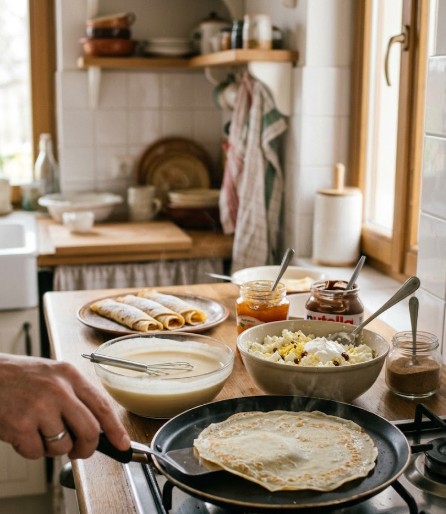
I always use a non-stick skillet so the crepes flip easily and cook evenly.
If batter spreads too slowly, I add a little milk for thinner crepes; if it’s too runny, I sift in a bit more flour until it feels right.
For creamier fillings, I stir in a splash of heavy cream or a spoonful of sour cream to my cottage cheese mix.
I like to try different fillings — Nutella, jam, or cinnamon sugar all work well.
I often make batter and fillings ahead and chill them; it saves time when I assemble and serve.
Nutrition Information:
I list typical nutrition for one plain palacsinta (about 60–80 g) as a guide. Values vary by recipe and fillings.
- Calories: ~200–300 kcal
- Total fat: ~8–12 g
- Saturated fat: ~3–5 g
- Carbohydrates: ~25–35 g
- Sugars: ~5–12 g (higher with sweet fillings)
- Protein: ~8–12 g
- Fiber: ~0.5–2 g
I recommend these notes when estimating nutrition:
- Fillings change values a lot. Sweet fillings (jam, chocolate, sweetened cottage cheese) raise sugars and calories. Savory fillings (cheese, meat, vegetables) add protein, fat, and sodium.
- Cooking fat adds calories. Brushing the pan with butter or oil increases total fat per pancake.
- Using whole milk and more eggs increases calories and protein. Lower-fat milk or egg substitutes reduce calories and fat.
- To lower calories: use thin spreads of filling, choose fruit or low-fat cottage cheese, and cook with a nonstick spray.
Nutrition quick-reference (approximate per plain pancake)
| Nutrient | Amount |
|---|---|
| Calories | 200–300 kcal |
| Fat | 8–12 g |
| Saturated fat | 3–5 g |
| Carbohydrates | 25–35 g |
| Sugars | 5–12 g |
| Protein | 8–12 g |
I suggest calculating exact values for your recipe using ingredient weights and a nutrition calculator when precise numbers matter.
How I Keep Leftovers Fresh
I store rolled palacsinta in an airtight container in the fridge and use them within 48 hours.
To reheat, I place them on a microwave-safe plate and warm for about 30 seconds until heated through.
If filling is wet, I separate layers with parchment to prevent sogginess.
What other filling can I use in palacsinta Hungarian pancakes?
I like swapping the classic cottage cheese for several tasty options.
- Cream cheese gives a tangy, smooth taste.
- Mascarpone makes the filling richer and silkier; it pairs well with berries.
- Greek yogurt mixed with honey and cinnamon lightens the dish while adding flavor.
- Almond paste spread thin adds a sweet, nutty layer.
- Whipped cream with fresh fruit turns palacsinta into an easy dessert.
Try one at a time or mix two for new flavor combinations.
Palacsinta Hungarian Pancakes Recipe
Tools I Use
- Mixing bowl and whisk
- Plastic wrap
- Nonstick frying pan and spatula
- Ladle for portioning batter
- Small bowl and spoon for filling
What Goes In
Batter
- 1 1/4 cups all-purpose flour
- 2 whole eggs
- 1 pinch salt
- 1 tsp sugar
- 1 1/4 cups whole milk
- 2/3 cup sparkling water
- Oil or butter for the pan
Sweet cheese filling
- 2/3 cup dry cottage cheese or ricotta
- 1 egg yolk
- 1 tbsp sugar (plus extra to taste)
- 1 tsp vanilla extract
- Zest of 1/2 lemon
Extras
- Apricot jam or other fruit preserves
- Powdered sugar for dusting
Step-by-step Method
- Mix the batter: Crack the eggs into the bowl, add salt and sugar, and whisk until smooth.
- Add milk slowly while whisking. Stir in the flour until lump-free. Pour in sparkling water and mix to a thin, yogurt-like batter. Cover with plastic wrap and chill for 5–10 minutes.
- Make the filling: Beat the egg yolk with sugar and vanilla until creamy. Mash the cottage cheese until smooth and fold in the yolk mixture and lemon zest. Adjust sweetness if needed.
- Heat the pan over medium. Add a small smear of oil or butter.
- Pour a ladle of batter into the center, tilt the pan to spread batter thinly and evenly. Cook about 30–60 seconds per side until lightly browned. Flip with a spatula and cook the second side. Repeat until batter is used, adding oil as needed.
- Fill and roll: Spread jam or a spoonful of the sweet cheese on each pancake, then roll tightly and set seam-side down.
- Dust the rolls with powdered sugar and serve warm.
Tips and Reminders
- Use a nonstick pan to help spread and flip the thin pancakes easily.
- If batter is too thick, add a splash more milk; if too thin, add a bit more flour.
- For a creamier filling, stir in a spoonful of sour cream or heavy cream.
- You can make batter and filling a day ahead and keep them chilled until ready to cook and assemble.
- Try different fillings like Nutella, jam, or cinnamon sugar for variety.
Estimated Nutrition
- Serving size: 1 rolled palacsinta (makes about 10)
- Calories per serving: ~100 kcal
Nutrition will vary by filling and amount of oil used.
Frequently Asked Questions:
Q1. Can I mix the batter the day before?
I often make the batter a few hours ahead or the night before. Store it covered in the fridge for up to 24 hours and stir well before cooking so it returns to a smooth, even consistency.
Q2. Can I freeze filled pancakes?
I prefer them fresh, but freezing works in a pinch. Wrap each filled pancake tightly in plastic, then foil, and freeze for up to one month. Thaw in the fridge overnight and reheat in the oven or microwave until warmed through.
Q3. Is it OK to swap the jam flavor?
Yes. Apricot is traditional, but I swap in raspberry, strawberry, plum, or any favorite jam to change the flavor. Use a thin layer so the pancake rolls neatly.
Q4. How do I make a dairy-free version?
I switch to plant milks like almond or oat and use vegan butter for the pan. For fillings, dairy-free cream cheese or coconut yogurt stand in well for traditional cottage cheese without losing texture.
Q5. Are these pancakes for breakfast or dessert?
I serve palacsinta for both. They work as a sweet breakfast or a light dessert depending on the filling. Sweet options (jam, sweet cheese) suit dessert; savory fillings (cheese, meat, vegetables) make a satisfying breakfast or main course.
Tip: To keep pancakes flexible, cook them over medium-low heat and stack between sheets of parchment while cooling. This prevents sticking and makes rolling easier.
Closing Thoughts
I enjoyed making these thin Hungarian pancakes and sharing how they come together. I like the soft crepe wrapped around a slightly sweet cottage cheese filling, with a spoonful of apricot jam on top for contrast. The recipe lets you tweak textures and flavors—thinner batter, richer cheese, or a different fruit jam—so each batch can feel new.
I recommend practicing one or two times to get the pan heat and batter consistency right. Keep extras in the fridge for quick treats, or freeze layers separated by parchment for later. Simple steps yield a tasty, flexible dish I return to often.
FAQs
- What makes palacsinta different from other pancakes?
I find palacsinta much thinner than American-style pancakes. They use a runny batter like crepes, so the pancakes cook quickly and stay flexible. That makes them easy to roll or fold with sweet or savory fillings. - Are palacsinta safe to eat for people with food allergies?
I recommend checking ingredients carefully. Traditional batter has wheat, eggs, and milk. You can make them without dairy or eggs by using plant milk and a flaxseed or banana binder, but I always test a small batch first to make sure the texture and taste work for someone with allergies. - How do I store and reheat leftover palacsinta?
I cool them completely, stack with parchment paper between each, then wrap and refrigerate up to 3 days or freeze up to 2 months. To reheat, I warm them briefly in a skillet over low heat or microwave for a few seconds until pliable. - What fillings work best, and how should I choose them?
I use sweet fillings like jam, sweetened cottage cheese, or Nutella for dessert palacsinta, and savory fillings like cooked meats, mushrooms, or cheese for meals. Pick fillings that are not too wet, or drain them first to avoid soggy pancakes. - How do I get thin, even palacsinta every time?
I aim for a smooth, slightly thin batter and heat the pan until it’s hot but not smoking. I pour a small amount and tilt the pan to spread it thin. A nonstick pan and a light coat of butter or oil help with even cooking and easy turning. - Can I make palacsinta ahead for a gathering?
I recommend making them in advance and storing them stacked with parchment between each pancake. Reheat them before serving and add fillings right before guests arrive so they stay fresh and not soggy. - How do palacsinta compare with other crepe-like dishes?
I see palacsinta as Hungary’s version of thin crepes. They’re very similar in technique and texture, but regional fillings and slight batter tweaks give them a distinct taste. Compared with thicker pancakes, palacsinta are more flexible and suit a wider range of fillings.
Conclusion
I recommend palacsinta as a versatile and reliable choice for home cooking and entertaining. These thin Hungarian pancakes work well with sweet or savory fillings, cook quickly, and use simple, common ingredients.
- I find them effective for serving many people without extra fuss.
- I consider them safe and family-friendly because the basic recipe is straightforward and easy to adjust for allergies or diets.
- I view palacsinta as eco-friendly when you use local ingredients and avoid single-use packaging for fillings.
Choose a trusted recipe and practice your technique for consistent, long-lasting results. I encourage you to try palacsinta regularly—they store, adapt, and please a wide range of tastes.