

Neiman Marcus Lemon Cake Recipe
I love making Neiman Marcus Lemon Cake because it brightens a table with fresh citrus and a tender, creamy crumb. I usually serve it with a light whipped cream or a scoop of vanilla ice cream, and sometimes add fresh berries or a cup of herbal tea to balance the lemon’s tartness.
This cake comes from a well-known culinary tradition and stands out for its simple ingredients that combine into a rich, balanced dessert. I’ll share my approach to the recipe, tips I learned while baking, and easy serving ideas so you can make it at home with confidence.

Key Takeaways
- The cake pairs well with light toppings and fresh fruit to enhance its lemon flavor.
- Simple, quality ingredients create the cake’s rich, balanced taste.
- I’ll provide practical tips and serving ideas to help you bake it confidently.
Why This Recipe Works
I balance rich and bright elements so each bite feels both creamy and lively. The butter and cream cheese give the cake a tender, moist crumb while lemon zest and juice cut through the richness with a clear, fresh tang.
The steps stay simple, which keeps texture reliable. Straightforward mixing and baking reduce mistakes that can make cakes dense or dry.
I value flexibility: this cake fits many occasions. You can keep it light for warm weather or dress it up for holidays without changing the core method.
Flavor-wise, the lemon adds a clean intensity that most people enjoy. It lifts the dessert while the creamy base keeps it comforting and familiar.
How It Tastes
I get a bright lemon note that lifts the whole cake without being sharp. The cream cheese layer feels velvety and almost melts on my tongue. Powdered sugar adds gentle sweetness that rounds the flavors but never cloys. Texturally, the cake is moist and tender, while the topping stays smooth and rich. Each bite balances citrus, creaminess, and sugar so I keep reaching for another forkful.
What Makes My Version Different from Other Neiman Marcus Lemon Cakes?
I use cream cheese in the batter to add a tangy, rich creaminess that most recipes miss. That change deepens the lemon flavor and keeps the cake moist without heaviness.
I also design the cake to be a flexible base. It works well as a simple dessert, a layered cake, or a trifle. Texture stays tender and not dry, so it holds up in different presentations.
The Ingredients
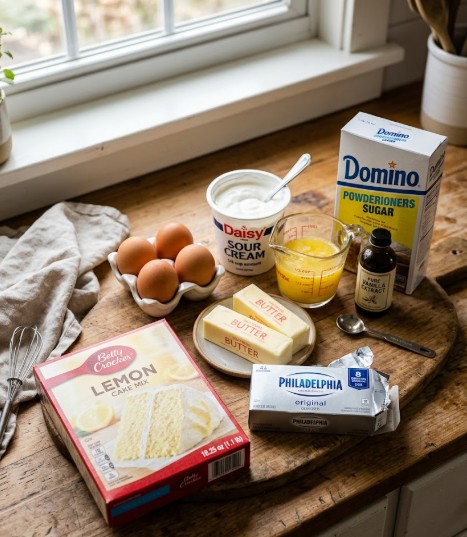
I gather simple, common items for this rich, gooey cake. You need 1/2–1 cup of butter or margarine, four large eggs, and an 8‑ounce package of cream cheese. I also use 1 teaspoon of vanilla and 1/4 cup of sour cream for flavor and texture. For the base, pick an 18‑ounce box of cake mix—lemon or chocolate work, with lemon preferred. Finally, I add a 1‑pound box of powdered sugar to finish the topping.
Instructions
Step One — Get Ready
I preheat the oven to 350°F (175°C). I grease and lightly flour two 8- or 9-inch round pans so the cakes release easily. I set the pans aside while I gather ingredients and tools.
Step Two — Blend Butter and Cream Cheese
I place room-temperature butter and cream cheese in a large bowl. I beat them until smooth and slightly fluffy, about 2–3 minutes, to build a rich, creamy base.
Step Three — Incorporate Eggs and Flavor
I add eggs one at a time, mixing well after each addition. Then I stir in vanilla extract. I make sure the eggs are fully mixed so the batter stays even and the cake rises properly.
Step Four — Combine Dry Mix and Sour Cream
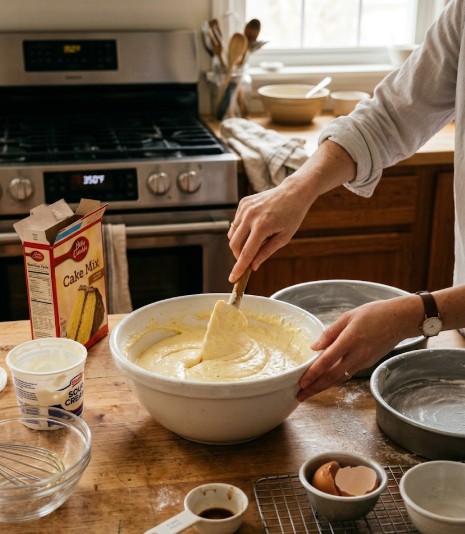
In a separate bowl I mix the cake mix with sour cream. I fold this dry mixture into the butter-cream cheese batter with a spatula. I work gently and stop when the batter is just combined to avoid a dense cake.
Step Five — Bake the Cakes
I divide the batter evenly between the prepared pans and smooth the tops. I bake them on the middle rack for 25–30 minutes, or until a toothpick inserted in the center comes out clean.
Step Six — Let Cakes Cool
I let the cakes rest in their pans for about 10 minutes, then turn them out onto a wire rack. I cool them completely before frosting to prevent the frosting from melting.
Step Seven — Frost and Assemble
I spread frosting on the top of one cooled layer, place the second layer on top, and frost the top and sides. I use a generous layer of cream cheese frosting or my preferred frosting, smoothing or decorating as desired.
Quick Baking Tips
I recommend sifting powdered sugar for a silky, lump-free topping. I let butter, eggs, and cream cheese warm to room temperature so my batter blends evenly. I often grate lemon peel into the mix when I want brighter citrus notes. I stop mixing as soon as ingredients are combined to keep the cake light. I also use an oven thermometer to confirm the correct baking temperature and avoid under- or over-baking.
Nutrition Information

I list key nutrition facts for a typical lemon cake serving:
- Serving size: about 1 slice (1/12 of cake)
- Calories: ~350–450 kcal
- Total fat: 15–25 g (saturated fat 8–12 g)
- Carbohydrates: 45–60 g (sugars 30–40 g)
- Protein: 4–6 g
- Sodium: 200–350 mg
I recommend checking exact values if you alter ingredients or portion size.
How Do I Keep This Neiman Marcus Lemon Cake Fresh?
I store slices covered at room temperature for 2–3 days to keep the frosting soft and the cake from drying out.
For longer storage, I put leftovers in the refrigerator, tightly wrapped or in an airtight container, and use them within a week.
If I need to save a cake for months, I freeze it before frosting: wrap it in plastic, then foil, and thaw it in the fridge overnight before serving.
Sides for Neiman Marcus Lemon Cake
I like to serve bright, simple sides that lift the lemon flavor without hiding it. Fresh berries—strawberries, blueberries, and raspberries—add color and a tart bite that balances the cake’s sweetness. A light scoop of whipped cream adds soft, airy texture without feeling heavy. I also offer herbal tea, such as chamomile or mint; its warmth and gentle flavors pair well with the cake and help cleanse the palate between bites.
What Alternatives Can You Use for the Ingredients?
Swaps for the Food Items
I often swap ingredients when a recipe calls for items I don’t have. For butter, I use melted coconut oil for a mild coconut note or unsweetened applesauce to cut fat while keeping moisture. If the recipe needs cream cheese, plain Greek yogurt makes the filling creamy and tangy; expect a slightly different texture and flavor. When I lack boxed cake mix, I combine all-purpose flour with baking powder and sugar — roughly 1 1/2 cups flour, 1 1/2 teaspoons baking powder, and 1 cup sugar for a single-layer base — and adjust liquids. For powdered sugar, I blitz granulated sugar with 1 tablespoon cornstarch per cup in a blender until fine.
Tools and Utensils Alternatives
If I don’t have the exact pans or spatulas listed, I improvise. I use a 9×13 pan instead of two round pans; bake time changes, so I check doneness earlier. A silicone spatula or wooden spoon works for folding batter when a rubber spatula is missing. Parchment paper can replace heavy greasing to prevent sticking. If I need an oven thermometer but don’t own one, I watch bake time and test with a toothpick.
Technique Adjustments
I change steps to match my substitutes. When using applesauce instead of butter, I reduce liquid slightly because applesauce holds water. With Greek yogurt replacing cream cheese, I beat it briefly to avoid thinning the batter. If I make a homemade cake mix, I whisk dry ingredients well and add a splash of oil to mimic the boxed mix’s richness. I fold gently after combining wet and dry to avoid a dense cake. I also lower oven temperature by 10–15°F if my pan is dark or if the batter seems thin.
Nutrition and Dietary Options
I adjust ingredients to meet diet needs without losing texture. Using applesauce or Greek yogurt lowers fat and calories compared with butter and cream cheese. Swap margarine for butter if you want a dairy-free choice, but check labels for trans fats. Almond flour can replace some all-purpose flour for a gluten-reduced version, though I use a blend to keep structure. For lower sugar frosting, I cut powdered sugar and add a bit of lemon juice or vanilla for flavor instead of more sugar.
Extra Tips and Practical Notes
I always try small tests when changing key ingredients. If I swap coconut oil for butter, I taste a small baked sample to judge flavor. I sift homemade powdered sugar before mixing to remove grittiness. Letting eggs and dairy warm to room temperature helps them combine smoothly, especially when using substitutes. When I change pan size, I check the cake 5–10 minutes earlier than the original recipe time.
Frequently Asked Questions
- Can I make this cake with gluten-free ingredients?
I use a gluten-free cake mix in place of regular mix and follow the same steps. The texture and flavor stay very close to the original. - Can I change the flavor?
I swap lemon juice and zest for orange, lime, or another citrus to vary the taste. Small changes keep the recipe simple and reliable. - What toppings pair well?
I like cream cheese frosting, a lemon glaze, or a light buttercream. Pick one that balances the citrus without overpowering it. - How do I know the cake is baked through?
I insert a toothpick into the center. If it comes out clean or with a few crumbs, the cake is done. Wet batter means it needs more time.
Closing Thoughts
Baking this lemon cake always lifts my mood and brightens any table. I like how simple steps and common ingredients turn into a dessert that folks ask for again. The tart lemon and tender crumb pair well with plain coffee or a scoop of vanilla ice cream.
I enjoy sharing slices with family and friends; their smiles make the work worth it. When I bake, I focus on small details—fresh lemon zest, room-temperature butter, and gentle mixing—to get the best texture and flavor. Keep the process relaxed and enjoy tasting as you go.
FAQs
Q1: What makes this lemon cake distinct from other lemon cakes?
I use a simple boxed cake mix as the base and add butter, eggs, and chopped nuts for texture. The topping mixes cream cheese and powdered sugar with eggs to create a tangy, gooey layer. This gives a moist cake with a creamy, lemony finish unlike a plain frosted cake.
Q2: Is this recipe safe for people with nut allergies?
No. The traditional version calls for chopped pecans or walnuts in the batter. I recommend omitting nuts completely and checking all packaged ingredients for shared-facility warnings if you need a nut-free cake.
Q3: How can I keep the cake moist and prevent it from becoming too dense?
I bake at the suggested temperature and avoid overmixing the batter. Use room-temperature eggs and cream cheese so they blend smoothly. Check the cake a few minutes before the minimum bake time; a slightly underbaked center will finish as it cools and helps keep the texture gooey.
Q4: How long does the cake stay fresh and how should I store it?
Store the cake covered in the refrigerator for up to 4–5 days. The cream cheese topping needs refrigeration. For short-term storage (same day), you can keep it at room temperature under a cake dome for a few hours.
Q5: Can I use a different cake mix flavor or make this gluten-free?
Yes. I often swap in butter or vanilla cake mix for a milder base, or lemon mix for more citrus. To make it gluten-free, choose a certified gluten-free cake mix and confirm that the other ingredients are gluten-free.
Q6: How do I boost the lemon flavor without changing texture?
I add fresh lemon zest and a small amount of lemon juice to the batter or topping. Use finely grated zest for bright flavor without extra liquid. You can also brush a light lemon syrup over the baked cake before adding the topping.
Q7: How does this cake compare to other gooey butter or butter cake recipes?
This version uses a boxed mix shortcut, so it’s faster and more consistent than scratch recipes. The cream cheese layer creates a tangy, silky top that differs from pure butter-based gooey cakes. Texture and flavor lean toward sweet and tangy rather than purely buttery.
Conclusion
I recommend this Neiman Marcus lemon cake recipe when you want a bright, moist dessert that still feels simple to make. The lemon adds fresh flavor, the cake stays tender, and the cream cheese layer gives a rich balance without being overpowering.
- Safety and ease: The recipe uses common pantry ingredients and standard oven baking, so it is safe and easy for home cooks.
- Eco- and budget-friendly: Using a boxed cake mix or swapping in pantry staples cuts waste and keeps costs low.
- Reliability: Follow precise measurements and baking times, and you’ll get consistent results every time.
Choose quality ingredients—fresh lemons, real butter, and good cream cheese—to improve texture and flavor for the long term. I trust this recipe as a dependable choice for parties, weeknight treats, or when you want a citrus dessert that feels special.