
Collins Street Bakery Fruitcake Recipe
I’ve always loved a fruitcake that feels both rich and simple. This particular recipe blends a dense, moist crumb with a mix of dried fruits and nuts, giving each slice a warm, familiar taste that suits holiday gatherings and quiet afternoons alike.
I will show how careful ingredient choices and a slow baking approach bring out the best flavors. The method stays approachable for cooks at any level, so you can recreate this classic bakery-style fruitcake at home with confidence.
Key Takeaways
- The recipe focuses on rich, moist texture and balanced fruit and nut flavors.
- Simple steps and common tools make the bake accessible to all skill levels.
- Slow baking and quality ingredients deepen the cake’s flavor.
Collins Street Bakery Fruitcake Recipe
Ingredients I use
- 1 cup (225 g) unsalted butter, softened
- 1 cup (220 g) packed brown sugar
- 4 large eggs
- 3 cups (360 g) all-purpose flour
- 1 tsp baking powder
- 1/2 tsp ground cinnamon
- 1/4 tsp ground nutmeg
- 2 cups mixed dried fruit (currants, raisins, chopped dates, glacé cherries)
- 1 cup chopped nuts (walnuts, almonds or your choice)
- 1/2 cup fresh orange juice
- 1 tsp vanilla extract
- 1/4 cup brandy or rum (optional, for soaking)
I measure ingredients to keep the texture dense and moist while letting the fruit and nuts stand out.
How I prepare and bake it
- Preheat oven to 275°F (135°C). Grease a 9-inch round pan and line with parchment.
- Beat butter and brown sugar until light and creamy. This adds some lift without drying the cake.
- Add eggs one at a time, beating after each so the batter stays smooth.
- Sift flour, baking powder, cinnamon, and nutmeg together. Fold the dry mix into the wet mixture slowly to avoid overworking the batter.
- Toss the dried fruit and nuts with a tablespoon of flour from the dry mix so they don’t sink in the cake.
- Fold the coated fruit and nuts into the batter until evenly distributed.
- Stir in orange juice and vanilla gently until combined.
- Scrape batter into the prepared pan and smooth the top.
- Bake at 275°F (135°C) for about 2½ to 3 hours. Test by inserting a skewer near the center; it should come out clean or with a few moist crumbs.
- Let the cake cool completely in the pan before removing to prevent it from breaking.
I bake low and slow to keep the crumb tender and to let flavors deepen without overbrowning.
Soaking method for deeper flavor
- If I want richer taste and longer shelf life, I soak the cooled cake with brandy or rum.
- To do this, I wrap the cake in a cloth or foil and pour a few tablespoons of alcohol over it, or brush the surface lightly. Repeat once a day for several days if desired.
- Store wrapped and refrigerated if you use alcohol; otherwise keep it in an airtight container at room temperature for up to a week.
I use soaking sparingly if serving to children or those avoiding alcohol; orange juice or simple syrup works as an alcohol-free alternative.
Ingredients

Dry Mixes and Flours
- 2 1/2 cups all-purpose flour, sifted
- 1 1/2 teaspoons baking powder
- 1 teaspoon mixed spice (blend of cinnamon, nutmeg, and cloves)
- 1/2 teaspoon salt
- 2 1/2 cups mixed dried fruit (sultanas, raisins, currants, chopped dates)
- 1 cup chopped nuts (almonds, walnuts, or pecans)
Wet Components
- 1 cup unsalted butter, softened
- 1 cup packed brown sugar
- 4 large eggs, room temperature
- 1/4 cup brandy or dark rum (optional; I recommend it for flavor)
- 1 teaspoon vanilla extract
Extras and Flavor Boosters
I include a few add-ins to match a classic fruitcake profile and deepen the taste.
- 1/2 cup chopped glace cherries (for color and tartness)
- Zest of 1 lemon
- Zest of 1 orange
- 2 tablespoons molasses or treacle (for color and richer flavor)
Tip: I often soak the mixed dried fruit in brandy or rum overnight. That step plumps the fruit and gives the cake a subtle boozy note that many people expect.
Equipment Needed

I keep a short list of reliable tools that make baking this fruitcake easier and more consistent. Use quality items when you can; they help control timing, texture, and cleanup.
Extra Useful Tools
- Cake pan (8-inch round) — Gives the cake a classic shape and cooks the center more evenly.
- Mixing bowls (multiple sizes) — I use one for dry ingredients and one for wet ingredients to avoid overmixing.
- Electric mixer or whisk — An electric mixer speeds up creaming butter and sugar, but a good whisk works if needed.
- Measuring cups and spoons — I measure precisely for steady results every time.
- Rubber spatula — I fold in fruits and nuts gently with a spatula so the batter stays light.
- Sieve or sifter — I sift flour and spices to remove lumps and add air.
- Cooling rack — I let the cake cool on a rack to stop steam from making the bottom soggy.
- Kitchen scale (optional) — I weigh ingredients when I want exact accuracy.
- Aluminum foil — I tent the cake with foil during long bakes to prevent overbrowning.
- Toothpick or cake tester — I test the center for doneness with a clean skewer.
Additional handy items I use:
- Large wooden spoon for stirring soaked fruit.
- Parchment paper to line and release the cake pan easily.
- Small saucepan for warming liquids or soaking fruit.
These tools help me follow the slow, low-heat method and keep the cake moist and well-baked.
Prep Work

Mixing the Dried Fruit and Nuts
I measure and chop all dried fruit and nuts first. I use a mix of raisins, currants, sultanas, chopped glace cherries, and diced dried apricots. I roughly chop almonds and walnuts so they add texture without being too large.
I zest one lemon and one orange and fold the zest into the fruit and nut bowl. This brightens the mix and balances the rich flavors.
Liquor Soak for the Fruit and Nuts
I transfer the fruit-and-nut mix to a sealable container and pour enough brandy or dark rum to cover everything — about 1 cup (240 ml). I seal the container tightly and refrigerate.
Ideally I let the mix soak overnight, but if I’m short on time I soak it at least 4 hours. Soaking plumps the fruit, softens the nuts, and adds depth to the cake.
Quick reference:
- Fruit mix: ~450 g mixed dried fruit
- Nuts: ~150 g chopped
- Zest: 1 lemon, 1 orange
- Liquor: 240 ml brandy or dark rum
Oven and Pan Setup
I set the oven to 275°F (135°C) for a low, slow bake that keeps the cake dense and even. I grease an 8-inch round pan with unsalted butter and line the bottom and sides with parchment paper.
To prevent over-browning, I wrap the outside of the pan in two layers of aluminum foil. I place the pan on a baking sheet to catch any drips during the long bake.
Directions

Preparing the Batter
I cream the softened unsalted butter with brown sugar in a large bowl until the mix becomes light and airy, about 4–5 minutes with an electric mixer. I add the eggs one at a time, beating well after each, and if the batter looks curdled I stir in a tablespoon of sifted flour to bring it back together. I mix in molasses (or treacle) and fresh lemon and orange zest to deepen the flavor.
Combining Dry and Wet Components
I sift the all-purpose flour, baking powder, mixed spices (cinnamon, nutmeg, cloves), and salt into a separate bowl to remove lumps and blend flavors. I fold the dry mix into the butter-sugar-egg batter gently with a rubber spatula, stopping as soon as the flour disappears to keep the batter light. I drain the soaked mixed dried fruit and chopped nuts, reserving any soaking liquid I want to use, and fold them into the batter until they spread evenly.
Baking Instructions
I preheat the oven to 275°F (135°C) and line an 8-inch round pan with parchment paper. I wrap the pan’s outside with two layers of aluminum foil to protect the edges from overbrowning. I spoon the batter into the pan and smooth the top with a spatula for even cooking.
I bake the cake slowly for 2½ to 3 hours. I test doneness with a skewer in the center — it should come out clean or with a few damp crumbs. If the surface browns too fast, I loosely tent foil over the pan to prevent burning while the interior finishes.
Cooling and Long-Term Storage
I let the cake cool in the pan on a rack for about an hour so it firms up and is safer to remove. I turn the cake out onto a wire rack and let it cool completely before wrapping. Once cool, I wrap the cake tightly in plastic wrap and then in aluminum foil to lock in moisture.
Optional: I brush or sprinkle the cooled cake with brandy or dark rum for added richness. I return it to its wrapping and store it in an airtight container in a cool, dry place. I age the wrapped cake at least one week to let the flavors mellow and the texture improve.
Make-Ahead Tips

Soak fruit well in advance
I soak the dried fruit and chopped nuts in brandy or dark rum at least 24 hours before I bake. For a richer taste and plumper fruit, I prefer soaking up to a week in an airtight jar and stir the mix every couple of days.
- 24 hours: noticeable boozy flavor and slight plumpness
- 3–7 days: deep infusion and softer fruit that helps keep the cake moist
Mix the batter ahead of time
I often mix the batter the day before baking. After combining ingredients, I cover the bowl tightly and refrigerate overnight. Before I bake, I let the batter sit at room temperature for 30–60 minutes so it cooks evenly.
Let the cake rest to build flavor
After the cake cools, I wrap it first in parchment or baking paper, then in foil to seal in moisture. I store it in a cool, dark place and age it for at least two weeks to let spices and fruit meld.
- 1 week: mild improvement
- 2–4 weeks: well-rounded flavor
- 1+ month: richer aroma and increased moistness
Add alcohol after baking (optional)
I boost moisture and depth by brushing warmed brandy or rum over the cooled cake during aging. I either prick the cake lightly with a skewer or use a pastry brush to apply small amounts every few days. If you prefer less alcohol, I recommend diluting the spirit with a little water or fruit juice.
Tip box (quick guide)
- Use an airtight container for soaking fruit.
- Chill batter overnight, then warm briefly before baking.
- Wrap tightly after cooling to age properly.
- Apply alcohol sparingly and gradually during aging.
Serving Suggestions
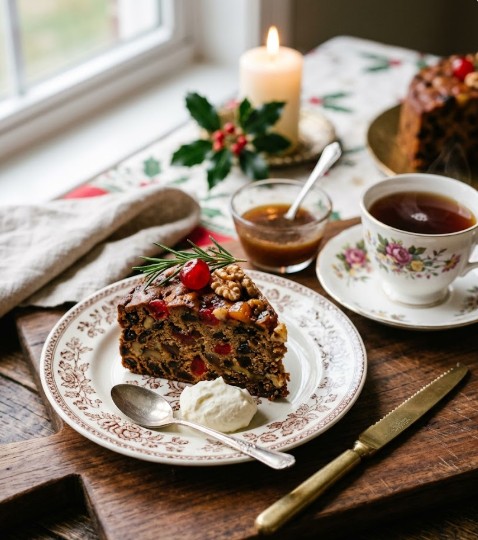
1. Tea or Coffee: a Classic Match
I serve thin slices with a strong black tea or hot coffee.
The warm, slightly bitter drink cuts the cake’s sweetness and lifts its spices.
Try Earl Grey, Assam, or a dark roast for best balance.
2. A Light Dollop: Whipped Cream or Mascarpone
I add a small spoonful of lightly whipped cream or mascarpone beside each slice.
This creamy touch smooths the dense fruit and nut textures and adds a mild tang.
Keep the cream unsweetened or only lightly sweetened so it doesn’t overpower the cake.
3. Boozy Toppers: Brandy Butter or Rum Sauce
I serve warm rum sauce or brandy butter when I want to heighten the boozy notes.
Heat the sauce slightly and spoon it over a slice, or place a pat of brandy butter on top to melt.
Both options deepen the alcoholic flavors and add a glossy, rich finish.
4. How to Slice and What Temperature to Serve
I cut the cake into thin wedges with a serrated knife to avoid crumbling.
I let slices come to room temperature for about 20 minutes if they were chilled.
Serving warm or at room temp unlocks aroma and softens the crumb for better texture.
5. Presentation Ideas for Holidays and Gatherings
I arrange slices on a wooden board or fine china for different vibes.
Use toasted nuts, a few glace cherries, or a sprig of rosemary to garnish.
Small labels — e.g., “rum-soaked” or “slice warmed” — help guests choose.
Bold serving plan (quick reference)
- Beverage: strong tea or coffee
- Cream: whipped or mascarpone, lightly sweetened
- Sauce: warm rum or softened brandy butter
- Slice: thin, serrated knife; room temp for 20 min
- Garnish: toasted nuts, glace cherries, rosemary sprig
Final Thoughts
I enjoy how this fruitcake ties food and memory together. Making it takes focus and good ingredients, but the result rewards that effort with deep flavor and a moist crumb. I find the process calming and worth the time, whether I bake every year or try it once.
If I want a reliable holiday centerpiece, this recipe fits the bill. It brings a steady, familiar taste that guests notice and remember.
Frequently Asked Questions
What makes Collin Street-style fruitcake stand out?
I value a fruitcake that feels dense and moist without being overly sweet. This style uses a careful mix of dried fruits, nuts, and warming spices. Slow, low-temperature baking helps the cake keep moisture and develop a deep, old-fashioned flavor.
Is this fruitcake recipe good for first-time bakers?
Yes. I find the steps clear and forgiving. With basic tools and attention to time and temperature, beginners can get reliable results.
Which ingredients matter most in this fruitcake?
Key items are unsalted butter, brown sugar, eggs, mixed dried fruits, and a variety of nuts. Small amounts of molasses or treacle and warm spices add depth. I often include a splash of brandy or dark rum if I plan to soak the cake.
How long should I bake the cake for best texture?
I bake this cake low and slow at about 275°F (135°C). Expect roughly 2½ to 3 hours, though ovens vary. The center should feel set and a skewer should come out with few moist crumbs.
Do I have to soak the cake in alcohol?
Soaking is optional but worthwhile. I usually brush or soak the cooled cake with brandy or rum to boost moisture and flavor. It’s fine to skip alcohol and use fruit juice for a similar effect.
What tools should I have on hand?
Use an 8-inch round pan, mixing bowls, a whisk or electric mixer, measuring cups and spoons, rubber spatula, and a sifter. A cooling rack and foil sheets help with finishing. A kitchen scale is useful for accuracy.
How should I treat the dried fruits and nuts before mixing?
I soak fruit and nuts in brandy or rum for at least 24 hours, up to a week when possible. That plumps the fruit and gives deeper flavor and moisture to the cake.
Can I make the batter ahead of time?
Yes. I often make the batter the day before and refrigerate it overnight. Chilling helps the flavors meld and can improve texture.
What’s the best way to store the fruitcake after baking?
After cooling, I wrap the cake tightly and store it in a cool, dark place. Letting it rest for at least two weeks lets flavors mellow. Periodically brushing with alcohol during storage adds richness.
How do I serve this fruitcake for best results?
I slice it thin and serve at room temperature with strong tea or coffee. I also enjoy small amounts of lightly whipped cream, mascarpone, brandy butter, or warm rum sauce on the side.
FAQs
Q1: What makes my version of the Collin Street Bakery fruitcake dense and moist?
I pack the cake with plenty of chopped fruits and pecans and use a rich batter with eggs and butter. A higher fruit-to-batter ratio and a bit of honey or brown sugar help keep the cake moist. Gentle mixing and a low, slow bake prevent the cake from drying out.
Q2: Is it safe to soak the fruit in alcohol before baking?
Yes. I often macerate dried and candied fruit in rum, brandy, or a nonalcoholic juice to boost flavor and shelf life. Keep fruit refrigerated while soaking and use clean glass containers. If you need an alcohol-free option, use orange juice, apple cider, or strong brewed tea instead.
Q3: How long will the fruitcake keep, and how should I store it?
When wrapped tightly in plastic and stored in an airtight tin or container, a well-made fruitcake can stay good for several weeks at room temperature. Refrigeration extends freshness for a few months. For very long storage, I wrap the cake in cheesecloth soaked in liquor, then foil, and freeze—it can last many months that way.
Q4: How do I make a fruitcake that tastes like the original Collin Street Bakery style?
I focus on three things: Texas-style pecans, pineapple, and red cherries mixed into a honey- or brown sugar–sweetened batter. Use high-quality pecans, well-drained candied pineapple, and firm candied cherries. Balance fruit, nuts, and spice (like cinnamon and nutmeg) rather than overloading any single element.
Q5: Can I adapt the recipe for dietary needs, such as gluten-free or nut-free?
Yes. For gluten-free, substitute a tested 1:1 gluten-free flour blend and add a binder like xanthan gum if needed. For nut-free, omit pecans and add toasted oats or seeds for texture. When changing ingredients, I adjust liquid and bake time slightly and test doneness with a skewer.
Q6: How does fruitcake compare to other holiday cakes in terms of effort and payoff?
Fruitcake requires more prep—soaking fruit, chopping nuts, and careful mixing—but it rewards with long shelf life and deep, concentrated flavors that often improve with aging. Compared with simple sponge cakes or quick breads, it takes more time but yields a dense, gift-friendly dessert.
Q7: What common mistakes should I avoid when making this fruitcake?
I avoid overmixing the batter, which can make the cake tough. I drain soaked fruit well to prevent a soggy center. I also bake slowly at a lower temperature to ensure even cooking and test with a skewer to avoid underbaking.
Conclusion
I find Collin Street Bakery–style fruitcake to be a reliable choice when I want a rich, long-lasting holiday cake. Its dense texture, mix of candied fruits, raisins, and pecans, and the option to age it with alcohol make it both flavorful and shelf-stable.
I trust recipes based on this style because they balance sweetness, spice, and nutty crunch without relying on artificial shortcuts. That balance keeps the cake safe to store when made and handled properly, and it also reduces waste by lasting through the season.
When I bake or buy a fruitcake modeled on Collin Street Bakery’s approach, I look for high-quality ingredients and clear instructions. Choosing a reputable recipe or vendor helps ensure consistent results and good value over time.
I encourage you to pick a well-tested recipe or a trusted source if you want a fruitcake that performs well, stores safely, and pleases guests. Give it a try this season and enjoy a dependable, classic holiday treat.