
Best Rice for Butter Chicken: Choosing the Ideal Grain for Creamy, Flavorful Results
I love cooking butter chicken because it tastes rich without needing a long list of ingredients. I find it easy to make and always serve it with rice, which brings out the sauce’s creamy, savory flavors.
Not all rice works the same with butter chicken, so I pick varieties that match its texture and aroma. Choosing the right rice makes the meal feel balanced and helps the sauce shine.
Key Takeaways
- Rice matters for highlighting butter chicken’s flavor.
- Some rice types pair better with the dish’s creamy sauce.
- Picking the right side transforms the overall meal.
Do You Have To Serve Rice with Butter Chicken?
I don’t think rice is required for butter chicken. I often eat it with naan, flatbread, or steamed veg instead. Choices depend on taste, not rules.
In India, basmati is the most common match, but that’s just tradition. I also use jasmine, brown rice, or even cauliflower rice when I want a change.
- Classic: basmati for aroma and fluffy grains
- Healthier: brown rice for fiber
- Low-carb: cauliflower rice or leafy greens
Mix and match to suit your meal.
Crowned Rice Variety for Butter Chicken: Basmati Rice
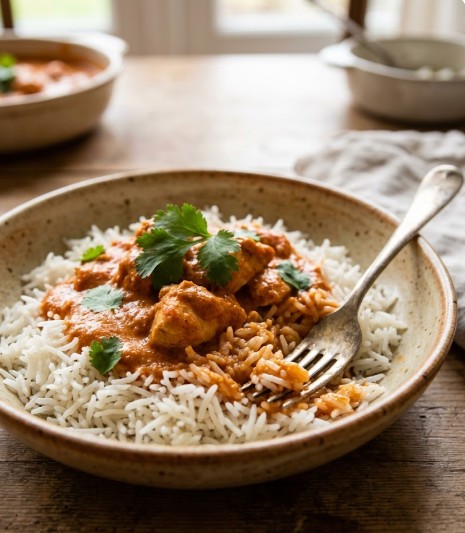
Why I Choose Basmati with Butter Chicken
I pick basmati because its long, separate grains soak up the sauce without turning mushy. The rice stays light and fluffy, so each mouthful carries the curry’s creaminess without becoming heavy.
I also like the mild, slightly nutty scent basmati gives the meal. It adds aroma that complements the spices without stealing the show.
Cooking basmati fits my routine. It cooks quickly and needs only simple steps, so I can focus on the butter chicken itself. For busy nights or when I want a reliable result, basmati delivers every time.
- Texture: grains stay distinct, offering a clean bite with sauce clinging to each grain.
- Flavor: subtle fragrance enhances the dish without overpowering it.
- Ease: straightforward cooking keeps prep fast and consistent.
I often rinse basmati to remove extra starch, then use a 1:1.5 to 1:2 rice-to-water ratio depending on the brand. That small step helps keep the grains separate and perfectly suited to soak up the rich butter chicken sauce.
Rice Alternatives for Butter Chicken
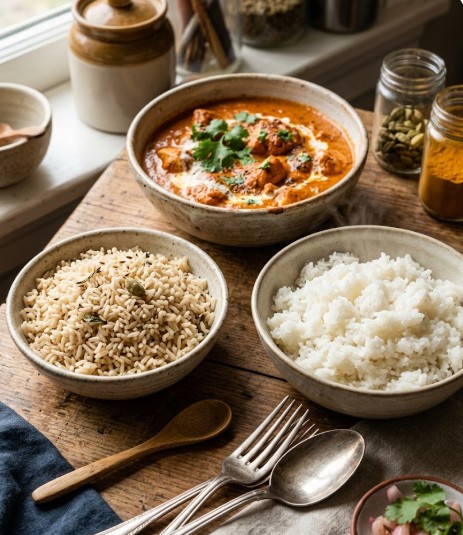
Brown Basmati Option
I often choose brown basmati when I want more fiber and a firmer bite. It soaks up the butter chicken sauce well and keeps distinct grains, which helps balance the creamy texture of the curry. Expect a chewier mouthfeel and a slightly nuttier aroma than white basmati.
Plan for a longer cook time: brown basmati can take about 40–45 minutes to finish. I start it early or put it on at the same time I begin the curry so both finish together. If you want to shorten the time, soak the rice for 30–45 minutes before cooking or use a pressure cooker.
Quick tips:
- Rinse once to remove dust.
- Use a 1:2 rice-to-water ratio for stovetop simmering.
- Let rice rest covered for 10 minutes after cooking to finish steaming.
Jasmine Rice Option
I pick jasmine rice when I want a softer, slightly floral side that still holds sauce. Jasmine cooks faster—around 15–20 minutes—and gives a tender, slightly sticky texture that clings to each spoonful of butter chicken. It won’t be as fluffy as basmati, but its aroma pairs nicely with the spices.
To reduce clumping, rinse the rice until the water runs clearer to remove excess surface starch. For best results:
- Rinse 2–3 times.
- Use about 1:1.5 rice-to-water ratio for stovetop cooking.
- Fluff gently with a fork once resting for 5–10 minutes.
All Rice to Meet Butter Chicken’s Best Partners
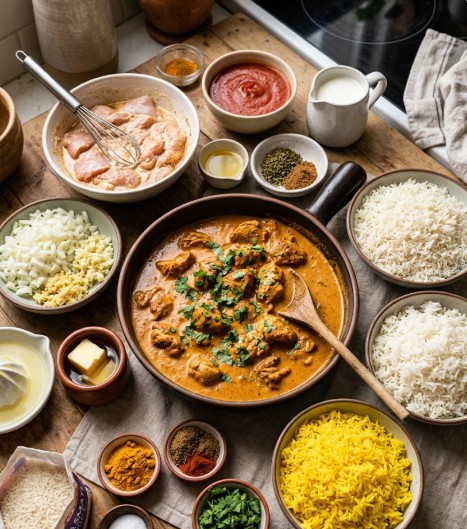
What to Gather
- Chicken: 1 lb boneless, cut into bite-sized pieces.
- Yogurt: 1/2 cup plain for a tangy marinade.
- Acid: 1 tbsp lemon juice to help tenderize.
- Spices for Marinade: 1 tsp each ground turmeric, ground cumin, ground coriander; 1/2 tsp paprika; 1/2 tsp salt.
- Oils & Fats: 1 1/2 tbsp vegetable oil and 3 tbsp butter.
- Aromatics: 1 medium onion (finely chopped), 2 garlic cloves (minced), 1 thumb-sized piece of ginger (minced).
- Tomato Base: 1 can (200 ml) tomato sauce.
- Creaminess: 1/2 cup heavy cream (add more to taste).
- Finishing Spices: 1/2 tsp garam masala; 1 tsp dried fenugreek leaves, crushed (optional).
- Garnish: Fresh cilantro, chopped.
- Rice Choices (my top picks):
- Basmati (white or brown) — fluffy, fragrant, classic match.
- Jasmine — slightly floral, soft texture.
- Saffron rice — for a richer aroma and color when I want to dress up the meal.
Bold tip: I always cook rice so each grain stays separate. That helps the sauce cling to the rice without turning it gluey.
How I Make It
- In a bowl, whisk together yogurt, lemon juice, turmeric, cumin, coriander, paprika, and salt. Toss the chicken in the mix until well coated. Cover and refrigerate at least 1 hour (overnight if possible).
- Heat 1 tablespoon oil in a large pan over medium heat. Add marinated chicken and brown on all sides. Remove and set aside.
- Add the remaining 1/2 tablespoon oil to the pan. Sauté the chopped onion until golden brown, about 6–8 minutes. Stir in garlic and ginger and cook for 1–2 minutes.
- Pour in the tomato sauce and simmer for about 10 minutes, stirring occasionally. If using fenugreek, add it now.
- Return the chicken to the pan and stir to coat thoroughly with sauce.
- Pour in heavy cream and add butter. Stir until the butter melts and the sauce turns smooth and creamy. Let simmer 4–6 minutes to blend flavors.
- Sprinkle garam masala over the curry, stir, and simmer another minute. Taste and adjust salt or cream as needed.
- Serve the butter chicken atop warm basmati or jasmine rice. Garnish with chopped cilantro.
Quick serving notes:
- For fluffy basmati, rinse rice until water runs clear and use a 1:1.5 rice-to-water ratio for stovetop cooking.
- If I want a special touch, I stir a few saffron threads into the cooking water for color and scent.
FAQs
- What rice do I recommend with butter chicken and why?
I recommend long-grain Basmati most often. It stays light and separate, so it soaks up the sauce without getting mushy. Jasmine or a well-rinsed long-grain white rice can work if you prefer a slightly stickier texture. - Is brown rice a safe and tasty option?
Yes. Brown Basmati adds nuttiness and more fiber, but it needs more water and a longer cook time. I use a bit more liquid and cook it longer, then let it rest to keep grains tender. - How can I keep rice fluffy and not clumped together?
I rinse the rice under cold water until the water runs clear to remove extra starch. I also use the correct water-to-rice ratio and let the rice rest covered for 5–10 minutes after cooking before fluffing with a fork. - Will using broth instead of water change the result?
Using low-sodium chicken broth adds flavor without overpowering the butter chicken. I cut salt in the rice recipe slightly when I use broth to avoid a salty final dish. - How does cooking method affect the rice for butter chicken?
Stove-top absorption gives consistent results for long-grain rice. A rice cooker or Instant Pot offers precise control and frees me up to focus on the curry. For stove-top, I cook on low heat and keep the lid closed while it simmers. - How do I match rice texture to different butter chicken styles?
For a rich, saucy butter chicken, I choose fluffy, separate grains like Basmati. If the curry is thinner or you want a cozier mouthfeel, I use Jasmine or slightly stickier rice. - How do I store and reheat rice safely for leftovers?
I cool rice quickly and store it in the fridge within two hours in a shallow container. To reheat, I add a splash of water and microwave or steam until hot throughout. I discard rice kept more than one day if it smells off.