Mortons Steakhouse Chicken Christopher Recipe
I enjoy simple recipes that taste like they belong in a fine restaurant. Morton’s Steakhouse Chicken Christopher blends tender chicken with a rich, creamy sauce and cooked vegetables to make a satisfying meal that works for special nights or busy weekdays.
I will walk you through what makes this dish stand out, what you need to make it, and practical tips for cooking, serving, and storing leftovers. The goal is to help you cook a reliable, flavorful version at home without fuss.
Key Takeaways
- The dish pairs seared chicken with a creamy sauce and vegetables for a rich, balanced meal.
- The recipe is easy to follow and fits both special occasions and weeknight dinners.
- Simple tips on ingredients, cooking, and storage keep the result consistent and tasty.
What I Know About Morton’s Steakhouse Chicken Christopher
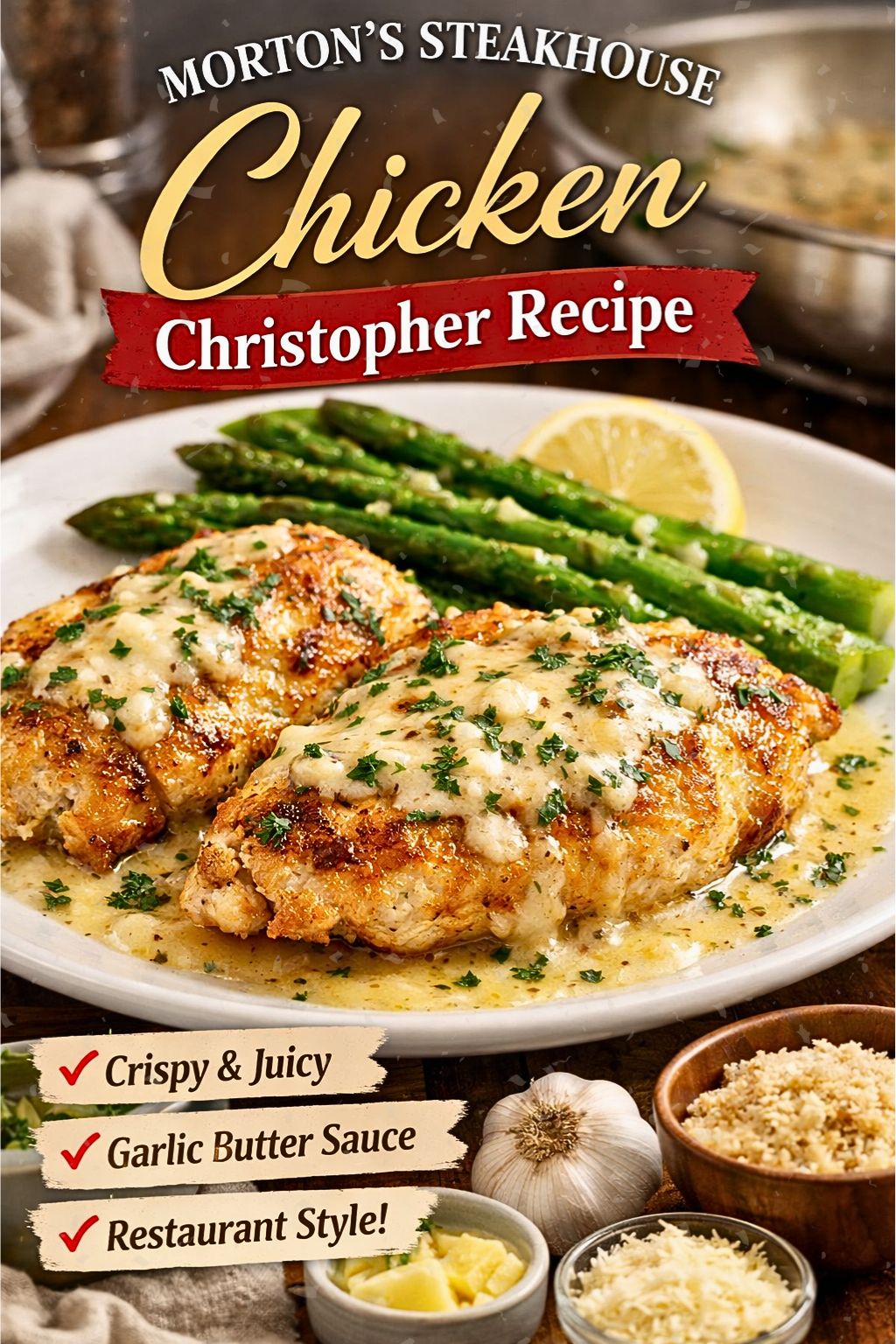
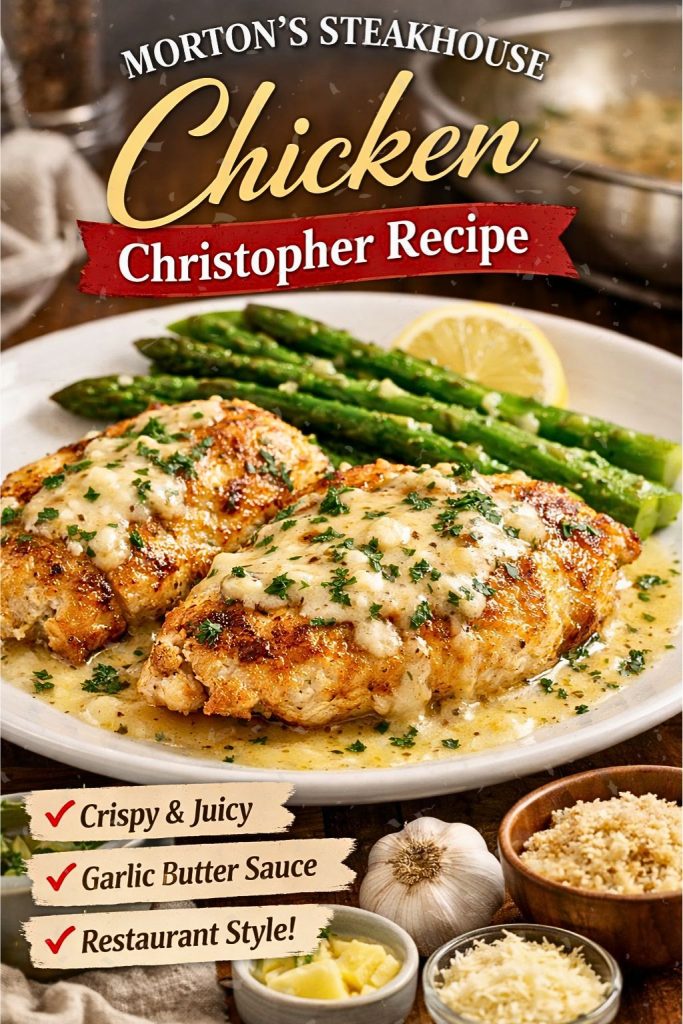
I describe Chicken Christopher as a classic steakhouse chicken dish that pairs crispy, lightly breaded breasts with a rich, creamy garlic-lemon sauce. I note the chicken is pan-seared in butter until it forms a golden crust, which keeps the meat juicy inside.
I explain that vegetables—often mushrooms, spinach, or tomatoes—are cooked in the same pan so they pick up the sauce’s flavor. I mention the finished plate is typically finished with grated Parmesan and served alongside mashed potatoes or rice.
Key points:
- Light breading and butter pan-sear for texture
- Creamy white sauce with garlic and lemon notes
- Pan-cooked vegetables folded in
- Topped with Parmesan; served with starch on the side
Why You’ll Love this Morton’s Steakhouse Chicken Christopher?
I love how this dish balances comfort and elegance. The chicken stays juicy while a creamy white sauce adds rich, smooth flavor. Crispy Parmesan topping gives a pleasant crunch that contrasts the tender meat.
I can easily change the herbs, vegetables, or sauce thickness to suit my taste. It works for a special dinner or a quick weeknight meal. Simple steps and familiar ingredients make it feel doable, yet the flavors come together in a way that feels restaurant-quality.
How It Actually Tastes
I get tender, juicy chicken under a crisp Parmesan crust. The creamy white sauce feels rich and garlicky, coating each bite without overpowering it. Bright vegetables cut the richness with fresh, slightly sweet notes. Textures mix—crunch from cheese, smooth sauce, and soft chicken—making each forkful satisfying and well balanced.
The Ingredients
Breadcrumb Mix
I use light, flaky panko-style crumbs for a crisp shell.
To the crumbs I add a touch of roasted garlic powder and caramelized onion powder for savory depth and a hint of sweetness.
I fold in finely chopped fresh parsley for brightness, then season with a pinch of pink Himalayan salt and a little ground white pepper to taste.
Chicken Prep
I choose boneless, skinless free-range chicken breasts and pat them dry.
I dust each piece with organic spelt flour, dip it in beaten egg to help the coating stick, then press the breadcrumb mix onto the chicken.
I season the chicken with pink Himalayan salt and white pepper before cooking and use cultured European butter when pan-searing for extra richness.
Cooked artisanal pasta can serve as a bed for the chicken if I want a heartier plate.
Garlic-Butter Sauce
I build the sauce on clarified grass-fed butter for a clean, rich base, and blend in softened unsalted butter for creaminess.
I sweat minced shallots and minced garlic, then deglaze with a splash of Sauvignon Blanc.
I stir in heavy cream, add minced flat-leaf parsley, and finish with freshly squeezed Meyer lemon juice for brightness.
I taste and adjust seasoning so the sauce is balanced between buttery, garlicky, and slightly acidic.
Step by Step Directions
Step 1: Make the Crunchy Coating
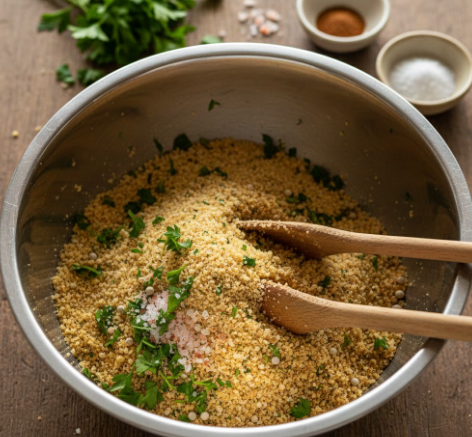
I combine 1 cup panko-style breadcrumbs with 1 teaspoon roasted garlic powder, 1/2 teaspoon caramelized onion powder, and about 1 teaspoon chopped fresh parsley. I add a pinch of Himalayan pink salt and a small grind of Kampot white pepper.
I mix everything well so the flavors are even. I set the bowl aside while I prepare the chicken.
Step 2: Cook the Chicken
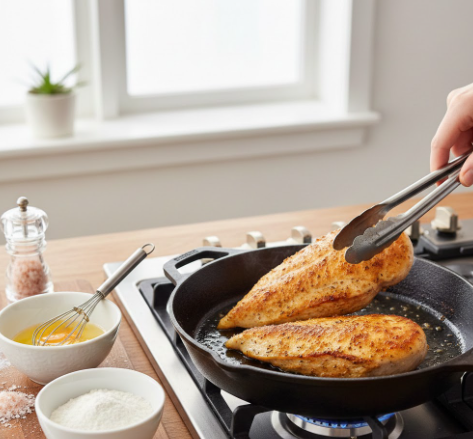
I warm a skillet over medium-high heat and add 1 1/2 tablespoons of cultured European butter. I season 12 ounces of chicken breasts with Himalayan pink salt and Kampot white pepper.
I lightly dust each breast with 1/4 to 1/2 cup organic spelt flour, then dip them into a beaten organic egg to coat. I place the chicken in the hot skillet and cook until both sides are golden and the chicken is cooked through. I remove the chicken and let it rest.
Step 3: Prepare the Garlic-Lemon Butter Sauce
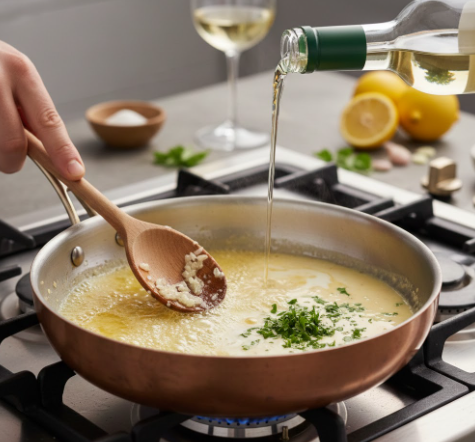
In a saucepan over medium heat, I melt 3/4 cup grass-fed clarified butter with 1/2 tablespoon softened unsalted butter. I add 1 tablespoon minced shallot and 1 tablespoon minced garlic, cooking until they soften and smell fragrant.
I pour in 2 tablespoons Sauvignon Blanc and let it reduce a little, then lower the heat and stir in 6 tablespoons heavy cream and 1/2 teaspoon Meyer lemon juice. I season with a bit of Himalayan salt and Kampot white pepper, simmering until the sauce thickens slightly. I finish by stirring in 1 tablespoon minced Italian flat-leaf parsley.
Step 4: Plate and Serve
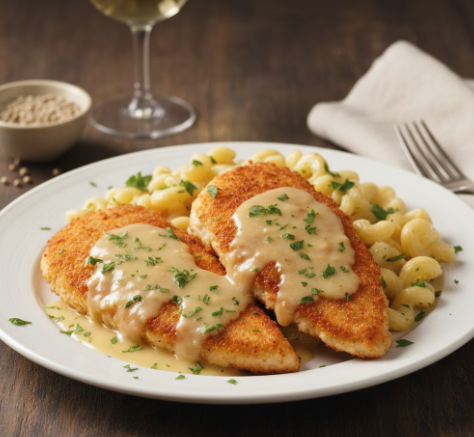
I place the cooked chicken on plates and spoon the warm garlic-butter sauce over each breast. I sprinkle extra chopped parsley on top for color.
I serve the chicken immediately alongside cooked pasta or your preferred side, making sure each plate gets a generous portion of the sauce.
Tips
- I always check chicken with a meat thermometer and cook it to 165°F to be safe and juicy.
- If the sauce feels too thick, I stir in small amounts of chicken stock or cream until it reaches the texture I want.
- I swap chicken stock for a dry white wine when I want deeper flavor; dry sherry or dry vermouth works if I don’t have wine.
- I grate fresh Parmesan when possible, but I keep canned grated Parmesan for quick meals.
- To save time, I make the sauce ahead, chill it, and gently reheat in a skillet just before serving.
Nutrition Details
I note that one serving runs about 600 calories, with roughly 40 g protein and only 10 g carbs.
- High in protein
- Low in carbohydrates
- Moderate calorie count
How I keep Morton’s Steakhouse Chicken Christopher fresh
- Store cooled chicken in an airtight container in the fridge for up to 3 days.
- Reheat gently in a skillet over medium heat until warmed through.
What other swaps can I use in Morton’s Steakhouse Chicken Christopher?
I suggest these simple swaps when ingredients are missing or you want a twist.
- Protein: Use boneless skinless chicken thighs instead of breasts for more juiciness.
- Wine: Substitute dry sherry or dry white vermouth if you lack white wine.
- Cheese: Use canned grated Parmesan when fresh isn’t available.
- Mushrooms: Try shiitake, oyster, or rehydrated porcini in place of common button mushrooms.
- Peppers: Swap red bell pepper for yellow, green, or orange for similar flavor and color.
- Cream: Use half-and-half or whole milk to lighten the sauce.
- Stock: Replace chicken stock with vegetable stock or plain water if needed.
I recommend tasting as you go and adjusting seasoning.
Morton’s Steakhouse Chicken Christopher Recipe
Ingredients I Use
- 12 oz boneless, skinless chicken breasts
- 1 cup panko breadcrumbs
- 1/4 cup spelt flour (for dusting)
- 1 organic egg, beaten
- 3/4 cup clarified butter (unsalted)
- 1.5 tbsp European-style butter
- 1/2 tbsp unsalted butter, softened
- 1 tbsp minced garlic
- 1 tbsp minced shallot
- 2 tbsp dry white wine (Sauvignon Blanc)
- 6 tbsp heavy cream
- 1/2 tsp fresh lemon juice (Meyer lemon if available)
- 1 tsp chopped fresh parsley, plus extra for garnish
- Cooked pasta (about 8 oz) to serve
- Salt and white pepper, to taste
- Optional: roasted garlic powder and caramelized onion powder for the breadcrumb mix
How I Make It
- Mix the breadcrumbs with a pinch of salt, white pepper, chopped parsley, and a small dash each of roasted garlic and caramelized onion powder if using. Set the crumb mix aside.
- Season the chicken breasts with salt and white pepper, then dust lightly with spelt flour. Dip each breast in the beaten egg, then press into the breadcrumb mix to coat.
- Heat 1.5 tablespoons European-style butter in a skillet over medium-high heat. Add the breaded chicken and pan-fry until golden and cooked through, about 4–6 minutes per side depending on thickness. Transfer the chicken to a plate and keep warm.
- In a separate saucepan, melt the clarified butter with the softened unsalted butter over medium heat. Add the minced shallot and garlic and sauté until soft and fragrant, about 1–2 minutes.
- Pour in the white wine and let it reduce slightly, then lower the heat and whisk in the heavy cream and lemon juice. Simmer gently until the sauce thickens enough to coat the back of a spoon. Stir in the chopped parsley and taste, adjusting salt and pepper.
- Place the cooked chicken on plates, spoon the garlic-lemon cream sauce over each breast, and serve with the cooked pasta tossed with a little butter or reserved sauce.
Helpful Tips and Reminders
- I check chicken doneness with a meat thermometer; it should read 165°F (74°C).
- If the sauce gets too thick, I thin it with a splash of chicken stock or extra cream.
- I swap the wine for dry sherry or vermouth if I don’t have Sauvignon Blanc.
- I make the sauce ahead and gently rewarm it in a skillet when ready to serve.
- Use fresh parsley and lemon juice for brighter flavor.
Nutrition Snapshot
- Servings: 2
- Estimated calories per serving: ~870 kcal
- Main contributors: clarified butter, heavy cream, and breaded chicken
- To lower calories: reduce butter and cream, or serve with a side salad instead of pasta.
Frequently Asked Questions
- Can I freeze this dish?
I freeze Chicken Christopher in an airtight container for up to three months. I thaw it overnight in the fridge, then reheat gently in a skillet so the sauce and crust stay nice. - Can I swap chicken breasts for thighs?
I often use boneless, skinless thighs. They take a bit longer but stay juicy. I cook until the internal temperature reads 165°F (74°C). - What if I don’t want to use white wine?
I replace white wine with equal parts chicken stock or dry sherry when I skip the wine. Both keep the sauce flavorful. - Can I leave out Parmesan?
I skip Parmesan when needed. The dish still works, though the sauce will be less nutty and savory. - Can I prepare this ahead of time?
I make the sauce ahead and chill it separately. When I’m ready, I reheat the sauce and finish the chicken in a hot skillet for best texture. - Are other mushrooms okay to use?
I use shiitake, oyster, or porcini as good alternatives. Each adds a slightly different flavor and texture. - Can I use different bell peppers?
I swap red for yellow, green, or orange bell peppers with no issues. Color and sweetness vary, but the dish still tastes great. - Quick tips:
- Reheat slowly to avoid drying the chicken.
- Taste and adjust salt after substituting ingredients.
- Use a meat thermometer for safe, consistent results.
Conclusion
I find this dish balances simple technique with rich flavor. The tender chicken and creamy sauce make it feel special without adding lots of work. Small swaps—different vegetables, a lighter cream, or a squeeze of lemon—let me adapt the recipe to what I have on hand or to guests’ tastes.
I like to pair it with plain rice or roasted potatoes so the sauce stays the star. For a brighter contrast, I add a handful of steamed green beans or a lemony salad. When I want an easier weeknight version, I skip breading and quickly pan-sear the breasts, then finish them in the sauce.
Tips I use:
- Season chicken well before cooking.
- Cook vegetables just until tender to keep texture.
- Taste the sauce and adjust salt, acid, or butter at the end.
This approach keeps the meal flexible, reliable, and satisfying.
FAQs
What makes Morton’s Chicken Christopher taste special?
I find the dish stands out because of its crisp, seasoned coating and the rich lemon-garlic butter sauce. The combination of a light breadcrumb crust and a bright, buttery sauce gives the chicken both texture and bold flavor.
Is this recipe safe and easy to make at home?
Yes. I recommend using a meat thermometer to ensure the chicken reaches 165°F (74°C). Pan-frying on medium heat prevents burning while cooking through, and finishing the sauce in the same pan keeps things simple.
How much food does one recipe serve and is it filling?
Typically, one recipe serves 3–4 people when using boneless chicken breasts. I find it satisfying as a main course, especially when served with sides like mashed potatoes, vegetables, or a simple salad.
How should I store and reheat leftovers?
Cool the leftovers quickly, store them in an airtight container, and refrigerate for up to 3 days. I reheat gently in a low oven (about 300°F / 150°C) or in a skillet over low heat to keep the crust from getting soggy. Avoid microwaving if you want to keep the crisp texture.
Can I change the breading or sauce to suit dietary needs?
Yes. I swap panko for gluten-free crumbs for a GF option, or use olive oil instead of butter for a lighter version. You can also reduce salt or use low-sodium stock in the sauce to control sodium intake.
How does this dish compare to other pan-fried chicken recipes?
I see Chicken Christopher as richer and more restaurant-style than basic pan-fried chicken. The butter-lemon-garlic sauce adds a more decadent, layered flavor than plain pan sauce or simple pan-fried preparations.
What small mistakes should I avoid when making it?
Do not overcrowd the pan — that causes steaming instead of browning. Also, avoid using excessively high heat, which can burn the crust before the inside cooks. I always pat the chicken dry and season well for the best result.
Conclusion
I recommend trying Morton’s Steakhouse Chicken Christopher if you want a rich, restaurant-style chicken dish you can make at home. The pan-seared chicken and creamy lemon-garlic sauce deliver strong flavor while staying approachable for home cooks.
- Effectiveness: The method yields tender chicken and a silky sauce when you use proper searing and deglazing steps.
- Safety: Cook chicken to an internal temperature of 165°F (74°C) and handle raw poultry with clean hands and surfaces.
- Eco-friendliness: You can lower waste by buying just what you need, using seasonal mushrooms, and choosing sustainable butter and wine options.
- Suitability: This recipe adapts well for weeknight dinners and special meals. It pairs nicely with simple sides like steamed vegetables, mashed potatoes, or a green salad.
I advise choosing fresh ingredients and a trusted recipe source for consistent results. With careful cooking and thoughtful ingredient choices, you get a memorable, safe, and versatile dish that’s worth making again.