
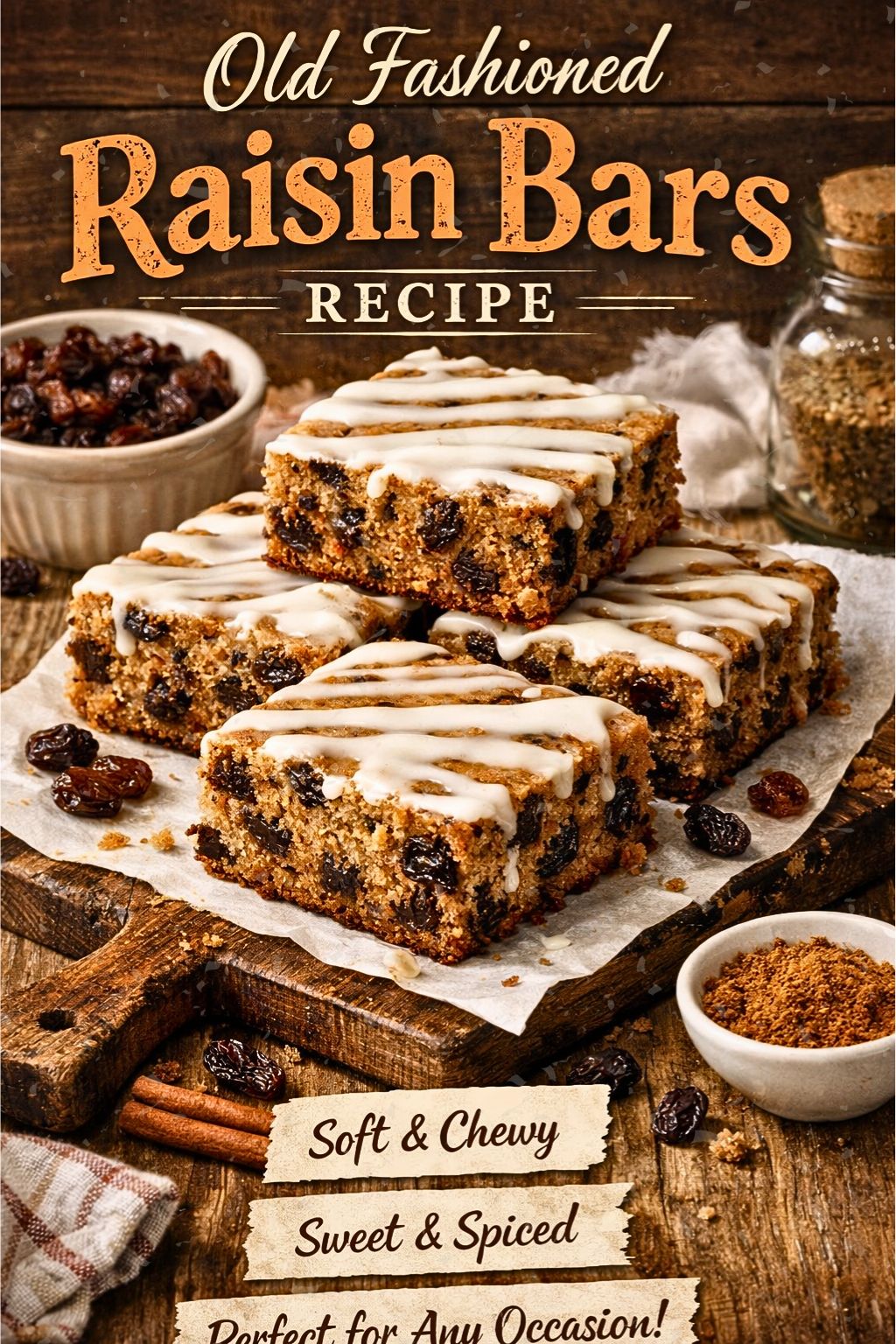
Old Fashioned Raisin Bars Recipe
The smell of cinnamon and warm spices led me straight to a pan of old fashioned raisin bars in my grandmother’s kitchen. I watched the soft, golden squares and realized these simple treats carry more than flavor — they hold family memories and a baking style passed down over time.
I will explain where these bars come from, how they taste, and why this recipe keeps working. I will also cover practical details like ingredients, steps, storage, and small swaps that make the recipe easy to use at home.

Key Takeaways
- Old fashioned raisin bars are a simple, spiced baked treat with nostalgic roots.
- The recipe balances a tender crust, a sweet raisin filling, and warm spices for classic flavor.
- Clear steps and easy ingredient swaps make these bars practical to bake and store.
What I Mean by Old-Fashioned Raisin Bars
I make dense, chewy bars with a tender shortbread-like crust and a spiced raisin filling. The fruit adds sticky sweetness while cinnamon and warm spices give depth. I often bake them in a 9×13 pan, cut into squares, and dust or glaze the top. They feel simple, homey, and like a recipe handed down through families.
What It Tastes Like
I taste sweet, plump raisins first, soft and slightly tangy. Warm spices—cinnamon, a hint of clove, and a touch of allspice—follow and give the bite a cozy depth. The crust is buttery and tender, balancing the fruit and spice. Texture shifts between chewy raisin pieces and soft cake-like crumb, making each mouthful rich but not heavy.
Why This Recipe Works?
I soak the raisins in warm water to make the bars moist and chewy. That simple step keeps the fruit plump so the bars stay tender instead of dry or crumbly.
I use a small mix of warm spices—cinnamon, allspice, and cloves—to lift the flavor without masking the raisins. The spices add depth and a cozy aroma while letting the fruit remain the star.
I balance granulated sugar with the raisins’ natural sweetness to avoid an overly sweet bar. This gives a pleasant, even flavor that both kids and adults will enjoy.
I finish with a light vanilla glaze made from melted butter and confectioners’ sugar when I want a touch of elegance. You can spread it smoothly for a clean look or drizzle it for a rustic finish.
Key points at a glance:
- Soaked raisins = moist, chewy texture
- Warm spices = layered, balanced flavor
- Sugar + raisins = controlled sweetness
- Simple glaze = easy, customizable topping
Ingredients for Old Fashioned Raisin Bars:
I list the ingredients I use to make classic raisin bars, with notes on why each item matters and simple options you can swap.
- All-purpose flour — 2 cups
I use it as the base to give the bars structure and a tender crumb. - Baking soda — 1 teaspoon
I add this to give a light lift and keep the texture soft. - Salt — 1/2 teaspoon
I use regular salt or a pinch of pink Himalayan for a subtle mineral note that balances sweetness. - Ground cinnamon — 1 teaspoon
I choose fresh cinnamon for warm, spicy flavor that pairs well with raisins. - Ground cloves — 1/4 teaspoon
I include a small amount for depth and a warm, aromatic edge. - Raisins — 2 cups
I use plump raisins for chewy, natural sweetness and moisture in every bite. - Water — 1/2 cup
I simmer the raisins in water to plump them and to create the right batter consistency. - Butter — 1/2 cup (1 stick), melted
I use real butter for richness and a tender crust. - Sugar — 1 cup
I use cane or organic sugar for balanced sweetness; you can use slightly less if you prefer. - Egg — 1 large, beaten
I add one egg to bind the mixture and provide moisture. - Nuts (optional) — 1/2 cup, chopped
I like pecans, walnuts, or almonds for crunch and a toasty flavor; they’re optional but add good texture. - Glaze (optional)
- Melted butter — 2 tablespoons
- Vanilla extract — 1 teaspoon
- Confectioners’ sugar — 1 cup
- Creamy almond milk — 1–2 tablespoons to thin
I stir these into a smooth glaze for a sweet, creamy finish. Maple extract can replace vanilla for a hint of maple flavor.
Quick tips: toast the nuts lightly for more flavor, and soak the raisins briefly in hot water to keep them soft while baking. Adjust spice levels to suit your taste.
Step by Step Instructions:
Step 1: Soften and Sweeten the Raisins

I place the raisins and water in a small saucepan and bring them to a gentle boil over medium heat. I lower the heat and simmer for about five minutes so the raisins swell and become tender. I remove the pan from heat and let the mixture cool to lukewarm before using it in the dough.
Step 2: Create the Dough Base

I cream shortening and sugar together until light and fluffy, then beat in the egg. I whisk flour, baking soda, salt, cinnamon, allspice, nutmeg, and cloves in a separate bowl. I add the dry mix slowly to the creamed mixture until a soft dough forms. I fold in chopped nuts and the cooled raisin mix, stirring until evenly combined.
Step 3: Press and Bake the Bars
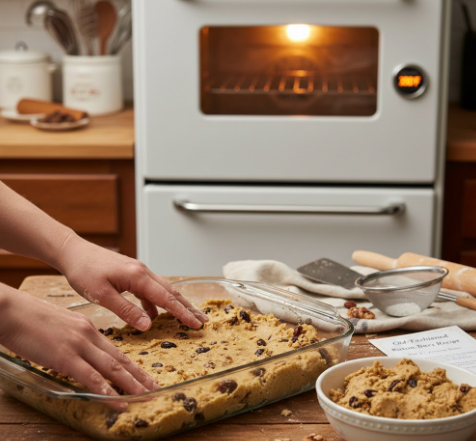
I preheat the oven to 350°F (175°C) and grease a 9×13-inch pan. I press the dough evenly into the pan so the thickness is uniform. I bake the bars for 20–25 minutes, watching for lightly golden edges and a firm center. I remove the pan and let the bars cool briefly before glazing.
Step 4: Make and Add the Glaze

I mix melted butter, powdered sugar, and vanilla, adding milk little by little until the glaze reaches a spreadable or drizzling texture. I let the bars cool fully so the topping won’t run. I either spread the glaze with a spatula or drizzle it, then allow it to set before cutting into bars.
Notes:
- I soak the raisins until they swell and taste juicy; this keeps the filling moist.
- I spread the batter evenly so each bar bakes the same.
- I let the bars cool fully before I add any glaze or frosting to avoid melting.
- I swap nuts like pecans or walnuts to change the texture and flavor.
- I adjust milk in the glaze: less for thick, more for a thin drizzle.
Nutrition Information:
I list the typical values per serving in a simple table for quick reference.
| Nutrient | Amount |
|---|---|
| Calories | 225 |
| Fat | 16 g |
| Carbohydrates | 38 g |
| Fiber | 2 g |
| Protein | 5 g |
How I Keep Leftovers Fresh
I let the bars cool completely, then slice them into servings. I store pieces in an airtight container.
- Room temperature: 2–3 days.
- Refrigerator: longer life, up to about a week.
I warm bars briefly before serving to bring back their best flavor.
Sides for Old-Fashioned Raisin Bars:
I like to serve raisin bars with a scoop of vanilla ice cream to add creaminess and a cool contrast.
A spoonful of whipped cream lightens each bite and keeps the dessert from feeling too dense.
Fresh berries on the side give a tart, fresh note that balances the bars’ sweetness.
I also offer hot coffee or tea — their warmth and bitterness cut through the richness and round out the plate.
Alternative Choices to the Ingredients:
Tools and gear I recommend
- Baking pan: I use a 9×13-inch pan. A slightly smaller pan makes thicker bars; a larger pan makes thinner bars.
- Liner options: I line the pan with parchment or lightly grease it so bars release easily.
- Small pot and bowl: I simmer dried fruit in a small saucepan and cool it in a bowl.
- Mixing tools: I alternate between a whisk, wooden spoon, or electric mixer depending on dough stiffness.
- Cooling and cutting: I cool bars on a wire rack and slice them with a sharp knife or bench scraper.
- Optional: I sometimes soak fruit in a shallow dish if I don’t want to heat it.
Swaps for the recipe components
- Flour: I swap all-purpose flour for whole wheat for more fiber and a nutty taste. Use a 1:1 replacement but expect a denser texture.
- Sugar: I choose brown sugar instead of white to add a mild molasses note and deeper color.
- Fat: I replace shortening with coconut oil for a cleaner ingredient list and a slight coconut hint. Use the same volume and chill slightly if needed.
- Fruit: I trade raisins for dried cranberries when I want a tangier bite. Other options: chopped dates or chopped dried apricots for different textures.
- Nuts: I switch between pecans and walnuts freely. Toasting them briefly brings out more flavor.
- Egg: For an egg-free version, I use a commercial egg replacer or a flax “egg” (1 tbsp ground flax + 3 tbsp water, rest 10 minutes).
- Liquid for fruit: I sometimes soak dried fruit in warm apple juice or brewed tea instead of plain water to add subtle flavor.
Changes I make to the method
- Fruit prep: I simmer raisins in hot liquid for 3–6 minutes until plump, then cool. Or I soak them at room temperature for 30–60 minutes if I want a no-cook option.
- Mixing: I cream fat and sugar until light, then add the egg. If I use oil, I mix it with sugar and egg to incorporate fully.
- Dry ingredients: I whisk spices, salt, and leavening into the flour before combining to avoid clumps.
- Layering: I press half the dough, spread the filling, then top with remaining dough for a more layered bar. Alternatively, I fold the filling into the dough for an even distribution.
- Baking time: I set the oven to 350°F (175°C). I start checking at 18 minutes; edges should be lightly golden. Thicker pans need more time.
- Cooling and glazing: I let bars cool fully before glazing. For a thicker glaze I use less milk; for a thin drizzle I add more milk. I melt butter first and mix with powdered sugar and vanilla, then add milk a teaspoon at a time.
Extra tips and reminders
- Texture control: Using whole wheat or extra liquid changes density. I add a tablespoon of milk or water if dough feels too dry.
- Flavor balance: Brown sugar and warm spices (cinnamon, nutmeg, cloves, allspice) pair well with tart dried fruit. Adjust spices to taste.
- Storage: I keep bars in an airtight container at room temperature for 2–3 days or freeze for longer storage.
- Portioning: I chill slightly before cutting to get cleaner slices.
- Customizing: I add a pinch of salt to the glaze to balance sweetness, or sprinkle chopped toasted nuts on top for crunch.
Frequently Asked Questions (FAQs):
1. What other dried fruit can I try instead of raisins?
I often swap raisins for dried cherries, apricots, or currants. These fruits change the flavor and texture but still work well in the bars. Chop larger fruits small so they distribute evenly.
2. Do I have to include nuts?
I skip nuts when serving people with allergies or when I want a softer bite. The bars remain tasty without them. If you want crunch, toast seeds or use chopped pretzel pieces.
3. How do I freeze these bars?
I freeze cooled bars in airtight containers or freezer bags for up to 2–3 months. I wrap pieces individually in plastic first to keep them from sticking. Thaw in the fridge or at room temperature before serving.
4. Can I swap margarine for shortening?
I can use margarine, but it changes texture and flavor. Shortening gives a flakier, more tender result; margarine may make the bars slightly softer and less crisp.
Final Thoughts:
I find old-fashioned raisin bars comforting and simple. Their soft texture, warm spices, and gentle sweetness make them easy to enjoy any time. They don’t need fancy ingredients, yet they feel special when shared with family or guests.
I like how they pair with coffee or tea for a quiet morning or a casual gathering. The mix of oats, raisins, and cinnamon gives a familiar taste that many people remember from childhood. They also travel well and keep their texture for a day or two, which makes them handy for potlucks.
Try small tweaks to fit your taste: add chopped nuts for crunch, use orange zest for brightness, or stir in a splash of vanilla for depth. You can bake them in a single pan for bars or press the same mixture into cookie shapes. Warm them slightly before serving to bring out the spice and chewy texture.
If you want a quick reference:
- Key flavors: cinnamon, raisins, brown sugar
- Texture: moist, chewy
- Good with: coffee, tea, or milk
I recommend making a batch and sharing them to see how simple ingredients make a memorable treat.
FAQs
- What makes my old‑fashioned raisin bars different from other bar cookies?
I use a spiced, cake‑like batter with a buttery base and a sweet raisin filling. That contrast of soft bar and chewy raisins gives a classic, homey texture that many boxed or modern bars don’t match. - Are raisin bars safe for people with common food sensitivities?
I can adapt the recipe. For gluten sensitivity, I swap in a tested gluten‑free flour blend. For dairy intolerance, I use dairy-free butter and yogurt substitutes. Always check labels and test small batches if allergy risk is high. - How long do the raisin bars stay fresh and how should I store them?
I store bars in an airtight container at room temperature for up to 3 days. Refrigerate to extend freshness to about a week. For longer storage, freeze individual slices wrapped tightly for up to 3 months. - What maintenance steps keep the bars moist and flavorful?
I brush or drizzle a little warm syrup or jam on cut surfaces before storing if bars feel dry. Also, let them cool completely on a rack to avoid trapped steam, which can make the crust soggy. - How effective is adding a glaze or frosting to raisin bars?
A thin glaze brightens flavor and adds moisture without hiding the spice and raisin texture. I prefer a light cream cheese or maple glaze for balance; heavy frostings can overwhelm the mild spice profile. - How do these raisin bars compare with other dessert bars like oatmeal or fruit bars?
I find raisin bars are lighter and spicier than dense oatmeal bars and less tart than fresh fruit bars. They work well as a snack or dessert when you want a mildly sweet, chewy option rather than a very rich treat. - Can I change the filling or spices without losing the “old‑fashioned” character?
Yes. I swap some raisins for currants, chopped dates, or mild dried fruit and keep warm spices like cinnamon and a hint of clove or nutmeg. Small changes preserve the nostalgic feel while adding new flavor.
Conclusion
I recommend old-fashioned raisin bars as a dependable, easy treat that delivers consistent flavor and texture. They use simple, pantry-friendly ingredients and a straightforward method, so they work well for both everyday snacks and special occasions.
- Effectiveness: These bars give a chewy, spiced filling with a buttery oat crust that holds up during baking and transport.
- Safety: The recipe relies on common baking steps (properly softened butter, fully cooked filling) that keep the bars safe to eat when followed.
- Eco-friendliness: Using shelf-stable ingredients like oats, flour, and raisins reduces waste and the need for frequent refrigerated transport.
- Suitability: They suit many diets with minor swaps (gluten-free flour, dairy-free butter) and store well for several days, making them practical for busy cooks.
I encourage you to pick a trusted recipe and make small ingredient choices that match your needs. Try a batch soon — these bars are reliable, adaptable, and satisfying.