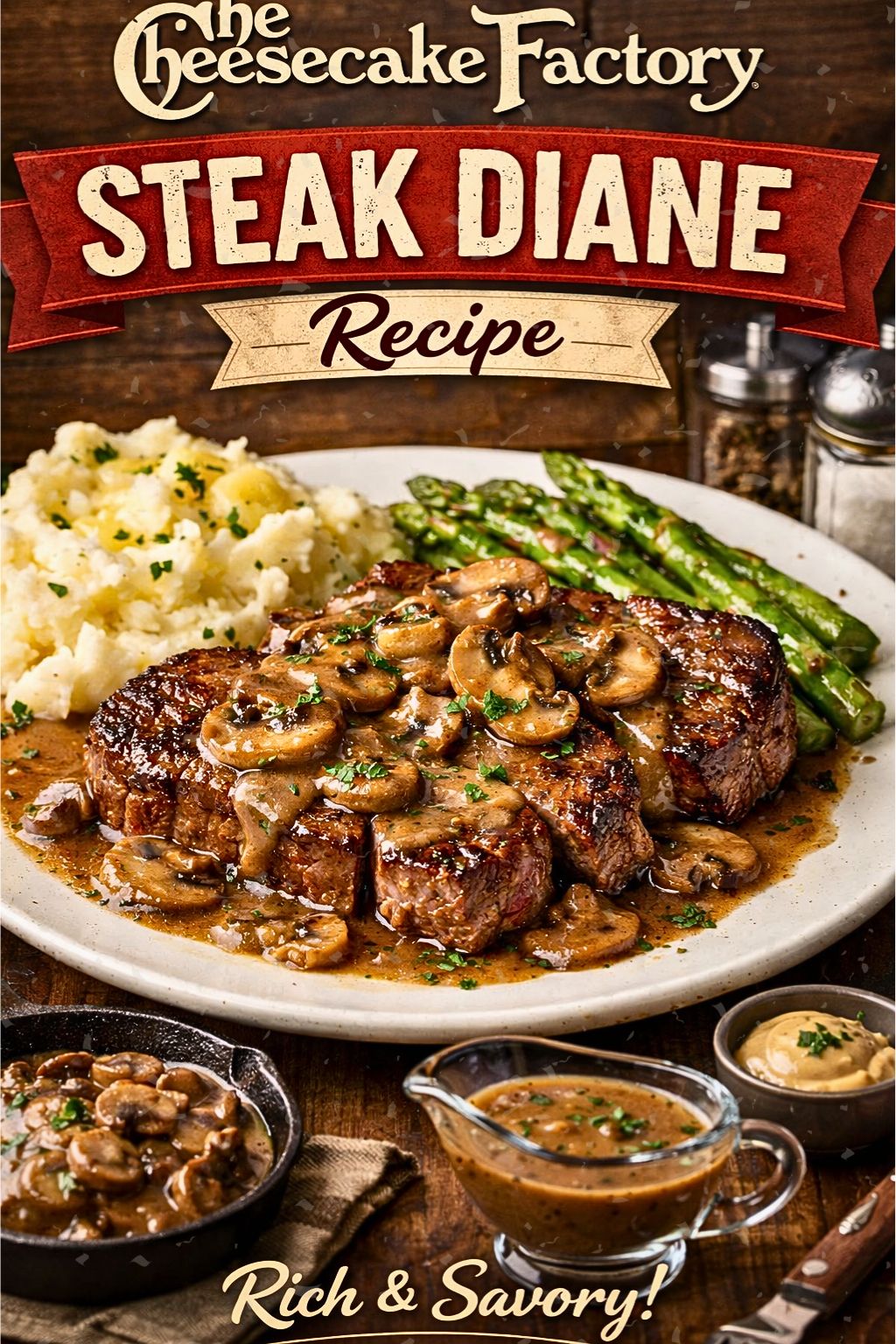
Cheesecake Factory Steak Diane Recipe
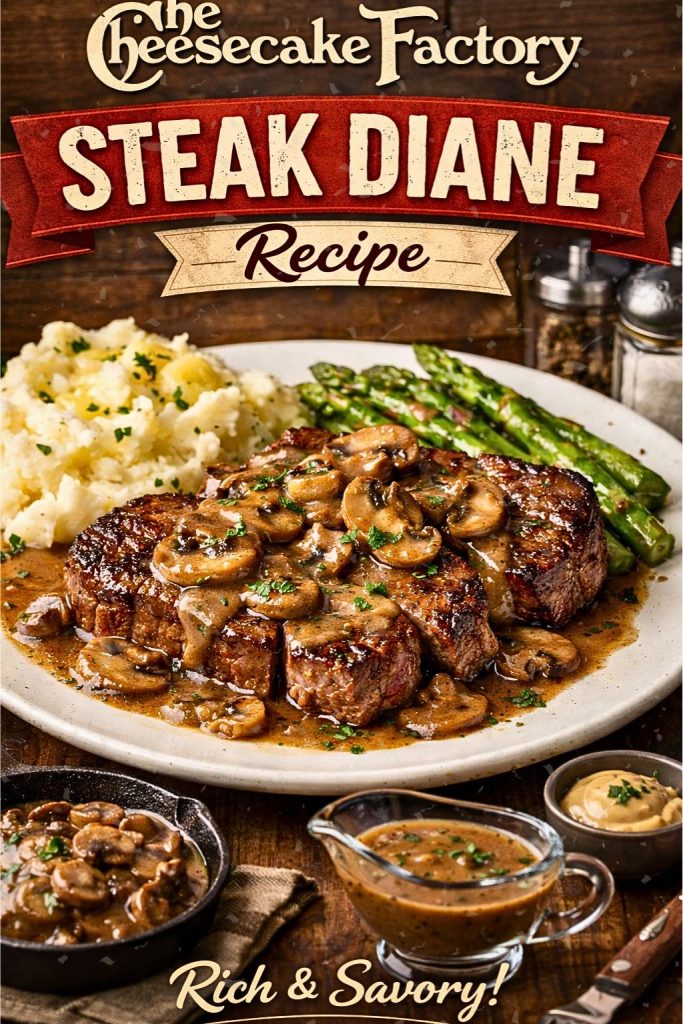
I love the Cheesecake Factory’s Steak Diane for its tender beef and creamy, flavorful sauce. The dish feels special but also fits a quiet night at home. I’ll explore what makes it work, how it tastes, and how to recreate that restaurant feel in your own kitchen.
I’ll also suggest simple sides and swaps so the meal comes together easily. My aim is to give clear steps and practical tips that help you serve a balanced, satisfying plate every time.
Key Takeaways
- The dish balances tender steak with a rich, creamy sauce.
- Simple sides and swaps make the meal easy to finish at home.
- Clear steps and tips help recreate a restaurant-quality result.
Why This Recipe Works for Me
I balance bold flavors and simple technique to get great results fast. The beef medallions give a rich, meaty base while a cream-based pan sauce adds silkiness. I use a little Worcestershire and Dijon to cut through the richness and add bright savory notes.
I keep the cook time short so the steak stays tender; searing first locks in juices, and finishing in the sauce builds flavor without overcooking. I also layer textures: soft mushrooms, lightly crisped shallots, and tender beef make each bite interesting.
I rely on flexible pantry choices. Swapping cognac for dry white wine or changing herbs lets me adapt the dish easily. This mix of speed, contrast, and adaptable ingredients is why the recipe performs well.
How Does It Taste Like?
I bite into tender beef that melts with little effort. The sauce feels smooth and coats my tongue, adding richness. A light smokiness from paprika lingers, while fresh herbs add a subtle green note. Worcestershire brings deep umami and warmth that rounds each mouthful. I find the flavors balanced—savory, slightly smoky, and gently herbaceous—so I keep reaching for another bite.
What Makes This Version Stand Out?
I keep the classic method but simplify ingredients so cooks can find them easily.
- I use cognac and heavy cream for a rich, French-style sauce.
- I add familiar herbs to keep the flavor balanced and home-friendly.
Result: a true-tasting Steak Diane that’s practical for weeknight or special meals.
The Ingredients
I list what I use for this dish so cooking stays simple and consistent.
- 4 beef fillets (about 1 inch thick; 2–2.25 lb total)
- Sea salt and freshly ground black pepper, to taste
- 1 tbsp extra-virgin olive oil
- 2 tbsp unsalted butter
- 1 shallot, thinly sliced
- 1 clove garlic, minced (optional)
- 8 oz cremini or white button mushrooms, sliced
- 1 tsp fresh thyme leaves (optional)
- 1/2 tsp smoked paprika
- 2 tbsp Worcestershire sauce
- 1 tbsp Dijon mustard
- 1/2 cup cognac or dry white wine
- 1/3 cup heavy whipping cream
I bolded key items and kept amounts clear so prep is fast and accurate.
Instructions
Step 1: Get the beef ready
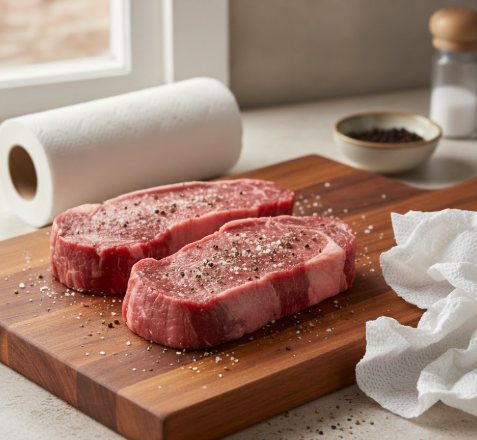
I bring the fillets to room temperature so they cook evenly. I pat them dry with paper towels, then season both sides well with salt and black pepper.
Step 2: Brown the steaks
I heat a splash of olive oil in a large skillet over medium-high heat until it shimmers. I add the fillets and sear about 3–5 minutes per side for medium-rare, adjusting time for how done I want them. I transfer the steaks to a warm plate and let them rest.
Step 3: Cook the shallots and garlic
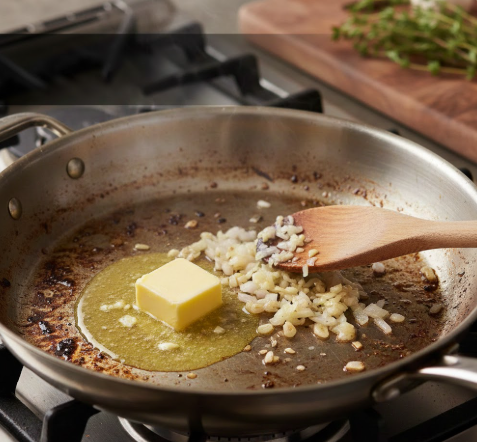
I lower the heat and add butter to the same pan, scraping up browned bits. I stir in finely chopped shallots (and garlic if I use it) and cook until soft and fragrant, stirring so nothing burns.
Step 4: Brown the mushrooms
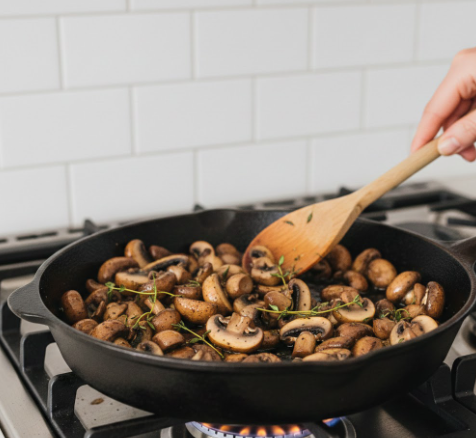
I add sliced mushrooms and fresh thyme to the skillet. I cook them without crowding until they turn deep brown and release their juices, about 4–6 minutes, stirring occasionally.
Step 5: Build the pan sauce
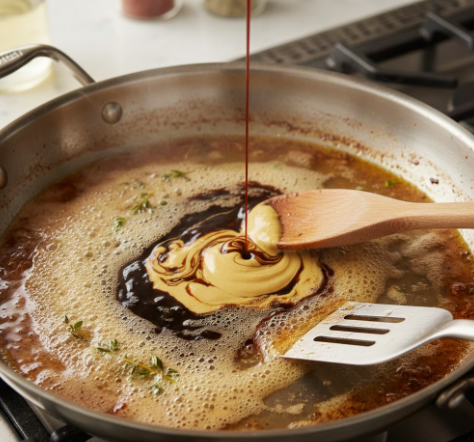
I mix in a little Worcestershire and Dijon mustard, then pour in cognac or dry white wine. I let the liquid simmer and reduce for a few minutes while I scrape the pan to lift fond and deepen flavor.
Step 6: Add cream and thicken
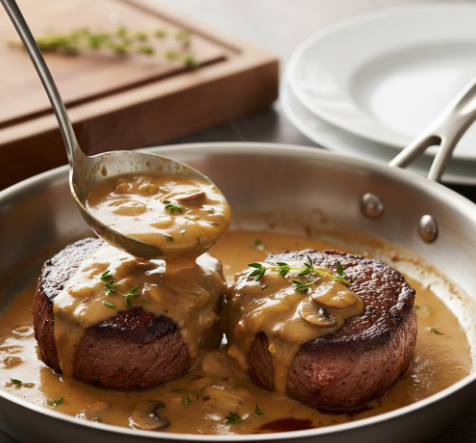
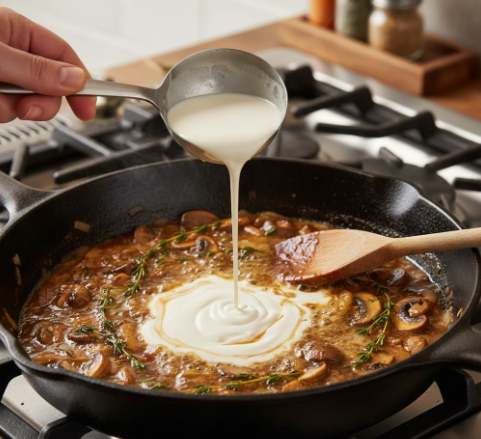
I reduce the heat and stir in heavy cream, combining it until smooth. I simmer gently until the sauce coats the back of a spoon and thickens slightly.
Step 7: Reunite and plate
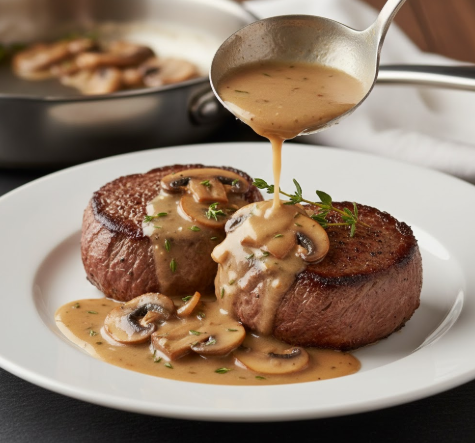
I return the rested steaks to the skillet, spooning sauce over them to warm and coat. I serve each medallion with extra sauce spooned on top.
Notes
- I prefer fresh herbs; they brighten the dish more than dried ones.
- I always let the meat rest after cooking so the juices redistribute and the steak stays moist.
- I use a meat thermometer for accuracy: about 130°F for medium-rare, then adjust to taste.
- I choose sides that balance richness — creamy mashed potatoes or a sharp, tangy green salad work well.
- I like to try different sauces; a hint of blue cheese or a sprinkle of Parmesan can lift the finished plate.
How I Store This Dish
I let the Steak Diane cool fully, then seal it in an airtight container. I keep it in the fridge for up to 3 days. For longer storage, I freeze portions, though fresh tastes best.
Sides for Cheesecake Factory Steak Diane
I pair Steak Diane with sides that balance its rich sauce and tender beef. I like creamy mashed potatoes for their smooth, buttery texture that soaks up the sauce. I also serve garlic-sautéed green beans for a crisp, bright contrast—finish them with a squeeze of lemon. For a fresher option, I toss arugula with cherry tomatoes and a lemon vinaigrette; the peppery greens cut the richness.
- Mashed potatoes: butter, cream, salt — mash until silky.
- Garlic green beans: quick sauté, lemon finish.
- Arugula salad: lemon vinaigrette, cherry tomatoes.
Alternatives for Missing Ingredients
Substitutes for Main Foods
If I can’t get beef fillets, I use pork tenderloin or boneless chicken breasts. Cook them to safe temperatures: 145°F for pork and 165°F for chicken. Slice into medallions so the cooking method still works.
For mushrooms, I swap cremini with shiitake, oyster, or even drained canned mushrooms. Drier, firm varieties give better texture; canned work when fresh ones are not available.
Replacements in the Sauce
When I lack cognac or dry white wine, I add a splash of beef or chicken broth mixed with a little apple juice or a teaspoon of vinegar for acidity. This keeps moisture and brightness without the alcohol.
If heavy cream is missing, I stir in full-fat Greek yogurt off heat to avoid curdling. For a dairy-free option, I try canned coconut milk, noting it changes the flavor slightly.
Use Worcestershire and Dijon as layered flavor builders. If one is missing, boost the other and add a small dash of soy sauce or a pinch of sugar to balance taste.
Adjustments to Cooking Steps
If I use leaner meats like chicken, I lower the sear time and finish in the oven or on lower heat to avoid drying. I always pat meat dry and season well before searing to get good color.
When using canned mushrooms, I drain them and sauté a bit longer to deepen flavor. If I lack a shallot, I use half a small onion or a shallot-onion mix. Garlic is optional; I add it late and cook briefly so it doesn’t burn.
If I must skip deglazing with alcohol, I pour in warm broth and scrape up brown bits. That builds sauce flavor without wine or cognac.
Nutrition Swaps and Impact
Swapping beef for chicken lowers fat and calories and raises protein-to-fat ratio. Pork falls between beef and chicken in calories and fat, depending on the cut.
Replacing heavy cream with Greek yogurt cuts fat and calories but raises protein slightly. Coconut milk keeps calories high and adds saturated fat.
Using broth instead of wine or cognac reduces carbs and alcohol content, with minimal caloric change. Canned mushrooms add a small amount of sodium; rinse if I need lower salt.
Practical Tips and Notes
- I taste as I go; small adjustments with salt, acid (vinegar or lemon), and a touch of sugar fix balance.
- I add delicate ingredients like yogurt off the heat to stop curdling.
- I rest meats after cooking to keep juices locked in.
- I use a meat thermometer for reliable doneness rather than guessing by time.
Key quick swaps in bold:
- Beef → pork or chicken
- Cognac/wine → broth + apple juice or vinegar
- Heavy cream → Greek yogurt (added off heat) or coconut milk
- Cremini mushrooms → shiitake, oyster, or canned mushrooms
These choices keep the dish close to the original while letting me adapt to what I have on hand.
Frequently Asked Questions
- Can I cook with frozen fillets?
I recommend fully thawing them first. Thawed fillets cook more evenly and sear better. - Do I have to use cognac?
I don’t think so. You can skip it or swap in a dry white wine for a similar flavor. - How do I make it gluten-free?
I check labels and use gluten-free Worcestershire or omit any suspect sauces. - Can I prepare this ahead?
Yes. I cook it, chill it, then gently reheat in a skillet with a splash of cream.
Final Thoughts
I find making Steak Diane at home both rewarding and practical. With a few quality ingredients and basic pan‑searing skills, I can create a rich, restaurant-style plate without spending much. The sauce ties the dish together, and simple sides like mashed potatoes make it feel complete.
I enjoy how cooking this recipe becomes a shared moment—friends or family notice the flavor even if the technique is straightforward. Try it once, tweak salt or wine to your taste, and it will likely become a go-to for special dinners and weeknight treats.
FAQs
Q1: What cut of beef do I use to get a Cheesecake Factory–style Steak Diane?
I recommend beef tenderloin medallions or another tender cut sliced about ¾ inch thick. These give the soft texture and quick sear the recipe needs. If budget matters, you can use sirloin or flank cut into medallions, but cook a bit more carefully to avoid toughness.
Q2: Is the pan sauce safe to make with alcohol like cognac or wine?
Yes. I use a small amount of cognac or dry white wine to deglaze the pan and build flavor. If you prefer not to use alcohol, you can substitute low-sodium beef broth with a splash of apple cider vinegar or lemon juice to mimic acidity. Always take care if you flambé—keep a lid nearby and remove flammable items.
Q3: How do I keep the steak tender and not overcook it?
I pat the meat dry and let it come close to room temperature before searing. Use high heat for a short time and check doneness with a meat thermometer: 130°F for medium-rare, 140°F for medium. Let the steaks rest 5 minutes so juices redistribute.
Q4: What sides pair best with Steak Diane?
I serve it with creamy mashed potatoes to soak up the sauce and a simple green vegetable like steamed broccoli or roasted asparagus. Rice or buttered noodles also work well to catch the pan sauce.
Q5: How long does the whole dish take, and can I prep ahead?
I can sear the steaks and make the sauce in about 20–30 minutes. You can slice the mushrooms and measure ingredients ahead of time. Avoid cooking the steak too early; keep cooked steaks loosely covered and rewarm briefly in a low oven if needed.
Q6: How do I make the sauce richer without changing the core flavor?
I stir in a small splash of heavy cream or a pat of cold butter at the end off the heat to add silkiness. Taste and adjust with a little Dijon mustard or Worcestershire sauce for balance if needed.
Q7: How does Steak Diane compare to other restaurant steak sauces?
I find Steak Diane is richer and more sauce-forward than a basic steak au jus. It focuses on a mushroom, mustard, wine, and cream mix that coats the steak, unlike dry rubs or simple pan juices. It’s more decadent but still quick to make.
Final Thoughts
I find Steak Diane to be a reliable choice when I want a rich, restaurant-style meal at home. The combination of seared beef medallions and a creamy, wine‑and‑mushroom sauce delivers bold flavor without needing exotic ingredients.
- Flavor and texture: The pan‑seared steak stays tender when cooked briefly at high heat, while the sauce adds depth and silkiness.
- Simplicity and safety: The recipe uses common pantry items and standard cooking steps, so I can prepare it safely and consistently.
- Eco‑ and cost‑sense: Making this dish at home cuts down on packaging waste and expense compared with dining out.
- Suitability: It works well for weeknight dinners or special meals, and pairs easily with mashed potatoes or steamed vegetables.
I recommend using quality beef and fresh mushrooms for the best results, and choosing a trusted recipe to ensure consistent outcomes over time. Try it and see how this classic dish fits into your rotation.