

Paul Hollywood Croissant Recipe
I love the way a well-made croissant pulls apart into thin, buttery layers. In this article I will walk you through a trusted croissant recipe that yields crisp crusts and soft, airy centers, explain what makes the dough and butter work together, and list the simple swaps and storage tips that keep these pastries tasting fresh.
I will also cover the basic ingredients, step-by-step technique, and a few practical tips to prevent common mistakes. Expect clear instructions, flavor notes, and basic nutrition and storage guidance so you can bake reliably at home.

Key Takeaways
- The recipe produces flaky, buttery croissants with a crisp outside and tender inside.
- Simple ingredients and careful folding create the layered texture.
- Clear storage and substitution tips help maintain quality and adapt the recipe.
What I mean by Paul Hollywood’s croissant
I refer to a classic French croissant shaped and baked from laminated dough that forms thin, flaky layers. My version follows Paul Hollywood’s approach, which focuses on neat butter lamination and careful resting to build lift and texture.
I use strong white flour, yeast, cold butter, salt, sugar, and milk or water. The dough gets multiple folds and turns so the butter creates many separate layers. These croissants bake to a deep golden color, with a crisp outer shell and a soft, airy inside. They work plain or with sweet and savory fillings.
Why You’ll Love This Paul Hollywood Croissant Recipe
I love how this recipe turns a few basic ingredients into crisp, layered croissants with little fuss. The method asks for patience, not skill, so even a home baker can get flaky, buttery results.
- Simple ingredients: flour, yeast, butter, salt, sugar, and milk or water.
- Flexible use: enjoy plain, add jam, or stuff with cheese and ham.
- Reliable texture: a deep golden crust outside and light, airy layers inside.
I find the process satisfying — the folds build the pastry’s structure, and the wait makes the flavor richer. This recipe rewards care with classic, bakery-style croissants.
How It Tastes to Me
I taste a rich, clean butter note first, followed by a crisp, golden crust. Inside, the layers feel light and airy, with a soft, slightly sweet crumb. I enjoy them plain, but they also pair well with jam, honey, or savory fillings for added contrast.
Ingredients
I gather simple, high-quality items to make flaky, buttery croissants. Below is a clear list and brief notes on why I choose each one.
- Bread flour (high protein) — 500 g
Builds gluten for strength and stretch so the layers hold their shape. - Instant dry yeast — 10 g (about 2 tsp)
Helps the dough rise reliably and speeds up proofing. - Granulated cane sugar — 30 g (about 2 tbsp)
Adds mild sweetness and aids browning during baking. - Fine sea salt — 8 g (about 1½ tsp)
Balances flavor and enhances the dough’s taste. - Unsalted butter (cold, high-fat) — 300 g (for laminating)
Provides the fat layers that create flakiness; keep it cold for clean folds. - Cold water — 200–250 ml
Hydrates the dough; using cold water helps control dough temperature. - Large eggs — 2 (one for the dough, one for egg wash)
Adds richness and helps with structure; the wash gives a glossy finish.
I like to measure ingredients by weight for accuracy. If you prefer, use a kitchen scale and keep butter and water chilled. Having everything ready and cold makes the lamination and rolling steps much easier.
Step by Step Directions
Step 1: Make the dough
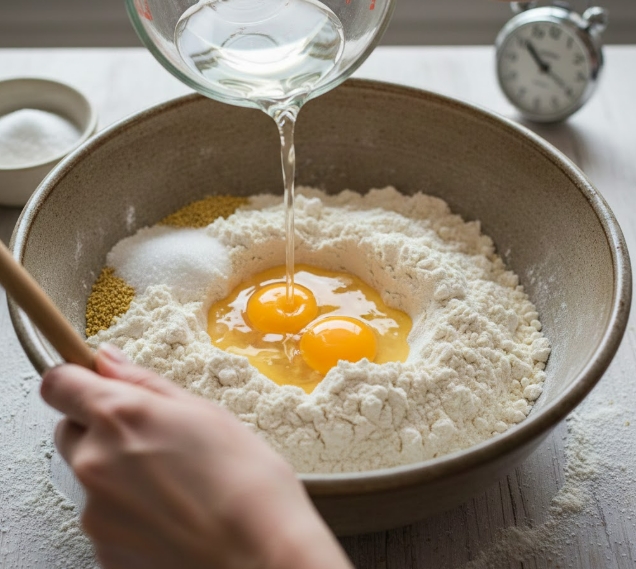
I mix the dry ingredients in a large bowl: flour, instant yeast, sugar, and a pinch of salt. I make a well, add eggs and lukewarm water, then stir until a rough dough forms. I knead on a floured surface for 10–15 minutes until the dough feels smooth and elastic, then shape it into a ball.
Step 2: Let the dough rest and rise

I place the dough ball in a lightly oiled bowl and cover it with plastic wrap or a cloth. I leave it to rise at room temperature for 1–2 hours, or until it roughly doubles in size.
Step 3: Make the butter slab
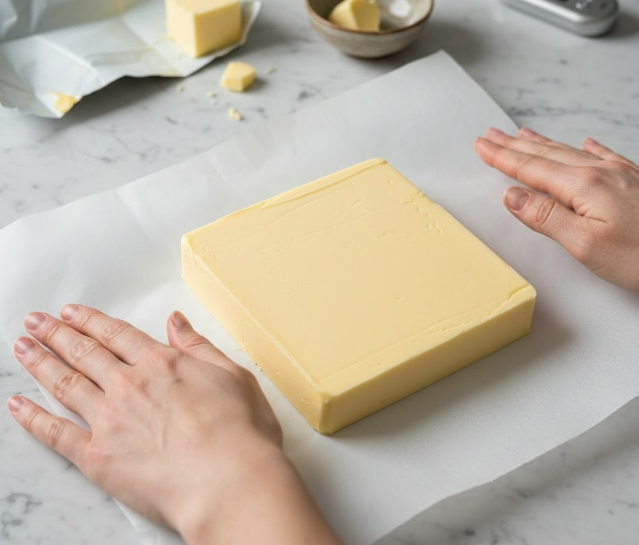
I soften unsalted butter slightly, then shape it into a flat square or rectangle between sheets of parchment. I chill the butter block in the fridge for at least 30 minutes so it firms but stays pliable.
Step 4: Roll the dough to size
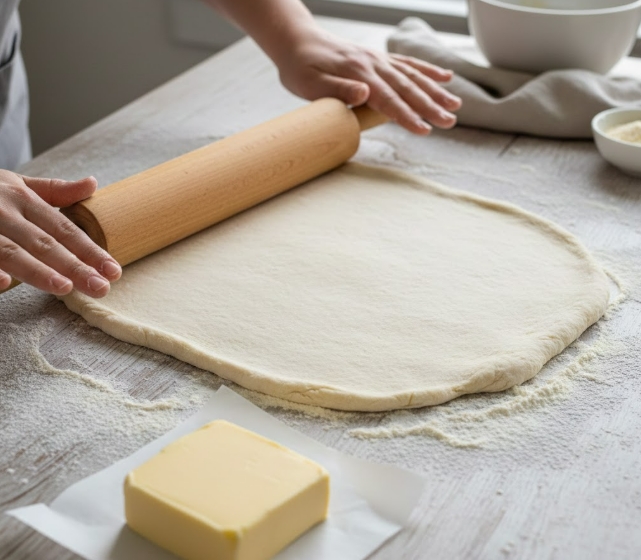
After the dough has risen, I gently deflate it and roll it out on a floured surface. I aim for a rectangle that is about twice the size of the chilled butter slab so the butter will sit comfortably inside.
Step 5: Wrap the butter inside
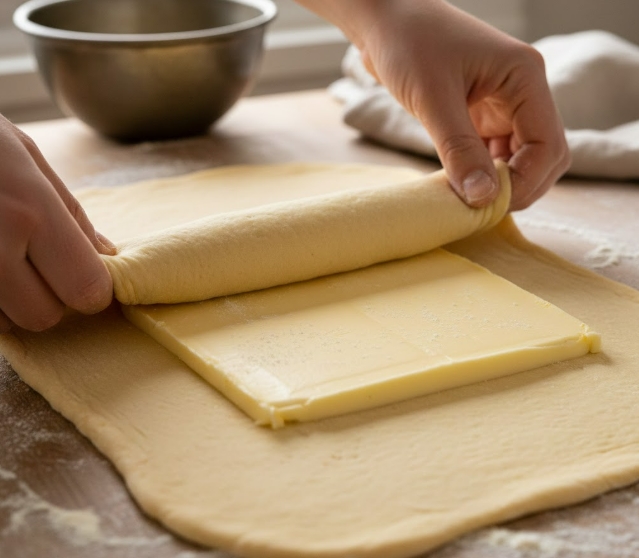
I place the cold butter slab in the center of the rolled dough and fold the dough edges over to fully enclose it. I pinch the seams so the butter stays sealed and the package is neat.
Step 6: Laminate with folds
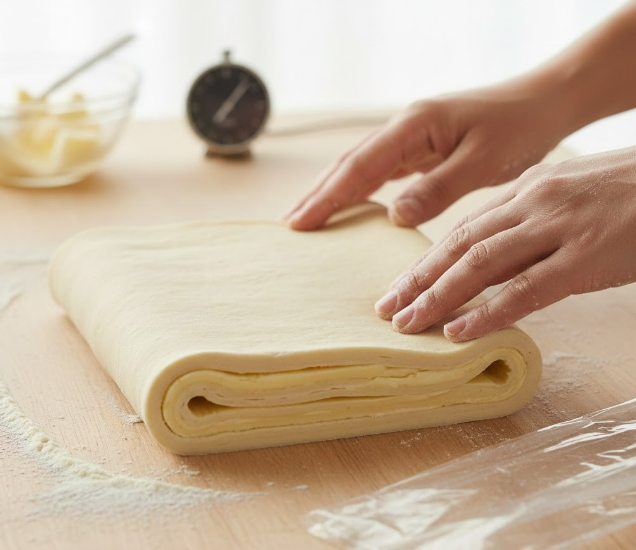
I roll the dough-butter package into a long rectangle, then fold it into thirds like a letter to create layers. I wrap it and chill for 30–60 minutes. I repeat the roll-fold-chill cycle two more times, keeping the dough cold between each turn to keep layers distinct.
Step 7: Cut and form croissants
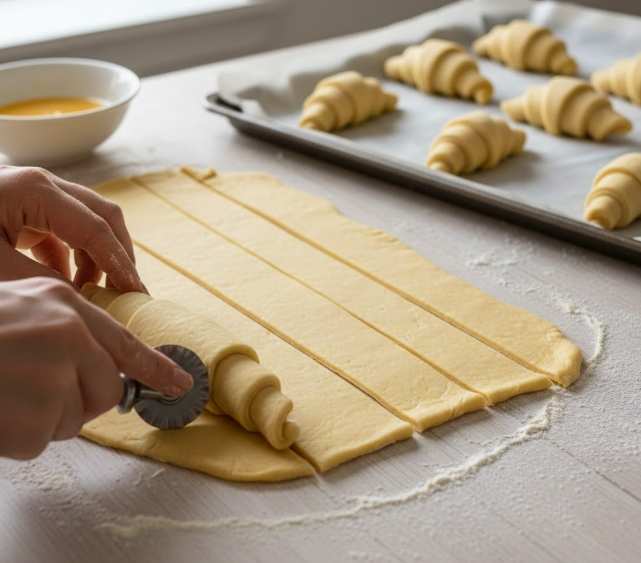
After the final chill, I roll the dough to about 1/4 inch thickness. I cut the sheet into triangles and roll each triangle from the wide base toward the point, shaping a curved croissant. I place them on a parchment-lined baking sheet with room to expand.
Step 8: Proof and bake
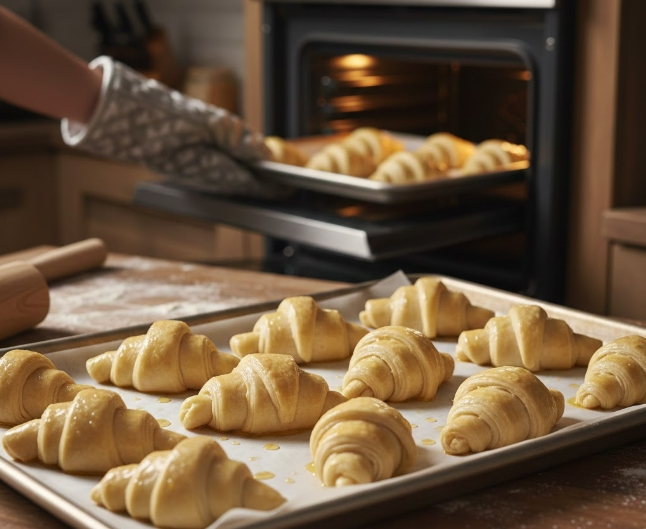
I loosely cover the shaped croissants and let them proof at room temperature for 1–2 hours until puffed and airy. I preheat the oven as the recipe directs, brush the croissants with beaten egg for shine, then bake 15–20 minutes until deep golden and sounding hollow when tapped.
Step 9: Cool and serve

I transfer the baked croissants to a wire rack to cool for a few minutes so the layers set. I serve them warm or at room temperature, enjoying the flaky, buttery texture.
Tips
I keep the butter very cold when laminating to preserve sharp layers. I roll the dough thin to boost flakiness. I bake on parchment so croissants don’t stick. I brush with melted butter for a deep, even color. I wait until they cool fully before serving so the interior sets.
Nutrition Information
I list key nutrients per croissant (approx.):
- Calories: 310 kcal
- Fat: 16 g
- Carbs: 37 g
- Protein: 4 g
Storing My Paul Hollywood Croissants
I keep croissants in an airtight container at room temperature; they stay good for about three days.
For longer storage, I freeze them up to three months—wrap tightly first.
To serve, I reheat in a 350°F oven for 5–10 minutes until warmed and crisp.
What Other Options I Can Use in Paul Hollywood’s Croissant Recipe
I swap ingredients when needed without changing technique. For flour, I use all-purpose if I don’t have strong bread flour. For sugar, light brown or regular granulated work fine. I replace melted butter with vegan butter or a bit of olive oil, and I use almond or coconut milk for the warm liquid. For the laminated dough, vegan margarine can stand in for cold butter.
Paul Hollywood Croissant Recipe
Ingredients I use
- 4 cups strong white bread flour
- 1 tablespoon instant or rapid-rise yeast
- 6 tablespoons granulated sugar
- Pinch of sea salt
- 300 ml cold water
- 2 large eggs
- 18 tablespoons unsalted butter, cold and divided (for lamination)
- Extra beaten egg for egg wash
How I make them
- Whisk flour, yeast, sugar, and salt in a large bowl. Make a well, add eggs and water, and mix until a rough dough forms.
- Knead on a floured surface 10–15 minutes until smooth and elastic. Shape into a ball and oil a bowl, then cover and leave to double (about 1–2 hours).
- While dough rises, shape the butter into a flat square between parchment paper. Chill 30 minutes so it’s firm but pliable.
- Deflate the risen dough, roll into a rectangle roughly twice the butter block size. Place the chilled butter in the center and fold the dough to enclose it. Seal the edges.
- Roll the dough into a long rectangle, fold into thirds (single turn). Wrap and chill 30–60 minutes. Repeat two more times for three total turns, chilling between each.
- After final rest, roll the dough to about 1/4 inch thick. Cut into triangles and roll each from the wide end to the tip into a crescent shape.
- Place croissants on baking sheets lined with parchment. Cover loosely and proof at room temperature until puffy, about 1–2 hours.
- Preheat oven to 200°C (390°F) or the temperature you prefer. Brush croissants with beaten egg.
- Bake 15–20 minutes until deep golden and hollow-sounding when tapped. Cool briefly on a wire rack before serving.
Practical tips and reminders
- Keep the butter cold during lamination. If it softens, chill the dough before continuing.
- Roll the dough thin for clear, distinct layers.
- Work quickly and keep surfaces lightly floured to avoid sticking.
- Use parchment on the baking sheet to stop sticking and aid even browning.
- If croissants brown too fast, lower the oven by 10–20°C and extend bake time slightly.
- Let croissants cool a few minutes so layers set; they taste best warm or at room temperature.
Estimated nutrition per croissant
- Calories: about 365 kcal each
- Main contributors: butter and flour (fat and carbohydrates)
- Protein comes mainly from the eggs and flour
I follow these steps and tips to get flaky, layered croissants with a golden crust and a soft interior.
Frequently Asked Questions
- How long will croissants stay fresh?
I keep croissants in an airtight container at room temperature for up to three days. For longer storage, I freeze them; they keep well for about three months. - Can I swap the flour called for in the recipe?
I often use plain all-purpose flour when I don’t have strong bread flour. The croissants still turn out fine, though texture may vary slightly. - How do I tell when the croissants are fully baked?
I look for a deep golden-brown color and slightly crisp edges. The inside should feel light and flaky rather than doughy. - Is it okay to prepare the dough ahead of time?
Yes. I make the dough in advance, place it in a lightly greased bowl, cover it, and let it rise for about an hour before proceeding with folding and chilling. - Can I add fillings or flavorings?
I add fillings often. Sweet options include jam, chocolate, or cinnamon; savory choices include cheese or ham. I’ll also sprinkle spices or brush a glaze after baking. - What swaps work for butter and liquids?
For dairy-free versions, I use melted vegan butter or olive oil, and substitute warm water with almond or coconut milk. Vegan margarine can replace cold butter for the laminating steps. - How should I reheat frozen croissants?
I thaw them briefly, then warm them in a 350°F (175°C) oven for about 5–10 minutes. This restores some crispness and reheats the interior. - Any quick tips for better results?
I keep butter and dough cold during lamination, rest the dough between folds, and watch baking time closely so the layers puff without burning.
Closing Thoughts
I’ve found that mastering this croissant method rewards patience and neat work more than fancy tools. The dough needs cold butter, careful folding, and timed rests to build layers that bake into a crisp outside and soft, airy inside. You can keep the basic recipe as written or vary fillings and toppings to suit a simple breakfast or a more ambitious dessert.
Tips I use:
- Keep ingredients chilled and work on a cool surface.
- Rest the dough fully between folds to keep butter from melting.
- Brush with egg wash for color and a slight shine.
Storage and make-ahead ideas:
- Freeze shaped, unbaked croissants on a tray, then transfer to a bag. Bake from frozen, adding a few minutes.
- Reheat baked croissants at 300°F (150°C) for 5–7 minutes to refresh crispness.
- Store cooled croissants in an airtight container for up to two days; re-crisp in the oven.
Nutrition and swaps:
- You can reduce butter slightly or use alternatives, but layers and texture will change.
- Whole-milk or lower-fat options alter richness and browning.
I recommend practicing the folding technique a few times; results improve quickly and make the effort worth it.
FAQs
- What common mistakes should I avoid when making croissants?
I recommend keeping ingredients cold, especially the butter and dough. Warm butter will melt into the dough and stop layers forming. Also avoid overworking the dough; too much handling can toughen the pastry. Give each rest and chill time fully — patience makes flakier results. - How do I know when the dough has been laminated enough?
I look for distinct, even layers when I roll the dough thin. After the final fold, the dough should show many fine stripes of butter and dough when viewed from the side. If layers blend or butter leaks, chill it longer and be gentler when rolling. - Is this recipe safe for people with food allergies?
I use wheat flour, butter, and usually milk or eggs, so this recipe is not safe for those with dairy or gluten allergies. For nut allergies, check all ingredients and avoid cross-contamination. If needed, I suggest using certified allergen-free substitutes and labeling clearly. - How should I store croissants and how long do they stay good?
I store baked croissants at room temperature in an airtight container for up to 2 days. For longer storage, I freeze them wrapped tightly for up to 1 month and reheat from frozen at low oven heat. Reheating restores some crispness better than microwaving. - How does this method compare to quicker shortcut recipes?
I find traditional lamination takes more time but gives flakier, layered results than shortcuts that use pre-made dough or a butter mix. Quick methods save time but usually produce fewer delicate layers and a different texture. Choose based on the time you have and the result you want. - What maintenance or routine should I follow between batches?
I clean and dry my work surface and rolling pin between folds to prevent dough sticking. I also keep the butter chilled and rotate chilling times depending on kitchen temperature. Regularly checking dough temperature helps keep the process consistent. - Can I adjust the recipe for different sizes or fillings?
I adjust portion sizes by changing the dough rectangle size and trimming accordingly. For fillings, I add them just before shaping or tuck small amounts into the center; be careful not to overload, which can stop proper rising and break layers.
Conclusion
I trust this recipe shows that careful technique and patience make the best croissants. I recommend keeping ingredients cold, following the folding schedule, and allowing proper rest to get crisp, flaky layers and a soft interior.
- I find the method reliable and safe when you handle butter and dough in a cool environment.
- I value its low-waste approach: basic pantry ingredients and reusable tools keep the process eco-friendly.
- I believe this recipe suits home bakers who can commit time and attention; it rewards practice and neat work.
Choose a clear, tested recipe and stick to the steps for consistent results. Try the method, refine your timing, and enjoy the payoff of freshly baked croissants that truly shine.
Paul Hollywood Croissant Recipe

A classic laminated croissant recipe inspired by Paul Hollywood, producing flaky, buttery pastries with a crisp golden exterior and a soft, airy interior.
- Mixing bowl
- Rolling pin
- Parchment paper
- Baking sheet
- Wire cooling rack
Dough
- 500 g Strong white bread flour (High-protein, for structure)
- 10 g Instant dry yeast (Rapid-rise)
- 30 g Granulated sugar (Aids browning)
- 8 g Fine sea salt (Flavor balance)
- 255 ml Cold water (Use cold to control dough temp)
- 1 Large egg (For the dough)
Butter Block (Lamination)
- 300 g Unsalted butter (Cold, high-fat, for lamination)
Egg Wash
- 1 Large egg (Beaten, for brushing)
Make the Dough
- In a large bowl, mix flour, yeast, sugar, and salt. Add egg and water and stir until a rough dough forms.
- Knead on a lightly floured surface for 10–15 minutes until smooth and elastic. Shape into a ball.
First Rise
- Place dough in a lightly oiled bowl, cover, and let rise at room temperature for 1–2 hours until doubled.
Prepare Butter
- Shape butter into a flat square between parchment paper. Chill for 30 minutes until firm but pliable.
Lamination
- Roll dough into a rectangle about twice the size of the butter slab. Place butter in the center and fold dough over to seal.
- Roll into a long rectangle, fold into thirds. Wrap and chill 30–60 minutes.
- Repeat the rolling and folding process two more times, chilling between each fold.
Shape Croissants
- Roll dough to about 1/4-inch thickness. Cut into triangles and roll from the wide base to the tip to form croissants.
Proof & Bake
- Place croissants on parchment-lined baking sheets. Cover loosely and proof 1–2 hours until puffy.
- Preheat oven to 200°C (390°F). Brush croissants with beaten egg.
- Bake 15–20 minutes until deep golden and hollow-sounding when tapped.
Cool & Serve
- Transfer croissants to a wire rack. Cool briefly before serving warm or at room temperature.
Keep butter and dough cold during lamination. Chill if butter softens. Croissants store at room temperature for up to 3 days or can be frozen for up to 3 months. Reheat in a 350°F (175°C) oven for 5–10 minutes.