
Dunkin Donuts Corn Muffin Recipe
I love the simple pleasure of a warm corn muffin and how small choices can change the whole experience. A bit of butter, a spoonful of jalapeño jam, a cup of coffee, or a side of scrambled eggs all shape the flavor and texture in different ways. I’ll show how modest pairings and small tweaks can turn a familiar snack into a more satisfying bite.
I also want to help you recreate that bakery-style muffin at home. I’ll share practical tips, ingredient swaps, and serving ideas so you can make moist, flavorful corn muffins that suit your taste and schedule.
Key Takeaways
- Simple pairings and toppings can greatly change the muffin’s flavor and texture.
- Practical swaps and clear steps make baking a reliable home version possible.
- Serving suggestions help turn a snack into a balanced, enjoyable meal.
What I Know About Dunkin’ Donuts Corn Muffin
I enjoy this corn muffin for its golden color and soft, moist crumb. It mixes cornmeal, sugar, and butter to give a mildly sweet taste with a tender, slightly crumbly texture.
I often reach for it as a quick breakfast or a snack. It pairs well with coffee, tea, or milk and works for casual mornings or on-the-go moments.
Key traits:
- Made from cornmeal plus wheat flour and fat
- Sweet, but not overly sugary
- Moist interior with a light crust
I find it comforting and simple, the kind of bakery treat that fits many occasions.
Why This Recipe Works
I focus on simple ingredients that play clear roles: sugar and cornmeal give the muffin its sweet-but-slightly-savory flavor, while eggs and melted butter add moisture and richness. The balance keeps the crumb tender without becoming greasy.
I pay attention to how ingredients interact. Sugar lifts sweetness; cornmeal adds texture and corn flavor; eggs provide structure; butter boosts mouthfeel. Small adjustments change the result, so I tweak sugar or cornmeal to reach the texture and sweetness I want.
- Key effects: sweetness, texture, richness
- I can adjust: sugar level, cornmeal ratio, egg/butter amounts
What I Need to Make These Corn Muffins
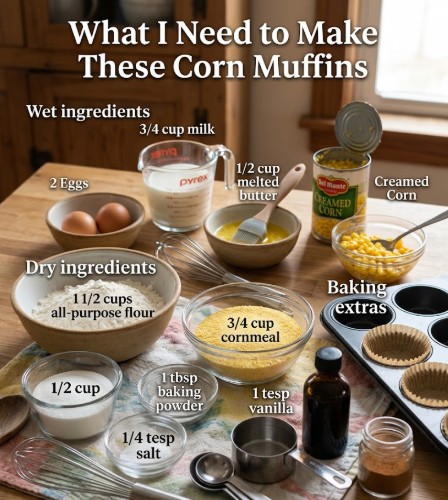
Below I list the tools and ingredients I use. I keep quantities so the batter turns out moist and slightly sweet.
- Wet ingredients
- 2 large eggs
- 3/4 cup (185 ml) milk
- 1/2 cup (115 g) melted unsalted butter
- 1 cup canned creamed corn
- Dry ingredients
- 1/2 cup (110 g) granulated sugar (I sometimes use 1/4 cup)
- 3/4 cup yellow cornmeal
- 1 1/2 cups (225 g) all-purpose flour
- 1 tablespoon baking powder
- 1/4 teaspoon salt
- 1 teaspoon vanilla extract
- 1/2 teaspoon cinnamon
- Baking extras
- Extra melted butter for greasing and brushing
- Muffin tin and liners or nonstick spray
- Mixing bowls, whisk, and measuring cups and spoons
How to Make Dunkin’ Donuts Corn Muffin
Step-By-Step Guide
I break the process into simple actions so it stays easy to follow. Each step moves quickly and uses common kitchen tools.
Step 1: Heat the Oven
I set the oven to 375°F (190°C) so it’s ready when the batter is mixed. A fully heated oven helps the muffins rise and brown evenly.
Step 2: Ready the Muffin Pan
I grease the cups with melted butter or place paper liners in the tin. This stops sticking and makes cleanup faster.
Step 3: Mix the Wet Ingredients
I whisk eggs, milk, melted butter, and creamed corn in a bowl until smooth. This wet mix gives the muffins moisture and corn flavor.
Step 4: Combine the Dry Ingredients
I stir sugar, cornmeal, flour, baking powder, salt, vanilla, and cinnamon in another bowl. Mixing dry ingredients well spreads leavening and flavor evenly.
Step 5: Blend Wet and Dry
I pour the wet mix into the dry ingredients and fold gently with a spatula. I stop when the batter is just blended; a few small lumps keep the muffins tender.
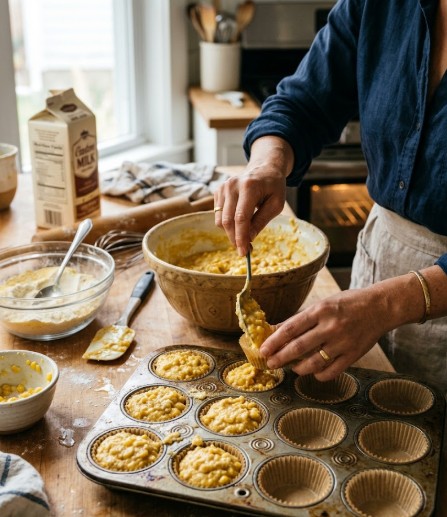
Step 6: Portion the Batter
I use a spoon or an ice cream scoop to fill each cup about two-thirds full. This lets the muffins rise without spilling over.
Step 7: Baking Time
I bake the muffins for 18–20 minutes until the tops are golden. I test doneness with a toothpick; it should come out clean or with a few moist crumbs.
Step 8: Cool and Serve
I let the muffins rest in the pan for about five minutes, then move them to a wire rack to finish cooling. I serve warm or at room temperature.
Tips for Perfect Muffins
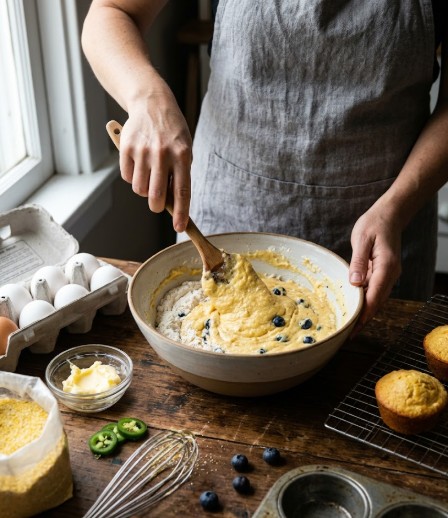
I keep ingredients at room temperature so batter mixes evenly and bakes with a tender crumb. I fold dry and wet ingredients gently—stopping when streaks disappear—to avoid tough muffins. I like to try mix-ins like blueberries for sweetness or jalapeños for heat; add fragile items last. I cool muffins in the tin briefly, then transfer to a rack so bottoms stay crisp. I store cooled muffins in an airtight container at room temperature to keep them moist for a few days.
How I Keep Leftover Muffins Fresh
I store leftover muffins in an airtight container at room temperature for up to three days. For longer storage, I wrap each muffin tightly in plastic wrap, then cover with foil and freeze them. Muffins keep well in the freezer for up to three months. To use, I let them thaw on the counter or heat them briefly in the microwave for a fast, warm snack.
Nutrition Information
I list key facts about the muffin below.
- Calories: 460 per muffin
- Total fat: 16 g (includes saturated fat)
- Carbohydrates: 72–73 g (about 30 g added sugar)
- Protein: ~7 g
- Sodium: moderate to high (check label for exact amount)
- Allergens: contains milk, eggs, wheat (gluten), and soy
Notes: I recommend checking Dunkin’s current nutrition guide for exact values and ingredient updates.
How I Suggest Serving a Dunkin’ Corn Muffin
I like to spread soft cream cheese on a warm corn muffin for a richer bite. The smooth, tangy cream cheese mixes well with the muffin’s sweet corn taste.
I often serve the muffin with a small fruit salad—berries, melon, or sliced apple—so the fruit brightens the meal. For a savory twist, I split the muffin and make a quick sandwich with turkey, avocado, and cheddar.
I pair the muffin with a hot drink. Coffee works well, but chai or a fruity tea also lifts the flavors.
- Best warm: heat 10–15 seconds in a microwave.
- Try with: cream cheese, fruit salad, or as a sandwich base.
What Alternatives Can You Use for the Ingredients if Not Available?
Swaps for the items called for
I list simple ingredient swaps you can use when something is missing.
- Milk: Thin plain Greek yogurt with a little water until it matches milk’s thickness. It adds protein and creaminess.
- Butter: Replace part or all of the melted butter with unsweetened applesauce to cut fat and add natural sweetness.
- Cornmeal: Use polenta or masa harina as a direct substitute; both give a similar corn texture and flavor.
- Sugar: Swap granulated sugar for honey or maple syrup, but reduce other liquids slightly since these sweeteners add moisture.
Adjustments in the mixing and baking steps
I explain how to change the method when using substitutes.
- When using yogurt for milk, whisk it with water until smooth before adding to the wet mix. This avoids lumps.
- If using applesauce for butter, reduce baking time by a minute or two if muffins brown faster. Watch texture; applesauce can make the crumb denser.
- For liquid sweeteners, lower any added liquid by about 2 tablespoons per 1/4 cup of honey or maple syrup used. Mix wet ingredients gently to avoid overworking the batter.
- When using masa harina, let the batter rest 10 minutes before baking so the corn flour hydrates; this helps texture and prevents gritty crumbs.
Nutrition changes and what to expect
I cover how substitutions affect calories, fat, and texture.
- Greek yogurt swap: Raises protein and lowers fat compared with whole milk or cream, while keeping moistness.
- Applesauce swap: Lowers total fat and calories but can increase natural sugars; muffins may be a bit more cake-like and less buttery.
- Polenta or masa harina: Similar carbohydrate content to cornmeal; flavor may be more pronounced with masa harina.
- Honey or maple syrup: Adds natural sugars and small amounts of minerals, but increases sweetness and moisture. Cut back on other liquids to avoid a soggy crumb.
Practical tips and final notes
I give quick, usable tips for best results with alternatives.
- Measure by weight where possible for consistency when swapping ingredients.
- Keep wet-to-dry balance: if batter looks too thin after a swap, add 1–2 tablespoons of flour; if too thick, add a splash of milk or water.
- Taste the batter lightly if you used honey or maple syrup; you might want to reduce added sugar.
- Grease and temperature: muffins with applesauce or yogurt can brown faster—check at the earlier end of the bake time.
- Storage: Muffins made with applesauce or honey can stay moist longer; store in an airtight container and use within 2–3 days or freeze for longer storage.
I recommend testing one change at a time so you can see how it affects texture and flavor. This helps you learn which swaps you prefer and ensures reliable results.
Frequently Asked Questions
Can I make these muffins gluten-free?
I swap the all-purpose flour for a 1:1 gluten-free baking flour and check that every other item is gluten-free. The texture can vary by blend, so I may add a tablespoon of extra liquid if the batter seems too thick.
What can I mix in for more flavor?
I like savory add-ins like chopped chives or parsley. For sweetness or warmth, I stir in spices such as nutmeg or cardamom, or fold in blueberries, shredded cheese, or diced jalapeño for a different kick.
How do I tell when muffins are fully baked?
I insert a toothpick into the center of a muffin. If it comes out clean or with a few moist crumbs, I remove the pan. If batter sticks to the toothpick, I bake a couple more minutes and check again.
Can I keep the batter to use later?
I try to bake the batter right away for best rise and texture. If I must wait, I cover and refrigerate it for up to 2 hours, then give it a gentle stir before baking.
How long will the muffins stay good?
I store muffins in an airtight container at room temperature for up to 3 days. For longer storage, I freeze them wrapped or in a freezer bag for up to 3 months.
Can I make this recipe as mini muffins?
I use a mini muffin tin, fill each cup about halfway, and cut the baking time to 10–12 minutes. I check them earlier since they bake faster.
Final Thoughts
I enjoyed turning that classic corn muffin into a recipe you can make at home. Baking these muffins fills the house with a warm, sweet smell and gives you a soft, tender bite that tastes familiar and comforting.
I like that this recipe lets you tweak sweetness, texture, and add-ins so each batch matches your taste. Share a plate with family or bring them to a friend — they make simple moments feel special.
If you want to keep experimenting, try different mix-ins or swap sweeteners to find your favorite version. I plan to bake another batch soon and test a few variations to see which one I prefer.
FAQs
Q: How close does my version match Dunkin’s corn muffin?
I aim for a similar taste and texture: tender crumb, sweet corn flavor, and a slightly buttery finish. Home results can vary by oven and ingredient brands, so it won’t be identical to the shop-bought version but should be very close.
Q: Is this recipe safe for people with food allergies?
I include common allergens like wheat, dairy, and eggs. You can make safe swaps: use dairy-free milk and oil instead of butter, and an egg replacer or flax egg for eggs. Always check labels for cross-contamination risks.
Q: How should I store the muffins so they stay fresh?
Let muffins cool fully, then keep them in an airtight container at room temperature for up to 2 days. For longer storage, freeze individually wrapped muffins for up to 2 months and thaw at room temperature or warm gently in the oven.
Q: Can I change ingredients to make them healthier?
Yes. I suggest reducing sugar slightly, using whole-grain flour, or swapping part of the oil for applesauce. These changes alter texture and flavor a bit, so adjust expectations for sweetness and moisture.
Q: What maintenance or care does the batter need during prep?
Mix wet and dry ingredients until just combined. I avoid overmixing to prevent tough muffins. Resting the batter briefly isn’t required, but preheating the oven and having pans ready helps consistent rise.
Q: How does this recipe compare to other corn muffin recipes?
Compared to classic corn muffins, this version aims for a lighter, bakery-style crumb rather than a dense, rustic one. It balances cornmeal flavor with a tender texture, unlike some recipes that prioritize grainy texture or heavy sweetness.
Q: Will this recipe work at high altitudes or in convection ovens?
At high altitude, I reduce baking powder slightly and increase liquid a little to prevent over-rise and dryness. For convection ovens, lower the temperature by 15–25°F and check for doneness sooner to avoid overbaking.
Final Thoughts
I found that a homemade Dunkin-style corn muffin brings together sweet corn flavor, tender crumb, and a golden crust in a simple bake anyone can repeat. I recommend using a mix of cornmeal and all-purpose flour, a bit of sugar, and buttermilk or milk for moisture; these choices create a balance of taste and texture close to the bakery version.
Key points I emphasize:
- Ingredients: Use quality cornmeal, fresh leavening (baking powder/soda), and room-temperature eggs for consistent rise.
- Texture: A short mixing method prevents toughness and keeps crumbs light.
- Flavor: A touch of butter and salt enhances sweetness without overpowering the corn.
- Safety and longevity: Store cooled muffins in an airtight container at room temperature for 2–3 days, or freeze for longer keeping; reheat gently to restore softness.
I trust this approach is practical, safe, and eco-friendly when you choose reusable baking tools and minimal packaging. If you want reliably great muffins over time, pick quality ingredients and follow simple storage steps.
I encourage you to try the recipe, adjust sweetness or corn intensity to your taste, and enjoy fresh, homemade muffins that match the classic Dunkin flavor.