
Goose Liver Pate Recipe — Classic French Technique and Serving Tips
I love making goose liver pâté because it turns a few simple ingredients into a rich, silky spread that lifts any meal. Rooted in French tradition, this dish balances deep savory flavors with a smooth texture, and I keep the technique straightforward so cooks at home can get great results without fuss.
My approach keeps the classic character but simplifies steps, so you can serve a gourmet-tasting appetizer without a long list of tricks. Whether I’m preparing it for a celebration or a casual gathering, the pâté feels elegant and easy to share.
Key Takeaways
- The introduction explains the dish’s appeal and origin in one clear overview.
- The recipe focuses on accessible ingredients and basic tools for home cooks.
- Preparation and serving tips emphasize simplicity and elegant results.
Ingredients
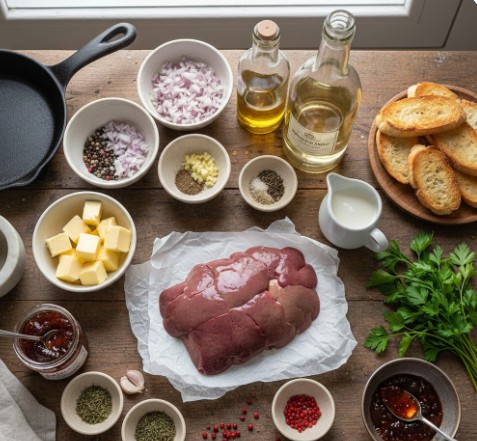
Core Components
- 1 lb fresh goose liver, trimmed and cleaned
- 4 tbsp unsalted butter, divided (for cooking and smoothing)
- 1 medium shallot, very finely chopped
- 2 garlic cloves, minced
- 1/4 cup dry white wine or brandy
- 1/4 cup heavy cream
- 1 tsp olive oil
- Salt, a pinch to start (adjust to taste)
Flavorings and Seasonings
I use a small set of spices to lift the liver without covering it.
- Freshly ground black pepper — about 1/2 tsp
- Ground nutmeg — about 1/4 tsp
- Thyme (fresh or dried) — about 1/2 tsp
- Allspice — optional, a light pinch (≈1/8 tsp)
Tip: Add spices gradually and taste after blending.
Serving Touches (Optional)
These extras add contrast in texture and taste when serving.
- Fresh parsley, finely chopped for brightness
- Toasted baguette slices or crackers for crunch
- Small spoonfuls of fig jam or red currant jelly for sweet contrast
- Cracked pink peppercorns for color and a mild floral bite
I recommend weighing the liver and tasting as you go to balance salt and spice.
Equipment Needed
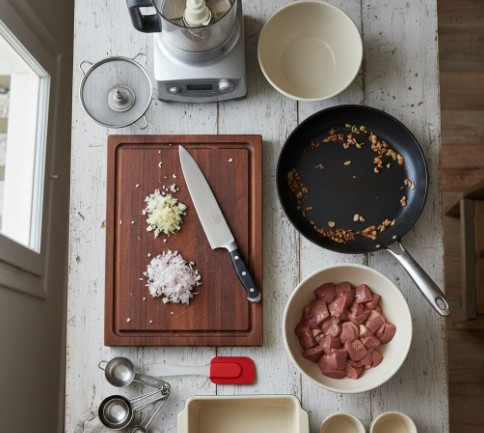
Key tools for prep and cooking
I use a sharp chef’s knife to finely chop shallots, garlic, and herbs so they blend into the pâté without large pieces. A solid cutting board gives me a safe surface for all prep work.
A nonstick skillet or sauté pan lets me cook the liver and aromatics gently without sticking. I keep a couple of mixing bowls on hand to hold cooked ingredients and to combine fats and seasonings.
I rely on a food processor or a high-speed blender to puree the cooked liver into a smooth paste. For an extra-silky finish, I sometimes push the puree through a fine-mesh sieve to remove any small bits.
Accurate measuring cups and spoons help me balance butter, cream, wine, and spices. A rubber spatula lets me scrape every bit from bowls and the processor so nothing goes to waste.
Finally, I chill and shape the pâté in a loaf pan or individual ramekins, depending on how I want to serve it.
Equipment at a glance
| Tool | Why I use it |
|---|---|
| Sharp chef’s knife | Precise chopping of aromatics |
| Cutting board | Stable prep surface |
| Nonstick skillet / sauté pan | Gentle cooking without sticking |
| Mixing bowls | Holding and combining ingredients |
| Food processor / blender | Smooth, even puree |
| Fine-mesh sieve (optional) | Extra-smooth texture |
| Measuring cups & spoons | Consistent seasoning and ratios |
| Rubber spatula | Thorough mixing and scraping |
| Loaf pan or ramekins | Molding and chilling for serving |
I set out these items before I start. Having them ready speeds up the process and helps me get a consistent, creamy pâté every time.
Preparation
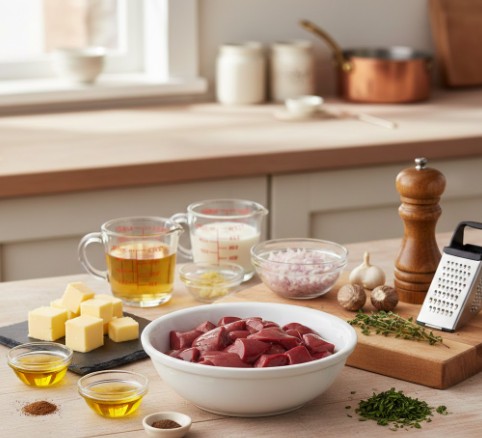
Getting the Goose Liver Ready
I trim the liver first, removing any visible veins and connective tissue with a sharp knife. Then I soak the liver in cold water for about 15 minutes to flush out excess blood. After soaking, I drain and pat the pieces dry with paper towels so the pâté won’t become watery.
Next, I cut the liver into roughly 1-inch cubes for even cooking. I handle the pieces gently to keep the liver’s delicate texture intact.
Ready the Supporting Ingredients
I chop two medium shallots finely and mince one garlic clove so their flavors release quickly during cooking. I measure 1/4 cup of dry white wine or brandy and set it aside to deglaze the pan later. I cut 4 tablespoons of unsalted butter into small cubes so it melts evenly.
I also measure 1/4 cup heavy cream and 1 tablespoon olive oil and have them ready near the stove. I strip the leaves from 3–4 thyme sprigs and chop them finely. For seasoning, I grind fresh black pepper and nutmeg, and I decide whether to include a pinch of allspice.
Quick checklist (my mise en place):
- Liver: trimmed, soaked, dried, cut into 1″ cubes
- Shallots: finely chopped (2 medium)
- Garlic: minced (1 clove)
- Wine/brandy: 1/4 cup, ready
- Butter: 4 tbsp, cubed
- Heavy cream: 1/4 cup
- Olive oil: 1 tbsp
- Thyme: leaves stripped and chopped (3–4 sprigs)
- Spices: freshly ground black pepper, nutmeg, optional allspice
Having everything prepped and within reach makes the cooking stage smooth and helps me achieve a consistent, silky pâté.
Cooking Instructions
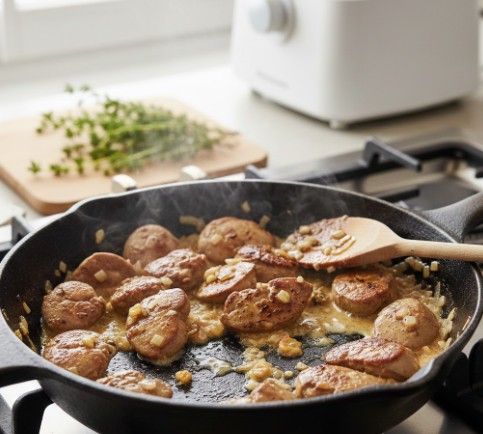
Pan-Cooking the Liver
I heat 2 tablespoons of olive oil in a heavy nonstick skillet over medium heat until it shimmers. I add about 1/4 cup finely chopped shallot and two cloves of minced garlic, and cook them gently for about 2 minutes until they are soft and fragrant.
I raise the heat to medium-high and lay the trimmed, cut goose liver pieces in a single layer. I sear each side 1–2 minutes so the edges brown but the center stays slightly pink; this keeps the liver tender. I pour in 1/3 cup dry white wine or brandy to deglaze the pan, scrape up the browned bits, and cook another 1–2 minutes until most of the liquid has evaporated. I remove the pan from the heat and set the liver and shallots aside to cool a bit before blending.
Pureeing and Finishing the Pâté
I transfer the cooled liver and shallots to a food processor. I add 3 tablespoons of softened unsalted butter, 1/4 cup heavy cream, 1/2 teaspoon freshly ground black pepper, 1/4 teaspoon ground nutmeg, and 1 teaspoon fresh thyme leaves. If I want a warmer note, I include a small pinch of allspice.
I start by pulsing until the mixture breaks down, then run the processor continuously for 1–2 minutes until the texture is very smooth. I stop, scrape down the sides, and process briefly again if needed. For an extra-silky finish, I push the purée through a fine-mesh sieve with a spatula to remove any fibrous bits.
I taste the pâté and adjust salt and pepper as needed. I spoon it into a serving dish, smooth the top, and press plastic wrap directly onto the surface to prevent a dry skin. I chill it in the refrigerator for at least 4 hours or overnight so the flavors meld and the texture firms up.
Key steps at a glance:
- Sauté shallots and garlic: 2 minutes at medium heat.
- Sear liver: 1–2 minutes per side at medium-high.
- Deglaze: 1–2 minutes with wine or brandy.
- Blend: 1–2 minutes in processor; optional sieve for extra smoothness.
- Chill: 4+ hours in refrigerator.
Assembly and Serving
Cooling and Setting the Spread
I place the blended pâté into ramekins, small loaf pans, or a serving dish, then smooth the top with a spatula for a neat finish. I cover each container tightly with plastic wrap to keep the surface moist and stop other fridge smells from seeping in.
I chill the pâté for at least 4 hours, but I prefer to leave it overnight so the texture firms and the flavors deepen. This rest time makes the pâté easier to slice or spread and gives a silkier mouthfeel.
| Step | Action | Timing |
|---|---|---|
| Fill molds | Spoon pâté into containers and smooth | Immediately after pureeing |
| Seal | Cover tightly with plastic wrap | Before chilling |
| Chill | Refrigerate to set and meld flavors | 4 hours to overnight |
Plating and Pairing Ideas
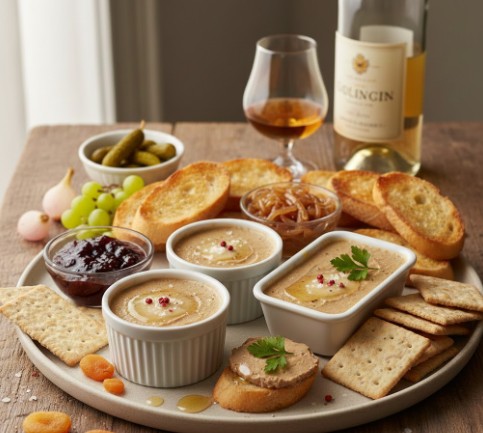
I serve the pâté chilled or slightly softened at room temperature to let the flavors open. I offer toasted baguette slices or crisp crackers so guests get a crunchy contrast to the creamy pâté.
I like to add a sweet element—fig jam, caramelized onions, or a light honey drizzle—to cut through the richness. A small sprinkle of fresh parsley or cracked pink peppercorns gives color and a mild, bright note.
For drinks, I choose a dry white wine or a glass of brandy to match the pâté’s delicate, savory character. I arrange the platter with a mix of textures and flavors—crackers, fruit, pickles, and a sweet spread—so each bite feels balanced and inviting.
Storage and Make-Ahead Tips
Chilled Storage
I keep pâté in airtight containers or tightly wrapped ramekins to stop air and odors from affecting it.
Store it in the fridge set between 34°F and 39°F (1°C–4°C).
Eat within 4–5 days for best flavor and safety.
Take it out 15–20 minutes before serving so it softens and gains a creamier mouthfeel.
Long-Term Freezing
I wrap pâté snugly in plastic wrap, then foil, or use a freezer-safe container to prevent freezer burn.
Freeze for up to one month for the best texture and taste.
Thaw in the refrigerator overnight — never at room temperature — to keep it safe.
After thawing, the texture may be a bit firmer; let it sit at room temperature briefly before serving.
Prep Ahead Strategies
I often make pâté up to three days ahead because the flavors deepen with time.
For bigger events, I assemble it a day early to cut last-minute work and ensure flavors meld.
When moving pâté to a party, keep it chilled in a cooler with ice packs so it stays firm and safe.
Serving and Finishing After Storage
I add fresh garnishes like chopped parsley, chives, or cracked pepper just before serving to lift the look and taste.
Serve chilled or slightly softened alongside toasted baguette slices, crackers, or cornichons for texture contrast.
If the top looks dry after refrigeration, spread a thin layer of melted butter to refresh appearance and slow oxidation.
Final Thoughts
I find making goose liver pâté at home both rewarding and practical. With careful technique and good ingredients, I can achieve a smooth texture and deep flavor that feels special without costing a fortune. I like to focus on small details — gentle cooking, proper seasoning, and chilling — to get the best result. When I serve it, the pâté elevates any gathering and offers a memorable, refined bite that guests appreciate.
Frequently Asked Questions
What is goose liver pâté called and what is it like?
I make goose liver pâté by cooking and blending goose liver with butter, cream, and a splash of wine or brandy. The result is a rich, smooth spread with a buttery texture and a savory, slightly sweet flavor.
Why would I make goose liver pâté at home?
I make it at home to save money and control ingredients while getting a restaurant-style appetizer. It also works well for special meals and makes a simple dish feel more elegant.
What core ingredients do I need?
I use fresh goose liver, unsalted butter, shallots, garlic, and heavy cream. I add dry white wine or brandy, plus seasonings such as black pepper, a pinch of nutmeg, and thyme.
Which kitchen tools are necessary?
I need a sharp chef’s knife, a good nonstick skillet, and a food processor or blender. A fine mesh sieve helps make the texture extra smooth, and ramekins or a loaf pan serve for chilling.
How should I get the liver ready before cooking?
I trim away veins and membranes, then soak the liver in cold water or milk briefly. Finally I cut it into even pieces so it cooks evenly and blends smoothly.
What steps do I follow to cook the pâté?
I sauté shallots and garlic, sear the liver quickly, then deglaze the pan with wine or brandy. I blend the cooked mix with butter, cream, and spices, and push it through a sieve if I want a silkier finish.
How long must the pâté chill before serving?
I chill the pâté at least four hours, though overnight is better to let it firm up and the flavors meld.
How do I serve goose liver pâté?
I serve it chilled or slightly softened on toasted baguette slices or crackers. I often add fresh herbs, a spoon of fig jam, and pair it with a dry white wine or brandy.
What is the best way to store leftovers?
I keep pâté in an airtight container in the fridge for 4–5 days. For longer storage I freeze portions and thaw them slowly in the refrigerator before serving.
Can I make goose liver pâté ahead of time?
Yes. I often make it up to three days ahead because resting improves the taste. I add fresh garnishes just before serving.
FAQs
Q: Can I make a safe and tasty goose liver pâté at home?
I can guide you to make a safe, delicious pâté if you handle and cook the liver properly. Use fresh livers from a trusted source, remove membranes and veins, and gently cook to the recommended internal temperature (around 160°F / 71°C for whole liver dishes). Chill promptly and store refrigerated.
Q: How long will homemade goose liver pâté keep in the fridge?
I recommend using pâté within 3–4 days when stored in an airtight container in the refrigerator. If you cover the top with a thin layer of clarified butter, it can stay fresher for up to a week by limiting air contact.
Q: Is goose liver pâté safer or riskier than store-bought options?
Homemade pâté can be as safe as commercial products if you follow good food safety: start with quality liver, cook to the right temperature, and chill quickly. Commercial pâtés may include preservatives and are made under controlled conditions, so they can have longer shelf life.
Q: How does goose liver pâté compare to duck or chicken liver pâté?
Goose liver gives a richer, silkier texture and deeper flavor than chicken liver. Duck liver is closer to goose in taste and texture, so it makes a good substitute. I find duck produces similar results if goose liver isn’t available.
Q: What maintenance or care does pâté need after making it?
I suggest keeping pâté chilled, covering it tightly, and consuming within the safe window. If you top it with clarified butter, press the butter smooth and reseal after each use. Always use clean utensils to avoid contamination.
Q: Can I freeze goose liver pâté, and how well does it hold up?
Yes, you can freeze pâté for up to 2–3 months in a freezer-safe container. Wrap it tightly to prevent freezer burn. Thaw in the fridge overnight and expect a slight change in texture; re-chill before serving.
Q: Are there allergies or safety concerns I should know about?
Liver is high in vitamin A and iron, so people with certain conditions (like hemochromatosis) or pregnant people should consult a doctor before eating large amounts. Also check for food allergies to ingredients like dairy, nuts, or alcohol used in recipes.
Q: What flavorings and techniques improve texture and taste?
I often add aromatics (shallot, garlic), a splash of brandy or cognac, cream or butter for silkiness, and fresh herbs for brightness. Cook gently, blend until smooth, and strain if you want an extra-fine texture.
Final Thoughts on Making Goose Liver Pâté
I recommend making goose liver pâté at home when you want a rich, elegant spread that still feels practical. I find the best results come from using fresh, high-quality liver, gentle cooking, and careful seasoning to keep the texture smooth and the flavor balanced.
- Effectiveness: A simple terrine method or skillet sauté followed by a short chill gives reliably creamy pâté that spreads easily.
- Safety: I always trim membranes, cook to a safe internal temperature, and store pâté chilled. Proper handling prevents foodborne risks.
- Eco-friendliness: Choosing livers from trusted, responsible producers or local game helps reduce waste and supports sustainable sourcing.
- Suitability: This pâté works well for entertaining, sandwiches, or as a special snack. It pairs nicely with crusty bread, pickles, or fruit preserves.
I suggest starting with a small batch to refine your seasoning and technique. Pick reliable ingredients and keep food-safety steps in mind so your pâté stays delicious and safe. Give it a try—you’ll likely find it a rewarding addition to your cooking.


