Thanksgiving Ham Recipes: Crowd-Pleasing Glazes and Simple Prep Tips
A glossy, well-glazed ham changes how a holiday meal feels. I’ve found that its sweet and savory balance can lift a simple dinner into something warm and memorable, and it often shares the table with or even outshines the usual turkey.
I cook ham in several ways to match different tastes and schedules, from quick glazes to slow, hands-off methods. My goal is to help you choose a ham style that looks beautiful, tastes great, and brings the right mood to your holiday gathering.
Key Takeaways
- A glazed ham adds rich flavor and festive appeal to the holiday table.
- Simple and slow-cook methods both yield tasty, crowd-friendly ham options.
- Choosing the right glaze and method helps set the meal’s tone and ease preparation.
1. Classic Honey-Baked Ham
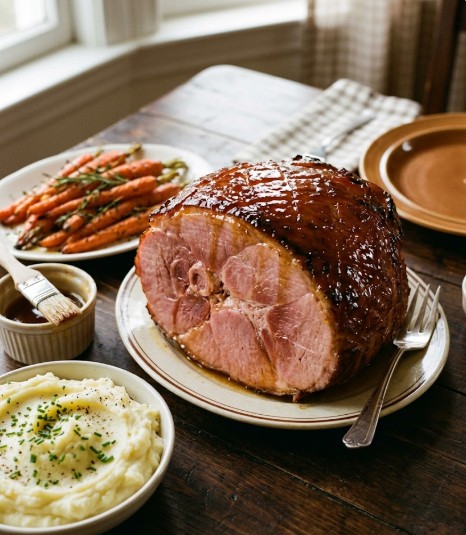
I glaze the ham repeatedly during roasting to build a deep, shiny crust that locks in flavor. The sweet honey caramel pairs with the ham’s saltiness for balanced bites.
Serve with simple sides like roasted carrots or creamy mashed potatoes to keep the plate comforting and familiar.
- Glazing tip: brush thin layers every 10–15 minutes near the end of cooking.
- Texture note: look for a sticky, golden finish before resting and slicing.
2. Orange Balsamic-Glazed Ham
I coat the ham with a tangy orange and balsamic mix that brightens the rich pork. I whisk orange juice, a splash of balsamic, and a sweetener until smooth, then brush it over the ham before and during baking. The glaze browns and becomes glossy, giving the slices a sticky, caramelized finish. I finish with a light sprinkle of orange zest for fresh citrus aroma and a sharp contrast to the savory meat.
3. Mustard Bourbon Gingersnap Ham
I coat the ham with a tangy mustard and warm bourbon glaze, then press crushed gingersnaps into the surface for a crunchy, sweet-spicy crust.
- Bold flavors: sharp mustard, mellow bourbon, sweet gingersnaps.
- Pairing idea: scalloped potatoes or roasted Brussels sprouts.
Tip: Press crumbs firmly so the crust stays intact while baking.
4. Bourbon-Glazed Ham
I make a glaze from bourbon, brown sugar, and a bit of molasses to coat the ham in a sweet, smoky layer.
While it roasts, the glaze forms a sticky, caramelized crust that keeps the meat juicy and tender.
- Use leftover glaze sparingly on roasted vegetables or carrots.
- Brush the ham every 15–20 minutes for best shine and flavor.
Tip: Let the ham rest 10 minutes before slicing to lock in juices.
5. Brown Sugar Mustard Glazed Ham
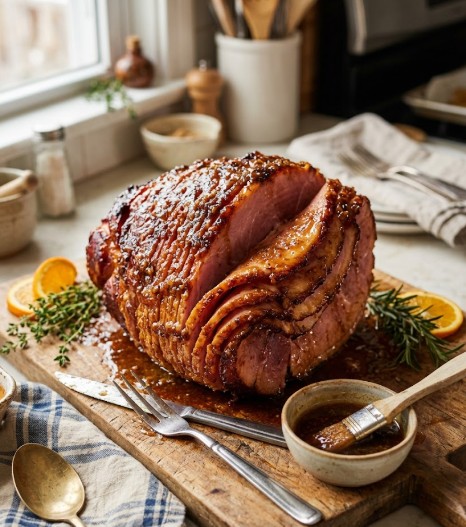
I coat the ham with a mix of brown sugar and mustard so it caramelizes into a sticky, flavorful crust. I often add a splash of apple cider vinegar to lift the flavors and cut some sweetness. The glaze bakes on and clings to each slice, giving a glossy finish and balanced sweet-tang bite. Serve slices warm so the glaze stays tacky and the ham stays juicy.
6. Maple-Syrup Glazed Ham
I brush the ham with real maple syrup for a warm, gentle sweetness that balances the meat’s smoky notes. The syrup caramelizes in the oven, forming a glossy crust and seeping into the slices for richer flavor. I like to serve it with roasted sweet potatoes.
Quick notes:
- Use pure maple syrup, not imitation.
- Glaze near the end of baking for best shine.
7. Brown Sugar Pineapple Ham
I glaze a fully cooked ham with brown sugar and pineapple juice, then nest pineapple rings on top. The sugar melts and caramelizes, making a sticky, golden crust while the fruit softens. I bake gently so the ham stays moist and the glaze becomes glossy and flavorful.
8. Hawaiian Ham Sliders
I layer sweet Hawaiian rolls with thin ham, melty cheese, and a simple honey-mustard butter. I brush the tops with garlic butter before baking to add extra flavor and a golden crust. These sliders hold up well as leftovers and make quick snacks or party bites.
Quick notes
- Use thinly sliced ham and soft rolls
- Spread a mix of butter, honey, and mustard on top
- Bake until cheese melts and tops turn golden
9. Crockpot Ham with Brown Sugar Glaze
I slow the ham all day in a mix of brown sugar, honey, and pineapple juice so it becomes very tender and tasty.
This hands-off method frees my oven for other dishes and saves time during busy holiday cooking.
- Cook low for several hours until the meat pulls apart.
- Brush glaze over the ham a few times for a glossy finish.
Tip: Use a 6-quart slow cooker for best fit and even cooking.
10. Scalloped Potatoes and Ham
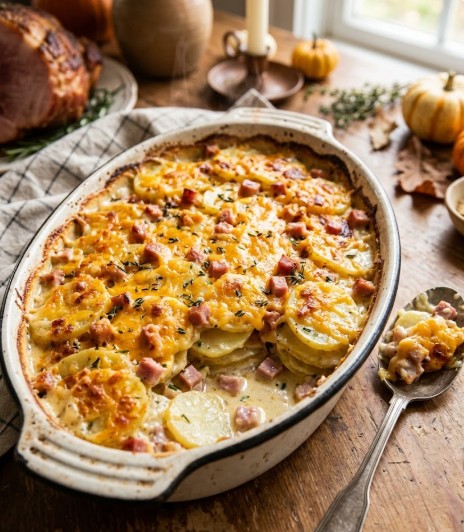
I layer thin potato slices with diced ham, pour a creamy sauce, and top with melted cheese for a warm, hearty casserole. I sometimes add a pinch of nutmeg for subtle warmth. This recipe works great for using leftover ham and pairs well with roasted mains.
Tips: slice potatoes thin, drain excess liquid, bake until bubbling and golden.
Let Your Thanksgiving Ham Shine
I love how forgiving ham is—it’s hard to mess up and often tastes better after resting. Pick a glaze you like: honey, maple, bourbon, or a fruity mix. Brush it on during the last 20–30 minutes so the sugars caramelize without burning.
Serve the ham as the main course or slice it thin for sandwiches the next day. Warm slices pair well with roasted vegetables or a tangy mustard. Simple steps—good glaze, proper heat, and a short rest—make the ham glossy, flavorful, and worth repeating.
FAQs
Q1: How do I pick the right ham for Thanksgiving?
I choose a ham based on size, type, and whether it’s fully cooked. For convenience, a fully cooked spiral or whole ham needs only reheating and glazing. If I want more control over flavor, I pick a raw or partially cooked ham and follow a specific cooking time per pound.
Q2: What’s the safest way to thaw a frozen ham?
I thaw frozen ham in the refrigerator, allowing about 24 hours for every 4–5 pounds. For faster thawing, I use a cold-water bath, changing the water every 30 minutes and keeping the ham sealed. I never thaw at room temperature to avoid bacteria growth.
Q3: How long should I cook or reheat a ham?
I follow package directions for fully cooked ham, usually heating to an internal temperature of 140°F (60°C). For raw or partially cooked ham, I cook to 145°F (63°C) and rest for at least 3 minutes. I use a meat thermometer in the thickest part, away from bone, to check doneness.
Q4: What are safe glazing and serving tips?
I apply glaze during the last 20–30 minutes of cooking to prevent burning. If I reheat a fully cooked ham, I tent it with foil and baste with glaze in the final stage. I keep leftovers refrigerated within two hours and eat them within 3–4 days or freeze for longer storage.
Q5: How do I compare ham to turkey for a holiday meal?
I find ham faster and often simpler to prepare, especially when using a pre-cooked spiral ham. Ham has a saltier, sweeter profile and pairs well with sweet glazes and fruit. Turkey offers more white meat and a different texture; choice depends on guest preference and menu balance.
Q6: What maintenance steps keep the ham moist and flavorful?
I brine or inject flavor before cooking when using raw ham to boost moisture. I roast with a bit of liquid in the pan, baste periodically, and tent with foil if it browns too fast. Resting the ham after cooking helps redistribute juices for better texture.
Q7: Are there safety concerns with glazing ingredients like sugar or alcohol?
I watch glaze sugars closely because they can burn under high heat. When I include alcohol, I add it sparingly and often warm it briefly to reduce strong alcohol flavor; it won’t fully cook off. I always monitor oven temperature and timing to avoid charred glaze.
Conclusion
I recommend choosing a ham recipe that fits your time, taste, and crowd size. Pick a cut and cooking method you trust, use a balanced glaze for flavor, and monitor internal temperature to keep the meat safe and juicy.
I favor simple glazes like honey-mustard or brown sugar and mustard for reliable results. For eco-friendliness and safety, I choose hams from reputable sources that use humane and sustainable practices when possible.
To keep results consistent, I follow a clear plan: prep ahead, baste at key points, check temperature with a probe, and rest the meat before slicing. These steps improve flavor, reduce waste, and lower the chance of overcooking.
- Effectiveness: Reliable techniques deliver tender, flavorful ham every time.
- Safety: Using a thermometer and proper handling prevents foodborne illness.
- Eco-friendliness: Choosing responsibly produced ham helps reduce environmental impact.
- Suitability: Options like spiral-cut, smoked, or bone-in meet different needs and guest preferences.
I encourage you to pick a trusted recipe, gather quality ingredients, and follow steady cooking and safety steps for a memorable holiday meal.