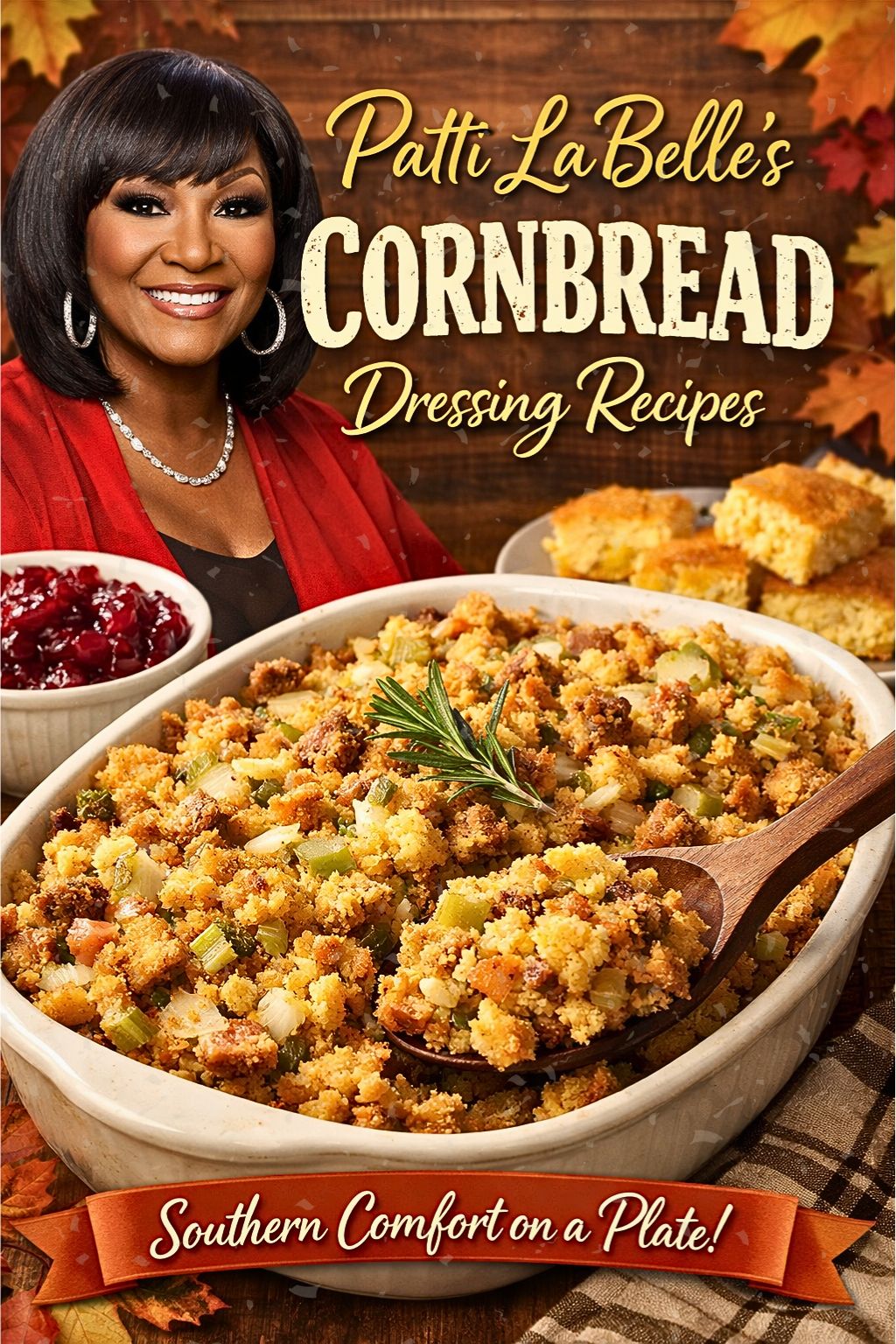
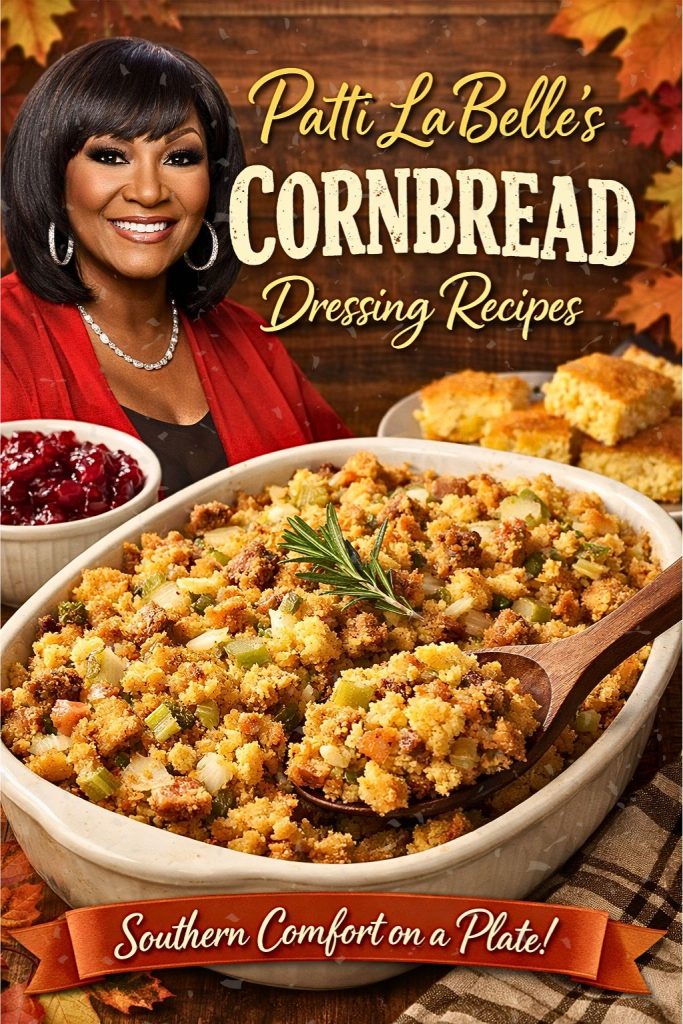
Patti LaBelle’s Cornbread Dressing Recipes
I have long loved Patti LaBelle’s cornbread dressing for how it brings warmth and tradition to a holiday table. In this article I will share what the dish is like, how I learned to make it, and the clear steps and tips I use to get a moist, flavorful dressing every time.
I will also cover the key ingredients, simple techniques, serving ideas, and safe storage so you can confidently add this dish to your celebrations. Read on for a straightforward, reliable guide that makes the recipe easy to follow and enjoy.
Key Takeaways
- The dish combines cornbread and savory seasonings to make a classic holiday side.
- Clear steps and practical tips help achieve good texture and flavor.
- Storage and serving advice keep leftovers safe and tasty.
What I Love About Patti LaBelle’s Cornbread Dressing
I make Patti LaBelle’s cornbread dressing as a hearty Southern side built from crumbled cornbread, aromatic vegetables, and warm stock.
I use white cornbread and chicken stock for a traditional base, then fold in sautéed onions, celery, and peppers for texture and depth.
- Flavor: savory and well-seasoned, with herbs and spices that play a supporting role.
- Texture: moist but not soggy; crumbled cornbread holds shape while soaking up stock.
- Customizable: I add extra ingredients—like sausage, nuts, or extra herbs—to suit my table.
Bold seasoning and simple steps make this dish a reliable holiday favorite.
What does it taste like?
I find the dressing balances mild sweetness from crumbled cornbread with savory, herb-driven notes. Vegetables like onion, celery, and bell pepper add fresh, slightly crunchy layers. Warm spices and seasonings — oregano, poultry blend, celery seed, and black pepper — give steady, earthy depth. Rich stock brings a silky, meaty backbone that makes each bite feel full and comforting.
- Bold cornbread sweetness
- Savory, herb-forward seasoning
- Fresh vegetable brightness
- Deep, rich stock finish
How I First Tried Patti LaBelle’s Cornbread Dressing
I first tasted Patti LaBelle’s cornbread dressing at my aunt’s Thanksgiving dinner a few years ago. She had made it for as long as I could remember, and the smell coming from her kitchen made me want to learn how to make it myself.
She told me the recipe came through the family and that Patti LaBelle’s version inspired their version. That pushed me to look up Patti’s original recipe online and try to recreate the dish in my own kitchen.
I learned to mix crumbled white cornbread with sautéed vegetables and a blend of seasonings until the texture felt right. The dressing balanced savory herbs and a mild sweetness from the cornbread, which matched what my aunt described.
After the first bake, I knew I’d found a new holiday staple. The recipe proved simple to repeat, and guests kept asking for seconds. Now I make it every Thanksgiving, tweaking small details each year to suit my taste while keeping the core elements that made me fall in love with it.
- Key appeal: crispy edges, moist center, savory-sweet balance
- Why it stuck: easy to make, familiar flavors, family approval
How I make Patti LaBelle’s cornbread dressing?
I start by baking cornbread, then crumble it into a large bowl. I sauté onions, celery, and green pepper in butter until soft. I mix the veggies with cornbread, breadcrumbs, herbs, poultry seasoning, and a splash of turkey drippings or stock. I bake until golden and set.
Ingredients I Use
- Chicken or Cornish hen stock — 2–3 cups for moistness and depth.
- White cornbread — about 8 cups crumbled; the base texture and flavor.
- Unsalted butter — 6–8 tablespoons, melted for creaminess.
- Onion, celery, green bell pepper — 1 cup each, finely chopped for savory layers.
- Dried oregano & celery seed — 1 teaspoon each to boost herb notes.
- Poultry seasoning — 1–2 teaspoons for traditional warmth.
- Pink Himalayan salt & freshly ground black pepper — to taste.
Step-by-step instructions
Step 1: Combine the wet and dry ingredients
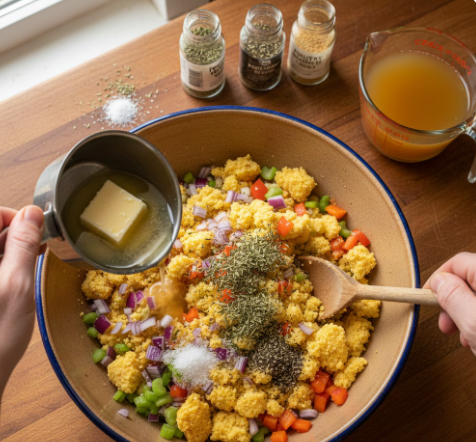
I put chicken stock and melted butter into a large bowl. Then I add crumbled cornbread, chopped onion, celery, and bell pepper. I sprinkle in oregano, celery seed, poultry seasoning, salt, and black pepper, and stir until mixed.
Step 2: Add the second stock and bind
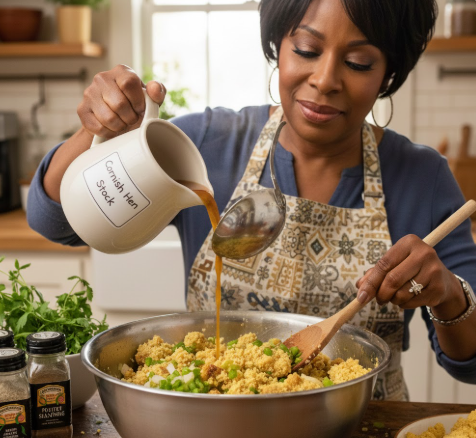
I pour in the Cornish hen stock. I fold the bread and liquid together until the mixture holds without being soggy.
Step 3: Simmer gently
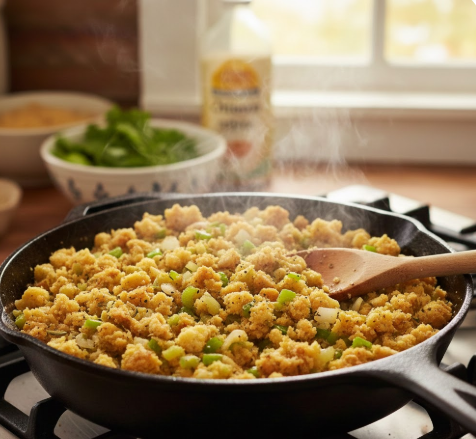
I transfer the mixture to a pan and cook on low for 10–15 minutes. I stir occasionally to prevent sticking and to heat evenly.
Step 4: Plate and serve
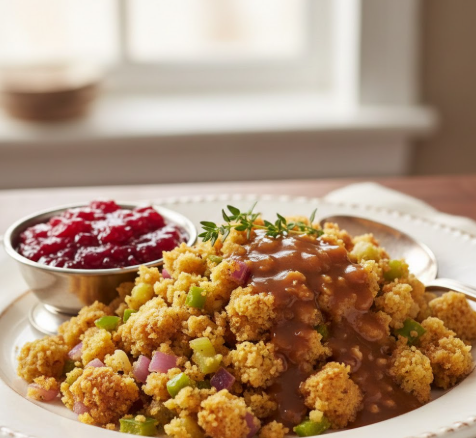
I spoon the dressing warm onto plates. I serve it with cranberry sauce or gravy as a side.
Tips
Tools I Recommend
- Use a large mixing bowl so ingredients combine easily and you avoid spills.
- Have a sturdy spoon or silicone spatula for mixing; they handle thick, wet crumbs well.
- A small baking dish or casserole pan works for finishing in the oven if you want a browned top.
- Optional: a small skillet for toasting breadcrumbs or melting butter for a crunchy topping.
Pantry and Fresh Items
- Use day-old or slightly dried cornbread for better texture; it soaks liquids without turning mushy.
- Keep both chicken and Cornish hen stocks on hand, or swap for vegetable stock to make a vegetarian version.
- Fresh vegetables (onion, celery, bell pepper, green onions) add crunch and flavor—dice them uniformly for even cooking.
- Measure herbs and seasonings ahead: poultry seasoning, celery seed, oregano, salt, and pepper are key to a balanced taste.
How I Put It Together
- Mix the liquid and melted butter into the crumbled cornbread first; this helps the crumbs absorb evenly.
- Fold in the vegetables and seasonings gently to keep some texture in the mixture.
- If the dressing seems dry, add up to 1/2 cup more stock for a creamier finish.
- Transfer to a baking dish and bake briefly if you want a warmed, set casserole rather than a loose stovetop side.
Extra Pointers and Variations
- For a crunchy top, combine melted butter with panko and sprinkle over the dressing before baking.
- Add chopped fresh herbs like parsley or thyme near the end for bright, fresh flavor.
- To reduce sodium, use low-sodium stocks and adjust salt after tasting.
- If you want richer poultry notes, include a small amount of Cornish hen stock; omit it when keeping the dish vegetarian.
Nutrition Details
I list values per 1 cup (232 g) serving for four servings.
- Calories: 166
- Fat: 14 g (Saturated: 6 g)
- Cholesterol: 30 mg
- Sodium: 545 mg
- Carbs: 8 g (Fiber: 1 g)
- Protein: 4 g
What to pair with Patti LaBelle’s cornbread dressing?
I like serving this dressing with something that balances its savory, buttery taste. Cranberry sauce or a tangy chutney adds sweet and bright contrast.
Mashed potatoes or roasted vegetables make a hearty plate. A simple green salad with a light vinaigrette lifts the meal.
Bold gravies also work well—I drizzle a pan gravy or turkey gravy over the dressing for extra moisture and flavor.
How I keep Patti LaBelle’s cornbread dressing fresh
I store leftovers in airtight containers and refrigerate them for up to four days. For quick reheating, I bake the dish at 350°F for 15–20 minutes until hot.
I also portion and freeze servings for up to three months. To use frozen portions, I thaw them overnight in the fridge, then bake or microwave until heated through.
Tip: Label with date and use within recommended times.
Can I eat this while pregnant?
I can eat Patti LaBelle–style cornbread dressing in pregnancy, but I watch portion size and ingredients. I limit salt and rich, high-cholesterol components to keep my diet balanced.
I make sure all ingredients are fresh and cooked through to lower risk of bacteria. I also check with my healthcare provider about any personal concerns or restrictions before adding this dish to my meals.
FAQs
Can I turn this into a vegan version?
I can make it vegan by swapping animal stocks for vegetable broth and skipping any poultry drippings. I also replace butter with a plant-based spread or oil. These simple swaps keep the same savory profile while making the dish fully plant-based.
Is Patti LaBelle’s cornbread dressing safe for a gluten-free diet?
The classic recipe uses white cornbread that usually contains wheat, so it is not gluten-free as written. I can use a certified gluten-free cornbread mix or make cornbread from gluten-free flour blends. I also check all other ingredients (spices, broths, breads) to confirm they are labeled gluten-free.
What other ways can I vary this dressing?
I often change proteins, like adding cooked sausage or crisp bacon, for a richer taste. I also mix in extra vegetables — mushrooms, zucchini, or bell peppers — to boost texture and flavor. For crunch, I sprinkle toasted nuts or seeds, and I adjust herbs and spices to suit my taste.
Wrapping Up
I hope this inspires you to make a memorable cornbread dressing for your next gathering. Try small changes—swap herbs, add sautéed vegetables, or mix in a little bacon—to find the balance you like. Keep notes on what you change so you can repeat the versions that work best.
Use simple steps to keep the dish moist: properly hydrate the cornbread, avoid overbaking, and fold in any liquids gently. Taste as you go and adjust seasoning slowly; a little salt or sage can transform the dish. If you want a richer result, stir in a beaten egg or a splash of cream before baking.
I suggest testing any new tweak in a smaller batch first. Share the recipe with neighbors or friends and ask for honest feedback. A clear plan—timing, oven temp, and serving size—makes holiday cooking less stressful.
If you like, print a short checklist to bring to the kitchen: ingredients, preheat time, bake time, and resting time. That simple list keeps me organized and helps the dish turn out the same way each time.
FAQs
- Q: What makes Patti LaBelle–style cornbread dressing stand out? I find that the hallmark is a rich, buttery base with plenty of sautéed onions, celery, and bell pepper. The cornbread adds a slightly sweet, crumbly texture that contrasts well with savory herbs and sometimes a hint of heat from red pepper flakes.
- Q: Is this dressing safe to bake inside a turkey? I recommend not stuffing the turkey with dressing that contains raw eggs or large amounts of liquid. Baking the dressing separately in a casserole dish ensures it reaches a safe internal temperature (165°F / 74°C) and reduces food-safety risks.
- Q: How do I keep the dressing moist but not soggy? I control moisture by using slightly stale cornbread, adding hot stock gradually, and tasting as I go. A balance of wet and dry ingredients—plus a short bake covered, then uncovered at the end—gives a moist but not waterlogged result.
- Q: What maintenance steps help the recipe perform well every time? I toast or dry the cornbread ahead of time, chop vegetables uniformly, and measure poultry seasoning and salt carefully. I also preheat the oven fully and use a shallow baking dish for even cooking.
- Q: How does Patti LaBelle–style cornbread dressing compare to other stuffing types? Compared to classic bread stuffing, this style leans sweeter and crumblier because of the cornbread. It usually features Southern flavorings like celery seed, poultry seasoning, and sometimes pepper flakes, giving it a distinct regional profile.
- Q: Can I adapt the recipe for dietary needs? I often swap butter for a plant-based spread, use gluten-free cornbread, or replace dairy stock with vegetable stock to fit dietary needs. Texture and flavor change slightly, so I taste and adjust seasonings after substitutions.
- Q: What coverage or serving size can I expect from a standard recipe? I expect a typical recipe using two pans of cornbread and standard amounts of vegetables and stock to serve about 8–10 people as a side. You can scale ingredients up or down while keeping the same wet-to-dry ratio.
Closing Thoughts
I recommend trying Patti LaBelle’s cornbread dressing recipes when you want a reliable, flavorful side dish that pleases a crowd. I find these recipes balance moistness and seasoning well, and they use simple, familiar ingredients that keep the dish safe and easy to prepare.
I value recipes that are mindful of food safety and ingredient quality. Use fresh produce, handle poultry and eggs carefully, and bake the dressing to a safe internal temperature to keep it both tasty and safe. Choosing quality cornmeal and fresh herbs helps the dressing stay flavorful without extra additives.
I also like that these recipes fit well with eco-friendly cooking. You can reduce waste by using leftover cornbread, buying local vegetables, and composting trimmings. Small choices like these make the dish kinder to the planet.
I encourage you to pick a trusted version of Patti LaBelle’s cornbread dressing and make it your own. With a reliable recipe and simple safety and sustainability steps, you’ll have a dish that performs well at gatherings and stands the test of time.